



SDG9
Cheng-Wen Wu leads delegation to visit NCKU Crystal Research Center, focus on next-generation semiconductor key technologies
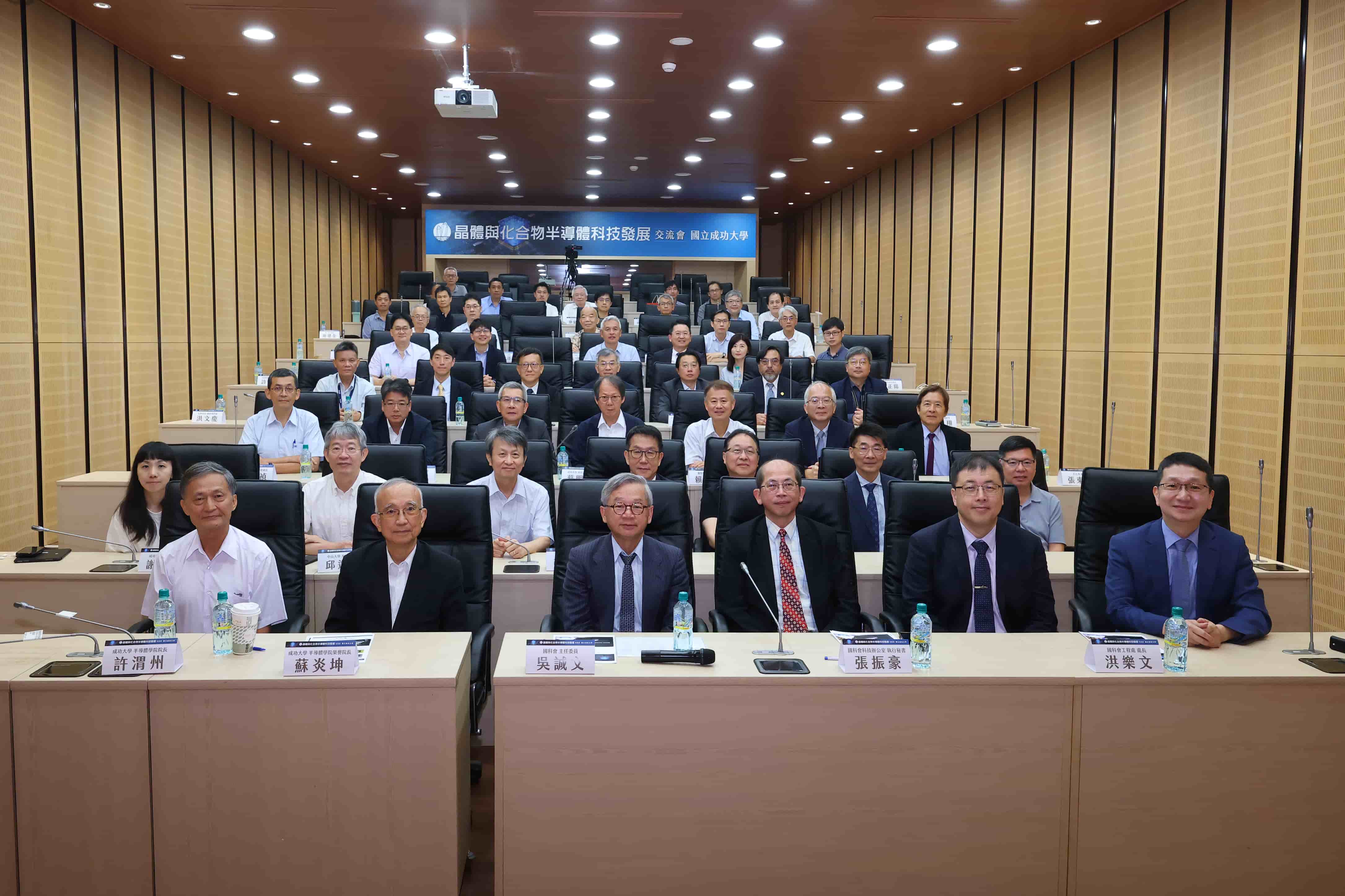
The Crystal Research Center at National Cheng Kung University (NCKU) hosted the “Crystal and Compound Semiconductor Technology Development Exchange Forum” on May 13 at the Delta Building on NCKU's Tainan Science Park Campus (Xinshi District, Tainan). The event invited National Science and Technology Council (NSTC) Minister Cheng-Wen Wu to lead a delegation in person, bringing together senior executives from key domestic semiconductor industries and prominent academic representatives. The forum established a landmark high-level tripartite dialogue among government, industry, and academia. Participating enterprises spanned optics, III–V compound semiconductors, SiC materials, silicon photonics, advanced packaging, and equipment sectors. By strengthening the vital linkage among “policy × industry × academia/research,” the event aimed to map out critical directions for Taiwan’s next-generation semiconductor development.
On the morning of May 13, Minister Cheng-Wen Wu visited the Crystal Research Center. The delegation included research teams from National Sun Yat-sen University (NSYSU) and NCKU, alongside executives from 20 leading companies. Minister Wu stated that while challenges such as global pandemics, geopolitical tensions, conflicts, and climate change persist, they have also presented Taiwan with unprecedented opportunities. He emphasized that industry remains the primary driver of Taiwan’s international engagement. The discussions gathered leading figures from both academia and the optics industry, and the insights shared will directly inform future government policy. In the AI era, the government will support the development of related industrial supply chains from a strategic national perspective, aiming to build a more comprehensive ecosystem that extends beyond traditional wafer fabrication into advanced materials, optical communications, and AI robotics. He added that he will actively integrate resources across government ministries to create higher value and a better future together.
The NCKU Crystal Research Center was inaugurated in 2025 under the leadership of Professor Ming-Chi Chou, Associate Dean of the Academy of Innovative Semiconductor and Sustainable Manufacturing at NCKU. The center is dedicated to building critical sovereign capabilities in crystal research. Professor Chou stated that building on the strong momentum since its launch in 2025, this forum further deepened industry–academia collaboration and focused on key materials and technologies for next-generation semiconductors. The center has already established core technological advantages in next-generation compound semiconductor materials such as silicon carbide (SiC) and gallium oxide (Ga₂O₃), and continues to advance these technologies toward commercialization, strengthening Taiwan’s resilience and competitiveness in the global semiconductor market.
Prior to the technical briefings on the morning of the 13th, the delegation toured the center's state-of-the-art laboratories. The visit covered core facilities including SiC epitaxy systems, cleanrooms, large-diameter crystal growth systems, and Ga₂O₃ laboratories. The delegation highly commended the center’s comprehensive R&D environment and technical capabilities. Industry representatives also provided concrete suggestions regarding market-driven industrial needs and required policy support.
The center showcased multiple cutting-edge research achievements, including large-diameter SiC single-crystal and epitaxial technologies, ultra-wide bandgap Ga₂O₃ materials, crystal growth and high-temperature process technologies, and silicon photonics integrated with III–V materials. With “heterogeneous integration” as its core strategy, the center seamlessly connects compound semiconductor materials, devices, and silicon photonics to establish a complete technology chain—spanning from materials, processes, and devices to next-generation packaging—creating a robust national-level platform.
Professor Chou has long been dedicated to crystal science and advanced materials research, championing Taiwan’s independent R&D and international positioning in next-generation semiconductors and high-end optoelectronic materials. His work bridges academic breakthroughs with industrial value, making significant contributions to national technological competitiveness. After joining the NCKU semiconductor academy in 2024, he led his team to establish a research base in the Tainan Science Park. With strong support from academia, government, and industry, the team rapidly built an international-class facility exceeding 1,300 square meters and introduced advanced crystal growth equipment, significantly accelerating Taiwan’s high-end crystal material R&D capacity.
His research focuses primarily on next-generation compound semiconductor materials like SiC and Ga₂O₃, which are vital for applications in electric vehicles (EVs), high-efficiency power management, smart grids, high-frequency communications, and advanced optoelectronic devices. The team actively addresses challenges in crystal growth, defect control, and process optimization to promote material self-sufficiency and technological upgrading, which carries significant strategic implications for Taiwan’s semiconductor supply chain.
In addition, Professor Chou has expanded the cross-disciplinary applications of crystal technologies, collaborating with international teams to develop high-power thin-disk laser systems for precision manufacturing, medical applications, and optical communications. In response to the rapid rise of artificial intelligence, he has also pioneered a dual strategy of “Crystals for AI” and “AI for Crystals,” integrating materials science with AI technologies to usher in a new paradigm in intelligent crystal materials research.
On the morning of May 13, Minister Cheng-Wen Wu visited the Crystal Research Center. The delegation included research teams from National Sun Yat-sen University (NSYSU) and NCKU, alongside executives from 20 leading companies. Minister Wu stated that while challenges such as global pandemics, geopolitical tensions, conflicts, and climate change persist, they have also presented Taiwan with unprecedented opportunities. He emphasized that industry remains the primary driver of Taiwan’s international engagement. The discussions gathered leading figures from both academia and the optics industry, and the insights shared will directly inform future government policy. In the AI era, the government will support the development of related industrial supply chains from a strategic national perspective, aiming to build a more comprehensive ecosystem that extends beyond traditional wafer fabrication into advanced materials, optical communications, and AI robotics. He added that he will actively integrate resources across government ministries to create higher value and a better future together.
The NCKU Crystal Research Center was inaugurated in 2025 under the leadership of Professor Ming-Chi Chou, Associate Dean of the Academy of Innovative Semiconductor and Sustainable Manufacturing at NCKU. The center is dedicated to building critical sovereign capabilities in crystal research. Professor Chou stated that building on the strong momentum since its launch in 2025, this forum further deepened industry–academia collaboration and focused on key materials and technologies for next-generation semiconductors. The center has already established core technological advantages in next-generation compound semiconductor materials such as silicon carbide (SiC) and gallium oxide (Ga₂O₃), and continues to advance these technologies toward commercialization, strengthening Taiwan’s resilience and competitiveness in the global semiconductor market.
Prior to the technical briefings on the morning of the 13th, the delegation toured the center's state-of-the-art laboratories. The visit covered core facilities including SiC epitaxy systems, cleanrooms, large-diameter crystal growth systems, and Ga₂O₃ laboratories. The delegation highly commended the center’s comprehensive R&D environment and technical capabilities. Industry representatives also provided concrete suggestions regarding market-driven industrial needs and required policy support.
The center showcased multiple cutting-edge research achievements, including large-diameter SiC single-crystal and epitaxial technologies, ultra-wide bandgap Ga₂O₃ materials, crystal growth and high-temperature process technologies, and silicon photonics integrated with III–V materials. With “heterogeneous integration” as its core strategy, the center seamlessly connects compound semiconductor materials, devices, and silicon photonics to establish a complete technology chain—spanning from materials, processes, and devices to next-generation packaging—creating a robust national-level platform.
Professor Chou has long been dedicated to crystal science and advanced materials research, championing Taiwan’s independent R&D and international positioning in next-generation semiconductors and high-end optoelectronic materials. His work bridges academic breakthroughs with industrial value, making significant contributions to national technological competitiveness. After joining the NCKU semiconductor academy in 2024, he led his team to establish a research base in the Tainan Science Park. With strong support from academia, government, and industry, the team rapidly built an international-class facility exceeding 1,300 square meters and introduced advanced crystal growth equipment, significantly accelerating Taiwan’s high-end crystal material R&D capacity.
His research focuses primarily on next-generation compound semiconductor materials like SiC and Ga₂O₃, which are vital for applications in electric vehicles (EVs), high-efficiency power management, smart grids, high-frequency communications, and advanced optoelectronic devices. The team actively addresses challenges in crystal growth, defect control, and process optimization to promote material self-sufficiency and technological upgrading, which carries significant strategic implications for Taiwan’s semiconductor supply chain.
In addition, Professor Chou has expanded the cross-disciplinary applications of crystal technologies, collaborating with international teams to develop high-power thin-disk laser systems for precision manufacturing, medical applications, and optical communications. In response to the rapid rise of artificial intelligence, he has also pioneered a dual strategy of “Crystals for AI” and “AI for Crystals,” integrating materials science with AI technologies to usher in a new paradigm in intelligent crystal materials research.
On May 13, Cheng-Wen Wu led a delegation to visit the Crystal Research Center at NCKU, with government, industry, and academia focusing on the strategic deployment of key technologies for next-generation semiconductors.
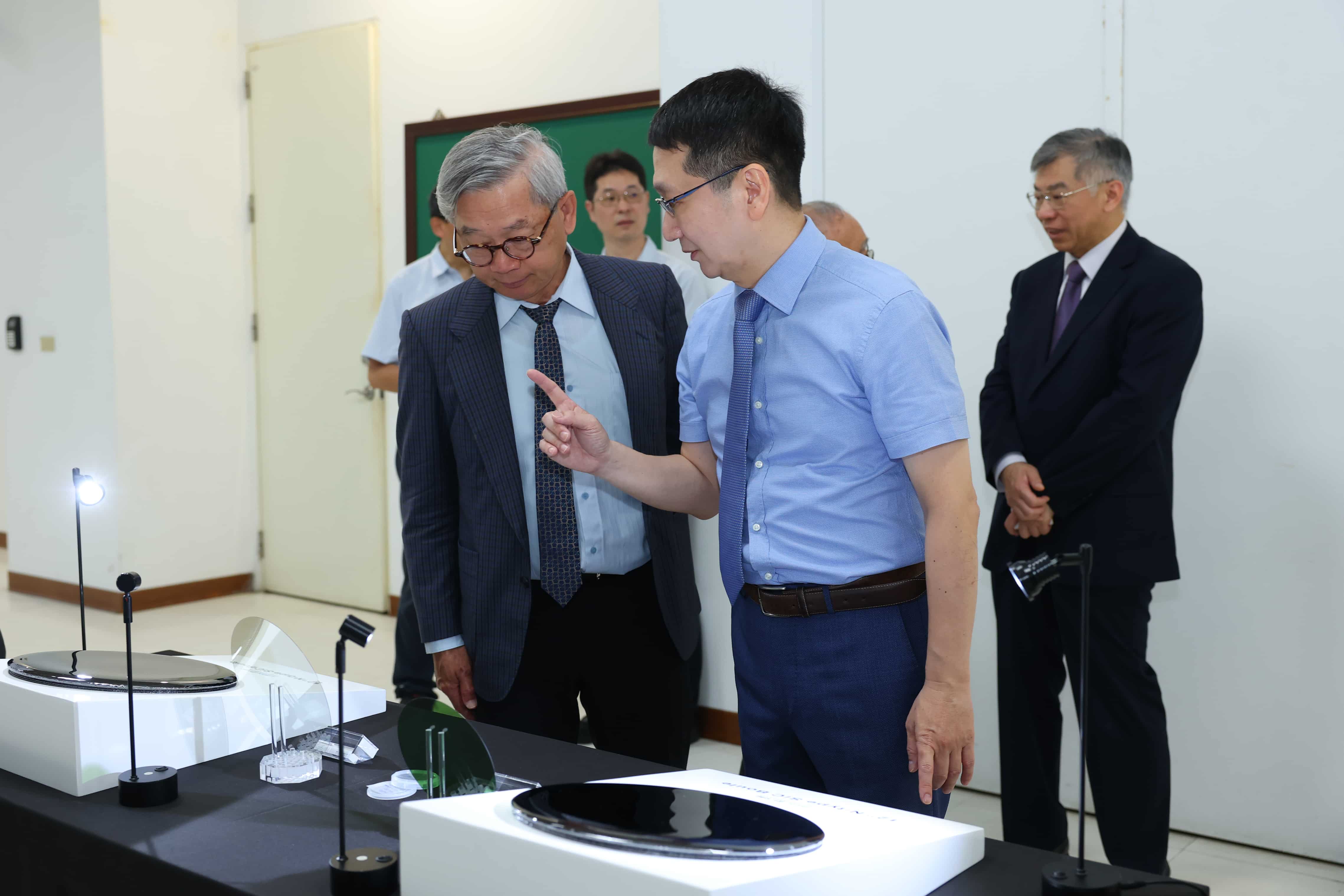
Professor Ming-Chi Chou, Director of the Crystal Research Center at NCKU (right), briefed Cheng-Wen Wu on the outcomes of industry–academia collaboration in large-diameter wafer development.
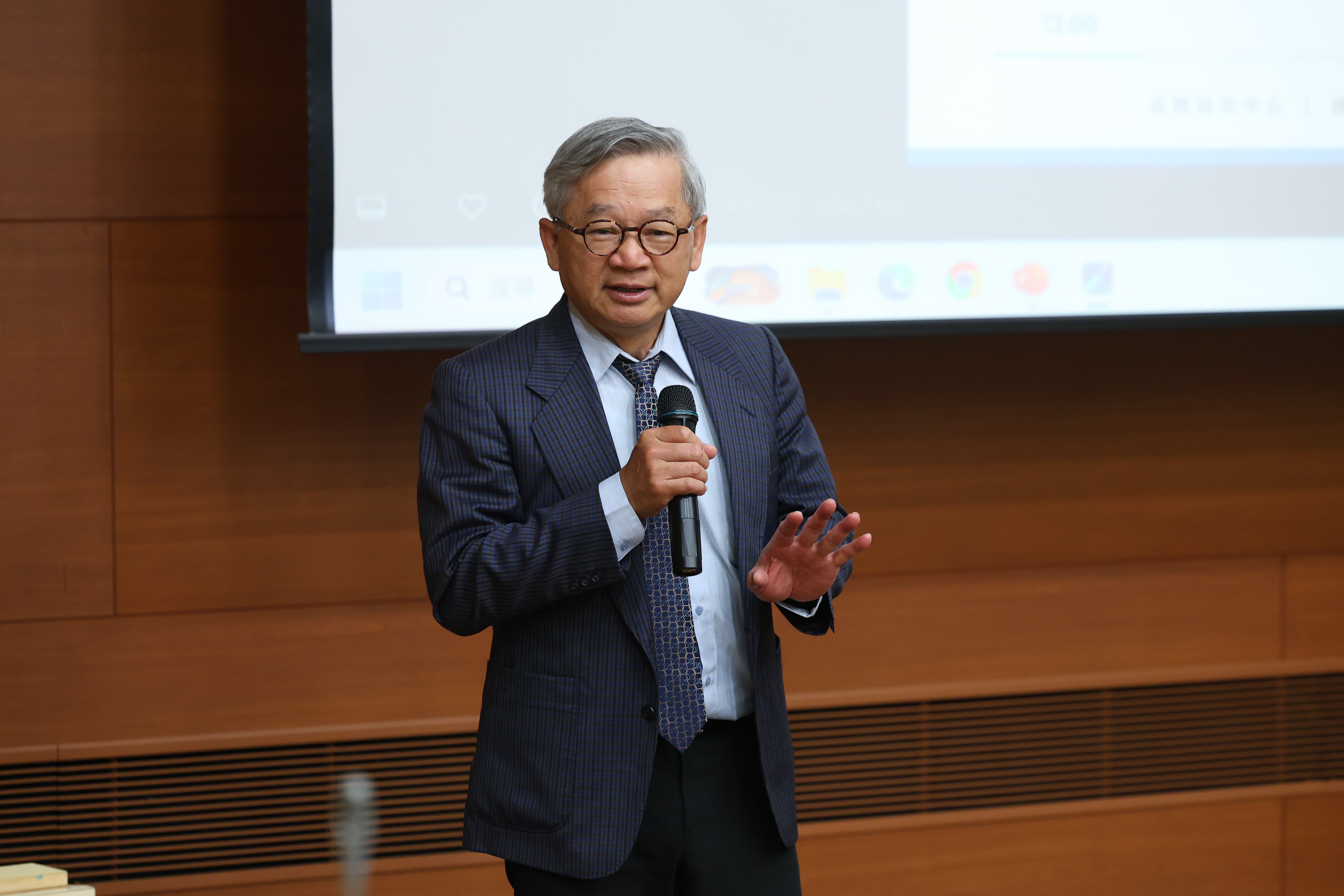
Cheng-Wen Wu emphasized in his remarks the importance of integration and the establishment of a comprehensive industrial ecosystem for Taiwan’s photonics sector.
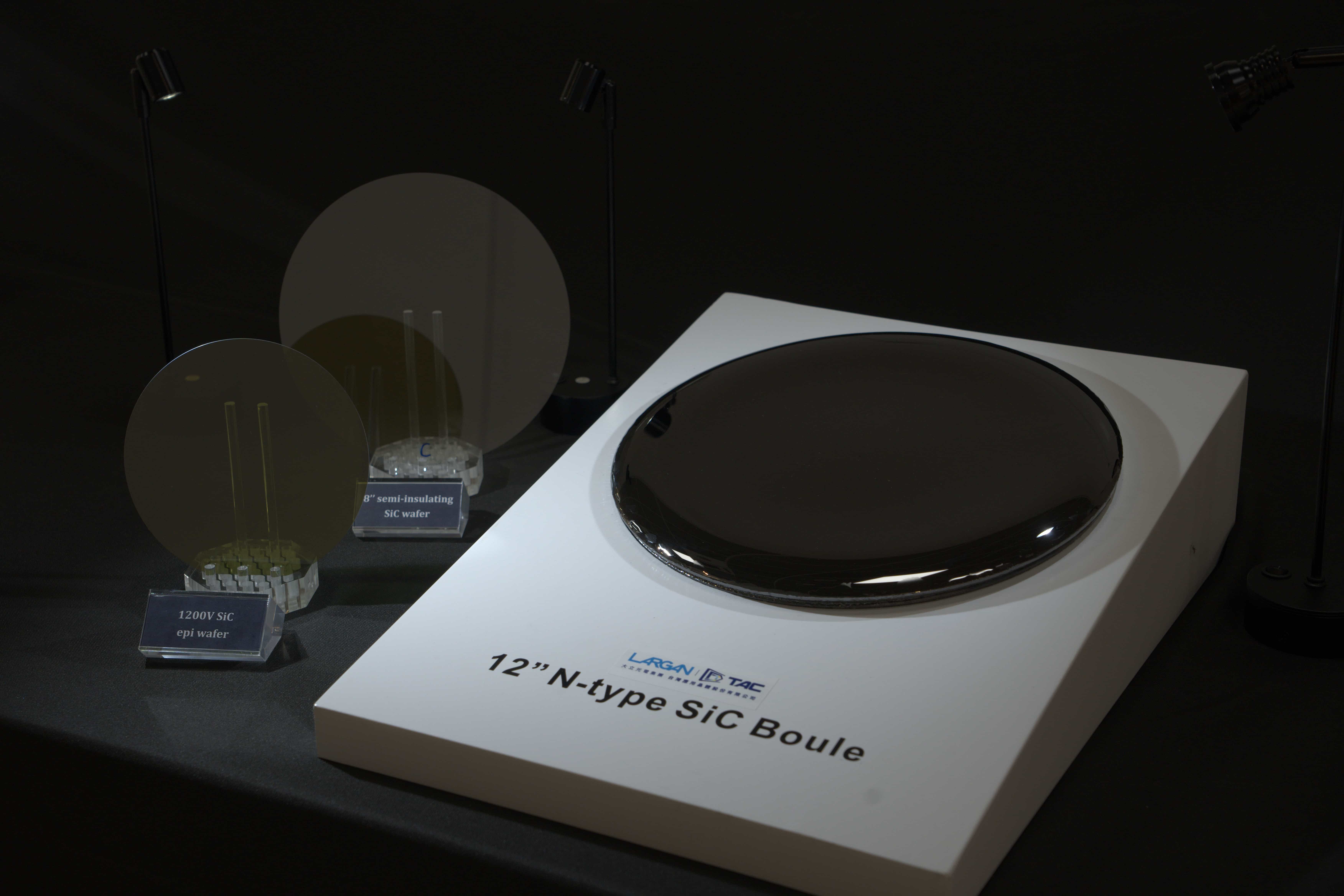
The forum showcased multiple cutting-edge research achievements from the Crystal Research Center at NCKU. The image shows a 12-inch N-type SiC ingot and an 8-inch semi-insulating SiC wafer.
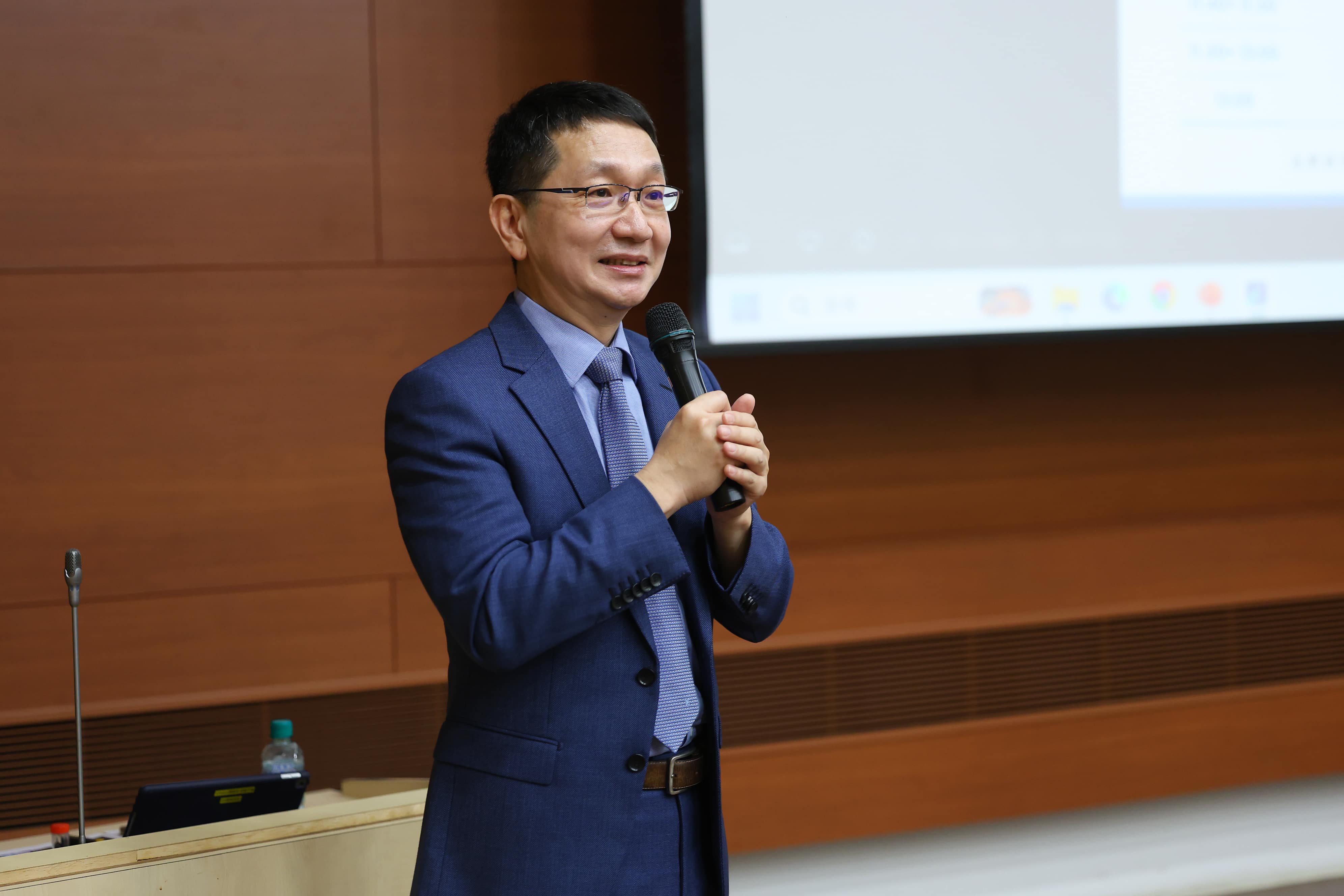
The Crystal Research Center at NCKU was inaugurated in 2025 under the leadership of Professor Ming-Chi Chou, Associate Dean of the NCKU College of Semiconductor, with the aim of building critical capabilities in crystal research.
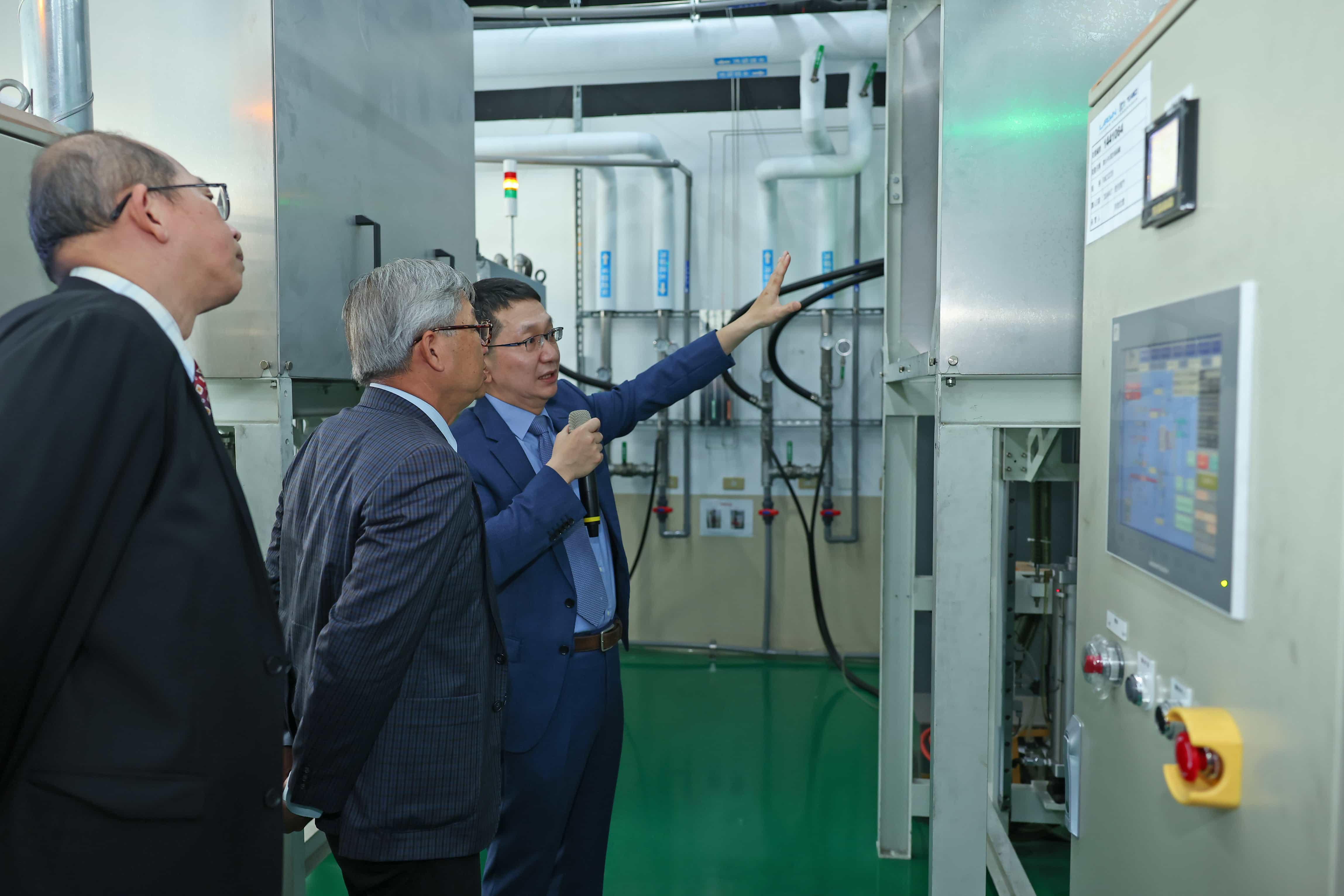
The forum established a landmark high-level dialogue among government, industry, and academia. Participating companies spanned a wide range of fields, including optics, III–V compound semiconductors, SiC materials, silicon photonics, advanced packaging, and equipment. By strengthening the close linkage among “policy × industry × academia/research,” the participants aim to jointly provide important directions for the development of Taiwan’s next-generation semiconductor technologies.

SDG9Czech Technical University in Prague Visits NCKU to Promote Joint UAV Research and Collaboration
View more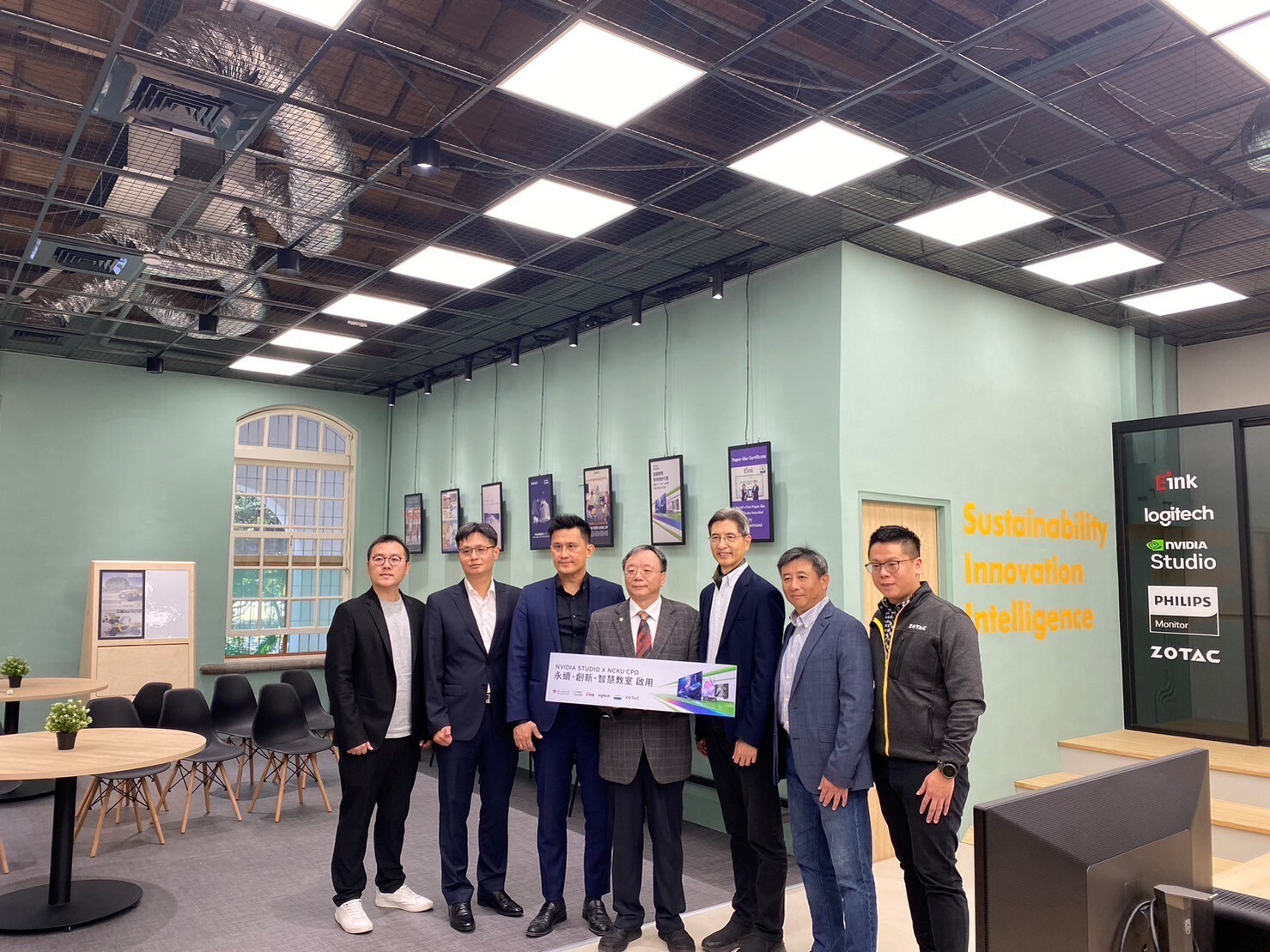
SDG9The College of Planning and Design at NCKU has inaugurated the "Sustainable, Innovative, Smart Classroom."
View more![[2025 SMART+ Manufacturing Exhibition] NCKU Showcases AI Technologies to Boost Factory Cybersecurity and Digital Transformation](https://sdg.ncku.edu.tw/userfiles/images/20260526084740338.jpg)