



SDG11
What Shape Is Your Emotion? NCKU Graduate Exhibition “Inner Topography” Explores the Inner World Through Technology
Have you ever wondered what shape your emotions take? How do memory and stress manifest themselves? The 10th Graduate Exhibition of the Master’s Program in Techno Art, College of Planning and Design, National Cheng Kung University (NCKU), titled “Inner Topography《內在地形》 ,” will be held from June 13 to 20 at the NCKU Art Space. The exhibition is open to the public and features six creators presenting six perspectives that translate abstract emotions and psychological stress into perceivable forms such as beams of light, soundscapes, electrostatic fields, plant-generated imagery, X-ray projections, and fashion encoding. Visitors are invited to step into these often-overlooked “inner landscapes.”
NCKU Art Center Artistic Director Shih-Hong Yang noted in his opening remarks that while physical “topography” can be measured externally, the “inner” dimension refers to emotional perception, which requires quiet reflection and imagination. Although one is visible and the other invisible, both can be experienced. The exhibition features diverse works, unified by a predominantly black visual tone. Black creates a stable atmospheric environment that allows viewers to focus while highlighting the students’ varied artistic explorations.
Associate Director of the Techno Art Program Hsuan-Cheng Lin expressed gratitude for the support of the Art Center. He noted that the six creators each present distinctive works, using diverse media and technologies to translate subtle and abstract internal states into perceptible artistic experiences. Their works reflect deep observations and reflections on contemporary society, technological environments, and personal lived experience.
The value of techno art does not lie in technology itself, but in how technology reshapes the relationship between humans and the world. This year’s exhibition spans artificial intelligence, interactive installations, virtual reality, sound art, and digital storytelling, demonstrating students’ interdisciplinary integration across art, design, and engineering. The opening ceremony also featured a keynote speech by artist Hao-Ning Chang titled “How the Inner Becomes Image: The Translation of Perception,” which explored how technological media can be used to rethink the relationships between humans and the world, environment, and the self. Chang emphasized that in an era dominated by AI, information overload, and rapid technological change, humanity’s most valuable capacities remain those of feeling, understanding, and empathy.
One featured work, “Observed Space《被注視的空間》 ,” by Cheng-You Fan-Jiang, uses light beams as a metaphor for the “gaze.” Combined with a kinetic installation and real-time tracking system, the light follows the viewer’s movement and focuses on their body, creating an experience of being targeted and tracked. The work transforms normally hidden and everyday surveillance mechanisms into a perceptible spatial condition.
Ching-Hui Chiu’s “Noise Zero Boundary《噪音零界》 ” uses urban traffic data as a carrier of invisible noise. Through data translation and an interactive soundscape system, congestion data from city traffic is transformed into perceptible sound and physical traces, inviting viewers to reconsider the boundaries of perception within urban rhythms.
“J’s Moon《J 個月亮》 ,” created by Yi-Chi Lin, centers on electrostatic fields and bodily perception. Drawing on the Eastern aesthetic concepts of “misty atmosphere” and “a single brushstroke,” the work constructs an unpredictable perceptual field. Through bodily interaction with space, viewers experience the subtle and slowly emerging relationship between humans and their environment.
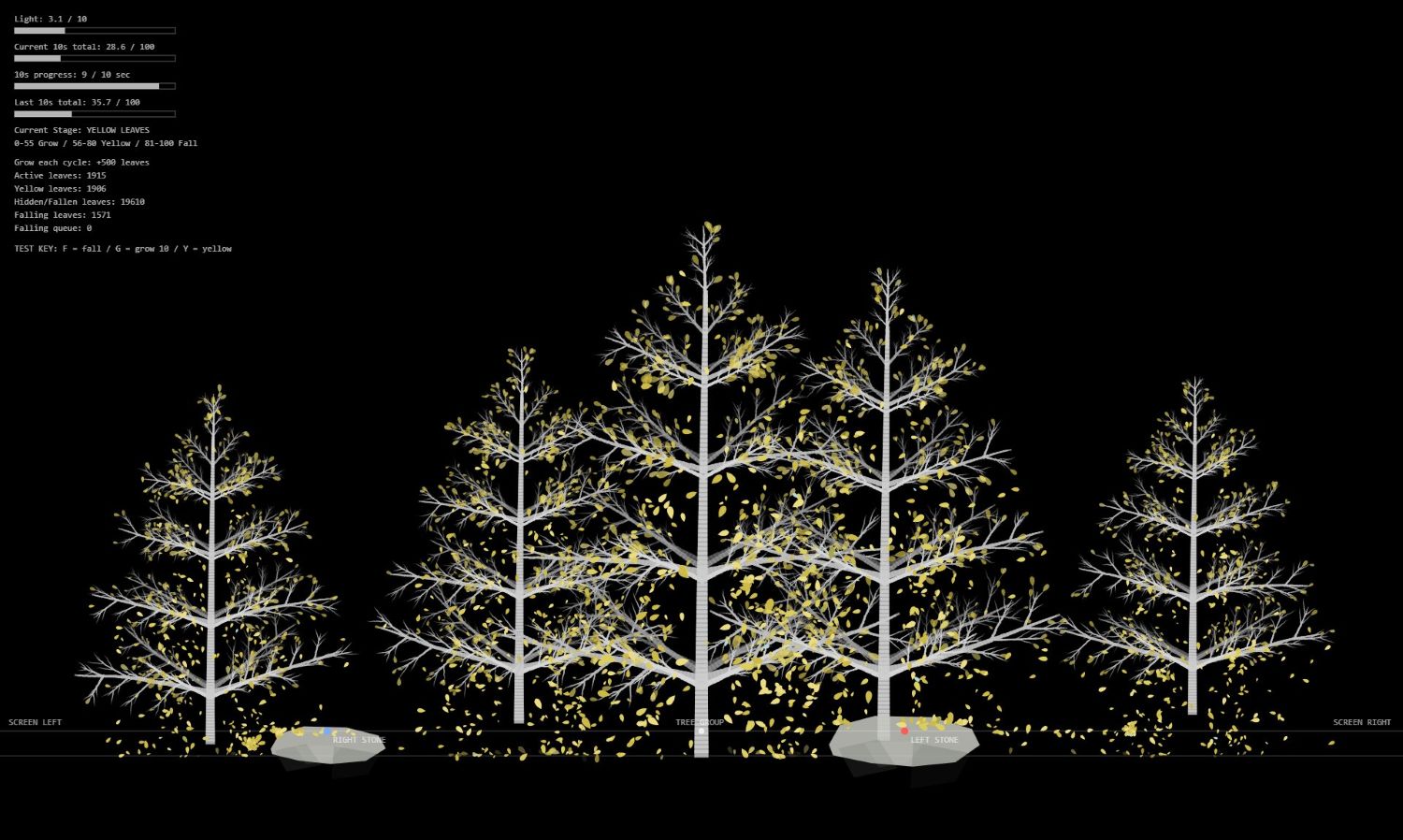
Jin-Rong Chen’s “The Unmanifested Past《尚未顯現的過去》 ” uses plants as a medium for exploring time and environmental relationships. By sensing changes in spatial light, environmental conditions are translated into generative imagery of plant growth and decay. The work emphasizes that growth is not an immediate response, but an accumulation of multiple conditions over time, rethinking the decentralized and continuously evolving relationship between humans and their environment.
Zi-Yong Liu’s “Threshold《閾》 ” explores stress as a bodily experience. Through X-ray imagery and projection installations, it constructs a perceptual boundary between what can and cannot be endured, transforming otherwise inexpressible stress into a visible and experiential presence.
Juan-Hui Wang presents “Re-stitching Eras: Re-encoding Taiwanese Women’s Fashion Styles of the 1960s, 1980s, and 2000s.《重縫時代:1960、1980、2000 年代臺灣女性流行服飾風格的再編碼》 ” Through video and interactive design, the work traces fashion trends across decades of Taiwanese women’s clothing culture. Combining multimedia, photographs, cards, and QR-code interactions, it guides viewers through shifts in fashion culture and invites reinterpretation and renaming of contemporary women’s fashion styles.
“Inner Topography” is more than a techno-art exhibition—it is an exploration of emotion, perception, and lived existence. Visitors are warmly invited to enter the exhibition space and re-experience the inner landscapes hidden within everyday life.
“Inner Topography” Exhibition Information
Dates: June 13 (Sat) – June 20 (Sat), 9:30–17:00
Closed: June 14 (Sun), June 19 (Fri)
Venue: NCKU Art Space, 1st Floor, Student Activity Center, No. 1 Daxue Road, East District, Tainan City, Taiwan
Instagram
NCKU Art Center Artistic Director Shih-Hong Yang noted in his opening remarks that while physical “topography” can be measured externally, the “inner” dimension refers to emotional perception, which requires quiet reflection and imagination. Although one is visible and the other invisible, both can be experienced. The exhibition features diverse works, unified by a predominantly black visual tone. Black creates a stable atmospheric environment that allows viewers to focus while highlighting the students’ varied artistic explorations.
Associate Director of the Techno Art Program Hsuan-Cheng Lin expressed gratitude for the support of the Art Center. He noted that the six creators each present distinctive works, using diverse media and technologies to translate subtle and abstract internal states into perceptible artistic experiences. Their works reflect deep observations and reflections on contemporary society, technological environments, and personal lived experience.
The value of techno art does not lie in technology itself, but in how technology reshapes the relationship between humans and the world. This year’s exhibition spans artificial intelligence, interactive installations, virtual reality, sound art, and digital storytelling, demonstrating students’ interdisciplinary integration across art, design, and engineering. The opening ceremony also featured a keynote speech by artist Hao-Ning Chang titled “How the Inner Becomes Image: The Translation of Perception,” which explored how technological media can be used to rethink the relationships between humans and the world, environment, and the self. Chang emphasized that in an era dominated by AI, information overload, and rapid technological change, humanity’s most valuable capacities remain those of feeling, understanding, and empathy.
One featured work, “Observed Space《被注視的空間》 ,” by Cheng-You Fan-Jiang, uses light beams as a metaphor for the “gaze.” Combined with a kinetic installation and real-time tracking system, the light follows the viewer’s movement and focuses on their body, creating an experience of being targeted and tracked. The work transforms normally hidden and everyday surveillance mechanisms into a perceptible spatial condition.
Ching-Hui Chiu’s “Noise Zero Boundary《噪音零界》 ” uses urban traffic data as a carrier of invisible noise. Through data translation and an interactive soundscape system, congestion data from city traffic is transformed into perceptible sound and physical traces, inviting viewers to reconsider the boundaries of perception within urban rhythms.
“J’s Moon《J 個月亮》 ,” created by Yi-Chi Lin, centers on electrostatic fields and bodily perception. Drawing on the Eastern aesthetic concepts of “misty atmosphere” and “a single brushstroke,” the work constructs an unpredictable perceptual field. Through bodily interaction with space, viewers experience the subtle and slowly emerging relationship between humans and their environment.
Jin-Rong Chen’s “The Unmanifested Past《尚未顯現的過去》 ” uses plants as a medium for exploring time and environmental relationships. By sensing changes in spatial light, environmental conditions are translated into generative imagery of plant growth and decay. The work emphasizes that growth is not an immediate response, but an accumulation of multiple conditions over time, rethinking the decentralized and continuously evolving relationship between humans and their environment.
Zi-Yong Liu’s “Threshold《閾》 ” explores stress as a bodily experience. Through X-ray imagery and projection installations, it constructs a perceptual boundary between what can and cannot be endured, transforming otherwise inexpressible stress into a visible and experiential presence.
Juan-Hui Wang presents “Re-stitching Eras: Re-encoding Taiwanese Women’s Fashion Styles of the 1960s, 1980s, and 2000s.《重縫時代:1960、1980、2000 年代臺灣女性流行服飾風格的再編碼》 ” Through video and interactive design, the work traces fashion trends across decades of Taiwanese women’s clothing culture. Combining multimedia, photographs, cards, and QR-code interactions, it guides viewers through shifts in fashion culture and invites reinterpretation and renaming of contemporary women’s fashion styles.
“Inner Topography” is more than a techno-art exhibition—it is an exploration of emotion, perception, and lived existence. Visitors are warmly invited to enter the exhibition space and re-experience the inner landscapes hidden within everyday life.
“Inner Topography” Exhibition Information
Dates: June 13 (Sat) – June 20 (Sat), 9:30–17:00
Closed: June 14 (Sun), June 19 (Fri)
Venue: NCKU Art Space, 1st Floor, Student Activity Center, No. 1 Daxue Road, East District, Tainan City, Taiwan
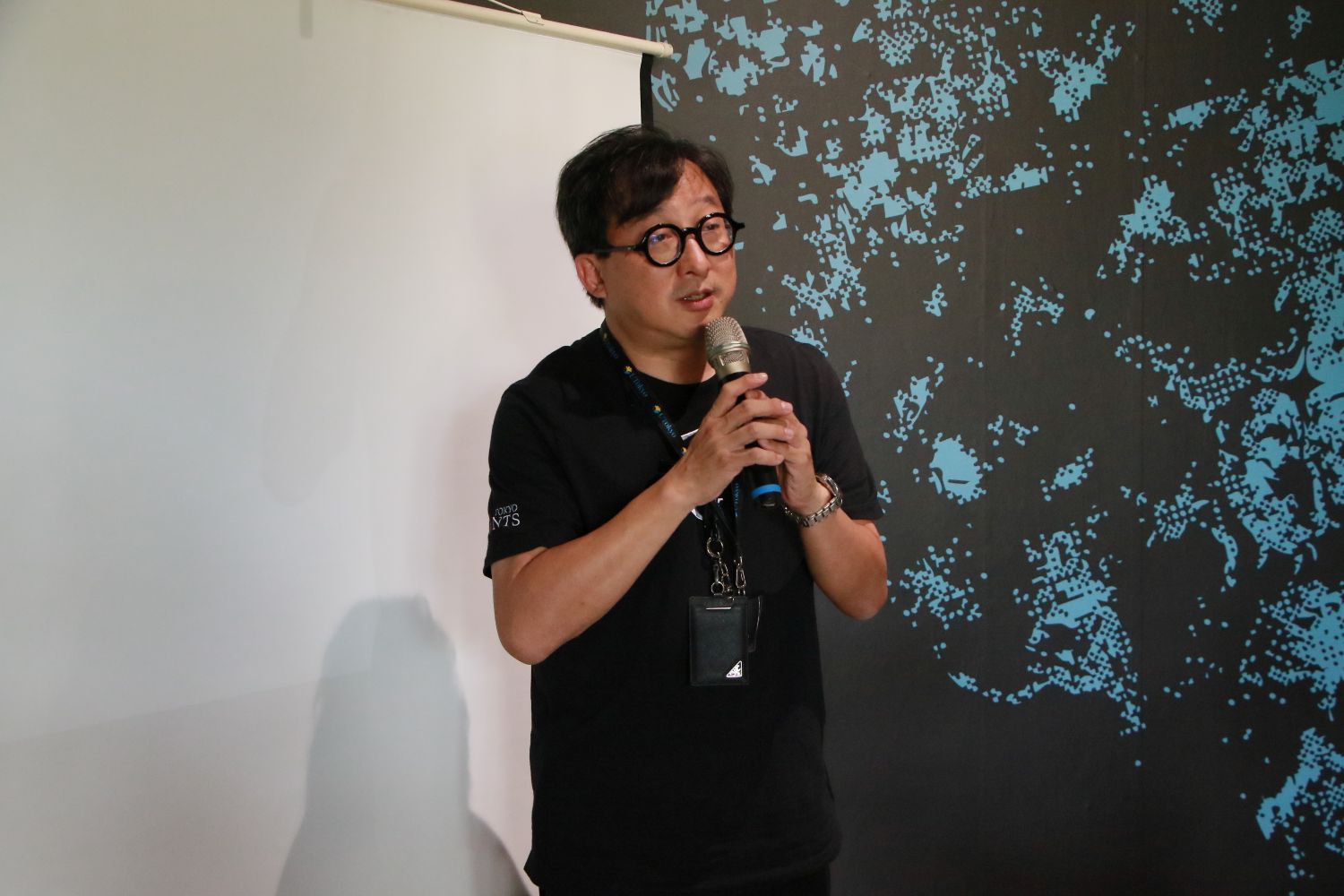
Artistic Director of the NCKU Art Center, Shih-Hong Yang, remarked that in an era dominated by AI, information overload, and rapid technological advancement, what is most precious to humanity is the capacity to feel, understand, and empathize.
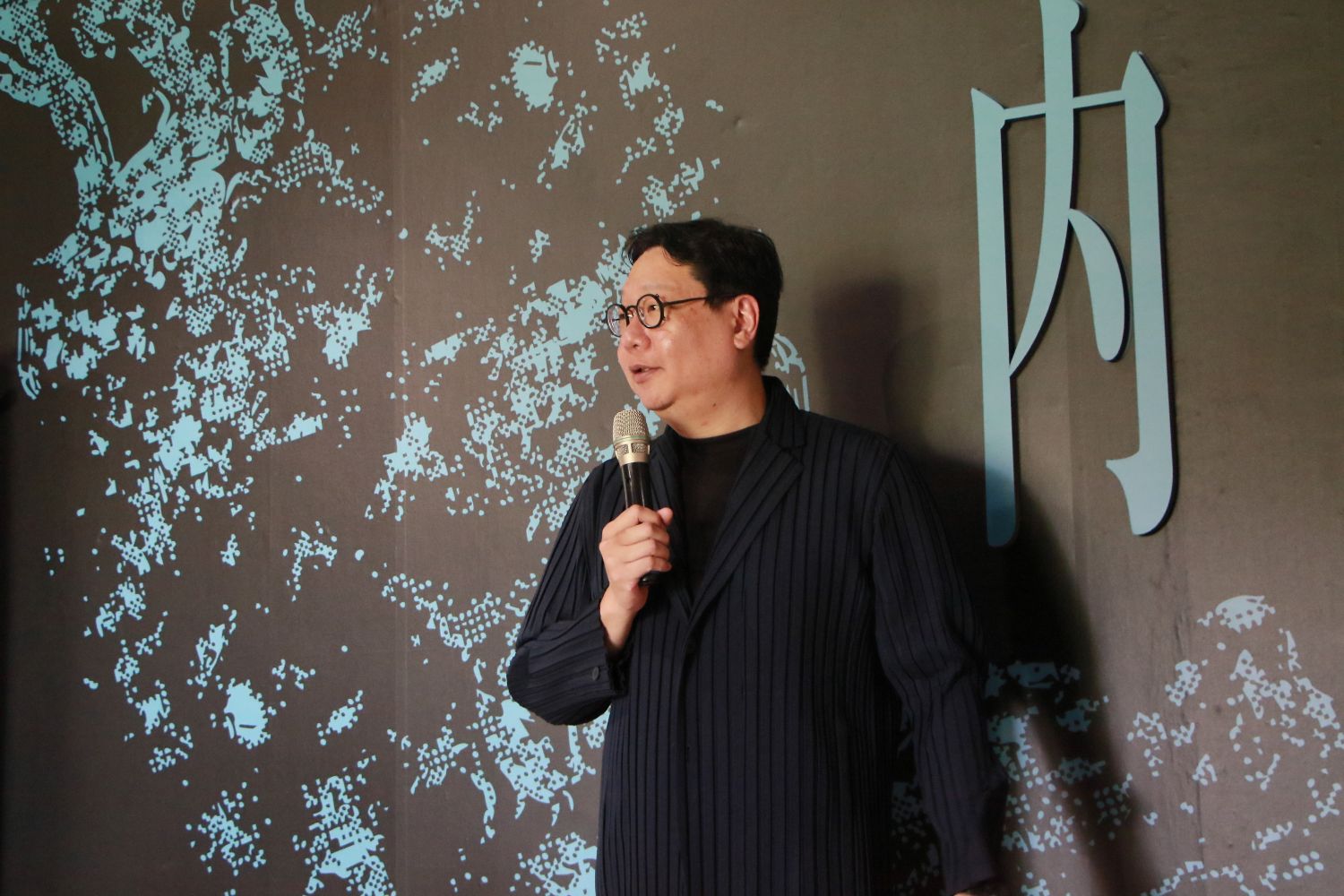
Associate Director of the Master’s Program in Techno Art at NCKU, Hsuan-Cheng Lin, remarked that the value of techno art does not lie in technology itself, but in how technology is used to reconstruct the perceptual relationship between humans and the world.

Artist Hao-Ning Chang delivered a keynote lecture titled “How the Inner Becomes Image: The Translation of Perception,” exploring how technological media can be used to rethink the relationships between humans and the world, the environment, and the self.
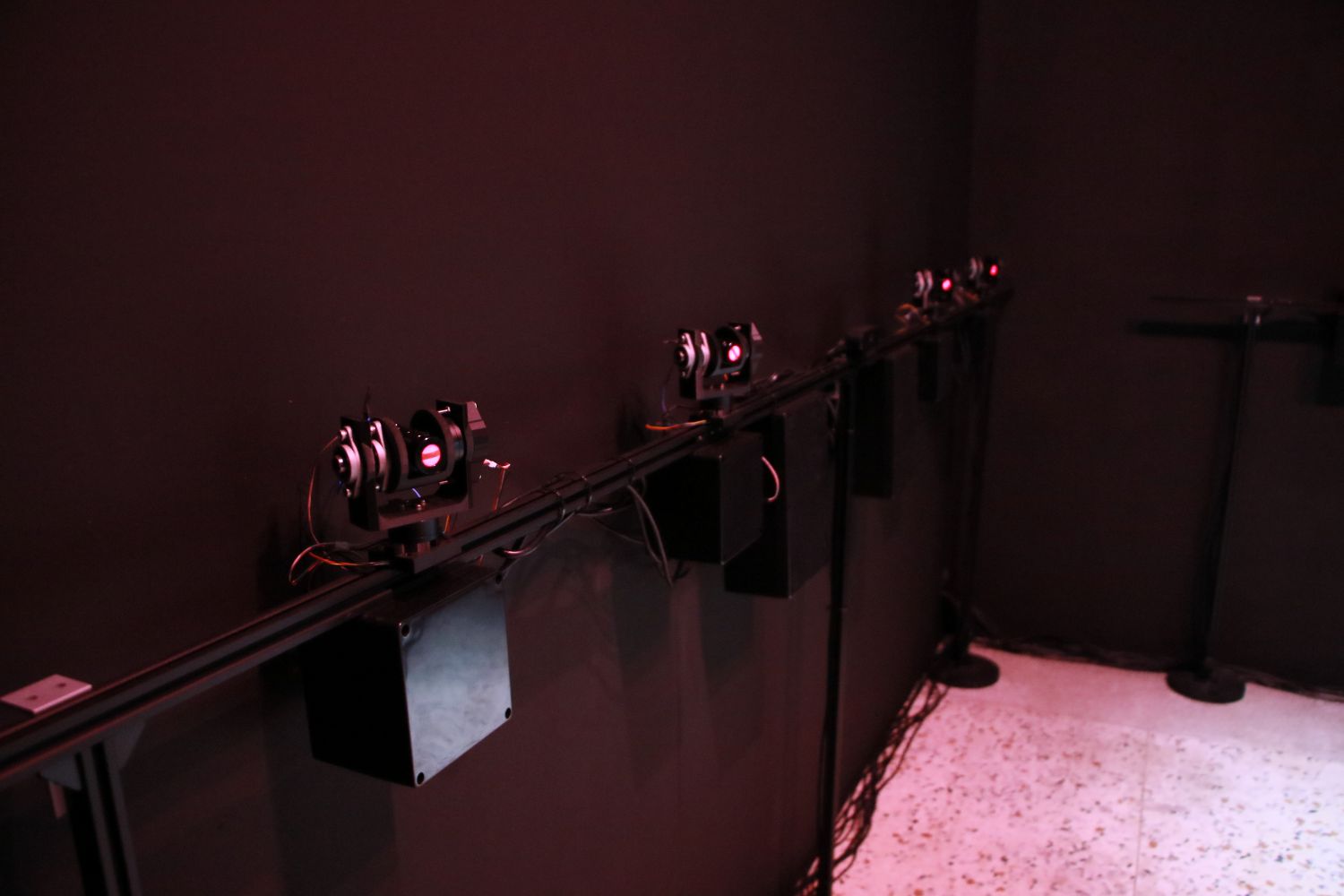
Cheng-You Fan-Jiang’s “Observed Space” uses beams of light as a metaphor for the “gaze,” combining kinetic installations and a real-time tracking system to create an experience in which viewers feel observed, locked onto, and tracked.
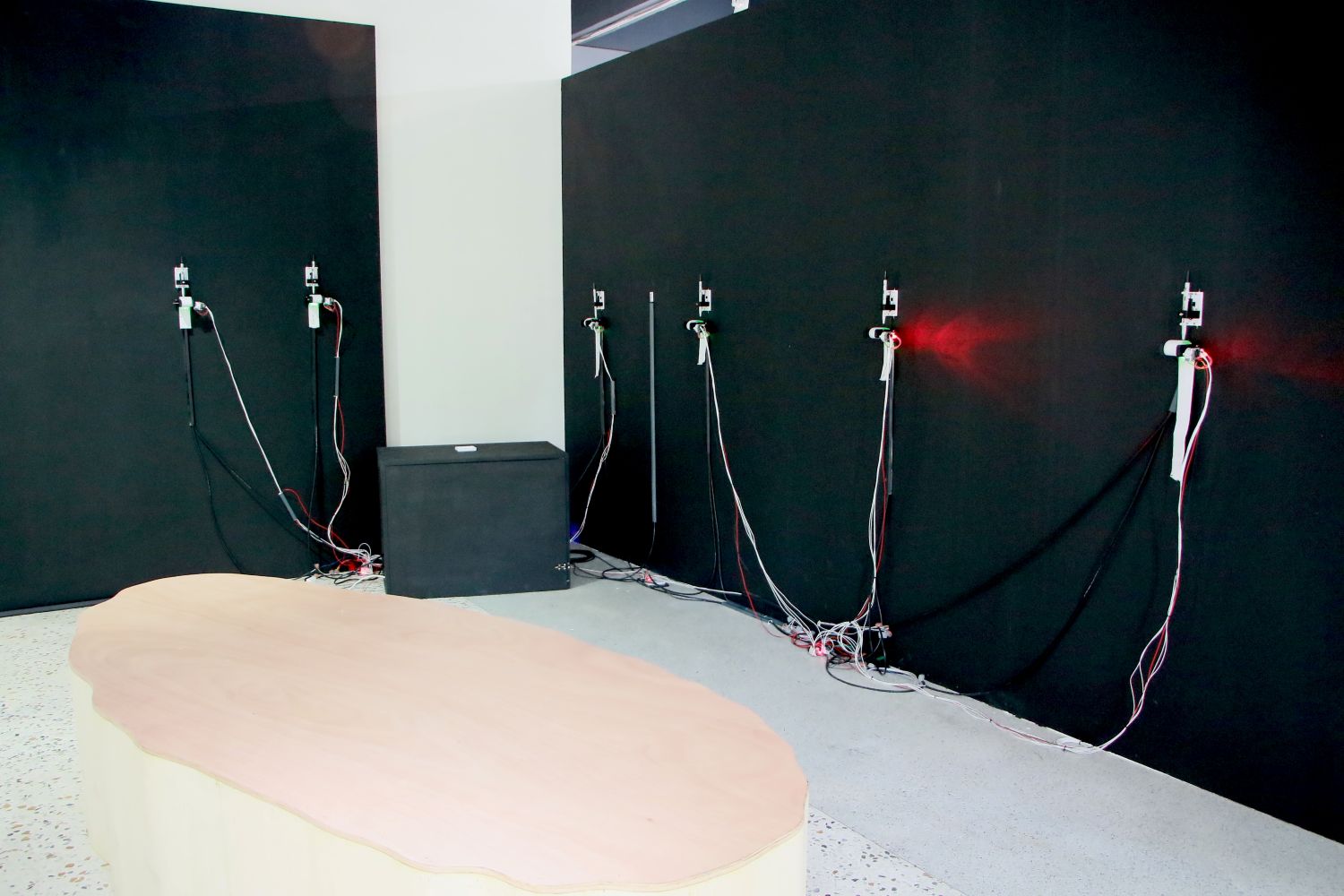
Ching-Hui Chiu’s “Noise Zero Boundary” transforms urban traffic congestion data into perceptible sounds and physical traces.
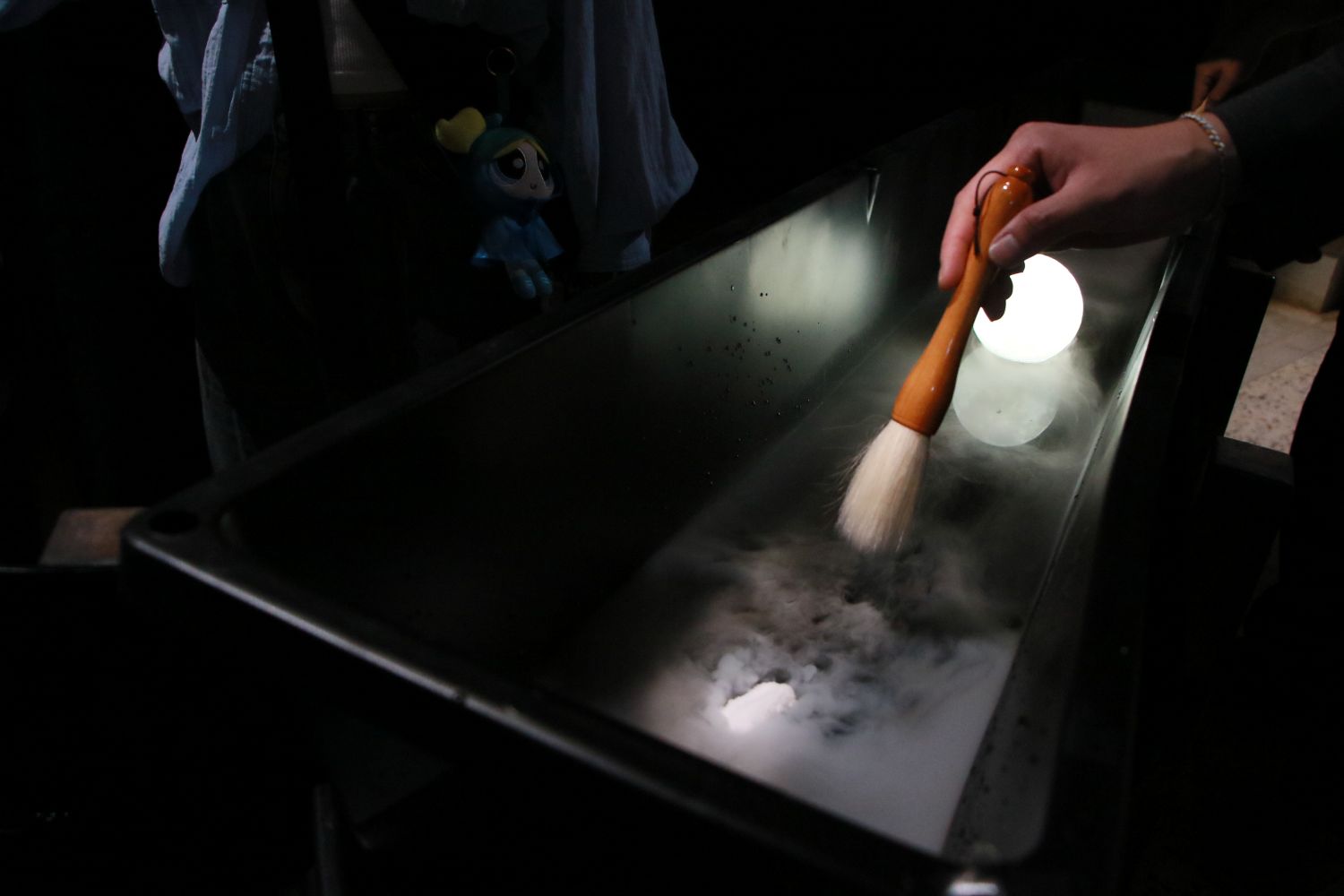
Yi-Chi Lin’s “J’s Moon” invites viewers to sweep a calligraphy brush through mist, where, under the influence of an electrostatic field, flowing trails of vapor and motion are formed. Through the interplay of observation and interaction, it evokes a shifting perceptual experience of qi-like resonance and brushstroke fluidity, akin to the expressive rhythm of ink painting.
Jin-Rong Chen’s “The Unmanifested Past” uses sensors to detect changes in ambient light, translating spatial conditions into generative imagery of plant growth and decay, exploring life processes shaped by the accumulation of time and co-constructed with the environment.
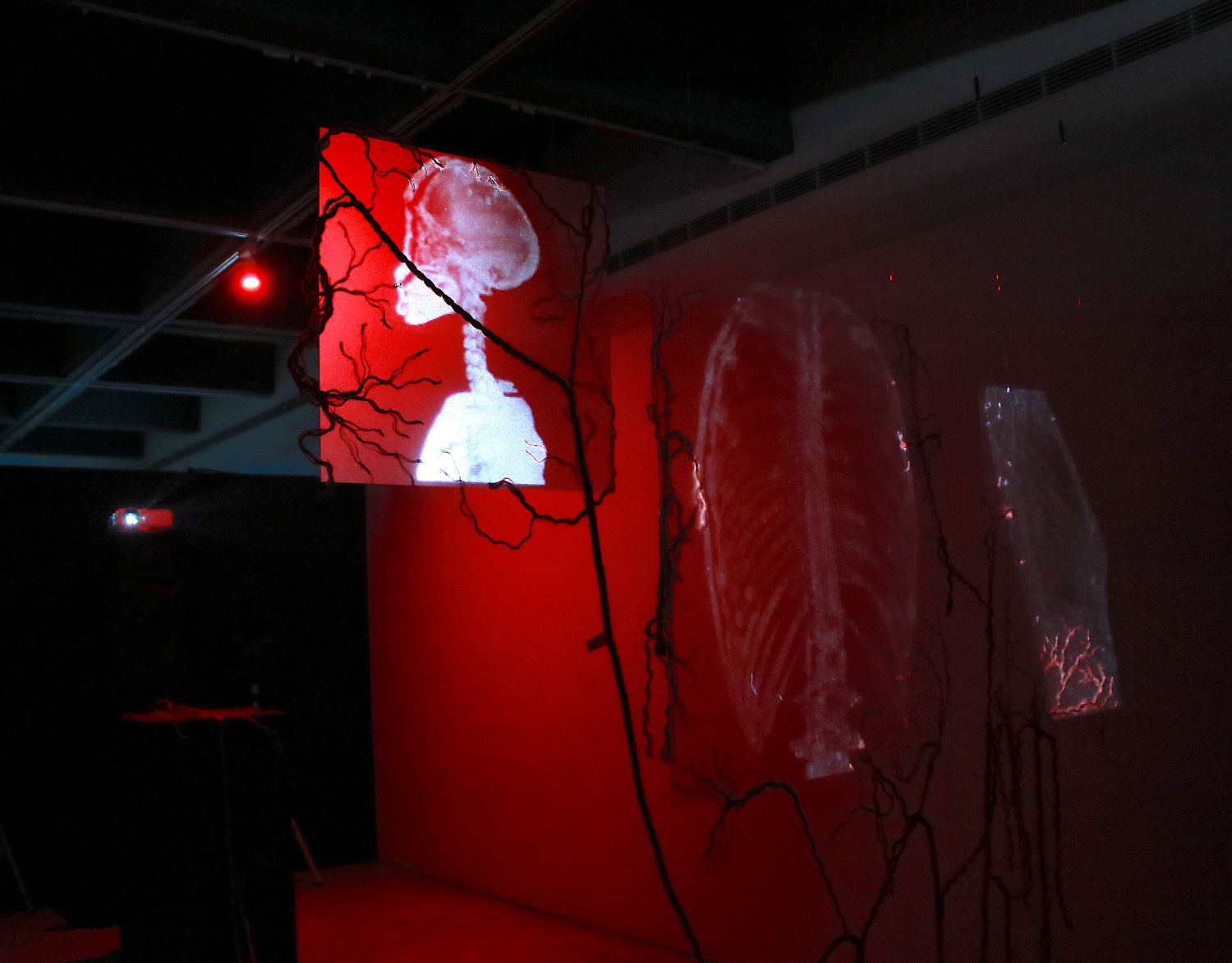
Zi-Yong Liu’s work “Threshold” uses X-ray imagery and projection installations to transform otherwise inexpressible experiences of stress into something that can be seen and felt.
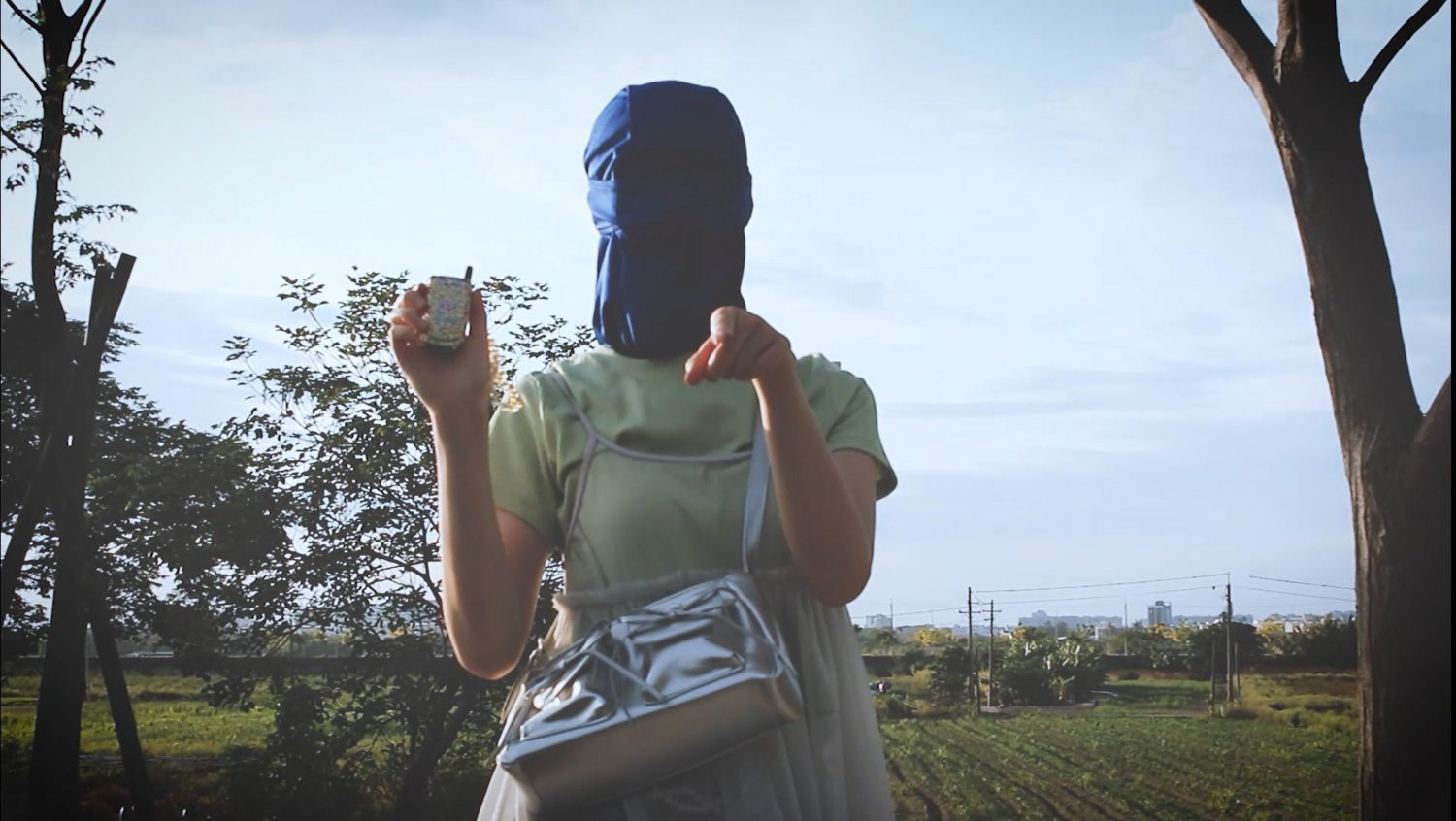
Through video and interactive design, Juan-Hui Wang created “Re-stitching Eras: Re-encoding Taiwanese Women’s Fashion Styles of the 1960s, 1980s, and 2000s,” inviting viewers to participate in rethinking and renaming contemporary Taiwanese women’s fashion styles.
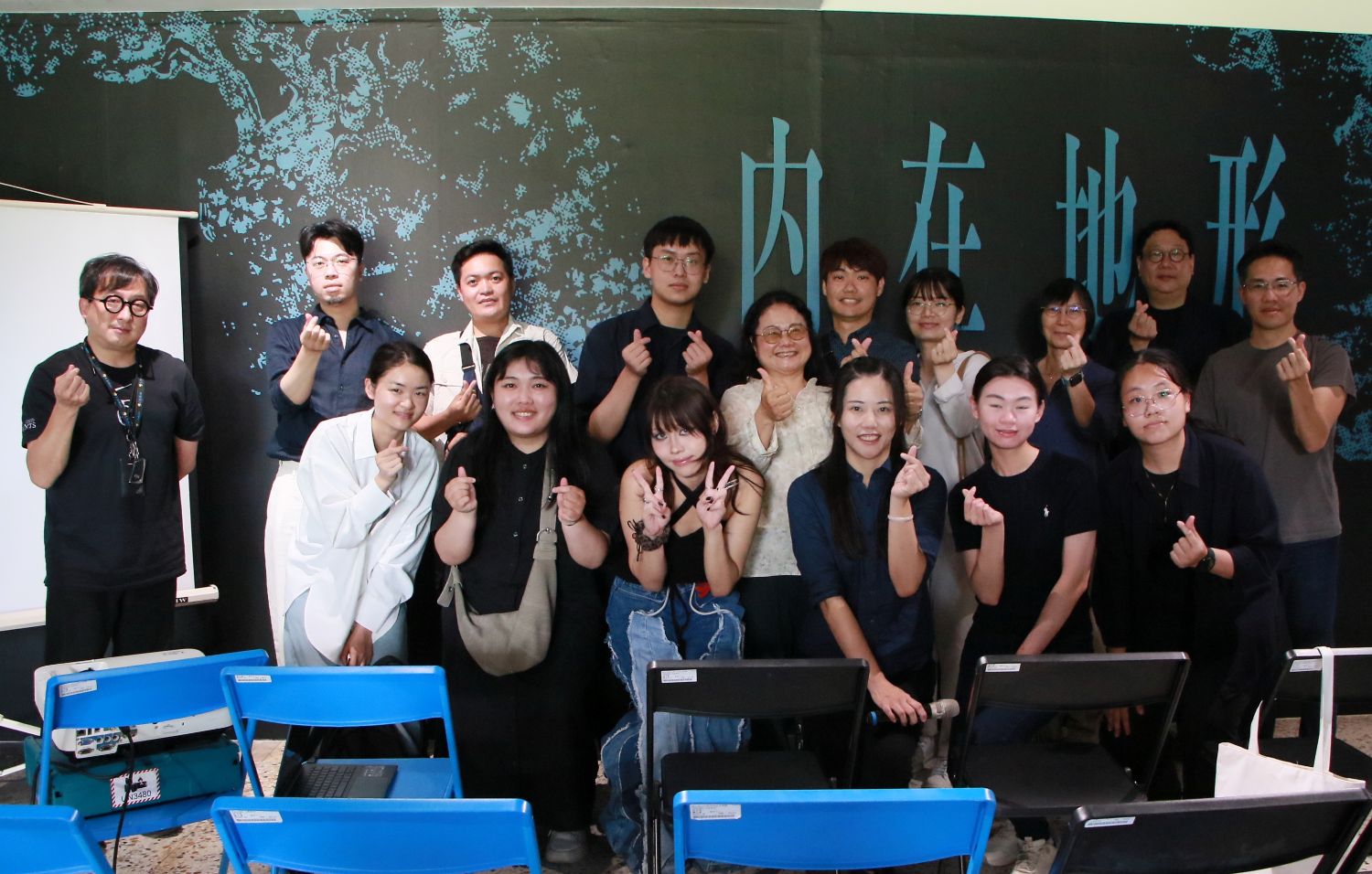
The 10th Graduate Exhibition, “Inner Topography,” of the Master’s Program in Techno Art, College of Planning and Design, NCKU, will be held from June 13 to June 20 at the NCKU Art Space.