




SDG17
NCKU Renews Purdue Pact, Expanding Semiconductor and AI Co-op
Written by NCKU Office of International Affairs & Image credit to NCKU News Center.
National Cheng Kung University (NCKU) welcomed a campus visit from Prof. Dimitrios Peroulis, Senior Vice President for Partnership and Online at Purdue University in the United States, on June 17, 2026. Witnessed by representatives from NCKU’s Office of International Affairs, Office of Research and Development, Academy of Innovative Semiconductor and Sustainable Manufacturing (AISSM), College of Bioscience and Biotechnology, College of Engineering, College of Electrical Engineering and Computer Science, and College of Medicine, a formal university-level Memorandum of Understanding (MoU) was officially renewed. The MoU was signed by Prof. Dimitrios Peroulis, Senior Vice President for Partnership and Online at Purdue University, and Executive Vice President Dist. Prof. Shyy-Woei Chang, representing NCKU. This milestone not only extends the solid friendship between the two universities that dates back to the U.S. aid era in 1952 but also brings new opportunities for future exchanges in forward-looking, strategic technological fields such as semiconductors, engineering, artificial intelligence, and online micro-credentials, jointly opening a new chapter of cooperation.
In his welcoming remarks at the opening of the meeting, Dist. Prof. Shyy-Woei Chang, Executive Vice President of NCKU, stated that NCKU and Purdue University have long maintained a deep and proud academic cooperative relationship. Over the years, the two universities have joined hands to promote the landmark “3+1+1 Dual Degree Program,” achieving fruitful results. This program has not only jointly cultivated top international talents with local care and global vision but has also deepened the academic community networks of both sides through intensive student exchanges. The renewal of this university-level cooperation agreement not only deepens the profound mutual trust between the two universities but also builds a solid academic bridge for future younger generations. Executive Vice President Chang specifically emphasized that, building upon the long-standing partnership between the two universities in the fields of engineering, electrical engineering, and computer science, NCKU looks forward to further extending the cooperative synergies of both parties into core strategic fields such as artificial intelligence, semiconductors, biotechnology, and medical engineering. Furthermore, in addition to continuously expanding the fields of dual degree programs and flexible, forward-looking online cooperation frameworks, NCKU proposed the establishment of "Cluster-to-Cluster" scientific research projects, alongside promoting diverse models such as short-term courses and summer schools, aiming to break geographical restrictions and share high-quality educational resources. Executive Vice President Chang expressed his expectation that today's gathering of representatives from various colleges will expand future research collaboration and substantive exchange opportunities in various fields, comprehensively deepening bilateral high-tech talent cultivation and innovation capabilities between Taiwan and the U.S.
During his address, Prof. Dimitrios Peroulis, Senior Vice President for Partnership and Online at Purdue University, expressed his agreement with the numerous cooperation opportunities proposed by NCKU. He pointed out that although Purdue University is a large public university with more than 50,000 students, it still takes “Excellence at Scale” as its core philosophy, maintaining top-tier research quality and emphasizing the transformation of research into substantive social impact. In the face of the global wave of artificial intelligence, he shared how Purdue University has implemented a three-stage strategy on campus, including Awareness, Activation, and Amalgamation. In addition to launching fully online AI master's degrees and micro-credential courses, the university has also mandated that starting from the fall of 2026, all undergraduate students must possess AI work proficiency to graduate. Senior Vice President Peroulis hopes to transcend geographical limitations with NCKU in the future, jointly offering micro-credentials or sharing virtual classrooms across diverse fields to create a new pattern of complementary and win-win international cooperation.
In order to implement the strategic vision of the leaders into concrete execution, this meeting also gathered representatives from various colleges of NCKU for presentations and in-depth dialogues. First, Prof. Chin-Lung Yang, Associate Vice President for International Affairs at NCKU, led the visitor to review past cooperation milestones between NCKU and Purdue University. Since 2019, NCKU and Purdue have achieved remarkable results in promoting dual degree programs in mechanical engineering, electrical engineering, and computer science, with a total of 46 NCKU students admitted to Purdue’s master’s programs. Based on these fruitful results, NCKU hopes to expand this successful dual-degree model to the fields of bioscience and biotechnology in the future. Regarding the macro-mechanism of transnational cooperation, Prof. Chia-Yih Wang, Associate Vice President for the Research and Development Office at NCKU, introduced the new “Cluster-to-Cluster” transnational cooperation framework currently being actively promoted by NCKU. This framework aims to break past point-to-point links and establish a mission-oriented bilateral cooperation ecosystem, combining the complementary strengths of both universities. In the future, it is further expected to extend cluster cooperation to cross-sector connections with industry, research institutions, and governments, guiding teams to secure long-term external funding for sustainable development.
In terms of substantive scientific research alignment among various colleges, the College of Engineering and the Academy of Innovative Semiconductor and Sustainable Manufacturing (AISSM) first demonstrated their strong engineering capabilities. Chair Prof. Yu-Lung Lo, Vice Dean of AISSM, briefly described the academy's close industry-academia alliance established with 19 benchmark enterprises, including TSMC. In addition to featuring five core clusters such as IC design and advanced packaging, the academy emphasized NCKU's geographical advantages of being adjacent to the Southern Taiwan Science Park and possessing national-level laboratory resources, expressing a strong willingness to establish semiconductor dual degree programs and customized short-term courses with Purdue in the future. Echoing the geographical advantages proposed by the semiconductor academy, Prof. Chen-Ming Kuo, Vice Dean of NCKU’s College of Engineering, reviewed the college's long history and emphasized that it has shared deep roots with Purdue University since the U.S. aid era in the 1950s, when the successful cooperation laid the foundation for NCKU's modern engineering education and practical scientific research.
In the AI field specifically mentioned by Purdue’s Senior Vice President, NCKU's College of Electrical Engineering and Computer Science also offered a corresponding response. As a cradle for giants in Taiwan's semiconductor and high-tech industries, Prof. S. Felix Wu, Dean of NCKU's College of Electrical Engineering and Computer Science, emphasized during the meeting that the college focuses on impact-oriented research and actively cooperates deeply with enterprises to advance campus AI. The goal is to explore artificial intelligence systems that possess transparency, trustworthiness, and understanding, and the college looks forward to pioneering collaboration with Purdue University in the fields of information security and artificial intelligence.
In addition to hard-tech capabilities, NCKU’s international scientific research in the fields of biomedicine and healthcare also performed brilliantly. Prof. I-Ching Chen, Vice Dean of the College of Bioscience & Biotechnology, stated that NCKU's College of Bioscience and Biotechnology possesses strong scientific research and innovation vitality, with international students accounting for 20% of the student body, and more than 40% of its papers published in top international journals. The college features three landmark research centers: The Marine Biology and Cetacean Research Center, the Orchid Research and Development Center, and the International Center for the Scientific Development of Shrimp Aquaculture. Among them, the Marine Biology and Cetacean Research Center stands as the unique facility of its kind in Taiwan. Meanwhile, the Orchid Research and Development Center leads the scientification of the industry, and the International Center for the Scientific Development of Shrimp Aquaculture is dedicated to practicing global sustainability, focusing on key shrimp species and disease-resistance research. In the future, the college looks forward to launching deeper faculty and student exchanges with Purdue University.
At the conclusion of the meeting, Assoc. Prof. Chia-Kuei Lee from the Department of Nursing briefly introduced the department's diverse curriculum design, research fields, and rich cooperation aspects with foreign partner universities in the field of nursing. The Department of Nursing is committed to constructing a comprehensive nursing knowledge system and internationalized education, and has maintained long-term faculty and student exchanges, academic mutual visits, and dual doctoral degree collaborations with multiple universities worldwide. In the future, building upon this existing solid foundation, the department will continue to deepen transnational alliances in professional research and clinical academics, joining hands to write a warm and solid conclusion to this transnational, multi-faceted cooperation.
The NCKU representatives included: Executive Vice President Dist. Prof. Shyy-Woei Chang; Prof. Wen-Tai Chiu, Vice President for International Affairs; Prof. Chin-Lung Yang, Associate Vice President for International Affairs; Prof. Chia-Yih Wang, Assoc. Vice President for Research & Development Office; Prof. S. Felix Wu, Dean of College of Electrical Engineering & Computer Science; Chair Prof. Yu-Lung Lo, Vice Dean of AISSM; Prof. Chen-Ming Kuo, Vice Dean of College of Engineering; Prof. Chih-Peng Chang, Vice Dean of College of Medicine; Prof. I-Ching Chen, Vice Dean of College of Bioscience & Biotechnology; Prof. Chun Hei Antonio Cheung, Department of Pharmacology; Assoc. Prof. Chia-Kuei Lee, Department of Nursing; Ms. Ya-Tsui Ellen Hsueh, Deputy Director, International Relations Division; Ms. Yu-Chi Tsai, Manager, Research Innovation and Development Division; Ms. Maxine Hui-Fen Yang, Executive Manager, International Relations Division; Ms. Nina Fu, Manager, International Relations Division; and Ms. Amy Chen, Manager, International Relations Division.
Provider: NCKU News Center
Date: 2026-06-18
National Cheng Kung University (NCKU) welcomed a campus visit from Prof. Dimitrios Peroulis, Senior Vice President for Partnership and Online at Purdue University in the United States, on June 17, 2026. Witnessed by representatives from NCKU’s Office of International Affairs, Office of Research and Development, Academy of Innovative Semiconductor and Sustainable Manufacturing (AISSM), College of Bioscience and Biotechnology, College of Engineering, College of Electrical Engineering and Computer Science, and College of Medicine, a formal university-level Memorandum of Understanding (MoU) was officially renewed. The MoU was signed by Prof. Dimitrios Peroulis, Senior Vice President for Partnership and Online at Purdue University, and Executive Vice President Dist. Prof. Shyy-Woei Chang, representing NCKU. This milestone not only extends the solid friendship between the two universities that dates back to the U.S. aid era in 1952 but also brings new opportunities for future exchanges in forward-looking, strategic technological fields such as semiconductors, engineering, artificial intelligence, and online micro-credentials, jointly opening a new chapter of cooperation.
In his welcoming remarks at the opening of the meeting, Dist. Prof. Shyy-Woei Chang, Executive Vice President of NCKU, stated that NCKU and Purdue University have long maintained a deep and proud academic cooperative relationship. Over the years, the two universities have joined hands to promote the landmark “3+1+1 Dual Degree Program,” achieving fruitful results. This program has not only jointly cultivated top international talents with local care and global vision but has also deepened the academic community networks of both sides through intensive student exchanges. The renewal of this university-level cooperation agreement not only deepens the profound mutual trust between the two universities but also builds a solid academic bridge for future younger generations. Executive Vice President Chang specifically emphasized that, building upon the long-standing partnership between the two universities in the fields of engineering, electrical engineering, and computer science, NCKU looks forward to further extending the cooperative synergies of both parties into core strategic fields such as artificial intelligence, semiconductors, biotechnology, and medical engineering. Furthermore, in addition to continuously expanding the fields of dual degree programs and flexible, forward-looking online cooperation frameworks, NCKU proposed the establishment of "Cluster-to-Cluster" scientific research projects, alongside promoting diverse models such as short-term courses and summer schools, aiming to break geographical restrictions and share high-quality educational resources. Executive Vice President Chang expressed his expectation that today's gathering of representatives from various colleges will expand future research collaboration and substantive exchange opportunities in various fields, comprehensively deepening bilateral high-tech talent cultivation and innovation capabilities between Taiwan and the U.S.
During his address, Prof. Dimitrios Peroulis, Senior Vice President for Partnership and Online at Purdue University, expressed his agreement with the numerous cooperation opportunities proposed by NCKU. He pointed out that although Purdue University is a large public university with more than 50,000 students, it still takes “Excellence at Scale” as its core philosophy, maintaining top-tier research quality and emphasizing the transformation of research into substantive social impact. In the face of the global wave of artificial intelligence, he shared how Purdue University has implemented a three-stage strategy on campus, including Awareness, Activation, and Amalgamation. In addition to launching fully online AI master's degrees and micro-credential courses, the university has also mandated that starting from the fall of 2026, all undergraduate students must possess AI work proficiency to graduate. Senior Vice President Peroulis hopes to transcend geographical limitations with NCKU in the future, jointly offering micro-credentials or sharing virtual classrooms across diverse fields to create a new pattern of complementary and win-win international cooperation.
In order to implement the strategic vision of the leaders into concrete execution, this meeting also gathered representatives from various colleges of NCKU for presentations and in-depth dialogues. First, Prof. Chin-Lung Yang, Associate Vice President for International Affairs at NCKU, led the visitor to review past cooperation milestones between NCKU and Purdue University. Since 2019, NCKU and Purdue have achieved remarkable results in promoting dual degree programs in mechanical engineering, electrical engineering, and computer science, with a total of 46 NCKU students admitted to Purdue’s master’s programs. Based on these fruitful results, NCKU hopes to expand this successful dual-degree model to the fields of bioscience and biotechnology in the future. Regarding the macro-mechanism of transnational cooperation, Prof. Chia-Yih Wang, Associate Vice President for the Research and Development Office at NCKU, introduced the new “Cluster-to-Cluster” transnational cooperation framework currently being actively promoted by NCKU. This framework aims to break past point-to-point links and establish a mission-oriented bilateral cooperation ecosystem, combining the complementary strengths of both universities. In the future, it is further expected to extend cluster cooperation to cross-sector connections with industry, research institutions, and governments, guiding teams to secure long-term external funding for sustainable development.
In terms of substantive scientific research alignment among various colleges, the College of Engineering and the Academy of Innovative Semiconductor and Sustainable Manufacturing (AISSM) first demonstrated their strong engineering capabilities. Chair Prof. Yu-Lung Lo, Vice Dean of AISSM, briefly described the academy's close industry-academia alliance established with 19 benchmark enterprises, including TSMC. In addition to featuring five core clusters such as IC design and advanced packaging, the academy emphasized NCKU's geographical advantages of being adjacent to the Southern Taiwan Science Park and possessing national-level laboratory resources, expressing a strong willingness to establish semiconductor dual degree programs and customized short-term courses with Purdue in the future. Echoing the geographical advantages proposed by the semiconductor academy, Prof. Chen-Ming Kuo, Vice Dean of NCKU’s College of Engineering, reviewed the college's long history and emphasized that it has shared deep roots with Purdue University since the U.S. aid era in the 1950s, when the successful cooperation laid the foundation for NCKU's modern engineering education and practical scientific research.
In the AI field specifically mentioned by Purdue’s Senior Vice President, NCKU's College of Electrical Engineering and Computer Science also offered a corresponding response. As a cradle for giants in Taiwan's semiconductor and high-tech industries, Prof. S. Felix Wu, Dean of NCKU's College of Electrical Engineering and Computer Science, emphasized during the meeting that the college focuses on impact-oriented research and actively cooperates deeply with enterprises to advance campus AI. The goal is to explore artificial intelligence systems that possess transparency, trustworthiness, and understanding, and the college looks forward to pioneering collaboration with Purdue University in the fields of information security and artificial intelligence.
In addition to hard-tech capabilities, NCKU’s international scientific research in the fields of biomedicine and healthcare also performed brilliantly. Prof. I-Ching Chen, Vice Dean of the College of Bioscience & Biotechnology, stated that NCKU's College of Bioscience and Biotechnology possesses strong scientific research and innovation vitality, with international students accounting for 20% of the student body, and more than 40% of its papers published in top international journals. The college features three landmark research centers: The Marine Biology and Cetacean Research Center, the Orchid Research and Development Center, and the International Center for the Scientific Development of Shrimp Aquaculture. Among them, the Marine Biology and Cetacean Research Center stands as the unique facility of its kind in Taiwan. Meanwhile, the Orchid Research and Development Center leads the scientification of the industry, and the International Center for the Scientific Development of Shrimp Aquaculture is dedicated to practicing global sustainability, focusing on key shrimp species and disease-resistance research. In the future, the college looks forward to launching deeper faculty and student exchanges with Purdue University.
At the conclusion of the meeting, Assoc. Prof. Chia-Kuei Lee from the Department of Nursing briefly introduced the department's diverse curriculum design, research fields, and rich cooperation aspects with foreign partner universities in the field of nursing. The Department of Nursing is committed to constructing a comprehensive nursing knowledge system and internationalized education, and has maintained long-term faculty and student exchanges, academic mutual visits, and dual doctoral degree collaborations with multiple universities worldwide. In the future, building upon this existing solid foundation, the department will continue to deepen transnational alliances in professional research and clinical academics, joining hands to write a warm and solid conclusion to this transnational, multi-faceted cooperation.
The NCKU representatives included: Executive Vice President Dist. Prof. Shyy-Woei Chang; Prof. Wen-Tai Chiu, Vice President for International Affairs; Prof. Chin-Lung Yang, Associate Vice President for International Affairs; Prof. Chia-Yih Wang, Assoc. Vice President for Research & Development Office; Prof. S. Felix Wu, Dean of College of Electrical Engineering & Computer Science; Chair Prof. Yu-Lung Lo, Vice Dean of AISSM; Prof. Chen-Ming Kuo, Vice Dean of College of Engineering; Prof. Chih-Peng Chang, Vice Dean of College of Medicine; Prof. I-Ching Chen, Vice Dean of College of Bioscience & Biotechnology; Prof. Chun Hei Antonio Cheung, Department of Pharmacology; Assoc. Prof. Chia-Kuei Lee, Department of Nursing; Ms. Ya-Tsui Ellen Hsueh, Deputy Director, International Relations Division; Ms. Yu-Chi Tsai, Manager, Research Innovation and Development Division; Ms. Maxine Hui-Fen Yang, Executive Manager, International Relations Division; Ms. Nina Fu, Manager, International Relations Division; and Ms. Amy Chen, Manager, International Relations Division.
Provider: NCKU News Center
Date: 2026-06-18
Executive Vice President Dist. Prof. Shyy-Woei Chang (right) and Prof. Dimitrios Peroulis (left), Senior Vice President for Partnership and Online at Purdue University, renewed the university-level Memorandum of Understanding on behalf of both institutions.
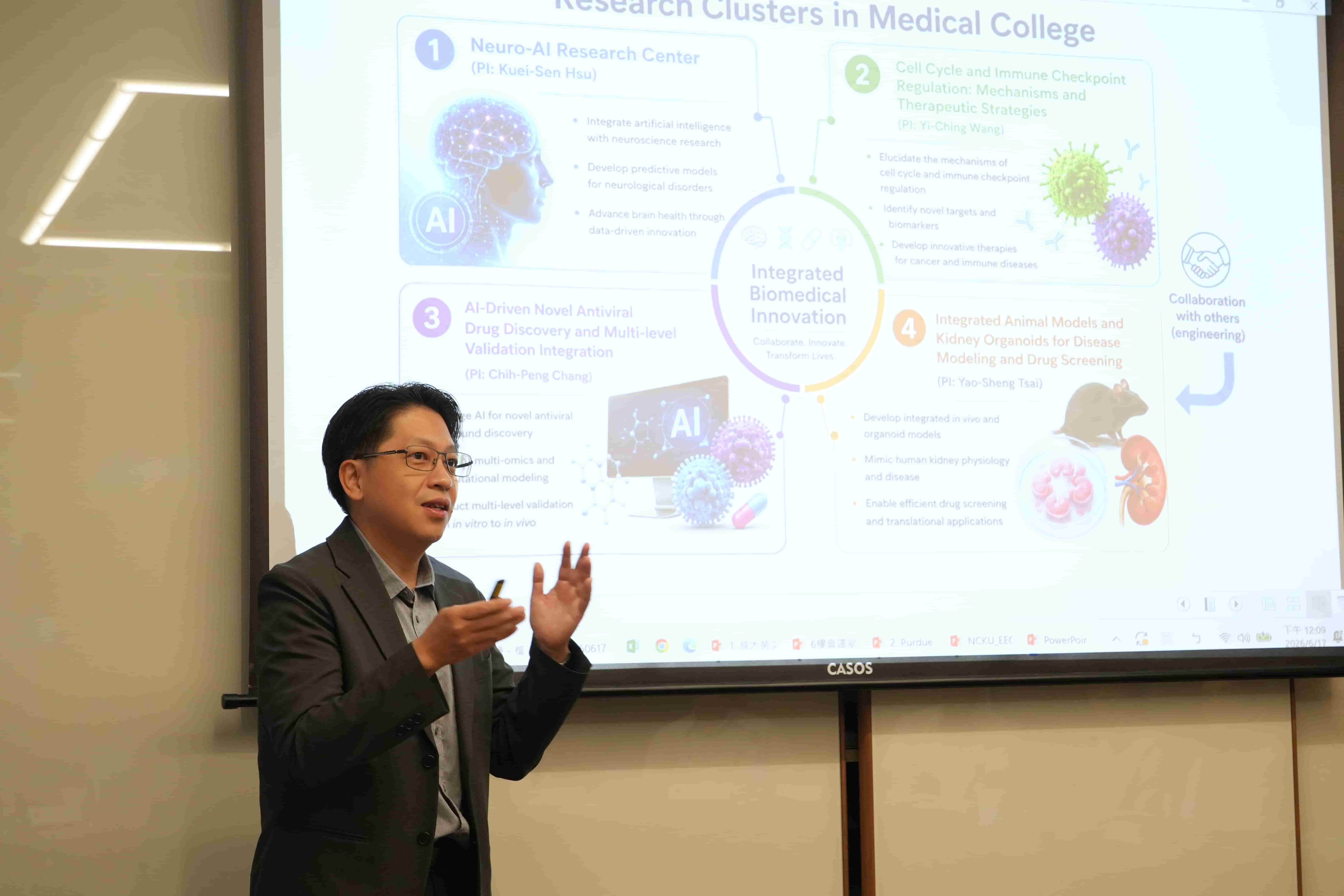
Prof. Chia-Yih Wang, Associate Vice President for the Research & Development Office at NCKU, introduces the new "Cluster-to-Cluster" transnational cooperation framework that is being promoted between NCKU and its partner universities to the visitor.
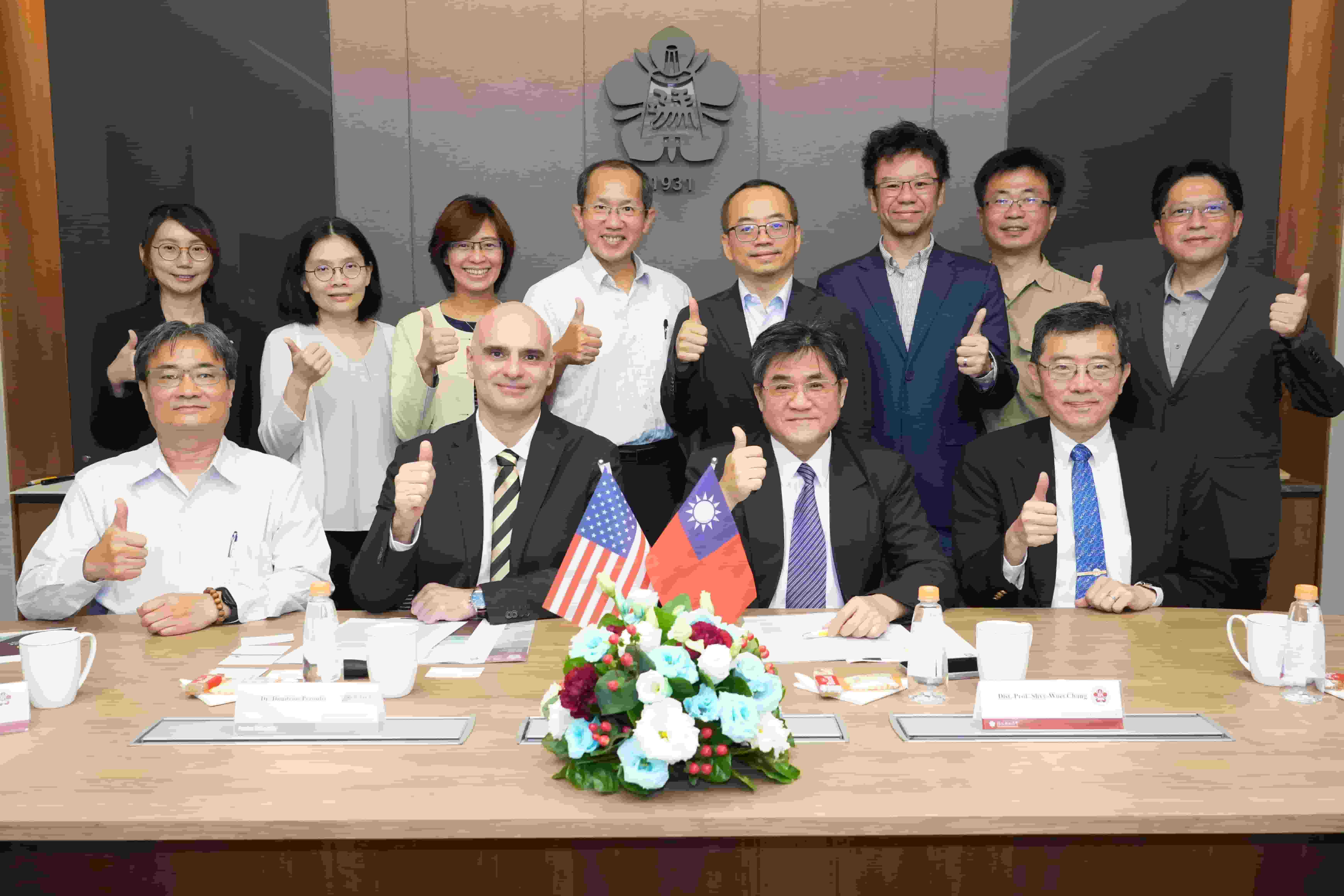
Faculty members from National Cheng Kung University and Prof. Dimitrios Peroulis (front row, second from left), Senior Vice President for Partnership and Online at Purdue University, exchange ideas and take a group photo after the signing ceremony.
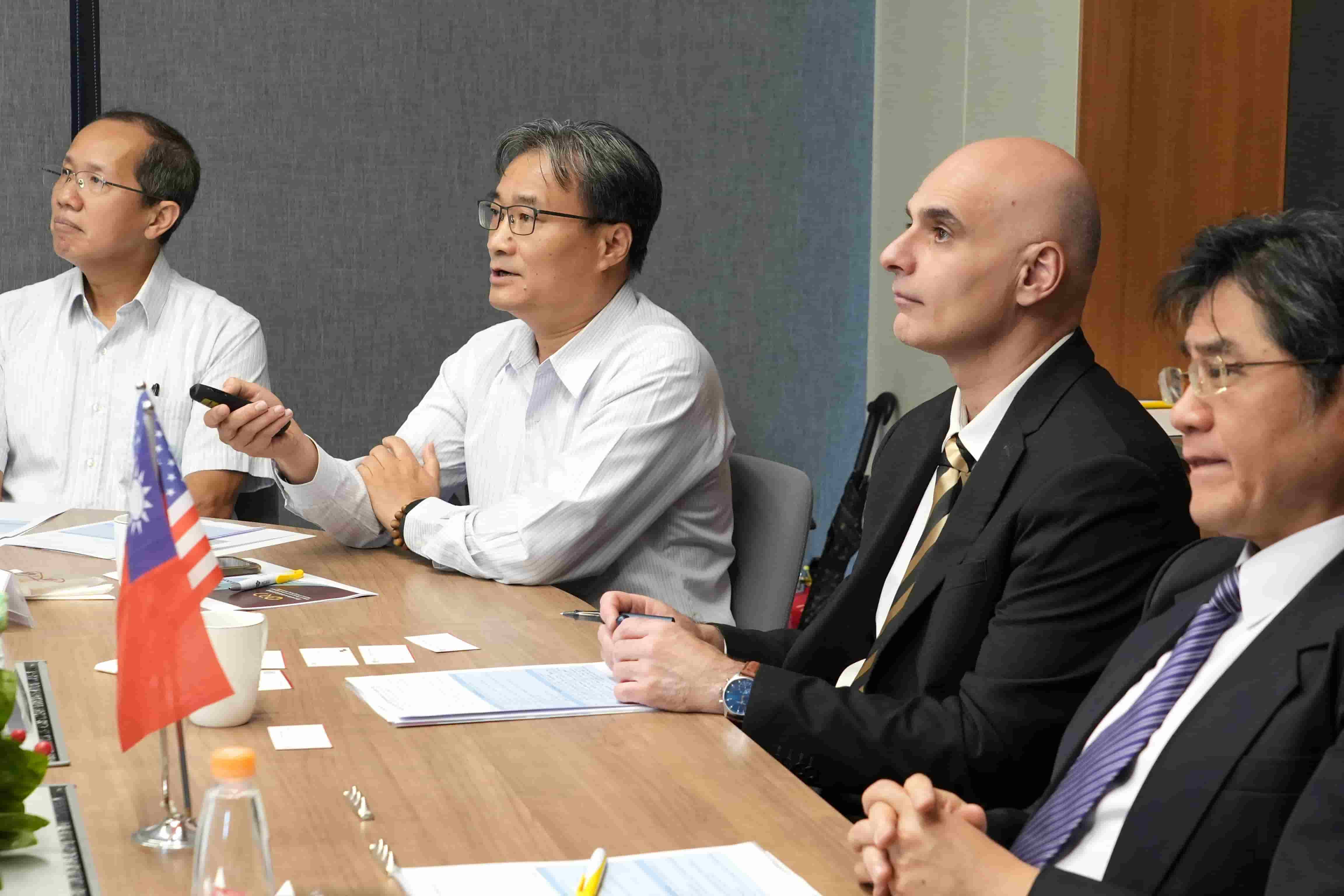
Chair Prof. Yu-Lung Lo (second from left), Vice Dean of the Academy of Innovative Semiconductor and Sustainable Manufacturing (AISSM), briefs the visitor on the academy's industry-academia alliance and the Shalun Smart Green Energy Science City.
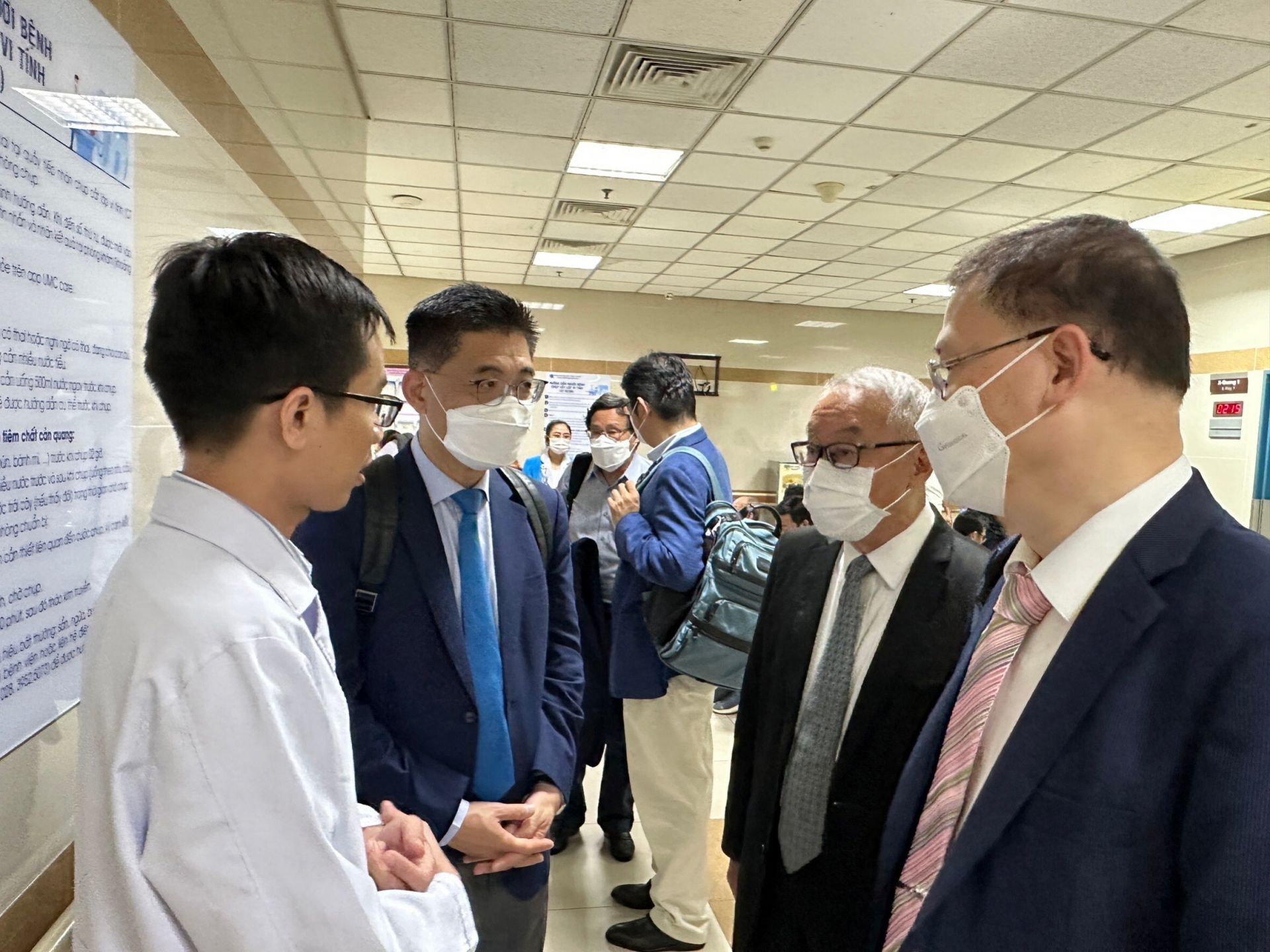
SDG17President Meng-Ru Shen Led NCKU Delegation to Visit UMP for Strengthening Scientific Collaboration.
View more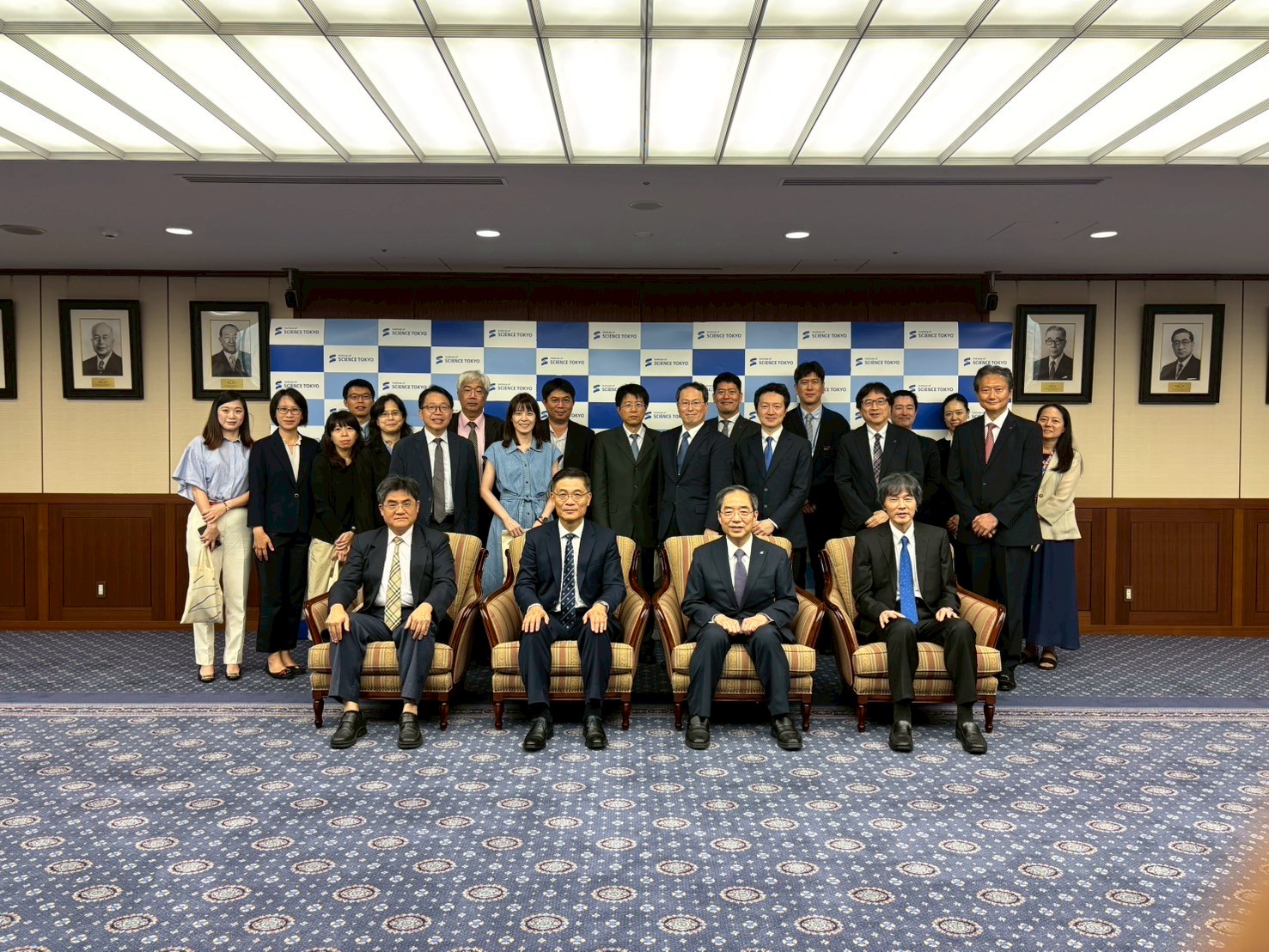
SDG17NCKU and Institute of Science Tokyo Co-organize Scientific Workshop, Highlighting Cross-Disciplinary Collaboration
View more