



SDG3
Sleep Experts Gather at NCKU as Smart Sleep Interpretation Workshop Hits Record Registration in Its 6th Year
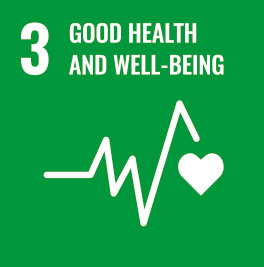

With the accelerating pace of modern life, rising workplace stress, and the advent of an aging society, sleep health has become a critical issue affecting the psychological and physical well-being of the public. To enhance the professional capabilities of domestic sleep medicine talent, the Taiwan Society of Sleep Medicine (TSSM) teamed up with prominent sleep medicine and technology research institutions—including the NCKU Hospital Sleep Medicine Center, the Department of Otolaryngology at NCKU Hospital, the NCKU Department of Computer Science and Information Engineering (CSIE), the Digital Biotech and Medical Innovation Research Center, and the Safety, Health and Sustainable Development Research Center—to host the 6th annual "Smart Sleep Interpretation Training Workshop" on June 13.
The event took place at the Mouse Lecture Hall in the NCKU Department of CSIE. Featuring lecturers from various fields, the workshop adopted a live-streamed, real-case teaching approach. By analyzing practical clinical scenarios, the program provided systematic training for sleep technologists, specialists, and related medical personnel across Taiwan, breaking geographical barriers and resource limitations to collectively elevate clinical care quality. The curriculum focused on interpretation techniques for signal anomalies during hypoxemia events. It also covered measurement methods for oxygen and carbon dioxide levels during sleep, alongside the development trends of "hypoxic burden" analysis algorithms—a highly discussed topic internationally. Additionally, the sessions delved deep into the physiological characteristics of patients with hypoventilation-type obstructive sleep apnea and obesity hypoventilation syndrome.
The event was chaired by Dr. Zheng-You Lin, Director of the NCKU Sleep Medicine Center. Dr. Li-Bang Zhuang, President of the Taiwan Society of Sleep Medicine, was specially invited to kick off the workshop, while Dr. Chung-Ping Young, Chairman of the NCKU Department of CSIE and Institute of Medical Informatics, delivered the welcome address. The opening session was led by Dr. Sheng-Yi Liu, Board Member of the Taiwan Society of Sleep Medicine, with Professor Sheng-Fu Liang from the NCKU Department of CSIE serving as the session chair. Combining years of clinical experience, Dr. Liu lectured on this year's theme, "Accurate Interpretation of the Sleep Hypoventilation Atlas," detailing case selections, participant performance, and scoring rule explanations.
Following this, Dr. Kai-Yuan Xiao from the Department of Oral and Maxillofacial Surgery at NCKU Hospital delivered a lecture titled "Hypoxic Burden Induced by Sleep Respiratory Events: Indicator Introduction, Disease Prediction, and the Potential for Paradigm Shifts." Dr. Zheng-You Lin chaired the session, which explored the vital importance of hypoxic burden in disease risk assessment and future clinical applications. The second half of the workshop featured a presentation by Mr. Chun-Sen Huang, Chairman of the Technologist Committee of the Taiwan Society of Sleep Medicine, on "Measurement of Blood Oxygen and Carbon Dioxide Related to Sleep." Mr. Wen-Gui Lin, Section Chief of the NCKU Sleep Medicine Center, chaired the session, which provided an in-depth look into blood oxygen and CO2 measurement technologies during sleep, troubleshooting common measurement issues, and establishing precise interpretation reports.
Finally, Dr. Xin-Jie Liang from the Department of Thoracic and Critical Care Medicine at China Medical University Hospital spoke on the "Characteristics of Hypoventilation Obstructive Sleep Apnea and Obesity Hypoventilation Apnea." Dr. Zong-Hua Lv, Deputy Director of the NCKU Sleep Medicine Center, served as the session chair. This session integrated expertise from sleep medicine, thoracic critical care, and pulmonary function assessment to guide participants in rethinking clinical diagnosis and treatment strategies from a highly accurate, mechanism-oriented physiological perspective.
Since its inception in 2021, the "Smart Sleep Interpretation Training Workshop" has evolved into a premier platform for professional exchange and education within Taiwan's sleep medicine sector, backed by long-term funding and credit certification from the Taiwan Society of Sleep Medicine. Registration numbers reached an all-time high in 2026. Beyond sleep technologists, the event attracted a large number of sleep specialists. In response to the dual "written + oral exam" certification system for sleep specialists, this turnout reflects a shift toward a more comprehensive and rigorous training framework for domestic sleep professionals, further elevating the workshop's depth and practical value. The event also received a research and development grant from the Worldwide Universities Network (WUN), inviting research teams from the University of Technology Sydney (UTS) and the University of Tsukuba to participate, thereby boosting the event's international visibility and fostering cross-border collaboration and talent cultivation.
Each year, the sleep workshop's theme and curriculum are designed by rotating domestic professional sleep medicine centers, ensuring that the updated content consistently reflects the latest research milestones and clinical needs. The Seed Technologist Working Group was convened by Board Member Sheng-Yi Liu, with members including Section Chief Chun-Sen Huang of China Medical University Sleep Center, Section Chief Wen-Gui Lin of Tainan NCKU Sleep Center, Section Chief Jun-Xian Zeng of Taipei Veterans General Hospital Sleep Center, and Technologist Yu-Jie Lin of Taichung Tzu Chi Sleep Center. For 2026, the core focus was set on sleep-related hypoventilation and hypoxemia to sharpen the clinical interpretation skills of sleep technologists and medical professionals, while serving as a vital reference blueprint for training and competency assessments across sleep centers nationwide. Notably, the event integrated a "Computer-Assisted Hypoxemia Detection and Intelligent Analysis Module" for the first time. Utilizing a rule-based algorithm, the system automatically identifies and flags the distinct hypoxemia interval patterns unique to patients with obesity hypoventilation syndrome. Moving forward, the integration of artificial intelligence is expected to provide more objective and reliable clinical interpretation support, ultimately enhancing the diagnosis and care quality of sleep disorders.
The event took place at the Mouse Lecture Hall in the NCKU Department of CSIE. Featuring lecturers from various fields, the workshop adopted a live-streamed, real-case teaching approach. By analyzing practical clinical scenarios, the program provided systematic training for sleep technologists, specialists, and related medical personnel across Taiwan, breaking geographical barriers and resource limitations to collectively elevate clinical care quality. The curriculum focused on interpretation techniques for signal anomalies during hypoxemia events. It also covered measurement methods for oxygen and carbon dioxide levels during sleep, alongside the development trends of "hypoxic burden" analysis algorithms—a highly discussed topic internationally. Additionally, the sessions delved deep into the physiological characteristics of patients with hypoventilation-type obstructive sleep apnea and obesity hypoventilation syndrome.
The event was chaired by Dr. Zheng-You Lin, Director of the NCKU Sleep Medicine Center. Dr. Li-Bang Zhuang, President of the Taiwan Society of Sleep Medicine, was specially invited to kick off the workshop, while Dr. Chung-Ping Young, Chairman of the NCKU Department of CSIE and Institute of Medical Informatics, delivered the welcome address. The opening session was led by Dr. Sheng-Yi Liu, Board Member of the Taiwan Society of Sleep Medicine, with Professor Sheng-Fu Liang from the NCKU Department of CSIE serving as the session chair. Combining years of clinical experience, Dr. Liu lectured on this year's theme, "Accurate Interpretation of the Sleep Hypoventilation Atlas," detailing case selections, participant performance, and scoring rule explanations.
Following this, Dr. Kai-Yuan Xiao from the Department of Oral and Maxillofacial Surgery at NCKU Hospital delivered a lecture titled "Hypoxic Burden Induced by Sleep Respiratory Events: Indicator Introduction, Disease Prediction, and the Potential for Paradigm Shifts." Dr. Zheng-You Lin chaired the session, which explored the vital importance of hypoxic burden in disease risk assessment and future clinical applications. The second half of the workshop featured a presentation by Mr. Chun-Sen Huang, Chairman of the Technologist Committee of the Taiwan Society of Sleep Medicine, on "Measurement of Blood Oxygen and Carbon Dioxide Related to Sleep." Mr. Wen-Gui Lin, Section Chief of the NCKU Sleep Medicine Center, chaired the session, which provided an in-depth look into blood oxygen and CO2 measurement technologies during sleep, troubleshooting common measurement issues, and establishing precise interpretation reports.
Finally, Dr. Xin-Jie Liang from the Department of Thoracic and Critical Care Medicine at China Medical University Hospital spoke on the "Characteristics of Hypoventilation Obstructive Sleep Apnea and Obesity Hypoventilation Apnea." Dr. Zong-Hua Lv, Deputy Director of the NCKU Sleep Medicine Center, served as the session chair. This session integrated expertise from sleep medicine, thoracic critical care, and pulmonary function assessment to guide participants in rethinking clinical diagnosis and treatment strategies from a highly accurate, mechanism-oriented physiological perspective.
Since its inception in 2021, the "Smart Sleep Interpretation Training Workshop" has evolved into a premier platform for professional exchange and education within Taiwan's sleep medicine sector, backed by long-term funding and credit certification from the Taiwan Society of Sleep Medicine. Registration numbers reached an all-time high in 2026. Beyond sleep technologists, the event attracted a large number of sleep specialists. In response to the dual "written + oral exam" certification system for sleep specialists, this turnout reflects a shift toward a more comprehensive and rigorous training framework for domestic sleep professionals, further elevating the workshop's depth and practical value. The event also received a research and development grant from the Worldwide Universities Network (WUN), inviting research teams from the University of Technology Sydney (UTS) and the University of Tsukuba to participate, thereby boosting the event's international visibility and fostering cross-border collaboration and talent cultivation.
Each year, the sleep workshop's theme and curriculum are designed by rotating domestic professional sleep medicine centers, ensuring that the updated content consistently reflects the latest research milestones and clinical needs. The Seed Technologist Working Group was convened by Board Member Sheng-Yi Liu, with members including Section Chief Chun-Sen Huang of China Medical University Sleep Center, Section Chief Wen-Gui Lin of Tainan NCKU Sleep Center, Section Chief Jun-Xian Zeng of Taipei Veterans General Hospital Sleep Center, and Technologist Yu-Jie Lin of Taichung Tzu Chi Sleep Center. For 2026, the core focus was set on sleep-related hypoventilation and hypoxemia to sharpen the clinical interpretation skills of sleep technologists and medical professionals, while serving as a vital reference blueprint for training and competency assessments across sleep centers nationwide. Notably, the event integrated a "Computer-Assisted Hypoxemia Detection and Intelligent Analysis Module" for the first time. Utilizing a rule-based algorithm, the system automatically identifies and flags the distinct hypoxemia interval patterns unique to patients with obesity hypoventilation syndrome. Moving forward, the integration of artificial intelligence is expected to provide more objective and reliable clinical interpretation support, ultimately enhancing the diagnosis and care quality of sleep disorders.
The Smart Sleep Interpretation Training Workshop officially enters its sixth year in 2026.
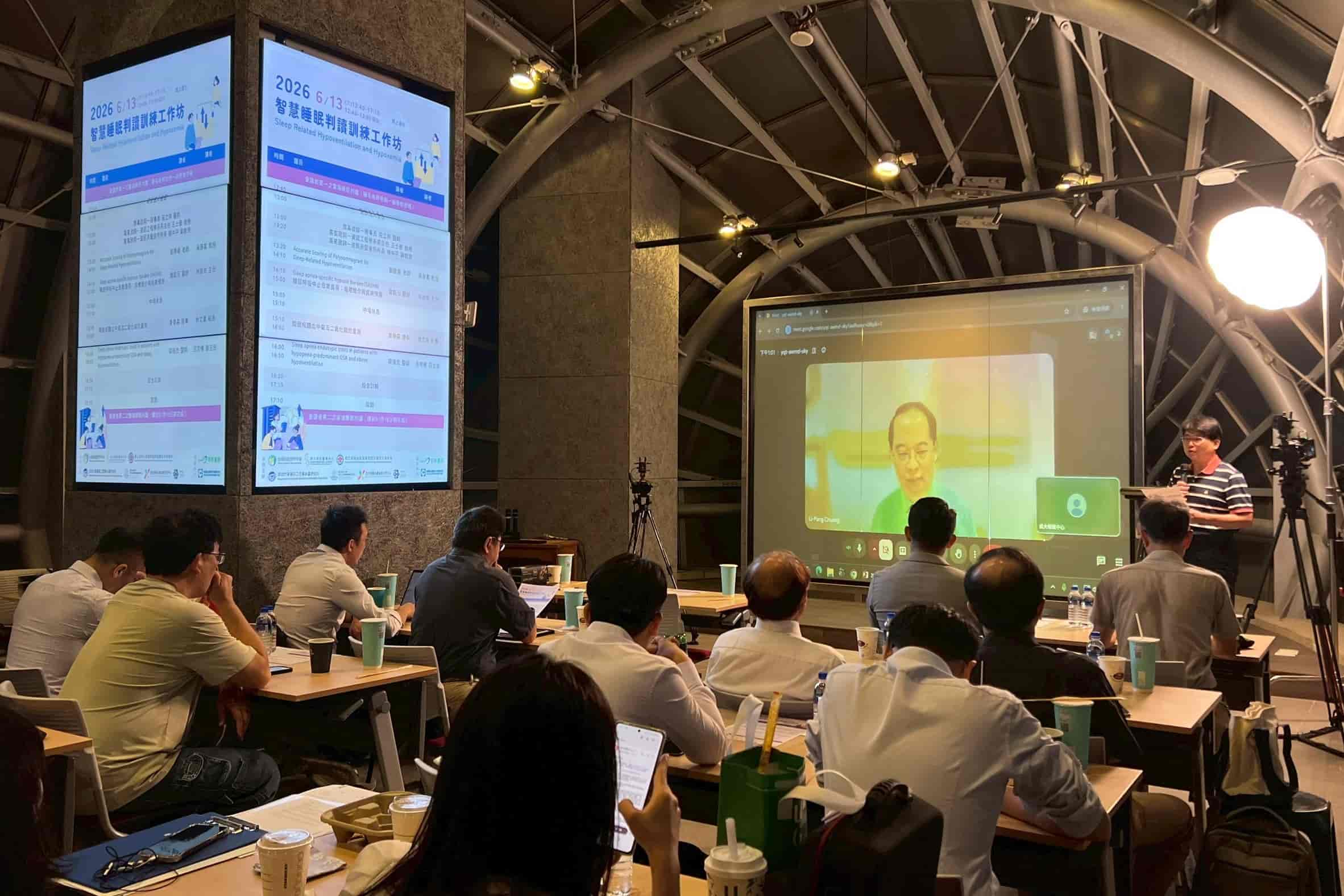
Dr. Li-Bang Zhuang, President of the Taiwan Society of Sleep Medicine, was invited to deliver the opening remarks online, officially kicking off the event.
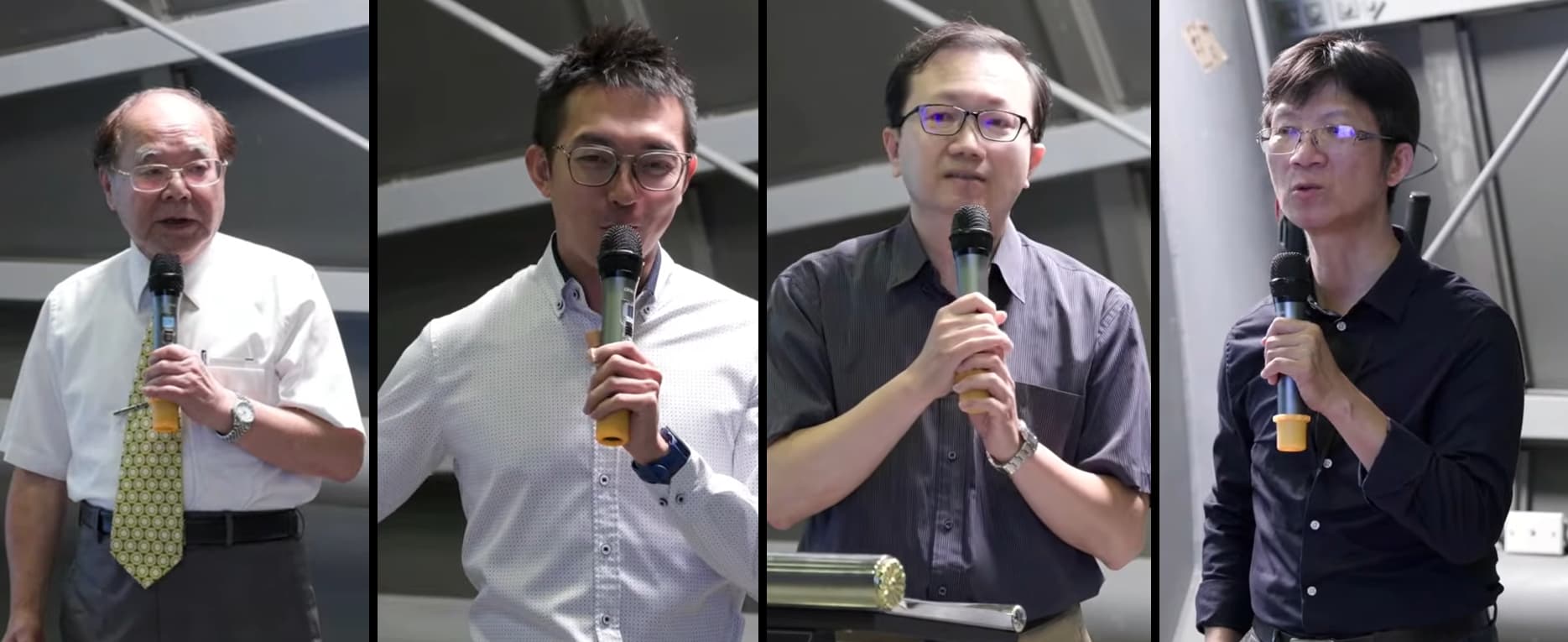
From left: Board Member Sheng-Yi Liu, Dr. Kai-Yuan Xiao, Committee Chairman Chun-Sen Huang, and Dr. Xin-Jie Liang serving as workshop lecturers.

The 2026 sleep workshop was met with enthusiastic acclaim, concluding the event on a highly successful note.