



SDG13
NCKU Team Presents Interdisciplinary Landslide Dam Studies at 15th ICEO&SI


By NCKU News Center
National Cheng Kung University (NCKU) and the Taiwan Society of Earth Observations co-hosted "the 15th International Conference on Earth Observations & Societal Impacts" (ICEO&SI 2026) in Tainan from July 2 to July 3. The conference hosted two special sessions dedicated to the Mataian River landslide dam event in Hualien, aiming to explore the latest research outcomes and applications of Earth observation technologies in landslide dam disasters, climate change, marine environments, and sustainable development with experts and scholars from around the globe.
Conference Chair Prof. Dong-Jiing Doong, Chair of the Department of Hydraulic and Ocean Engineering and Director of the Coastal Ocean Monitoring Center at NCKU, stated that extreme climate events have occurred frequently worldwide in recent years, with compound disasters such as heatwaves, droughts, torrential rains, landslides, sea level rise, and marine heatwaves intensifying daily. Traditional single-disciplinary approaches can no longer cope with the challenges of compound disasters. Earth observation technology—combining satellite remote sensing, radar, global navigation satellite systems, oceanographic buoys, artificial intelligence, and numerical models—not only enhances environmental monitoring capabilities, but also gradually moves toward disaster early warning, risk assessment, and resilient governance, serving as an important foundation for global disaster prevention and sustainable development.
During his opening remarks, Prof. Dong-Jiing Doong stated that themed "From Mountains to Oceans: Building a Resilient Future through Earth Observation," this conference invited experts and scholars from multiple countries, including Taiwan, Japan, Canada, India, Vietnam, Indonesia, and Thailand. Topics spanned landslide dam disasters, Earth observation, ocean observation, extreme weather, droughts and heatwaves, water resource management, polar observation, GNSS remote sensing, radar ocean observation, artificial intelligence, and smart oceans. Among these, the heatwave and drought special session focused on satellite remote sensing combined with AI analysis of the urban heat island effect, drought monitoring, and climate change impacts to help governments strengthen water resource adaptation strategies; water resource management explored new technologies under climate change for reservoirs, groundwater, and watershed management, demonstrating Taiwan's profound research capabilities.
This conference specially arranged the "Mataian Landslide Dam Formation, Investigation, Monitoring, and Governance" special session to share key research achievements from the NCKU team's recent efforts in investigating and analyzing the Hualien Mataian landslide dam disaster. Following the massive landslide in the Hualien mountain area in 2025 that formed a natural landslide dam, NCKU formed a cross-disciplinary research team integrating hydraulic engineering, topography, geology, remote sensing, public health, and artificial intelligence to conduct deep investigations and monitoring in the disaster zone, establishing an integrated research framework for landslide dam formation, breaching, flooding, sediment transport, and watershed resilience governance.
At this conference, the NCKU team presented multiple related studies, including: Mataian River Landslide Dam Incident: From Formation and Disaster to Watershed Resilience Governance; An Integrated Framework for Risk Management and Watershed Resilience Governance of Mataian River Landslide Dam; Topographic Changes and Flood Simulations Before and After the Mataian River Landslide Dam Event; Microbial Community Diversity Analysis of High-Concentration Fluid Sediments in Mataian Incident; Post-Disaster Infectious Disease Early Warning System—Integrated Monitoring of Environment, Vectors, and Epidemiology; Simulation of Overflow and Outflow Evolution of Mataian River Landslide Dam; and Quantitative Analysis of Unstable Sediment Sources from Mataian Landslide. These studies demonstrate a rare interdisciplinary research capability domestic-wise that combines engineering, environment, soil, and medical public health, aiming to establish an important scientific foundation for facing future large-scale slope disasters and landslide dam events, thereby improving disaster prevention decision-making capabilities and watershed governance resilience.
Following the disaster, the government devoted substantial effort to emergency response and recovery. In 2026, NCKU established the "NCKU Science Station" in Hualien. To avoid duplicating resources, the team focuses on providing information to the government from a scientific research perspective to translate academic knowledge into real-world applications. This aligns with the vision consistently emphasized by NCKU President Meng-Ru Shen. NCKU will continue to deepen its local engagement, working in close collaboration with NGO organizations through regular meetings to transform NCKU's academic energy into concrete assistance for national reconstruction.
Currently, observing high-concentration sediment presents practical difficulties, particularly regarding real-time monitoring. NCKU will establish a high-concentration sediment observation station along the Mataian River, utilizing optical and acoustic principles to observe high-concentration mudflows. Such real-time monitoring technology is world-leading, and it is hoped that in the future, it can be applied not only to rivers in Taiwan but also across the globe. Furthermore, for subsequent simulations of high-concentration mudflows, the team hopes to apply AI models to introduce fast computation, enhancing decision-making and governance efficiency.
The conference invited internationally renowned scholars to deliver keynote speeches, including Prof. Sunil Kumar De (India), President of the International Association of Geomorphologists; Prof. Takashi Oguchi, President of the Japan Geoscience Union; Prof. Weiming Huang from Canada; Prof. Kaoru Ichikawa from Kyushu University, Japan; and Director Kim Anh Nguyen from the Vietnam Space Center. They shared the latest research outcomes in glacial lake hazards, radar ocean remote sensing, and satellite ocean observation, fostering exchanges and cooperation between Taiwanese and international academic communities.
"The 15th International Conference on Earth Observations & Societal Impacts" attracted over a hundred scholars worldwide. The conference extended special thanks for the strong support from industry, government, academic, and research entities, including the Public Construction Commission, Executive Yuan; the Ocean Affairs Council; the Ministry of the Interior; the National Land Surveying and Mapping Center, Ministry of the Interior; the Agency of Rural Development and Soil and Water Conservation, Ministry of Agriculture; the Sinotech Foundation for Research & Development; and the College of Engineering at NCKU. Together, they promote the alignment of Taiwan's Earth observation technology with international standards and enhance Taiwan's international influence in landslide dam disasters, climate change adaptation, disaster prevention technology, and sustainable development. Moving forward, it is hoped that this international conference platform will promote collaboration among scholars worldwide to continuously advance Earth observation technology innovation, deepen overall observation capabilities across mountain areas, rivers, coasts, and oceans, and hand-in-hand build a safer, more resilient, and more sustainable future.
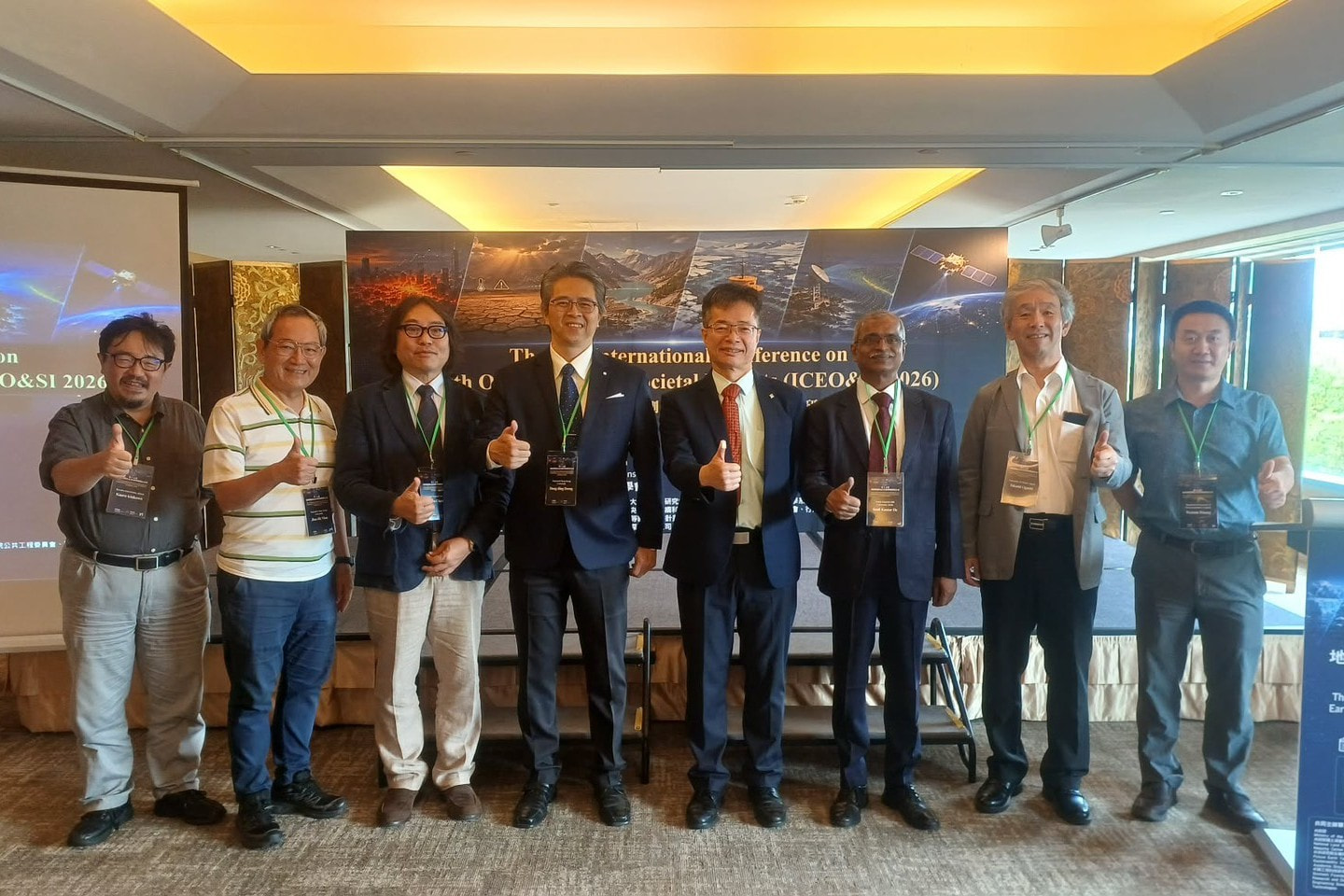
From left to right: Prof. Kaoru Ichikawa (Kyushu University, Japan); Emeritus Professor Chun-Yi Miao (NCKU); Prof. Hua Chien, President of the Taiwan Society of Earth Observations (National Central University); Conference Chair Prof. Dong-Jiing Doong, Department Chair (NCKU); Academician Yuei-An Liou, Founding President of the Taiwan Society of Earth Observations and Chair Professor (National Central University); Prof. Sunil Kumar De, President of the International Association of Geomorphologists; Prof. Takashi Oguchi, President of the Japan Geoscience Union; Prof. Weiming Huang (Memorial University of Newfoundland, Canada).
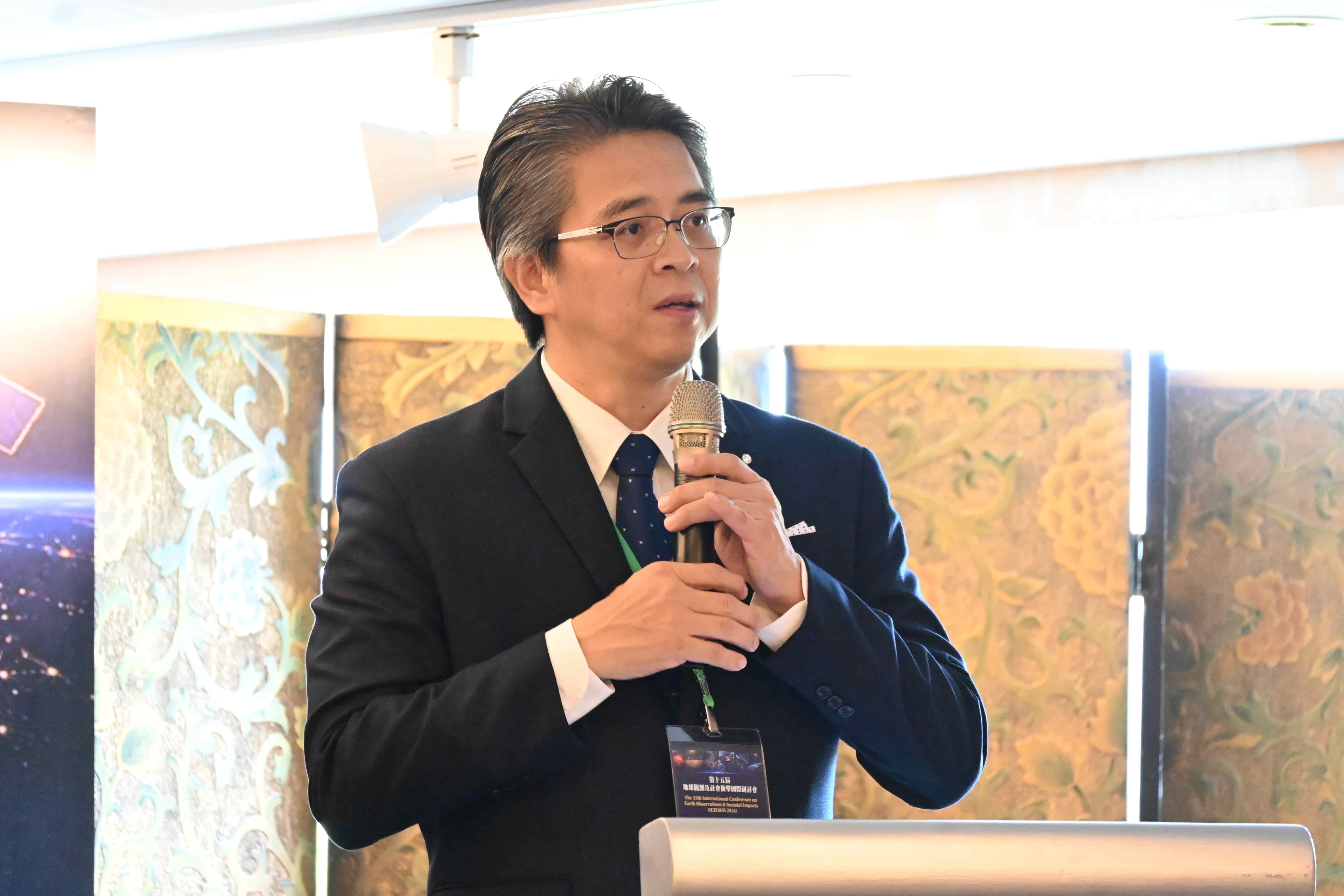
Conference Chair Prof. Dong-Jiing Doong, Chair of the Department of Hydraulic and Ocean Engineering and Director of the Coastal Ocean Monitoring Center at NCKU, stated that extreme climate events have occurred frequently worldwide in recent years, expressing hopes to engage in discussions with experts and scholars from multiple countries globally.
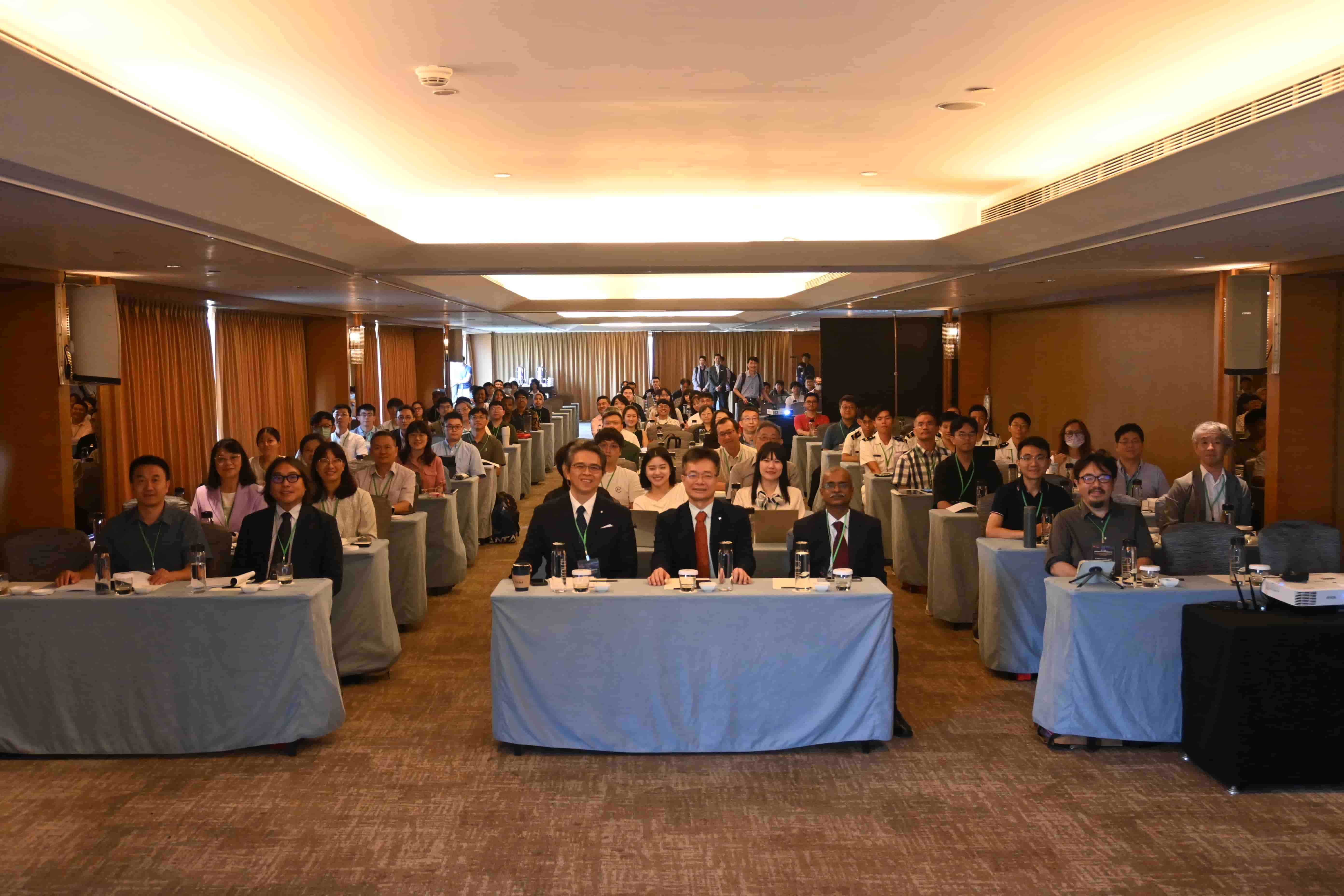
NCKU and the Taiwan Society of Earth Observations co-hosted "the 15th International Conference on Earth Observations & Societal Impacts," where the NCKU team presented multiple interdisciplinary research outcomes on landslide dam disasters.
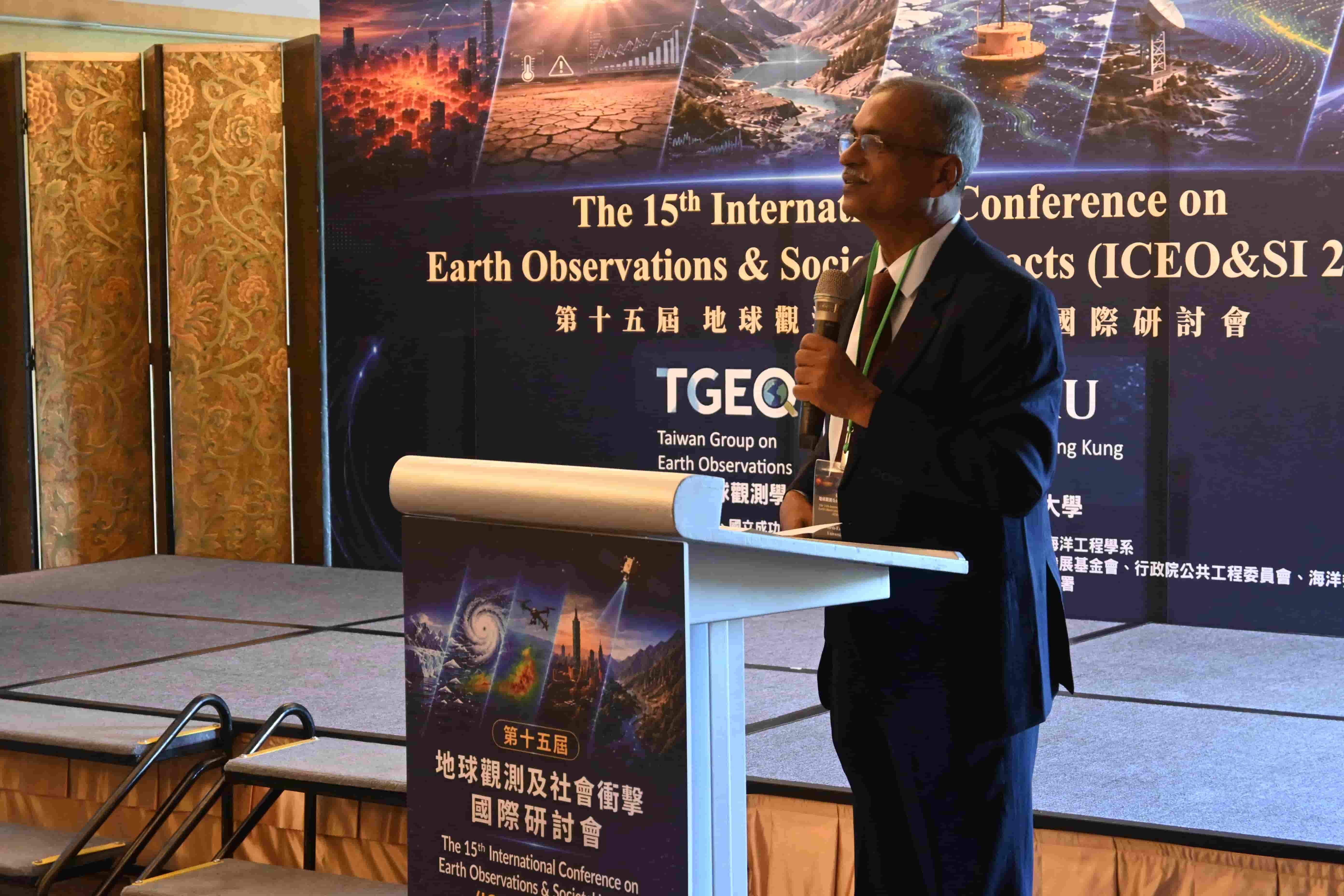
The conference brought together experts and scholars from multiple countries, including Taiwan, Japan, Canada, India, Vietnam, Indonesia, and Thailand.