



SDG16
"All Maps Lead Back to Tainan: Seeking Tainan's White Terror Memories" Exhibition Opens July 15 - Aug 30
By Department of History, NCKU
The exhibition "All Maps Lead Back to Tainan: Seeking Tainan's White Terror Memories," promoted under the "Transitional Justice Story Map Project" commissioned by the Ministry of Education, officially opened on July 15 at the Former Residence of Tang Te-Chang. Curated by the Department of History at National Cheng Kung University (NCKU) and the 20s Team, the exhibition builds upon 6 NCKU human rights story maps produced in recent years (Sheng-Da Wu, Zu-Quan Huang, Jie-De Zhang, Guo-Wei Xu, Chuan He, and Chin-Sheng Chen). Through diverse media including "characters," "space," and "sound," it guides audiences to understand the history of White Terror in Tainan's city and campus, showcasing the achievements of the younger generation in public history and human rights education. The exhibition will run until August 30, and the public is welcome to visit.
Since 2021, the 20s Team has been developing NCKU's "Human Rights Story Maps," combing through political cases and life experiences involving faculty and students who once studied at the Taiwan Provincial College of Engineering (now NCKU) and its affiliated vocational high school. These individuals include Sheng-Da Wu, a Teaching Assistant in the Physics Department at Taiwan Provincial College of Engineering; Zu-Quan Huang, a Teaching Assistant in the Department of Architecture; Guo-Wei Xu, a teacher at the Affiliated Senior Industrial Vocational Continuing Education High School of Taiwan Provincial College of Engineering; Jie-De Zhang, a night-school student at the affiliated high school; Chuan He, a teacher at Tainan Industrial Vocational School; and Chin-Sheng Chen, a student in the Department of Chemistry at NCKU. The life stories of these individuals not only reflect how state power intervened in campuses and society during the authoritarian era, but also demonstrate human choices and encounters when facing historical circumstances.
Additionally, the team has organized multiple "Human Rights Mini-Tours" based on the story map contents. In 2025, supported by the NCKU Exploring Tainan Office, the human rights mini-tour routes were incorporated as one of the routes in NCKU's university-wide general education course "Exploring Tainan." Part of the current exhibition content extracts feedback from nearly 700 students across the university who participated in this route.
The large map presented in the exhibition covers Tainan's urban area in the 1950s, displaying many spaces from the daily lives of Tainan citizens and NCKU students. It aims to focus public attention on daily life, imbuing spaces with new historical significance through personal life stories. The story maps interconnect time, characters, and locations, leading audiences to observe interpersonal relationships, ideological shifts, and life trajectories prior to the occurrence of political cases, thereby understanding how political cases took shape step-by-step rather than merely focusing on the tragic outcomes.
The curatorial units hope that through "story maps", a translation method balancing intellectual depth and public engagement, the threshold for the public to approach human rights issues can be lowered, enabling more people to start from daily life experiences and understand how history remains closely tied to today's city and campus. The exhibition "All Maps Lead Back to Tainan: Seeking Tainan's White Terror Memories" serves as an invitation for the public to walk into the city and campus to rediscover those history chapters that once occurred nearby yet were gradually forgotten.
The exhibition "All Maps Lead Back to Tainan: Seeking Tainan's White Terror Memories," promoted under the "Transitional Justice Story Map Project" commissioned by the Ministry of Education, officially opened on July 15 at the Former Residence of Tang Te-Chang. Curated by the Department of History at National Cheng Kung University (NCKU) and the 20s Team, the exhibition builds upon 6 NCKU human rights story maps produced in recent years (Sheng-Da Wu, Zu-Quan Huang, Jie-De Zhang, Guo-Wei Xu, Chuan He, and Chin-Sheng Chen). Through diverse media including "characters," "space," and "sound," it guides audiences to understand the history of White Terror in Tainan's city and campus, showcasing the achievements of the younger generation in public history and human rights education. The exhibition will run until August 30, and the public is welcome to visit.
Since 2021, the 20s Team has been developing NCKU's "Human Rights Story Maps," combing through political cases and life experiences involving faculty and students who once studied at the Taiwan Provincial College of Engineering (now NCKU) and its affiliated vocational high school. These individuals include Sheng-Da Wu, a Teaching Assistant in the Physics Department at Taiwan Provincial College of Engineering; Zu-Quan Huang, a Teaching Assistant in the Department of Architecture; Guo-Wei Xu, a teacher at the Affiliated Senior Industrial Vocational Continuing Education High School of Taiwan Provincial College of Engineering; Jie-De Zhang, a night-school student at the affiliated high school; Chuan He, a teacher at Tainan Industrial Vocational School; and Chin-Sheng Chen, a student in the Department of Chemistry at NCKU. The life stories of these individuals not only reflect how state power intervened in campuses and society during the authoritarian era, but also demonstrate human choices and encounters when facing historical circumstances.
Additionally, the team has organized multiple "Human Rights Mini-Tours" based on the story map contents. In 2025, supported by the NCKU Exploring Tainan Office, the human rights mini-tour routes were incorporated as one of the routes in NCKU's university-wide general education course "Exploring Tainan." Part of the current exhibition content extracts feedback from nearly 700 students across the university who participated in this route.
The large map presented in the exhibition covers Tainan's urban area in the 1950s, displaying many spaces from the daily lives of Tainan citizens and NCKU students. It aims to focus public attention on daily life, imbuing spaces with new historical significance through personal life stories. The story maps interconnect time, characters, and locations, leading audiences to observe interpersonal relationships, ideological shifts, and life trajectories prior to the occurrence of political cases, thereby understanding how political cases took shape step-by-step rather than merely focusing on the tragic outcomes.
The curatorial units hope that through "story maps", a translation method balancing intellectual depth and public engagement, the threshold for the public to approach human rights issues can be lowered, enabling more people to start from daily life experiences and understand how history remains closely tied to today's city and campus. The exhibition "All Maps Lead Back to Tainan: Seeking Tainan's White Terror Memories" serves as an invitation for the public to walk into the city and campus to rediscover those history chapters that once occurred nearby yet were gradually forgotten.
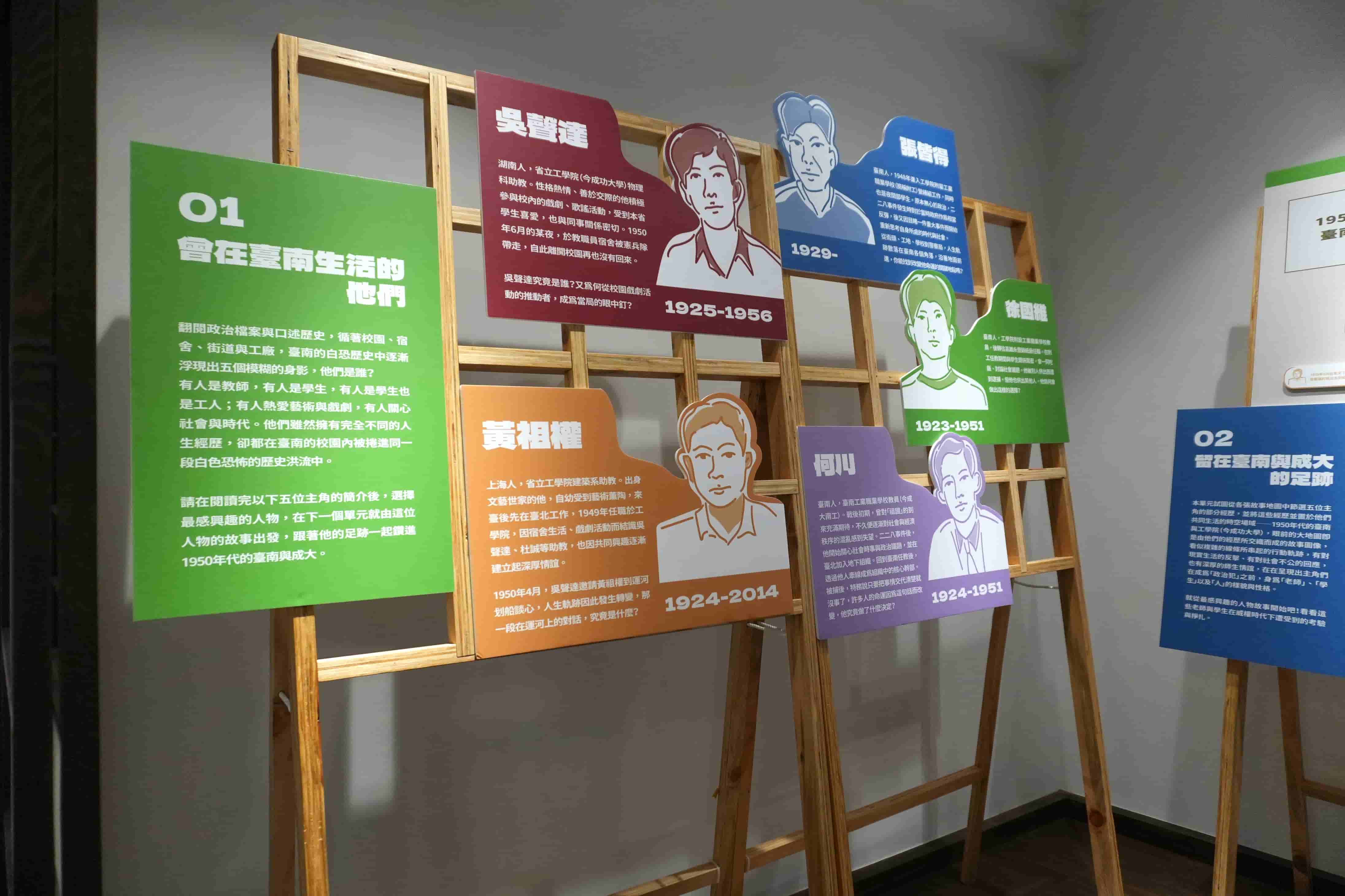
The first unit of the exhibition introduces 5 faculty members and students who once lived at NCKU.
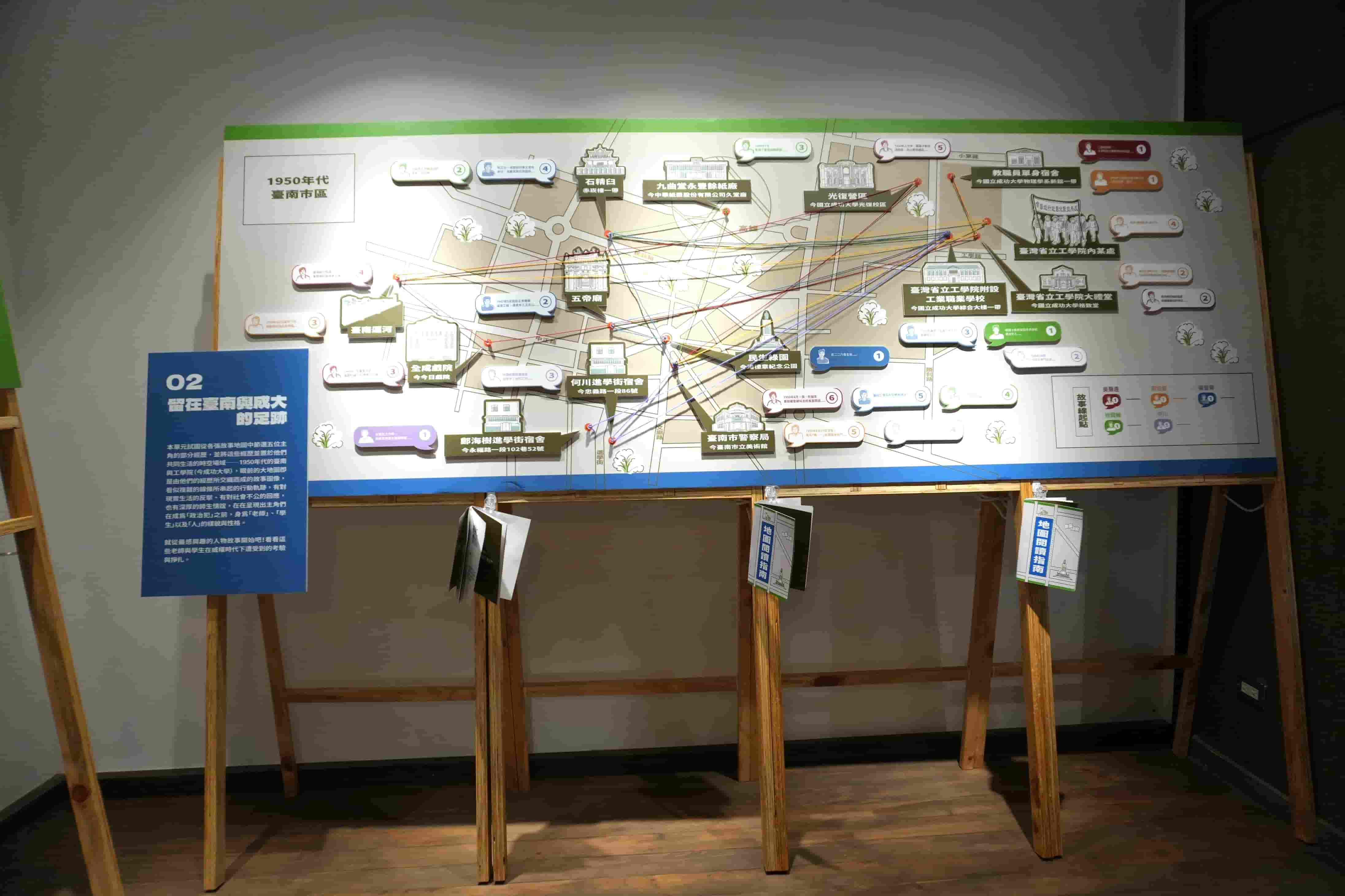
The second unit of the exhibition presents the action trajectories of five faculty members and students in the form of a large map.
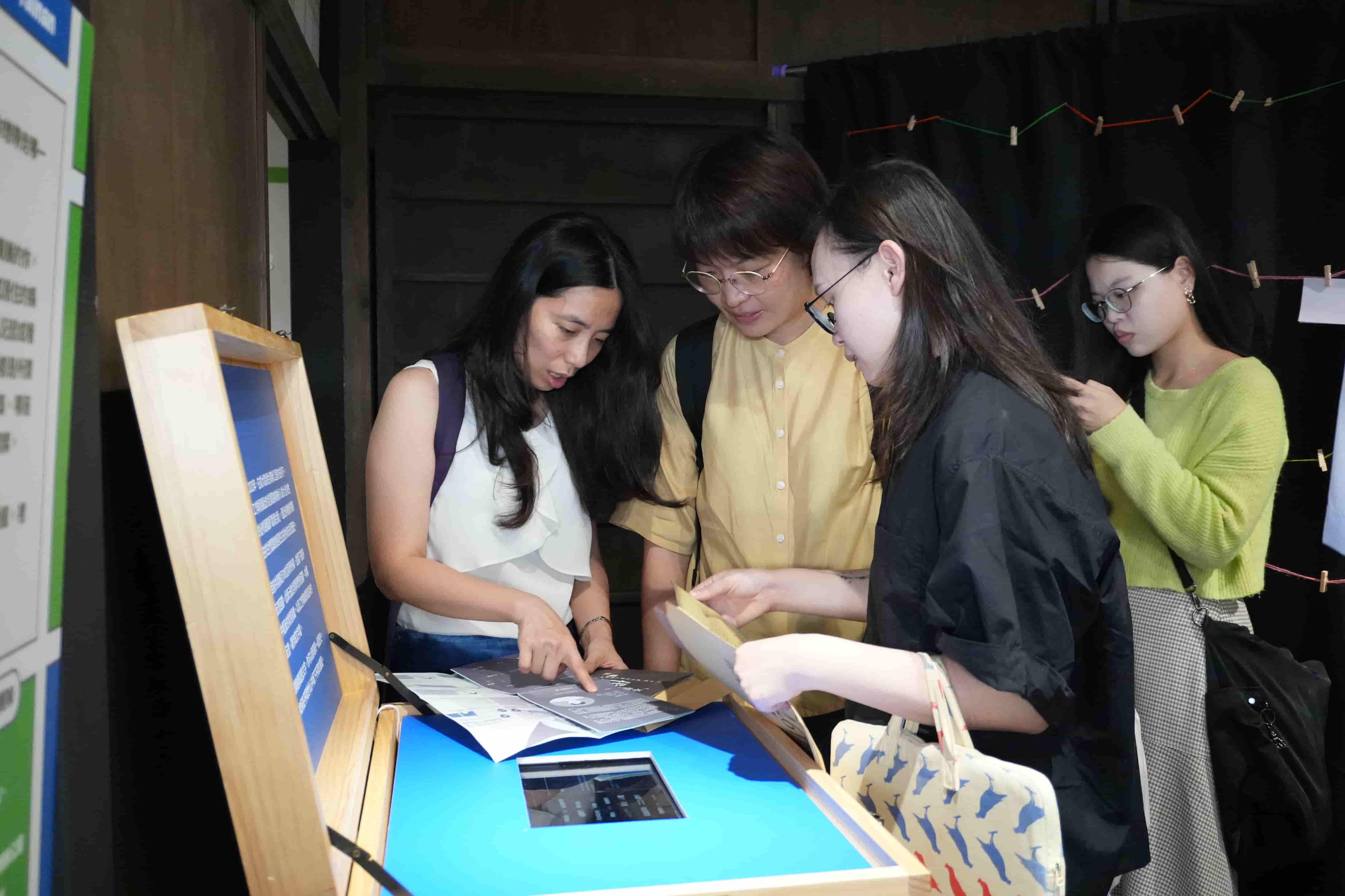
The exhibition utilizes "sound" and "word clouds" as curatorial elements.
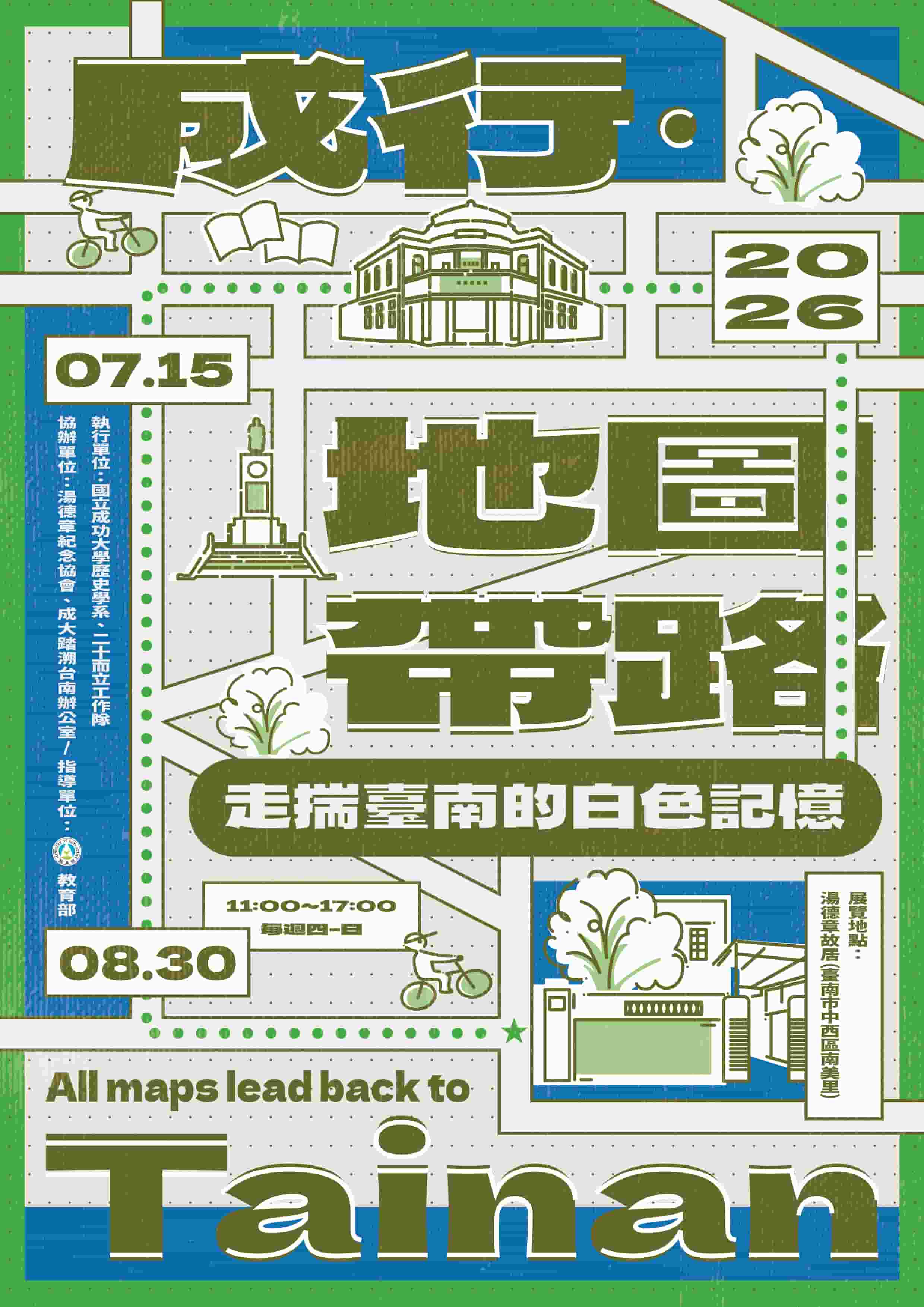
The exhibition will run until August 30, and the public is welcome to visit.
SDG16AIT Soliciting Technological Proposals to Promote Fishermen's Rights NCKU Team Won R&D Grants
View more
SDG16NCKU Art Center presents the solo exhibition "Traumatic Landscapes, Cognitive Maps, and Memory Architecture" by Yun-Yi Liu.
View more