



SDG11
NCKU Department of Architecture Redefines Coastal Culture at Taoyuan Land Art Festival
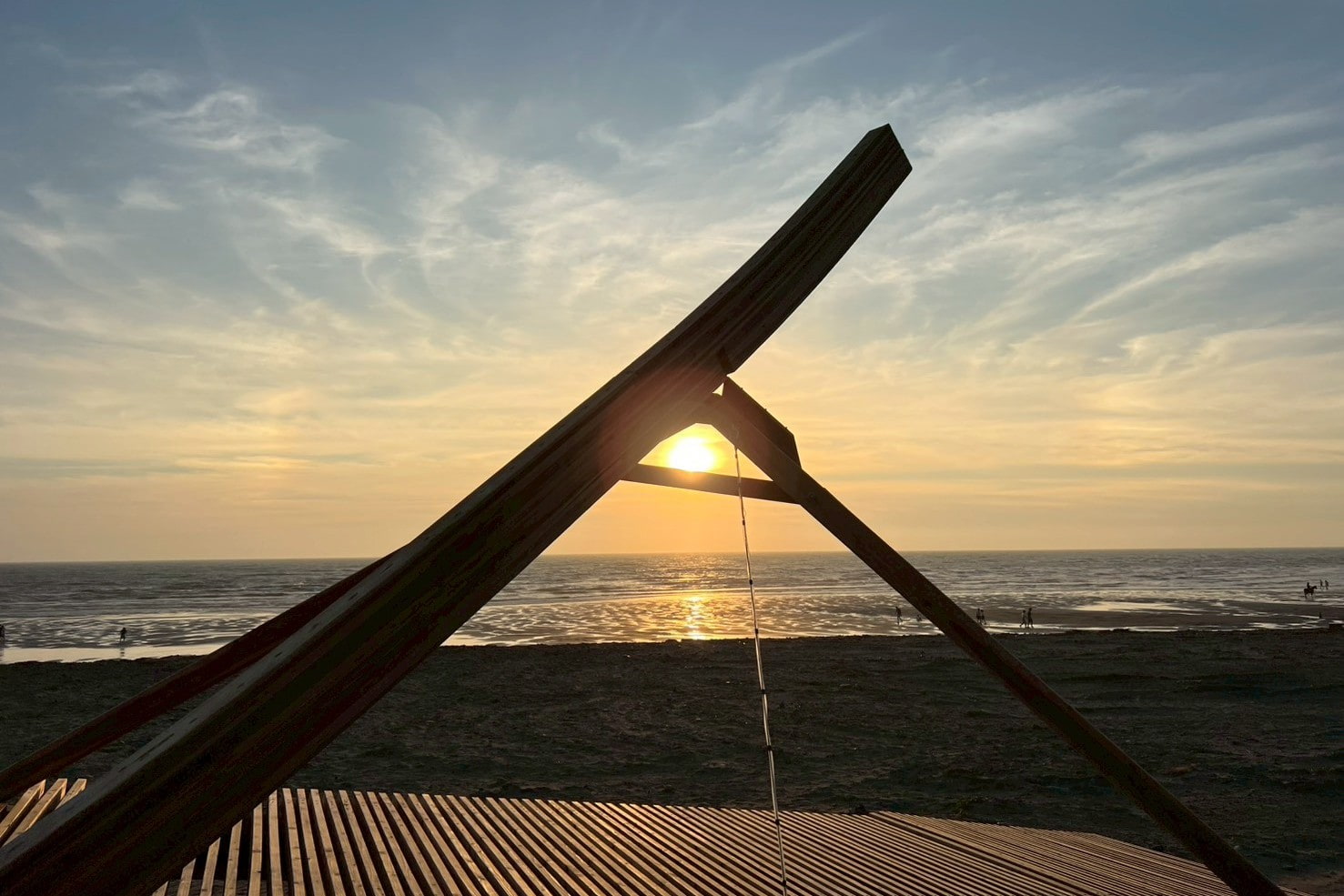
In-Between Tides was co-created by NCKU Department of Architecture faculty members Shen Yang-Ting and Yeh Yu-Hsiang, alongside seven master's and doctoral students: Huang Lian-Kai, Zu-Rui Ba-A-Li-Weng, Hsiao Hui-Yu, Tu Meng-Tse, Huang Po-Sen, Liu Hsia-Tung, and Hsiao Wan-Chen. Inspired by the arc created between the crowd pulling nets and the vast ocean during local beach seine operations, the work attempts to translate this unique landscape culture through a curved structural system. Accordingly, the team designed a framework system centered on bent glulam main beams, utilizing three simple lines to form a distinct multi-angled triangular framed view. This not only captures the coastal landscape of Taoyuan but also translates the curved line of net-pulling onto the main beam, making it resemble a line of tension floating on the sea that allows people to re-experience the vital tension of ancestors hauling nets for a living.
The greatest challenge of the work was crafting a 15-meter-long curved glued-laminated beam. Starting from their research capacity, the NCKU Department of Architecture team introduced the unique Dowel-Laminated Timber (DLT) technology into glued-laminated timber. The entire process used no glue or metal components; instead, wooden dowels were driven into pre-drilled holes in laminated timber panels, using the friction generated by the expansion of the wooden dowels to tightly interlock the multi-layer panels. Simultaneously, the team applied steam-bending techniques to bend the laminated panels to the designed curvature, ultimately manufacturing a 15-meter-long bent timber beam (with a cross-section of 30 cm×60 cm). Beyond challenging DLT technology, the NCKU team aimed to create a detachable, reversible, and low-impact curved building material made of 100% wood. This approach addressesF the sensitive environmental conditions of the Taoyuan intertidal zone, enabling the artwork to serve as a low-impact, biodegradable landscape installation.
Spatially, In-Between Tides translates the human and geographical features of Taoyuan's west coast intertidal zone and coastline using bent timber, frames, and slopes, forming a field that can be traversed, lingered in, and perceived. The installation invites people to enter with their physical bodies and imagine themselves as the waves impacting the fishing net. This transforms visiting the landscape from mere observation into a multi-layered perceptual process encompassing active participation, the physical sensation of tides, and memory recall of labor. As visitors walk through, they experience spatial transitions from high to low and from controllable to yielding. Their bodily actions change accordingly, allowing them to feel how tides and topography shape ways of moving and pausing. This transition is not only a spatial experience but also a temporal one, enabling the rhythm of life—formed by local long-term adaptation to tides and seasonal shifts—to be re-perceived through the body. Rather than dominating the site, the artwork follows a tectonic logic born from terrain and tides, integrating into the environment with a ground-level, low-undulation design vocabulary to avoid becoming an aggressive landscape object. Through low-impact and reversible assembly strategies, it reduces ecological impact on the intertidal zone, making the structure itself a part of human-nature collaboration. Ultimately, the artwork transforms the coastline from a viewed backdrop into a public venue that can be repeatedly entered and experienced, guiding people to reconsider their position in the tidal landscape and understand the dynamic co-constructed relationship between humans and the environment amid changes in wind, light, water level, and time.
Following the opening of the 2026 Taoyuan Land Art Festival in July, In-Between Tides has been successfully exhibited on the coastline in front of the Beach Seine Cultural Park, with the exhibition expected to run through the end of August. Professor Shen Yang-Ting, one of the creators, noted that this work demonstrates the NCKU Department of Architecture's ability to convert timber construction research into tectonic art. It treats site intervention as a practical test of shared learning between faculty and students, combining research with action to construct the university's social impact.
NCKU Architecture Team Redefines Taoyuan Coastal Fishing Culture with Curved "In-Between Tides"
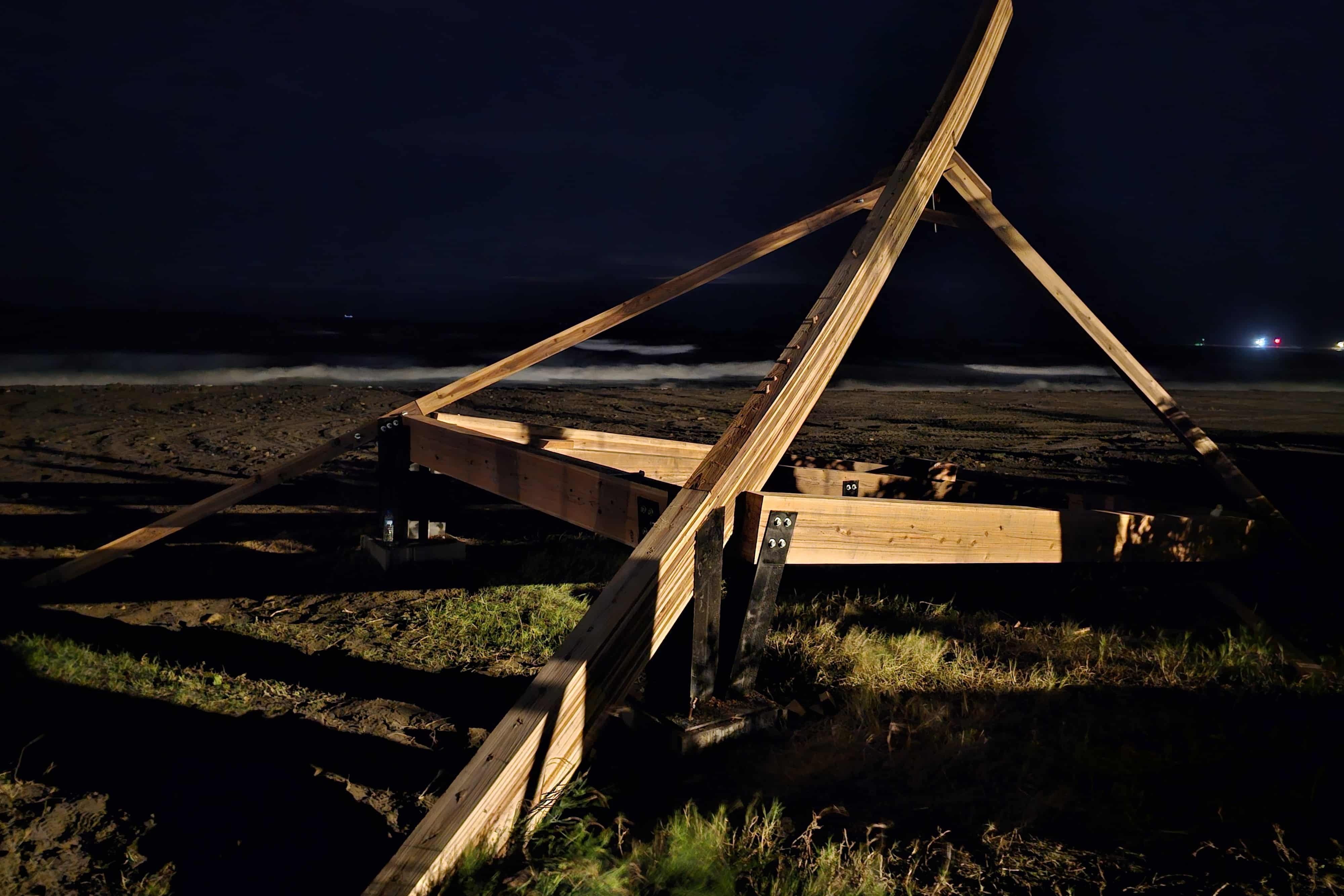
In "In-Between Tides," Curved Glulam Beams Evoke the Tension of Traditional Beach Seine Fishing
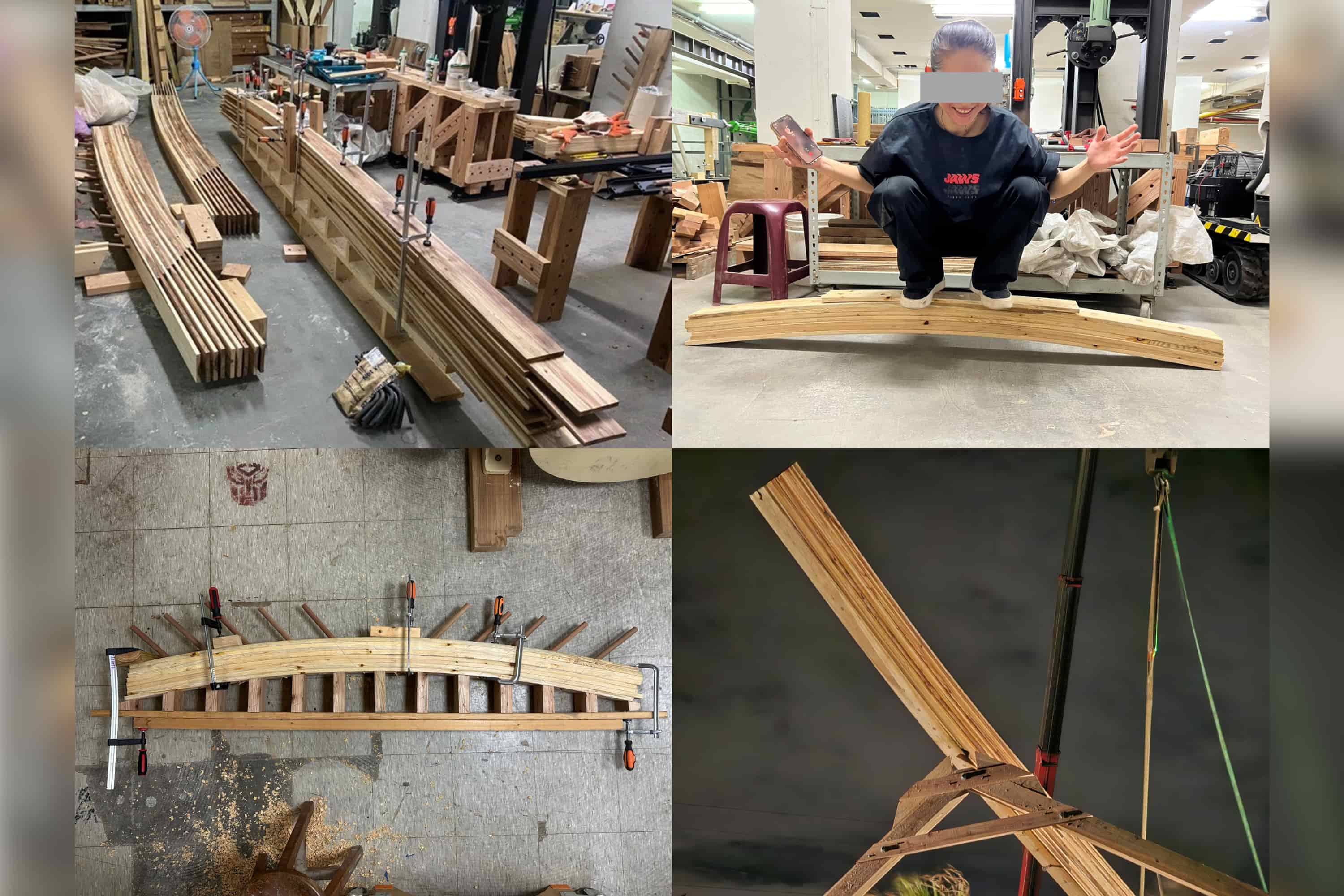
NCKU Architecture Team Crafts Low-Impact Curved Timber Using Dowel-Laminated Timber (DLT)
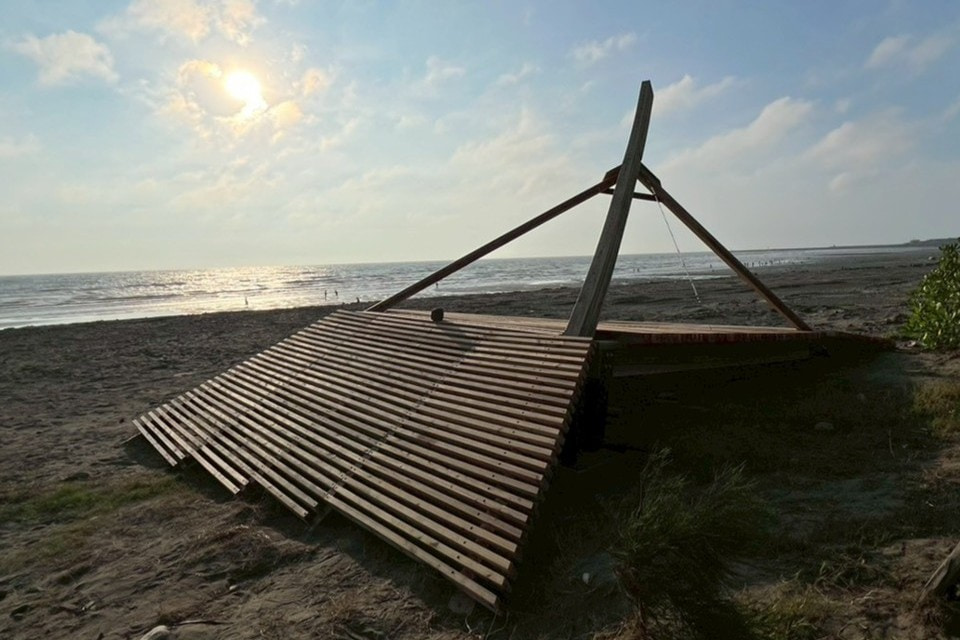
"In-Between Tides" Transforms the Coastline from a Passive Backdrop into an Accessible Public Space
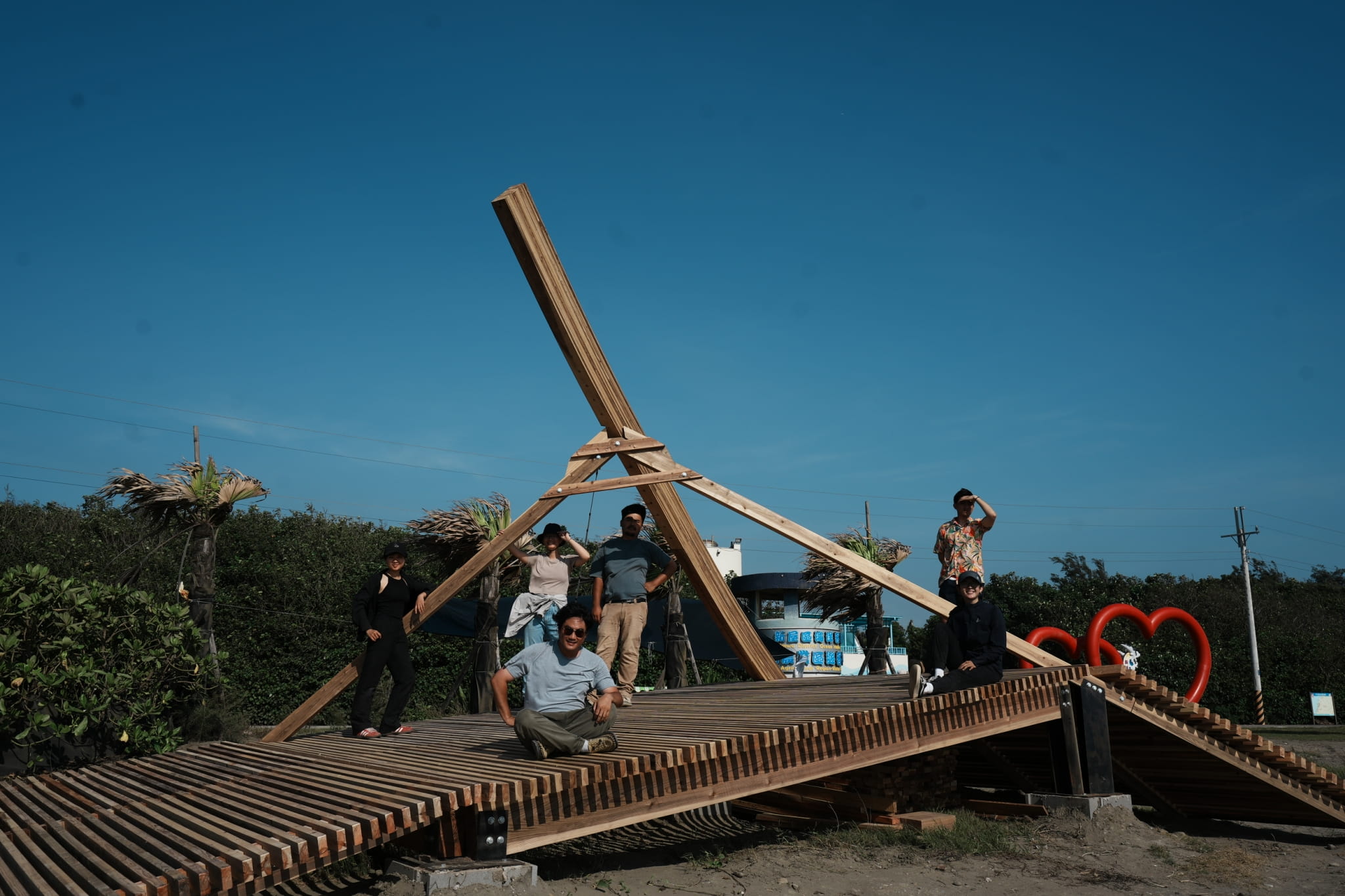
Team Photo of In-Between Tides
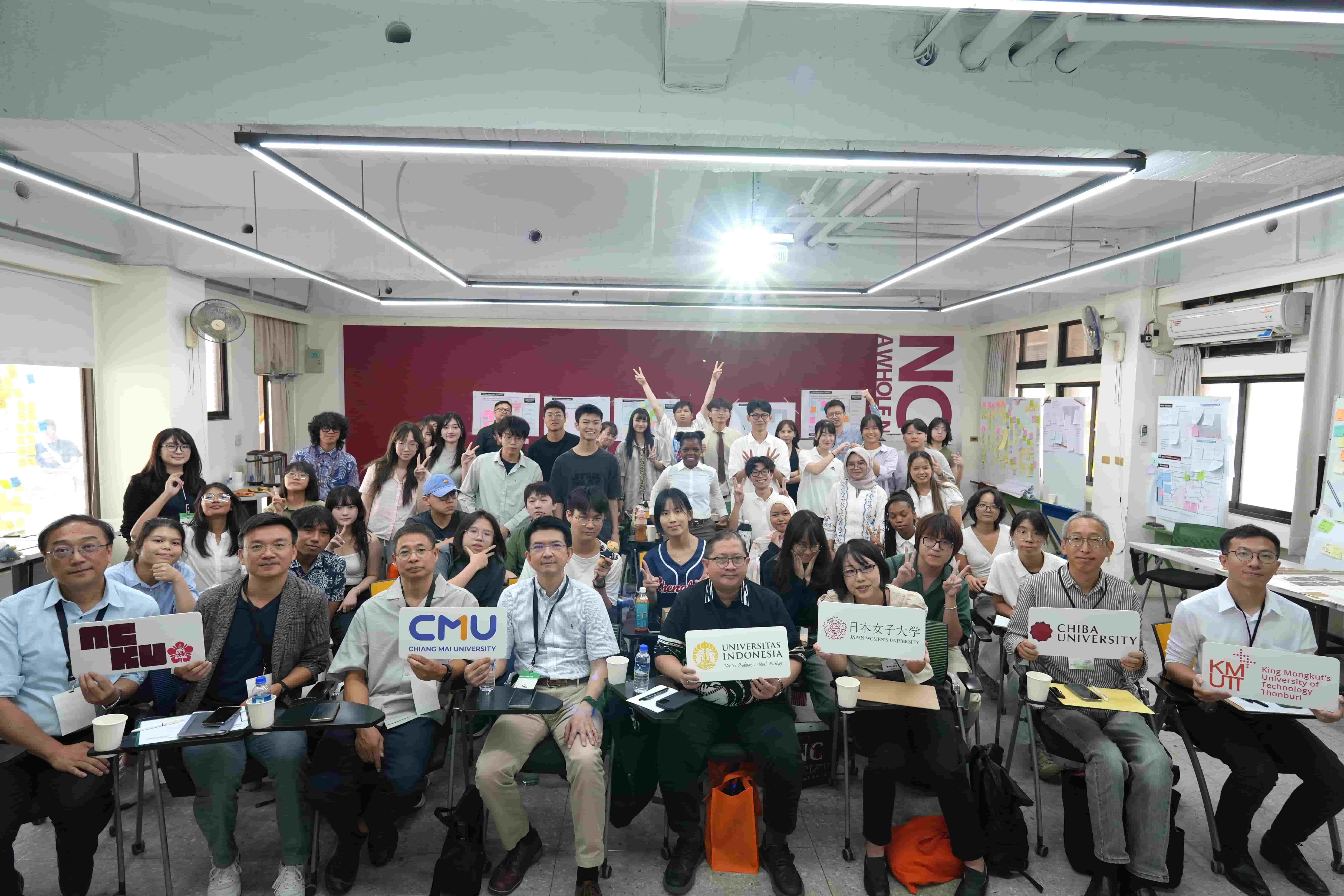
SDG11NCKU Workshop Explores Green Living for Super-Aged Society with 40 International Students
View more
SDG11NCCU “Diversity and Inclusion, Wenshan Mutual Prosperity” Project Visits NCKU for In-Depth Exchange at Three USR Sites
View more