



SDG9
NCKU CPL Validates Self-Developed Rocket Engine System

The Combustion and Propulsion Laboratory (CPL), led by Professor Chih-Yong Wu from the Department of Aeronautics and Astronautics at National Cheng Kung University (NCKU), recently successfully completed the validation of the new "Arete-KS-2000N" rocket engine. Developed through nearly two years of design, research, and testing, the engine has achieved significant progress in fuel formulation, ignition systems, and overall propulsion tech, showcasing NCKU's technological capabilities and integration achievements in aerospace engineering.
The "Arete-KS-2000N" engine delivers a maximum thrust of 2,000 Newtons (roughly 200 kg of thrust). Installed on the "Arete-1" rocket, simulation results indicate it is powerful enough to push the vehicle to a target altitude of approximately 3 kilometers.
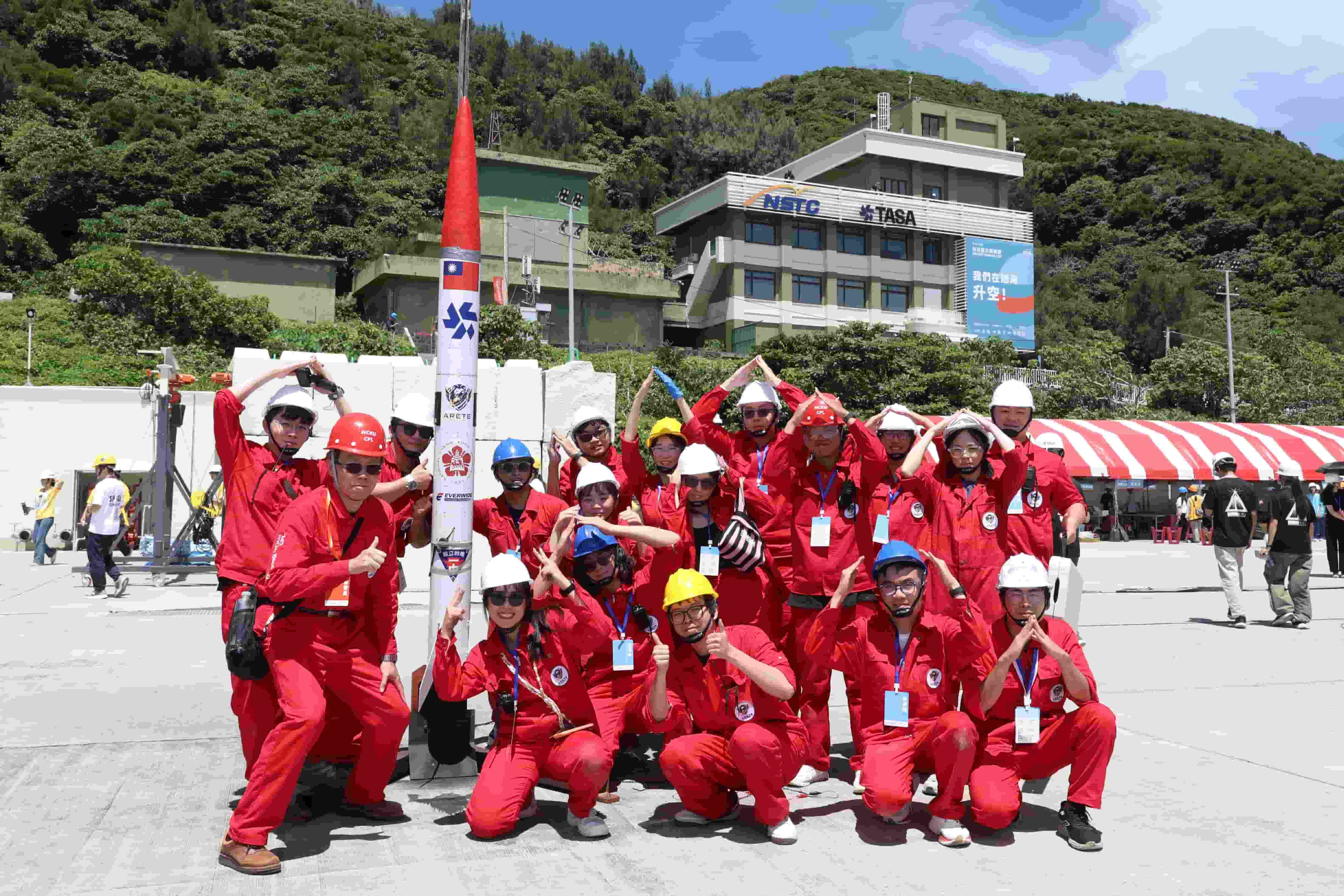
During the 2nd Rocket Cup held in Xuhai Village, Pingtung County, the NCKU CPL team participated as a demonstration team. They seized the opportunity to perform a full-system integration and launch of the Arete-1 rocket, validating the combined performance of the engine, airframe structure, avionics communication, recovery systems, and other sub-units.
Professor Wu noted that rocket engine development spans combustion, heat transfer, fluid mechanics, materials, and system integration. Overcoming challenges in fuel manufacturing, ignition reliability, and thrust stability, this test marks a major milestone while giving students hands-on experience across the entire engineering pipeline—from requirement definition to actual flight operations.
Spacecraft development is an extraordinarily complex engineering task where avionics, structures, and recovery teams must coordinate closely. To meet strict mass and drop-velocity constraints, students even hand-stitched parachutes themselves, connecting theoretical analysis directly with hands-on fabrication.
Professor Wu also shared that three lab members formed "Atlas Industrial Co., Ltd." to commercialize their propulsion technology. The startup received NT$3 million from the National Development Fund and won the top award with NT$1 million in funding from the National Science and Technology Council’s "From IP to IPO" (FITI) program in 2026.
Moving forward, the NCKU CPL team will analyze flight data to further optimize engine efficiency and vehicle reliability, paving the way for higher-thrust systems and advancing Taiwan's sovereign aerospace technology.
The "Arete-KS-2000N" engine delivers a maximum thrust of 2,000 Newtons (roughly 200 kg of thrust). Installed on the "Arete-1" rocket, simulation results indicate it is powerful enough to push the vehicle to a target altitude of approximately 3 kilometers.
During the 2nd Rocket Cup held in Xuhai Village, Pingtung County, the NCKU CPL team participated as a demonstration team. They seized the opportunity to perform a full-system integration and launch of the Arete-1 rocket, validating the combined performance of the engine, airframe structure, avionics communication, recovery systems, and other sub-units.
Professor Wu noted that rocket engine development spans combustion, heat transfer, fluid mechanics, materials, and system integration. Overcoming challenges in fuel manufacturing, ignition reliability, and thrust stability, this test marks a major milestone while giving students hands-on experience across the entire engineering pipeline—from requirement definition to actual flight operations.
Spacecraft development is an extraordinarily complex engineering task where avionics, structures, and recovery teams must coordinate closely. To meet strict mass and drop-velocity constraints, students even hand-stitched parachutes themselves, connecting theoretical analysis directly with hands-on fabrication.
Professor Wu also shared that three lab members formed "Atlas Industrial Co., Ltd." to commercialize their propulsion technology. The startup received NT$3 million from the National Development Fund and won the top award with NT$1 million in funding from the National Science and Technology Council’s "From IP to IPO" (FITI) program in 2026.
Moving forward, the NCKU CPL team will analyze flight data to further optimize engine efficiency and vehicle reliability, paving the way for higher-thrust systems and advancing Taiwan's sovereign aerospace technology.
Group photo taken to mark the occasion
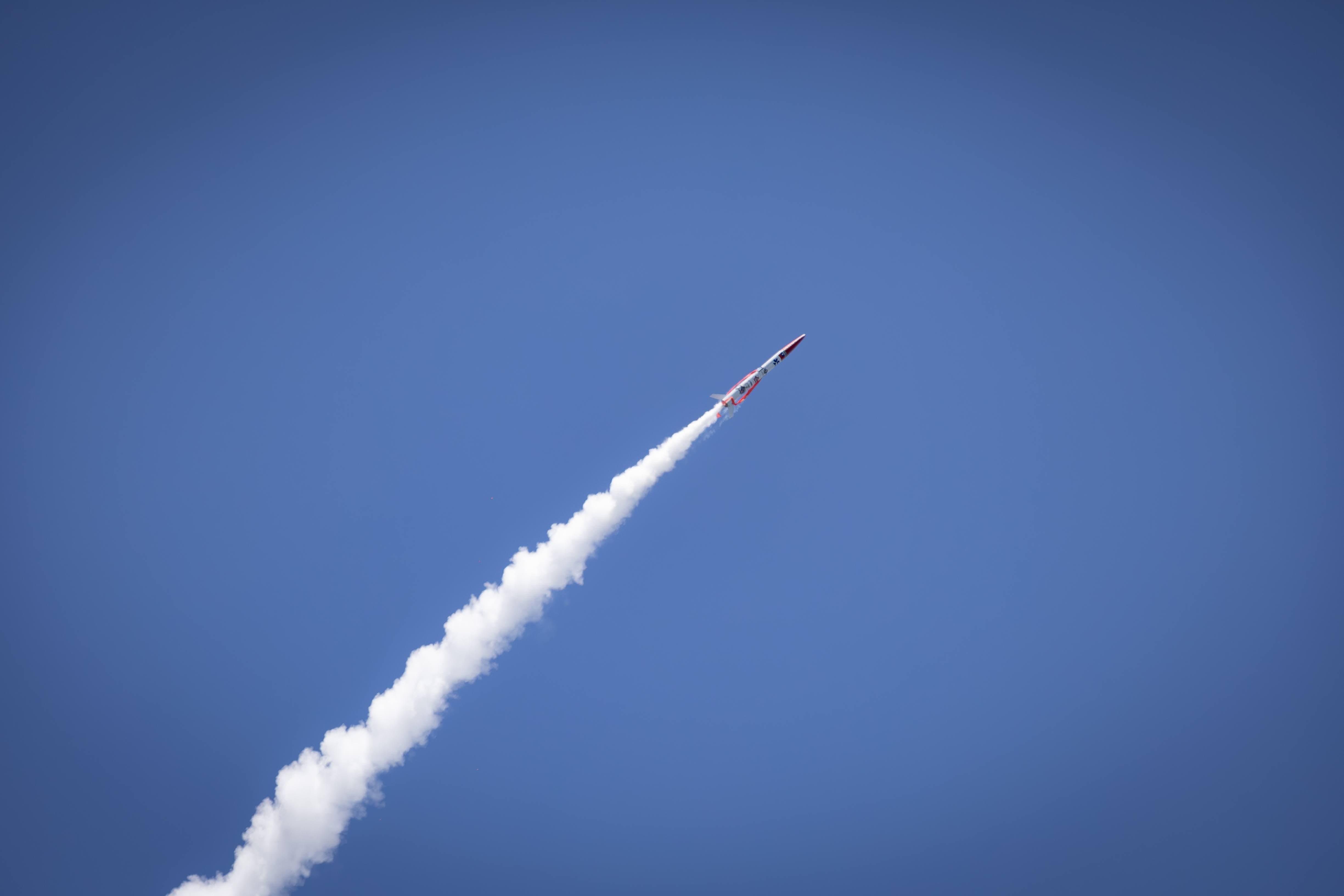
The rocket launches into the sky