




SDG4
NCKU UAV Team Becomes Taiwan’s First to Challenge AIAA Competition in US
A student UAV team from the Department of Aeronautics and Astronautics at National Cheng Kung University (NCKU) traveled to Kansas, USA, for the first time to compete in the 30th AIAA Design/Build/Fly (DBF) Competition. Facing 175 university teams from 14 countries, NCKU became the first-ever team from Taiwan to join the event, securing an impressive 29th place globally and 2nd place in Asia in their debut appearance.
Held from April 16 to 19 in Wichita, Kansas, the competition saw the NCKU team guided by Professor Ying-Chih Lai. The 10-member team included students Ting-Dian Zhuo, Yu-Shan Wei, Xuan-Han Li, Zi-Lun Xu, You-Hong Lin, Jia-You Lin, Jun-Yi Lin, Dong-Lin Wu, Qi-An Tsai, and Yao-Yu Tsai.
Hosted by the American Institute of Aeronautics and Astronautics (AIAA), the DBF Competition is one of the oldest, largest, and most prestigious student UAV design events in the global aerospace field. This year’s contest featured intense competition from top international universities, including MIT, Stanford University, Georgia Tech, UCLA, HKUST, RMIT University, IIT, and ITBA.
Beyond flight performance, the AIAA DBF Competition places strong emphasis on preliminary engineering design and practical verification. Lacking prior experience, the NCKU team built their design and preparation framework from scratch, completing aerodynamic analysis, structural fabrication, and system integration in strict accordance with contest specifications to pass the initial proposal review.
During the official contest, the team successfully completed two out of four flight missions. Although the aircraft sustained structural damage during a landing, members executed rapid on-site repairs to get the vehicle back in the air, demonstrating exceptional teamwork and system recovery skills. While many competing teams were eliminated at the proposal stage or suffered total losses from crashes, NCKU relied on extensive flight tests, structural optimization, and system integration to earn a top-tier global ranking on their first attempt.
Team members noted that building standard operating procedures and gaining first-hand experience from scratch was an invaluable milestone. More importantly, they laid a solid foundation—including comprehensive design reports, international travel logistics, funding application procedures, and flight test data—for future students to build upon while gaining deep insight into global engineering mindsets.
The team expressed gratitude to the Ministry of Education, the NCKU College of Engineering, the Department of Aeronautics and Astronautics, Chair Professor Yei-Chin Chao, Professor Fuh-Kuo Ueng, and distinguished alumni Wen-Hsiung Chan, Chih-Chia Chen, and Ching-Jung Chen for their generous support. Moving forward, the NCKU UAV team plans to build on this experience, further sharpening their aircraft design and system integration capabilities to represent Taiwan on the international aerospace stage.
Held from April 16 to 19 in Wichita, Kansas, the competition saw the NCKU team guided by Professor Ying-Chih Lai. The 10-member team included students Ting-Dian Zhuo, Yu-Shan Wei, Xuan-Han Li, Zi-Lun Xu, You-Hong Lin, Jia-You Lin, Jun-Yi Lin, Dong-Lin Wu, Qi-An Tsai, and Yao-Yu Tsai.
Hosted by the American Institute of Aeronautics and Astronautics (AIAA), the DBF Competition is one of the oldest, largest, and most prestigious student UAV design events in the global aerospace field. This year’s contest featured intense competition from top international universities, including MIT, Stanford University, Georgia Tech, UCLA, HKUST, RMIT University, IIT, and ITBA.
Beyond flight performance, the AIAA DBF Competition places strong emphasis on preliminary engineering design and practical verification. Lacking prior experience, the NCKU team built their design and preparation framework from scratch, completing aerodynamic analysis, structural fabrication, and system integration in strict accordance with contest specifications to pass the initial proposal review.
During the official contest, the team successfully completed two out of four flight missions. Although the aircraft sustained structural damage during a landing, members executed rapid on-site repairs to get the vehicle back in the air, demonstrating exceptional teamwork and system recovery skills. While many competing teams were eliminated at the proposal stage or suffered total losses from crashes, NCKU relied on extensive flight tests, structural optimization, and system integration to earn a top-tier global ranking on their first attempt.
Team members noted that building standard operating procedures and gaining first-hand experience from scratch was an invaluable milestone. More importantly, they laid a solid foundation—including comprehensive design reports, international travel logistics, funding application procedures, and flight test data—for future students to build upon while gaining deep insight into global engineering mindsets.
The team expressed gratitude to the Ministry of Education, the NCKU College of Engineering, the Department of Aeronautics and Astronautics, Chair Professor Yei-Chin Chao, Professor Fuh-Kuo Ueng, and distinguished alumni Wen-Hsiung Chan, Chih-Chia Chen, and Ching-Jung Chen for their generous support. Moving forward, the NCKU UAV team plans to build on this experience, further sharpening their aircraft design and system integration capabilities to represent Taiwan on the international aerospace stage.
Group photo of the team with department professors before departure to the US
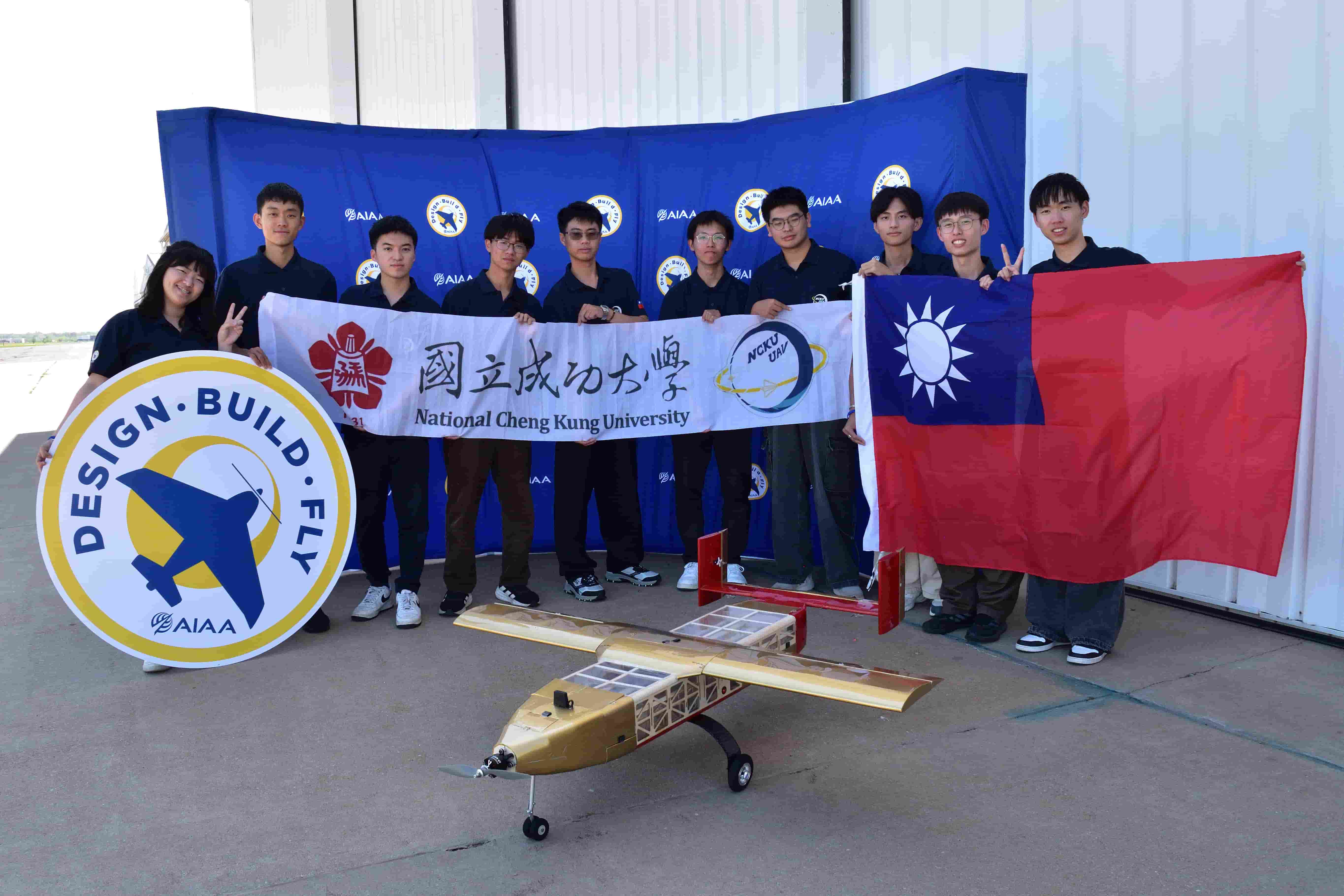
The team takes a group photo at the competition venue
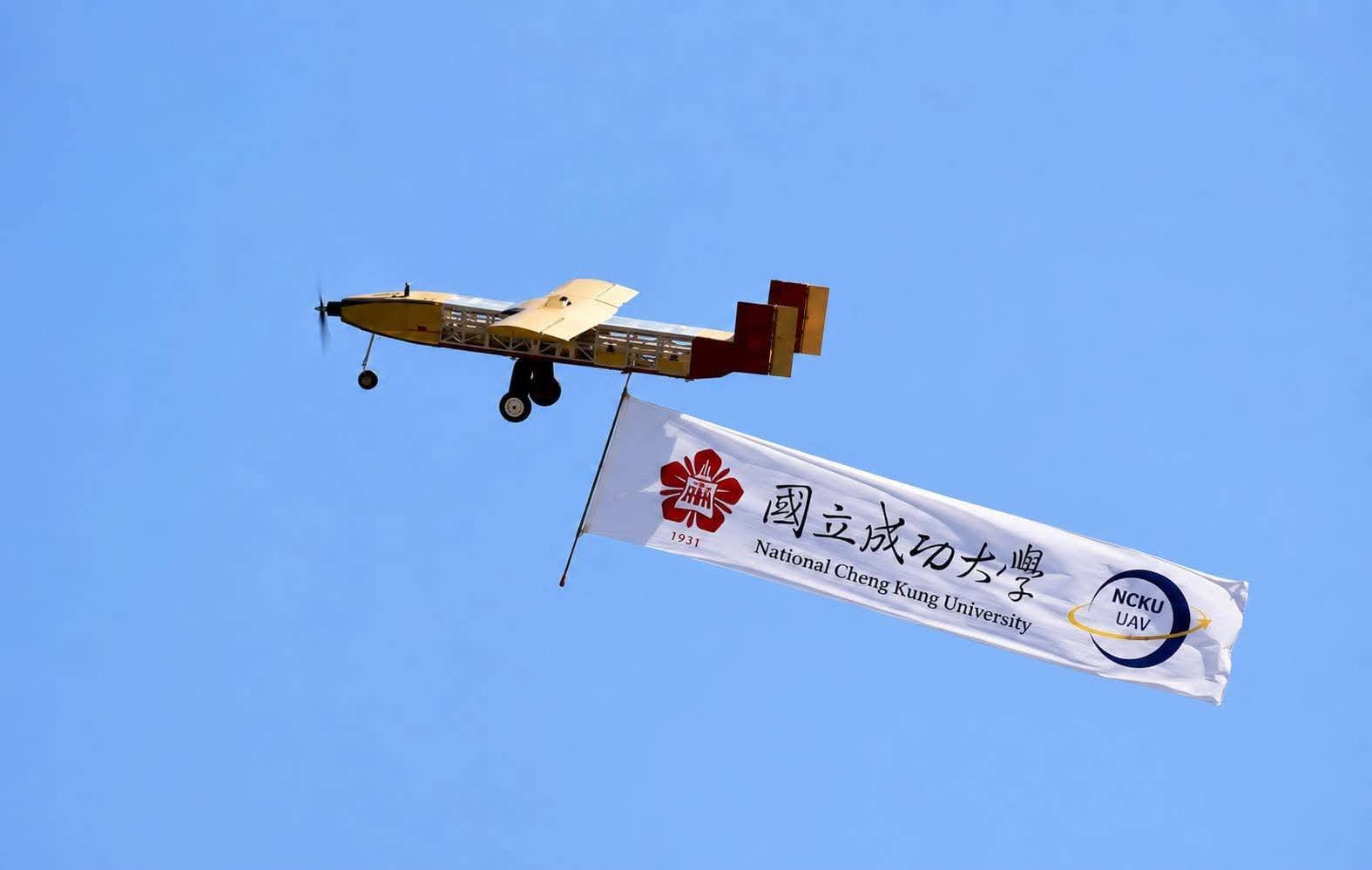
The UAV designed by the team for the competition
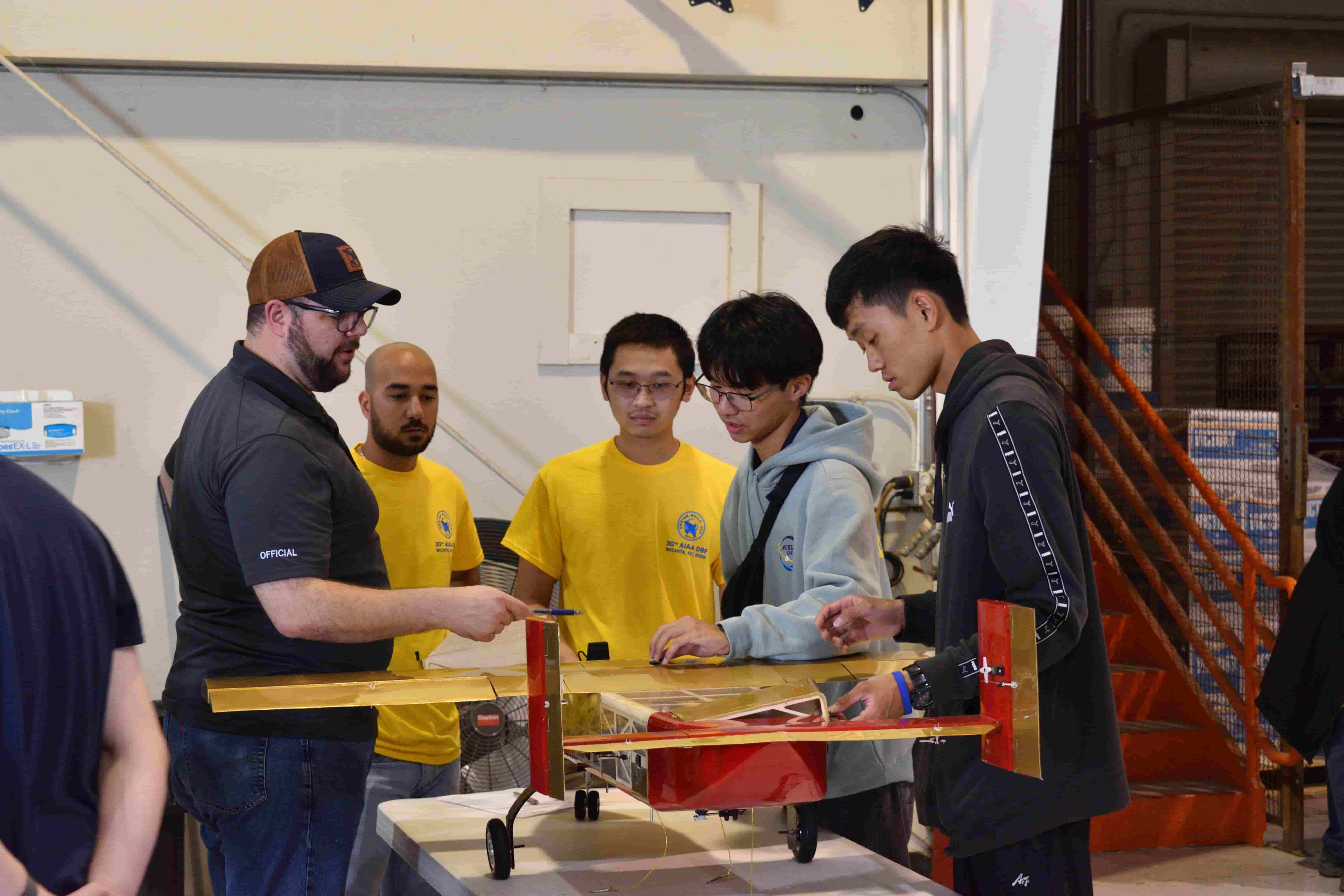
The team performs a technical inspection

The aircraft successfully lands after completing its first mission
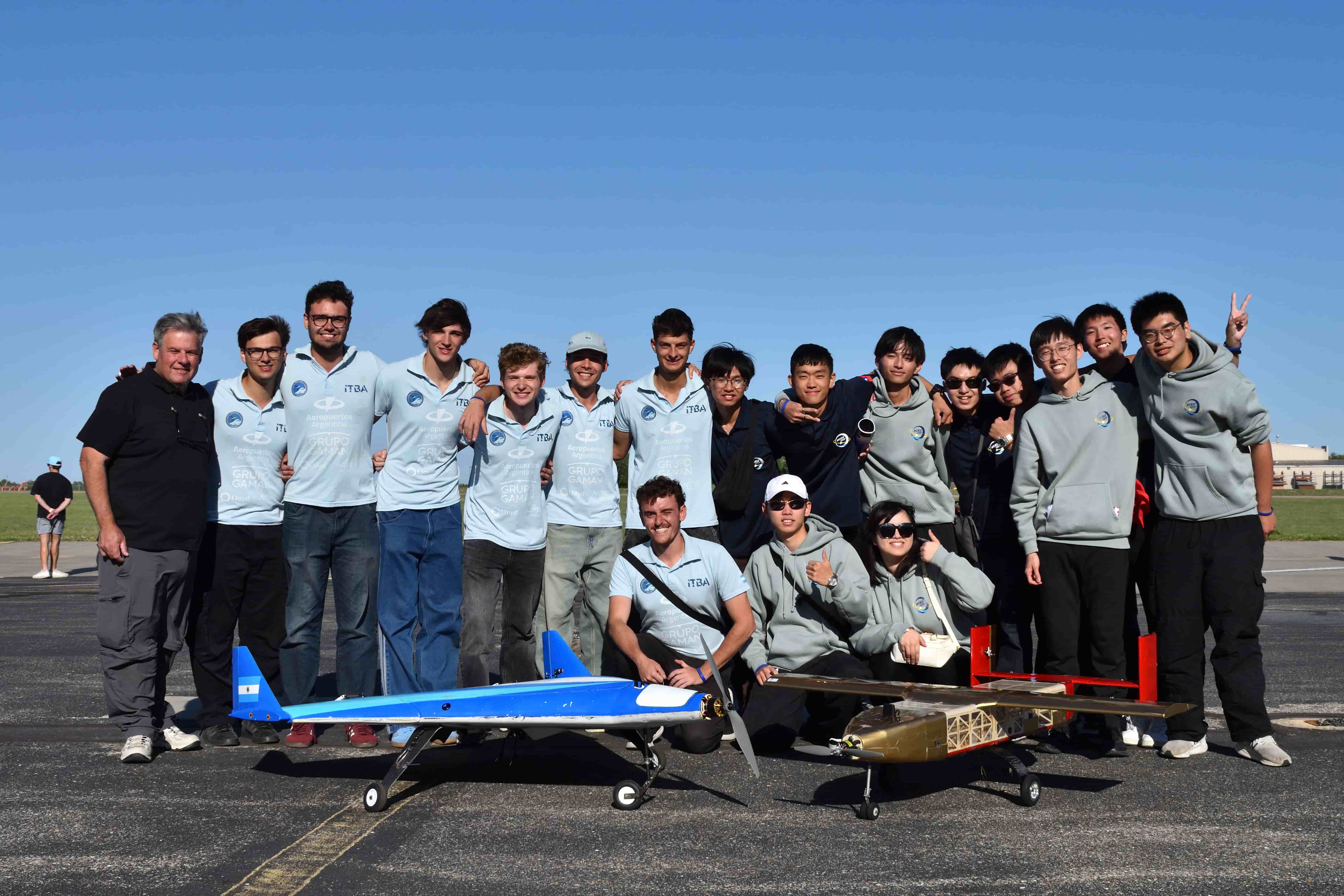
Post-race group photo with the Argentinian team, who was also participating for the first time
SDG4Hand in Hand: NCKU College of Social Sciences and Local High Schools Co-Create a Symphony of Self-Directed Learning
View more
SDG4NCKU X National Chaochou Senior High School: Science Camp that Integrates Science Education and Aboriginal Cultural Knowledge
View more