



SDG11
NCKU Workshop Explores Green Living for Super-Aged Society with 40 International Students
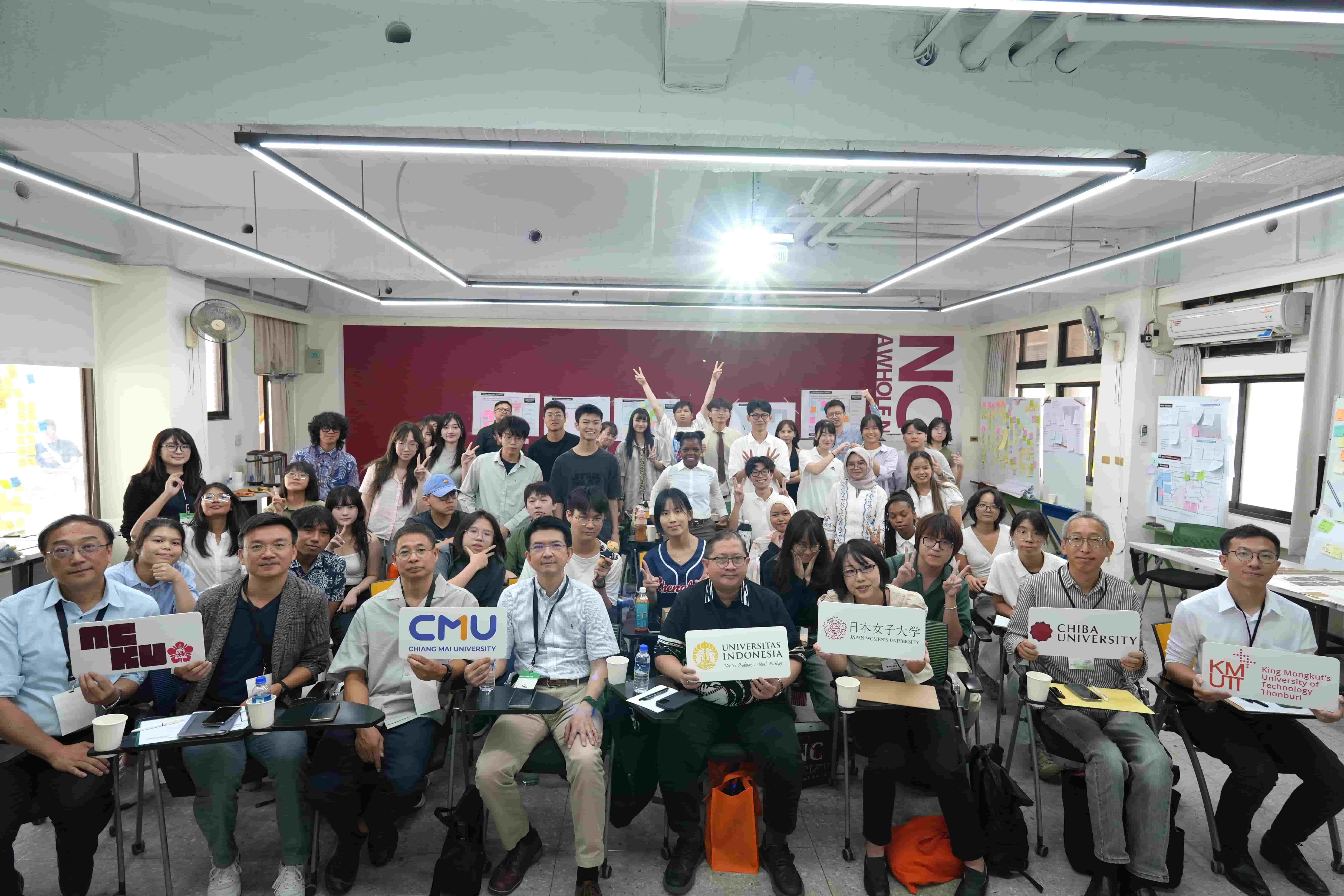
From August 1 to 6, the National Cheng Kung University (NCKU) University Social Responsibility (USR) project, "Urban-Rural Partnership for Healthy and Sustainable Living: East Asia Network," hosted the international intensive workshop "Green Living for the Super-Aged Society." The event brought together 40 students from Japan's Chiba University, Thailand's Chiang Mai University, Thailand's King Mongkut's University of Technology Thonburi, and Universitas Indonesia. Divided into seven multinational teams, the students focused on the northern section of the Tainan Railway Green Corridor and its surrounding communities. Utilizing cross-border collaboration, AI tools, and field research, they jointly explored green living solutions tailored for a super-aged society.
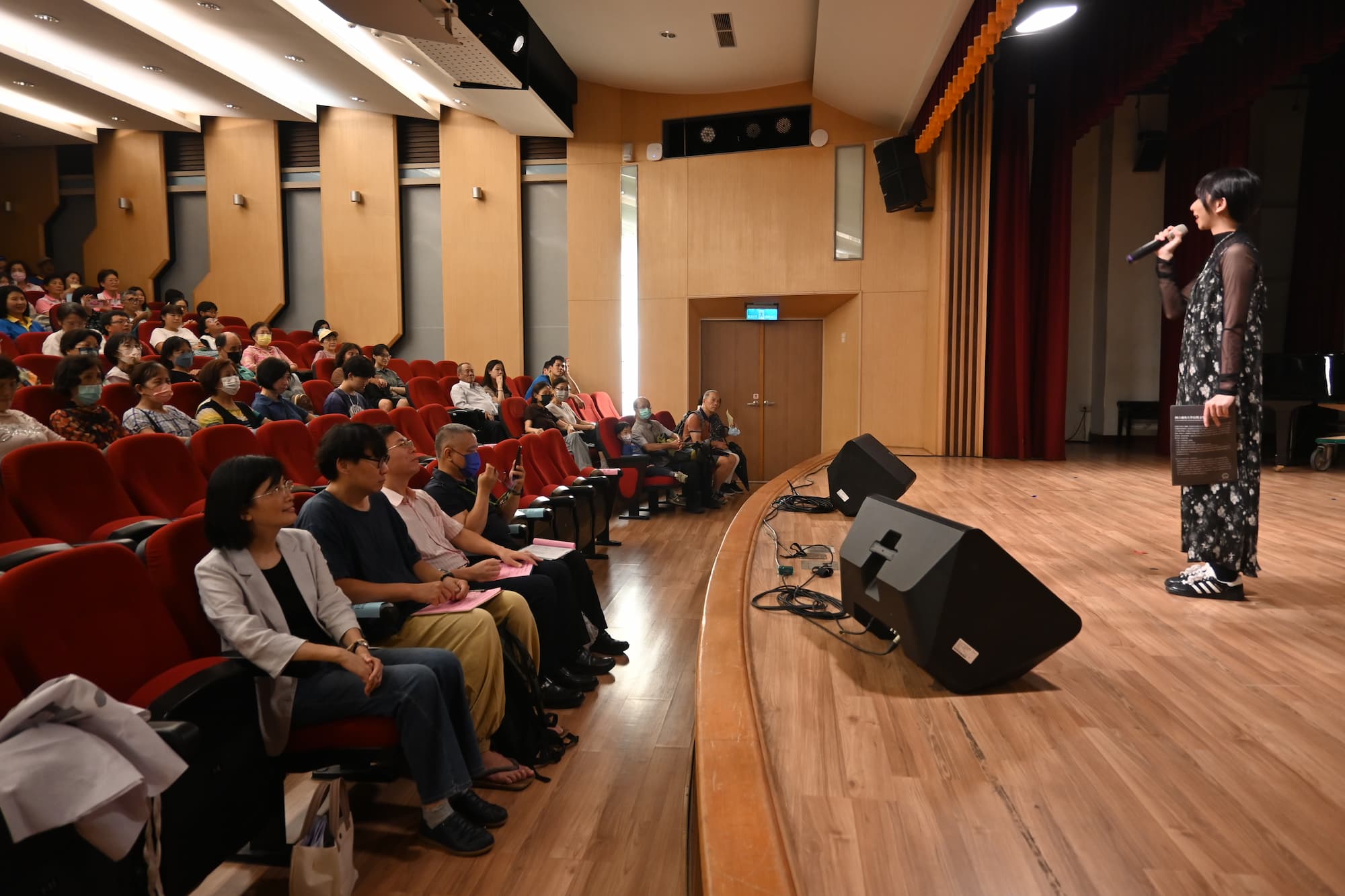
Distinguished Professor Cheng-Ta Yang, Director of the NCKU Humanities and Social Sciences Center and project lead, stated in his opening remarks that the USR project has long been dedicated to aging societies, community living, and local sustainability. He emphasized that social practice is not about the university unilaterally offering answers, but rather observing, discussing, and discovering potential directions alongside the community.
This year marks the fourth year of collaboration between NCKU and Chiba University, the second year with Chiang Mai University and King Mongkut's University of Technology Thonburi, and the inaugural participation of Universitas Indonesia. Bringing together students from diverse backgrounds, the workshop allowed participants to share regional experiences in addressing population aging and urban development while expanding international perspectives through field research and co-design.
The faculty lineup featured NCKU professors across various disciplines, alongside faculty members from Chiang Mai University who co-guided team discussions and proposal development. The curriculum encompassed design thinking, community design, elderly living, urban regeneration, healthy aging, aging in place, and public space planning.
Students conducted site investigations across the surrounding area—including the NCKU campus, NCKU Hospital, Tainan Park, social housing projects, Vanilla Park, Zhonglou Li, Changsheng Li, and Jiuliu New Village. Through walkability observations, user research, and resident interviews, they gathered real-world insights into community needs. Additionally, AI served as a key analytical tool for site evaluation, data synthesis, design ideation, and presentation, with findings continually validated through field observations to ensure a balance between tech integration and local insight.
During the final presentation on August 6, the seven teams unveiled diverse spatial concepts centered on age-friendliness, daily mobility, and intergenerational inclusion. Proposals included creating green corridors to connect markets, parks, temples, and community centers; integrating pedestrian and barrier-free networks across Tainan Station, NCKU, and Tainan Park; constructing elevated walkways to enhance campus commuting safety; and converting the Tainan Park underground pass into an intergenerational hub connecting the park, social housing, campus, and hospital. Across all groups, the central theme was "reconnection"—focusing on both physical urban connectivity and fostering natural daily interactions across generations.
Distinguished Professor Cheng-Ta Yang, Director of the NCKU Humanities and Social Sciences Center and project lead, stated in his opening remarks that the USR project has long been dedicated to aging societies, community living, and local sustainability. He emphasized that social practice is not about the university unilaterally offering answers, but rather observing, discussing, and discovering potential directions alongside the community.
This year marks the fourth year of collaboration between NCKU and Chiba University, the second year with Chiang Mai University and King Mongkut's University of Technology Thonburi, and the inaugural participation of Universitas Indonesia. Bringing together students from diverse backgrounds, the workshop allowed participants to share regional experiences in addressing population aging and urban development while expanding international perspectives through field research and co-design.
The faculty lineup featured NCKU professors across various disciplines, alongside faculty members from Chiang Mai University who co-guided team discussions and proposal development. The curriculum encompassed design thinking, community design, elderly living, urban regeneration, healthy aging, aging in place, and public space planning.
Students conducted site investigations across the surrounding area—including the NCKU campus, NCKU Hospital, Tainan Park, social housing projects, Vanilla Park, Zhonglou Li, Changsheng Li, and Jiuliu New Village. Through walkability observations, user research, and resident interviews, they gathered real-world insights into community needs. Additionally, AI served as a key analytical tool for site evaluation, data synthesis, design ideation, and presentation, with findings continually validated through field observations to ensure a balance between tech integration and local insight.
During the final presentation on August 6, the seven teams unveiled diverse spatial concepts centered on age-friendliness, daily mobility, and intergenerational inclusion. Proposals included creating green corridors to connect markets, parks, temples, and community centers; integrating pedestrian and barrier-free networks across Tainan Station, NCKU, and Tainan Park; constructing elevated walkways to enhance campus commuting safety; and converting the Tainan Park underground pass into an intergenerational hub connecting the park, social housing, campus, and hospital. Across all groups, the central theme was "reconnection"—focusing on both physical urban connectivity and fostering natural daily interactions across generations.
40 international students collaborate to co-create green living solutions for a super-aged society at the NCKU workshop.
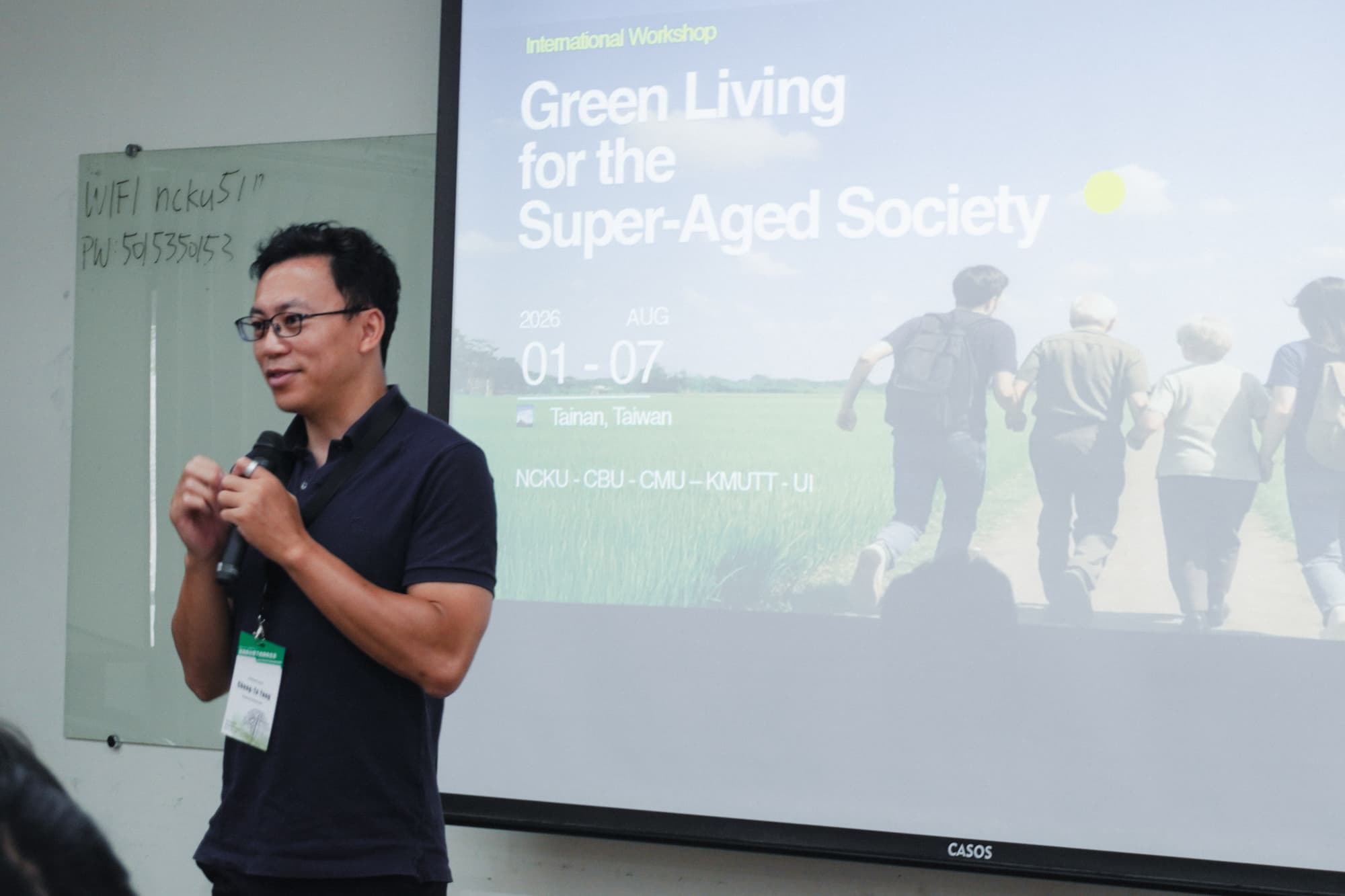
Project lead Distinguished Professor Cheng-Ta Yang gives opening remarks at the ceremony.
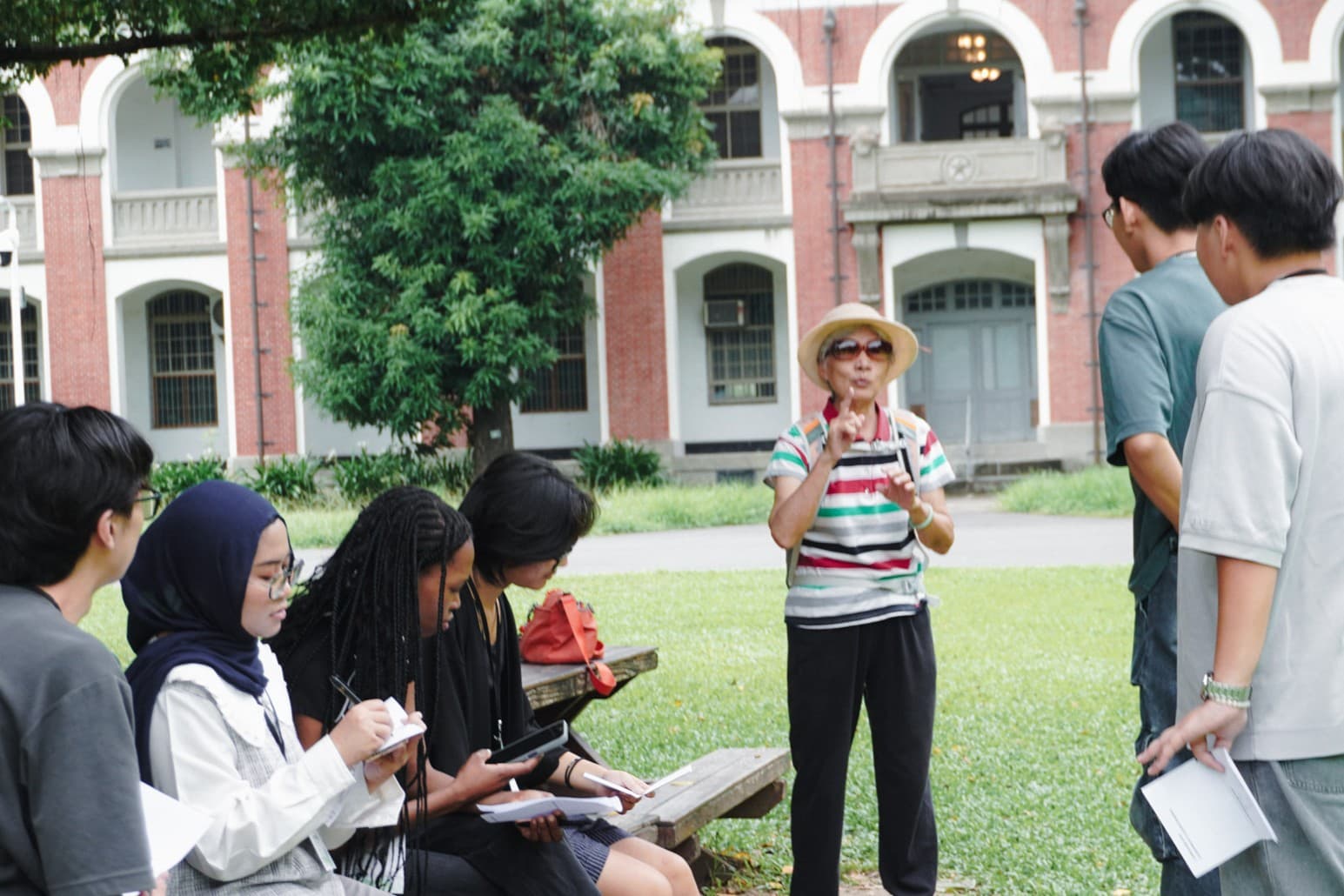
Students conduct field research in local public spaces to observe space usage across different demographic groups.
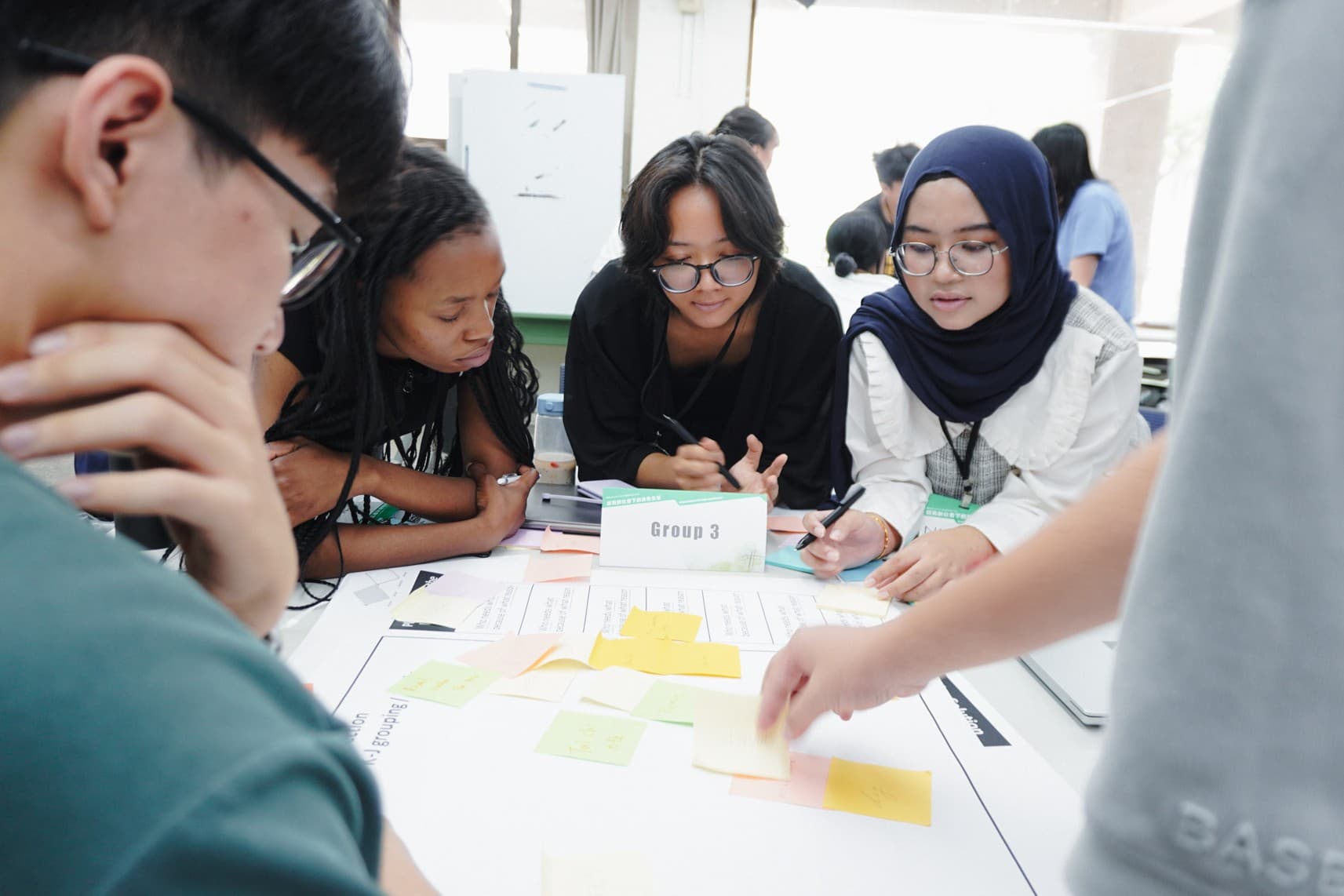
Students from diverse backgrounds collaborate in cross-border and cross-disciplinary exchanges.