



SDG17
NCKU’s USR Companion Program Deepens Cooperation with Thailand to Jointly Build a Cross-Border Social Practice "Living Lab"
The Humanities and Social Sciences Center at National Cheng Kung University (NCKU) executes the USR "Urban-Rural Companion for Healthy and Sustainable Life: East Asia Linkage Program" (hereinafter referred to as the Companion Program). Based on social practice fields in Tainan, it has long promoted interdisciplinary teaching and East Asian international exchanges. From August 24 to 26, led by Professor Yang Cheng-Ta, Director of the Center and Principal Investigator of the Program, the team visited Chiang Mai and Lamphun in Thailand. They visited Chiang Mai University’s Faculty of Architecture and Faculty of Nursing, as well as the Lamphun Municipality and the Learning Center for Development of Women and Family, exchanging experiences in talent cultivation, aging society solutions, and local practices between Taiwan and Thailand.
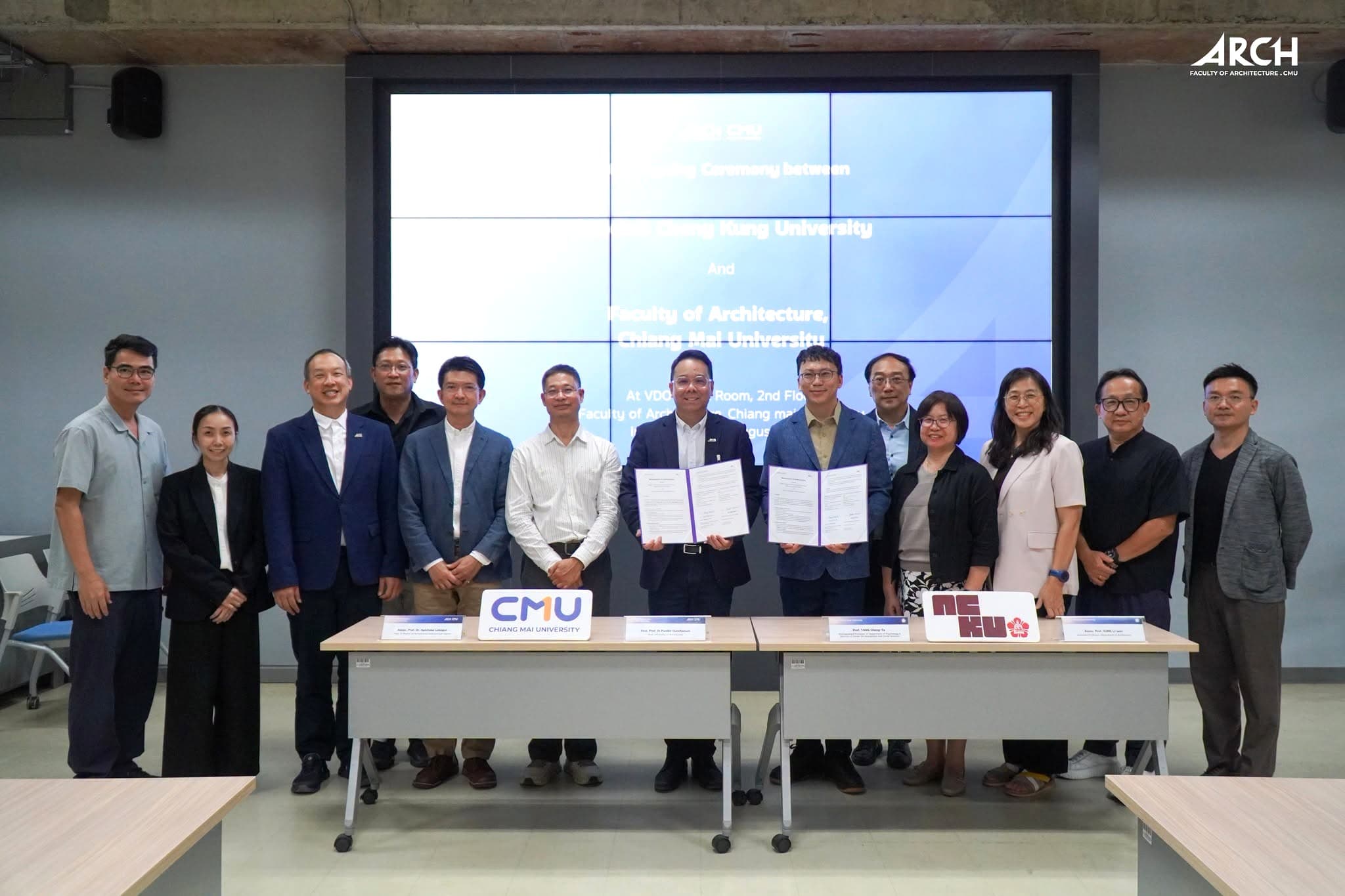
One of the major achievements of this exchange was the official signing of a Memorandum of Understanding (MOU) between NCKU’s Humanities and Social Sciences Center and Chiang Mai University’s Faculty of Architecture. The collaboration stems from international exchanges driven by the Companion Program in recent years. Faculty and students from Chiang Mai University’s Faculty of Architecture have visited Taiwan multiple times to join international workshops, stepping into Tainan communities alongside NCKU and other international partners to engage in cross-border co-learning on issues such as population aging, urban space, and local development. Signing the MOU institutionalizes these accumulated relationships, establishing a long-term foundation for future faculty-student exchanges, joint research, talent cultivation, and social practice.
During the discussions, both sides further explored the possibility of international students coming to Taiwan for USR internships. The Companion Program has accumulated diverse social practice fields in Tainan, including senior health, resilient rural areas, and urban-rural development. In the future, it aims to support overseas students in spending extended periods within communities, working alongside NCKU faculty, students, and local partners to transform USR sites into international "Living Labs." Through internships, research, and local engagement, international exchanges will go beyond campus visits or short-term tours, grounding themselves in real local issues to establish sustainable mechanisms for talent flow and mutual learning.
The Companion Program team also visited Chiang Mai University’s Faculty of Nursing together with Chair Professor Hsu Yu-Yun from NCKU’s Department of Nursing. Both sides shared experiences in interdisciplinary teaching, research, and international talent cultivation. The Companion Program team presented how USR connects teachers across disciplines, local governments, communities, and industry partners to enable students to learn from real community issues. They also shared the vision of cultivating "Interactive Experts"—emphasizing that professionals need not only domain expertise, but also the capacity to communicate and collaborate across disciplines and with local communities. Both parties exchanged views on joint research, short-term student exchanges, graduate student mobility, and community practices, anticipating further interdisciplinary connections in the future.
Introduced by Chiang Mai University’s Faculty of Architecture, the team also visited Lamphun Municipality and was received by Vice Mayor Suthinee Suriyakul Na Ayudhya. Lamphun has long faced the challenge of an aging population. The local government promotes healthy aging through public health and community networks, encouraging seniors to participate in activities based on their interests to maintain health and social connection. The NCKU team shared how the Companion Program uses sports and group activities as strategies to create continuous engagement, helping seniors build social connections and gradually form supportive "micro-communities."
Vice Mayor Suthinee Suriyakul Na Ayudhya expressed high appreciation for NCKU’s approach of combining senior health promotion with micro-communities. She welcomed the team to visit Lamphun again to bring sports and health promotion practices to local communities and deepen exchanges with Lamphun’s existing senior services and networks. Both sides also discussed international student exchanges, social practice cooperation, and expressed mutual intent to sign an MOU. They hope international exchange students can step into real cities and communities in different countries to learn directly from aging, health, and local development issues.
The team also visited the local Learning Center for Development of Women and Family to understand how local Thai entities empower women through vocational training, family support, and social welfare services. The center helps women enhance their economic and personal autonomy, linking empowerment outcomes with local communities and industries. The team made a field visit to a local women's textile group that grew out of this training mechanism, learning about the practical operations from government support and skills training to local industry development, serving as an important reference for social practice exchanges between Taiwan and Thailand.
From interdisciplinary education at Chiang Mai University to local governance, women’s empowerment, and community practice in Lamphun, this exchange allowed both sides to see different paths for addressing population aging, talent cultivation, and local development. Taking this MOU as a new starting point, the Companion Program looks forward to connecting universities, local governments, and communities to establish a collaborative network for international internships, joint research, and social practice—making Tainan, Chiang Mai, and Lamphun "Living Labs" for shared learning among international faculty and students, thereby deepening East Asian University Social Responsibility (USR) connections.
One of the major achievements of this exchange was the official signing of a Memorandum of Understanding (MOU) between NCKU’s Humanities and Social Sciences Center and Chiang Mai University’s Faculty of Architecture. The collaboration stems from international exchanges driven by the Companion Program in recent years. Faculty and students from Chiang Mai University’s Faculty of Architecture have visited Taiwan multiple times to join international workshops, stepping into Tainan communities alongside NCKU and other international partners to engage in cross-border co-learning on issues such as population aging, urban space, and local development. Signing the MOU institutionalizes these accumulated relationships, establishing a long-term foundation for future faculty-student exchanges, joint research, talent cultivation, and social practice.
During the discussions, both sides further explored the possibility of international students coming to Taiwan for USR internships. The Companion Program has accumulated diverse social practice fields in Tainan, including senior health, resilient rural areas, and urban-rural development. In the future, it aims to support overseas students in spending extended periods within communities, working alongside NCKU faculty, students, and local partners to transform USR sites into international "Living Labs." Through internships, research, and local engagement, international exchanges will go beyond campus visits or short-term tours, grounding themselves in real local issues to establish sustainable mechanisms for talent flow and mutual learning.
The Companion Program team also visited Chiang Mai University’s Faculty of Nursing together with Chair Professor Hsu Yu-Yun from NCKU’s Department of Nursing. Both sides shared experiences in interdisciplinary teaching, research, and international talent cultivation. The Companion Program team presented how USR connects teachers across disciplines, local governments, communities, and industry partners to enable students to learn from real community issues. They also shared the vision of cultivating "Interactive Experts"—emphasizing that professionals need not only domain expertise, but also the capacity to communicate and collaborate across disciplines and with local communities. Both parties exchanged views on joint research, short-term student exchanges, graduate student mobility, and community practices, anticipating further interdisciplinary connections in the future.
Introduced by Chiang Mai University’s Faculty of Architecture, the team also visited Lamphun Municipality and was received by Vice Mayor Suthinee Suriyakul Na Ayudhya. Lamphun has long faced the challenge of an aging population. The local government promotes healthy aging through public health and community networks, encouraging seniors to participate in activities based on their interests to maintain health and social connection. The NCKU team shared how the Companion Program uses sports and group activities as strategies to create continuous engagement, helping seniors build social connections and gradually form supportive "micro-communities."
Vice Mayor Suthinee Suriyakul Na Ayudhya expressed high appreciation for NCKU’s approach of combining senior health promotion with micro-communities. She welcomed the team to visit Lamphun again to bring sports and health promotion practices to local communities and deepen exchanges with Lamphun’s existing senior services and networks. Both sides also discussed international student exchanges, social practice cooperation, and expressed mutual intent to sign an MOU. They hope international exchange students can step into real cities and communities in different countries to learn directly from aging, health, and local development issues.
The team also visited the local Learning Center for Development of Women and Family to understand how local Thai entities empower women through vocational training, family support, and social welfare services. The center helps women enhance their economic and personal autonomy, linking empowerment outcomes with local communities and industries. The team made a field visit to a local women's textile group that grew out of this training mechanism, learning about the practical operations from government support and skills training to local industry development, serving as an important reference for social practice exchanges between Taiwan and Thailand.
From interdisciplinary education at Chiang Mai University to local governance, women’s empowerment, and community practice in Lamphun, this exchange allowed both sides to see different paths for addressing population aging, talent cultivation, and local development. Taking this MOU as a new starting point, the Companion Program looks forward to connecting universities, local governments, and communities to establish a collaborative network for international internships, joint research, and social practice—making Tainan, Chiang Mai, and Lamphun "Living Labs" for shared learning among international faculty and students, thereby deepening East Asian University Social Responsibility (USR) connections.

The Lamphun Learning Center for Development of Women and Family promotes women's empowerment through vocational training, family support, and social welfare services.
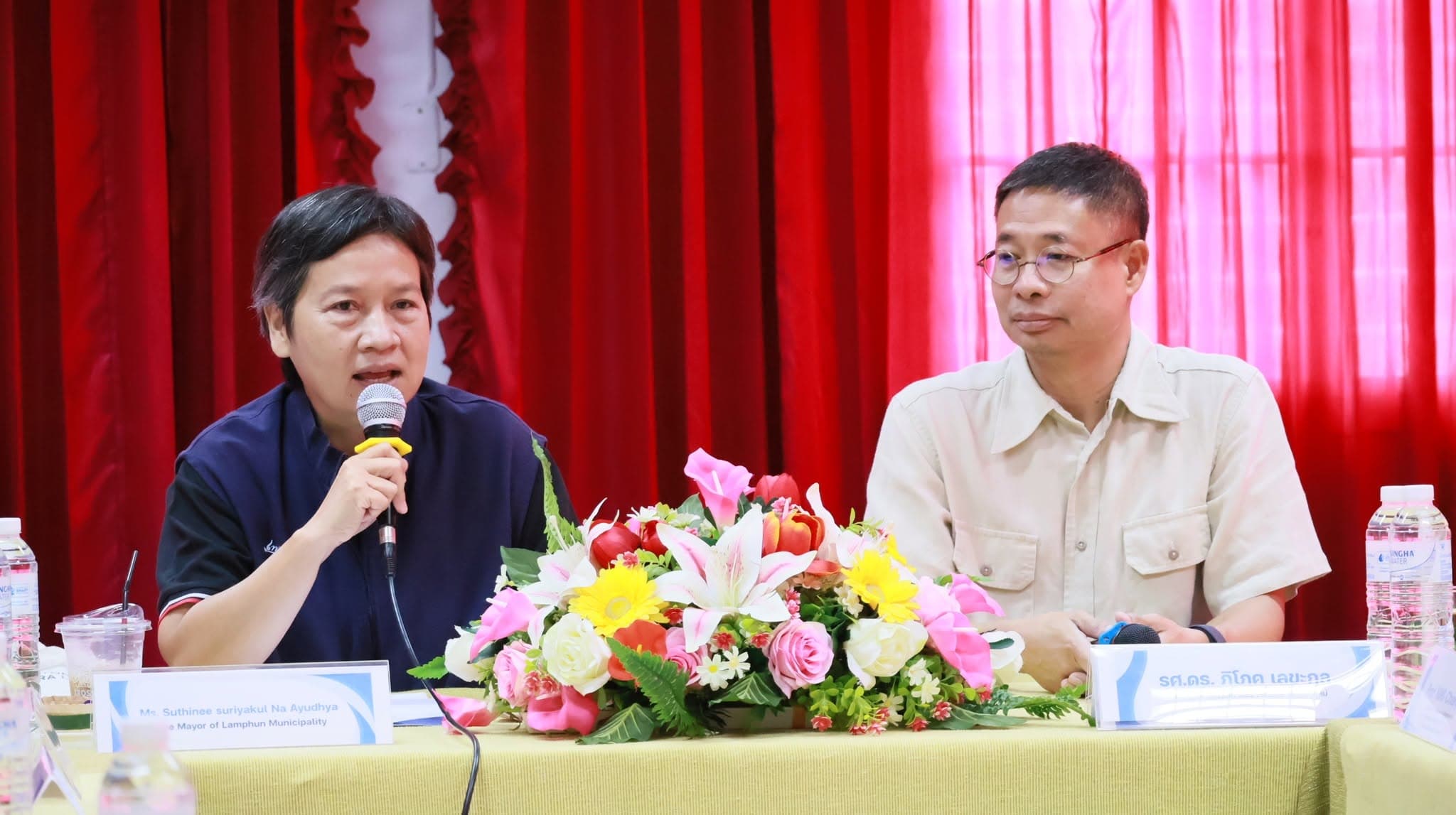
Vice Mayor Suthinee Suriyakul Na Ayudhya discusses the possibilities of international student exchanges and social practice cooperation, expressing intent to establish an MOU partnership in the future.

Director Yang Cheng-Ta shares how the Companion Program starts from senior health promotion and utilizes micro-communities as a strategy to foster engagement through sports and shared activities.
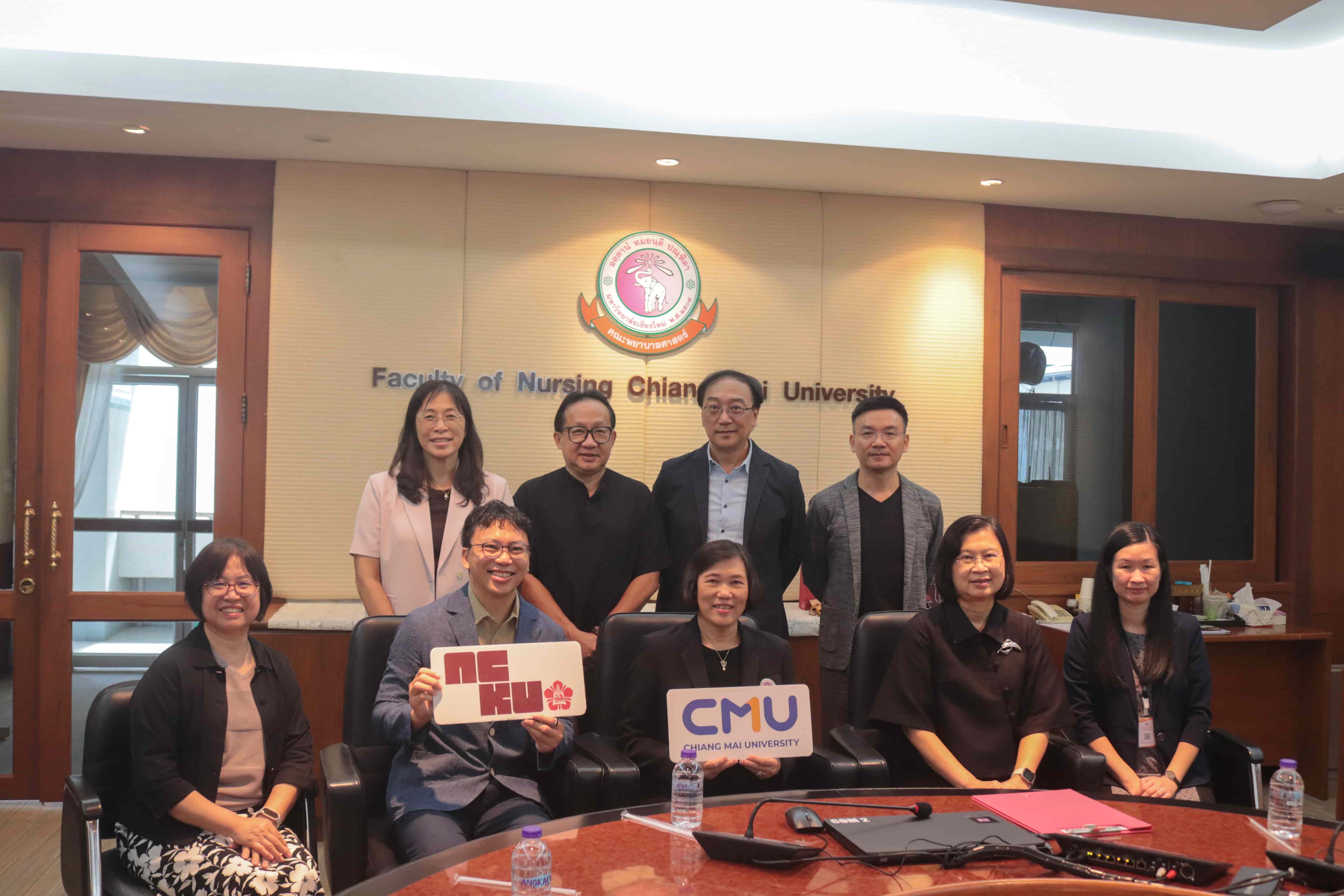
The Companion Program team, together with Chair Professor Hsu Yu-Yun of NCKU’s Department of Nursing, visits Chiang Mai University’s Faculty of Nursing to share experiences in interdisciplinary teaching, research, and international talent cultivation.
NCKU’s Humanities and Social Sciences Center officially signs a Memorandum of Understanding (MOU) with Chiang Mai University’s Faculty of Architecture.