



SDG4
Taiwan–U.S. Semiconductor Education Cooperation Deepens as U.S. Higher Education Delegation Visits NCKU and Himax Technologies
Written & Image credit to Academy of Innovative Semiconductor and Sustainable Manufacturing
To deepen Taiwan–U.S. cooperation in semiconductor education and international talent development, Charles L. Welch II, President and CEO of the American Association of State Colleges and Universities (AASCU), led a U.S. higher education delegation on a visit to the Academy of Innovative Semiconductor and Sustainable Manufacturing (AISSM) at National Cheng Kung University (NCKU) on the afternoon of September 2, 2026.
Accompanied by Director-General Dr. Joyce Yu-Jiuan Lee of the Department of International and Cross-Strait Education, Ministry of Education, and representatives from the Foundation for International Cooperation in Higher Education of Taiwan (FICHET), the delegation engaged in comprehensive discussions on semiconductor and AI talent development, international education programs, and university–industry collaboration, laying a strong foundation for bilateral cooperation in cultivating high-tech R&D talent.
The delegation, organized by AASCU, brought together senior administrators from 11 U.S. universities, including San José State University, George Mason University, Northern Arizona University, and institutions within the State University of New York (SUNY) system. Participants included provosts, engineering deans, and senior administrators responsible for academic affairs and international cooperation, who exchanged perspectives on Taiwan–U.S. collaboration in semiconductor education and talent development.
NCKU AISSM attached great importance to the visit and welcomed the delegation with a team led by Associate Dean Ming-Chi Chou, together with faculty and staff responsible for teaching and international cooperation. In his welcoming remarks, Associate Dean Chou noted that NCKU’s location in Tainan, close to the Southern Taiwan Science Park and one of Taiwan’s major semiconductor industry clusters, gives the University distinct geographic and industrial advantages in semiconductor talent development. AISSM is committed to integrating academic education, research capabilities, and industry resources while aligning talent development with real-world industry needs through interdisciplinary programs, university–industry collaboration, international exchange, and short-term training programs. As the semiconductor industry becomes increasingly globalized, Associate Dean Chou expressed his hope that the U.S.–Taiwan Semiconductor Education Alliance would further expand opportunities for student and faculty exchanges, joint education and training, research collaboration, and stronger university–industry partnerships, laying the foundation for substantive and long-term cooperation between NCKU and its U.S. partners.
Charles L. Welch II, President and CEO of the American Association of State Colleges and Universities (AASCU), delivered remarks on behalf of the U.S. delegation, expressing appreciation for the opportunity to learn more about developments in the semiconductor sector. He said the visit offered a valuable platform to deepen ties between U.S. communities and industry, while opening more educational and career opportunities for young people interested in the semiconductor field.
Advancing the Taiwan–U.S. Semiconductor Education Alliance
The U.S.–Taiwan Semiconductor Education Alliance represents an important milestone under the U.S.–Taiwan Education Initiative. During the fifth high-level dialogue held in January 2026, the two sides adopted the “U.S.–Taiwan Education Initiative New Three-Year Strategic Plan (2026–2028),” placing particular emphasis on talent exchanges in the semiconductor and AI fields.
Several Taiwanese universities with strong semiconductor education capabilities and the capacity to offer programs taught entirely in English, including NCKU, have joined the initiative. The participating institutions are committed to promoting diverse forms of cooperation, including degree programs, short-term study programs, off-site training, workshops, and industry internships. The AASCU delegation’s visit and direct engagement with both academia and industry marked another substantive and important step toward the goal of launching short-term student exchanges and training programs between Taiwan and the United States in 2027.
Connecting Global Semiconductor Talent through Education and Industry
Established in 2021 under Taiwan’s Innovation Act for Industry-Academia Collaboration and Talent Cultivation in National Key Fields, NCKU AISSM was the first operational national key-field research academy established under the initiative. Since its establishment, the Academy has been committed to integrating interdisciplinary teaching and research resources, strengthening collaboration with industry, incorporating industry needs and practical experience into talent development, and expanding partnerships overseas. Through these efforts, AISSM has built a semiconductor talent development environment that integrates professional education, industry connections, and international exchange.
In international talent development, the NCKU AISSM Semiconductor Summer School, held annually for five consecutive years, has become an important platform connecting NCKU with young semiconductor talent from around the world. The July 2026 program attracted 72 international students from 14 countries. Combining professional semiconductor training, lectures and exchanges with industry experts, corporate engagement, and cross-cultural learning, the program enables overseas students not only to acquire professional knowledge but also to gain firsthand understanding of Taiwan’s comprehensive semiconductor ecosystem and talent development environment.
Looking ahead, under the framework of Taiwan–U.S. semiconductor education cooperation, NCKU plans to deepen collaboration with U.S. universities and provide opportunities for American students to participate in the NCKU AISSM Semiconductor Summer School. Through the continued expansion of international training and student exchanges, NCKU aims to strengthen the global reach of the Summer School, transform Southern Taiwan’s geographic and industrial advantages into strengths in international education cooperation, and deepen long-term connections with overseas universities and international students.
From Higher Education and Research to Industry Practice
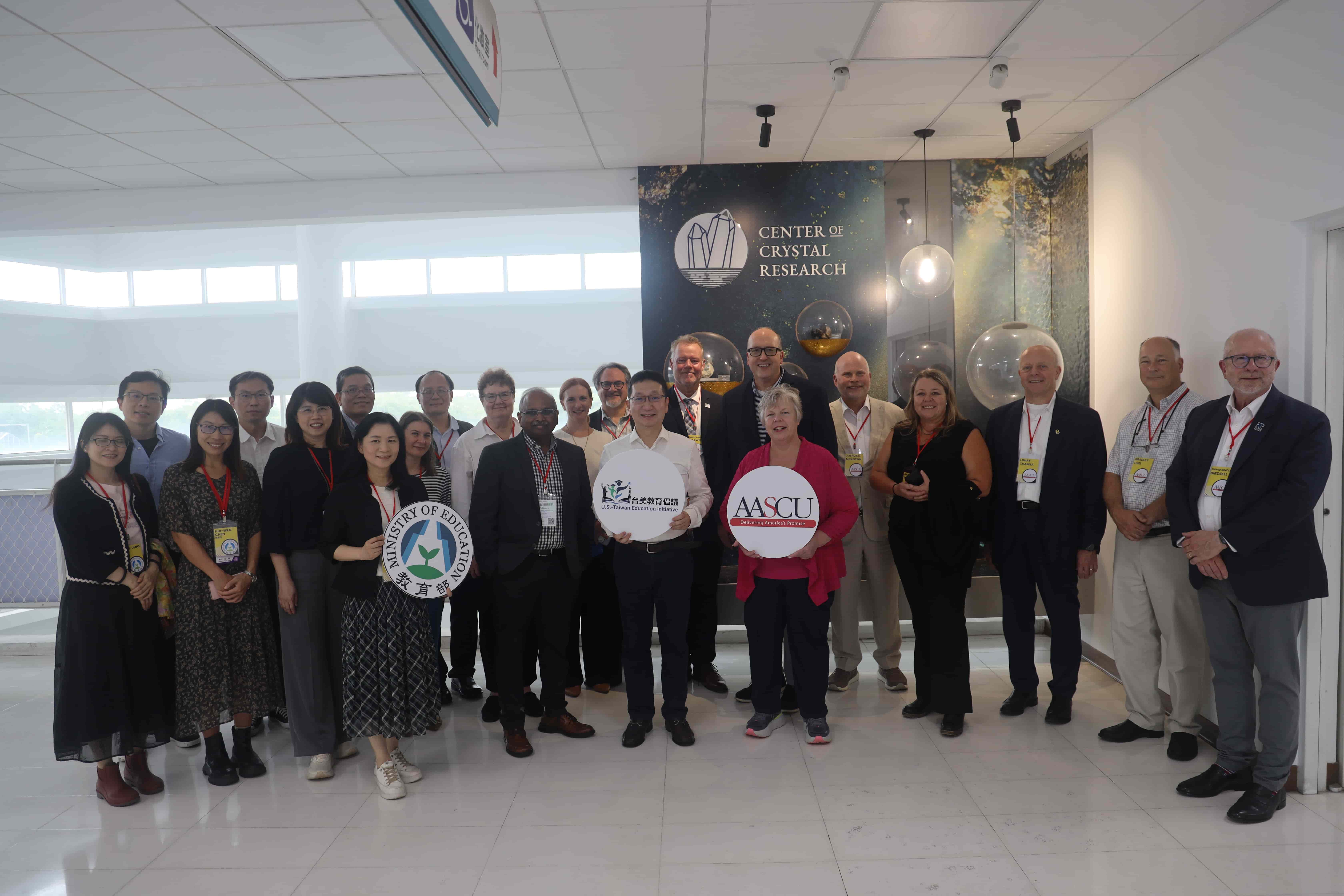
The exchange extended beyond the meeting room into both research and industry settings. The delegation first visited NCKU’s Center of Crystal Research, where participants gained firsthand insight into research and experimental capabilities related to critical semiconductor materials and learned how NCKU connects fundamental research and talent development with advances in semiconductor technology. The delegation then proceeded to Himax Technologies, a major IC design company and a longstanding semiconductor industry partner of NCKU, for an industry visit.
Himax Technologies attached great importance to the visit of the U.S. higher education delegation, with its Chairman Dr. Biing-Seng Wu personally welcoming the delegation and engaging with U.S. higher education leaders on Taiwan’s semiconductor industry development, industry talent needs, and university–industry collaboration. The direct exchange between senior industry leadership and U.S. university representatives also provided the delegation with a closer understanding of how Taiwan’s semiconductor industry is closely connected with higher education and talent development.
During the visit, Karan Kapur, an Indian engineer at Himax Technologies, introduced the delegation to the company’s technologies and practical applications, sharing insights into technological developments in Taiwan’s semiconductor industry from the perspective of a practicing engineer. Having an international engineering professional take an active role in the technical exchange also demonstrated the diverse and international talent environment within Taiwan’s semiconductor industry. From NCKU’s education and research environment to industry practice at Himax Technologies, the visit highlighted the close integration of talent development, academic research, and industrial innovation within Southern Taiwan’s semiconductor ecosystem.
Turning Exchange into Concrete Taiwan–U.S. Collaboration
The delegation’s visit was more than an inter-university exchange; it represented an important opportunity for the U.S.–Taiwan Semiconductor Education Alliance to deepen substantive cooperation.
Through dialogue among higher education, research institutions, and industry, NCKU hopes to translate these exchanges into concrete partnerships spanning student and faculty mobility, talent development, research collaboration, and university–industry engagement, thereby continuing to broaden and deepen Taiwan–U.S. cooperation in semiconductor education.
In an era of intense global competition for semiconductor talent and highly interconnected supply chains, talent development increasingly transcends individual campuses and national borders. Building on its position within Southern Taiwan’s semiconductor industry cluster, NCKU will continue to leverage its comprehensive strengths in education, research, and industry collaboration while connecting global talent and partners through international cooperation.
Through these efforts, Taiwan can serve not only as a critical hub of the global semiconductor industry but also as an important international center for semiconductor education, exchange, and collaboration.
Provider: NCKU News Center
Date: 2026-09-02
To deepen Taiwan–U.S. cooperation in semiconductor education and international talent development, Charles L. Welch II, President and CEO of the American Association of State Colleges and Universities (AASCU), led a U.S. higher education delegation on a visit to the Academy of Innovative Semiconductor and Sustainable Manufacturing (AISSM) at National Cheng Kung University (NCKU) on the afternoon of September 2, 2026.
Accompanied by Director-General Dr. Joyce Yu-Jiuan Lee of the Department of International and Cross-Strait Education, Ministry of Education, and representatives from the Foundation for International Cooperation in Higher Education of Taiwan (FICHET), the delegation engaged in comprehensive discussions on semiconductor and AI talent development, international education programs, and university–industry collaboration, laying a strong foundation for bilateral cooperation in cultivating high-tech R&D talent.
The delegation, organized by AASCU, brought together senior administrators from 11 U.S. universities, including San José State University, George Mason University, Northern Arizona University, and institutions within the State University of New York (SUNY) system. Participants included provosts, engineering deans, and senior administrators responsible for academic affairs and international cooperation, who exchanged perspectives on Taiwan–U.S. collaboration in semiconductor education and talent development.
NCKU AISSM attached great importance to the visit and welcomed the delegation with a team led by Associate Dean Ming-Chi Chou, together with faculty and staff responsible for teaching and international cooperation. In his welcoming remarks, Associate Dean Chou noted that NCKU’s location in Tainan, close to the Southern Taiwan Science Park and one of Taiwan’s major semiconductor industry clusters, gives the University distinct geographic and industrial advantages in semiconductor talent development. AISSM is committed to integrating academic education, research capabilities, and industry resources while aligning talent development with real-world industry needs through interdisciplinary programs, university–industry collaboration, international exchange, and short-term training programs. As the semiconductor industry becomes increasingly globalized, Associate Dean Chou expressed his hope that the U.S.–Taiwan Semiconductor Education Alliance would further expand opportunities for student and faculty exchanges, joint education and training, research collaboration, and stronger university–industry partnerships, laying the foundation for substantive and long-term cooperation between NCKU and its U.S. partners.
Charles L. Welch II, President and CEO of the American Association of State Colleges and Universities (AASCU), delivered remarks on behalf of the U.S. delegation, expressing appreciation for the opportunity to learn more about developments in the semiconductor sector. He said the visit offered a valuable platform to deepen ties between U.S. communities and industry, while opening more educational and career opportunities for young people interested in the semiconductor field.
Advancing the Taiwan–U.S. Semiconductor Education Alliance
The U.S.–Taiwan Semiconductor Education Alliance represents an important milestone under the U.S.–Taiwan Education Initiative. During the fifth high-level dialogue held in January 2026, the two sides adopted the “U.S.–Taiwan Education Initiative New Three-Year Strategic Plan (2026–2028),” placing particular emphasis on talent exchanges in the semiconductor and AI fields.
Several Taiwanese universities with strong semiconductor education capabilities and the capacity to offer programs taught entirely in English, including NCKU, have joined the initiative. The participating institutions are committed to promoting diverse forms of cooperation, including degree programs, short-term study programs, off-site training, workshops, and industry internships. The AASCU delegation’s visit and direct engagement with both academia and industry marked another substantive and important step toward the goal of launching short-term student exchanges and training programs between Taiwan and the United States in 2027.
Connecting Global Semiconductor Talent through Education and Industry
Established in 2021 under Taiwan’s Innovation Act for Industry-Academia Collaboration and Talent Cultivation in National Key Fields, NCKU AISSM was the first operational national key-field research academy established under the initiative. Since its establishment, the Academy has been committed to integrating interdisciplinary teaching and research resources, strengthening collaboration with industry, incorporating industry needs and practical experience into talent development, and expanding partnerships overseas. Through these efforts, AISSM has built a semiconductor talent development environment that integrates professional education, industry connections, and international exchange.
In international talent development, the NCKU AISSM Semiconductor Summer School, held annually for five consecutive years, has become an important platform connecting NCKU with young semiconductor talent from around the world. The July 2026 program attracted 72 international students from 14 countries. Combining professional semiconductor training, lectures and exchanges with industry experts, corporate engagement, and cross-cultural learning, the program enables overseas students not only to acquire professional knowledge but also to gain firsthand understanding of Taiwan’s comprehensive semiconductor ecosystem and talent development environment.
Looking ahead, under the framework of Taiwan–U.S. semiconductor education cooperation, NCKU plans to deepen collaboration with U.S. universities and provide opportunities for American students to participate in the NCKU AISSM Semiconductor Summer School. Through the continued expansion of international training and student exchanges, NCKU aims to strengthen the global reach of the Summer School, transform Southern Taiwan’s geographic and industrial advantages into strengths in international education cooperation, and deepen long-term connections with overseas universities and international students.
From Higher Education and Research to Industry Practice
The exchange extended beyond the meeting room into both research and industry settings. The delegation first visited NCKU’s Center of Crystal Research, where participants gained firsthand insight into research and experimental capabilities related to critical semiconductor materials and learned how NCKU connects fundamental research and talent development with advances in semiconductor technology. The delegation then proceeded to Himax Technologies, a major IC design company and a longstanding semiconductor industry partner of NCKU, for an industry visit.
Himax Technologies attached great importance to the visit of the U.S. higher education delegation, with its Chairman Dr. Biing-Seng Wu personally welcoming the delegation and engaging with U.S. higher education leaders on Taiwan’s semiconductor industry development, industry talent needs, and university–industry collaboration. The direct exchange between senior industry leadership and U.S. university representatives also provided the delegation with a closer understanding of how Taiwan’s semiconductor industry is closely connected with higher education and talent development.
During the visit, Karan Kapur, an Indian engineer at Himax Technologies, introduced the delegation to the company’s technologies and practical applications, sharing insights into technological developments in Taiwan’s semiconductor industry from the perspective of a practicing engineer. Having an international engineering professional take an active role in the technical exchange also demonstrated the diverse and international talent environment within Taiwan’s semiconductor industry. From NCKU’s education and research environment to industry practice at Himax Technologies, the visit highlighted the close integration of talent development, academic research, and industrial innovation within Southern Taiwan’s semiconductor ecosystem.
Turning Exchange into Concrete Taiwan–U.S. Collaboration
The delegation’s visit was more than an inter-university exchange; it represented an important opportunity for the U.S.–Taiwan Semiconductor Education Alliance to deepen substantive cooperation.
Through dialogue among higher education, research institutions, and industry, NCKU hopes to translate these exchanges into concrete partnerships spanning student and faculty mobility, talent development, research collaboration, and university–industry engagement, thereby continuing to broaden and deepen Taiwan–U.S. cooperation in semiconductor education.
In an era of intense global competition for semiconductor talent and highly interconnected supply chains, talent development increasingly transcends individual campuses and national borders. Building on its position within Southern Taiwan’s semiconductor industry cluster, NCKU will continue to leverage its comprehensive strengths in education, research, and industry collaboration while connecting global talent and partners through international cooperation.
Through these efforts, Taiwan can serve not only as a critical hub of the global semiconductor industry but also as an important international center for semiconductor education, exchange, and collaboration.
Provider: NCKU News Center
Date: 2026-09-02
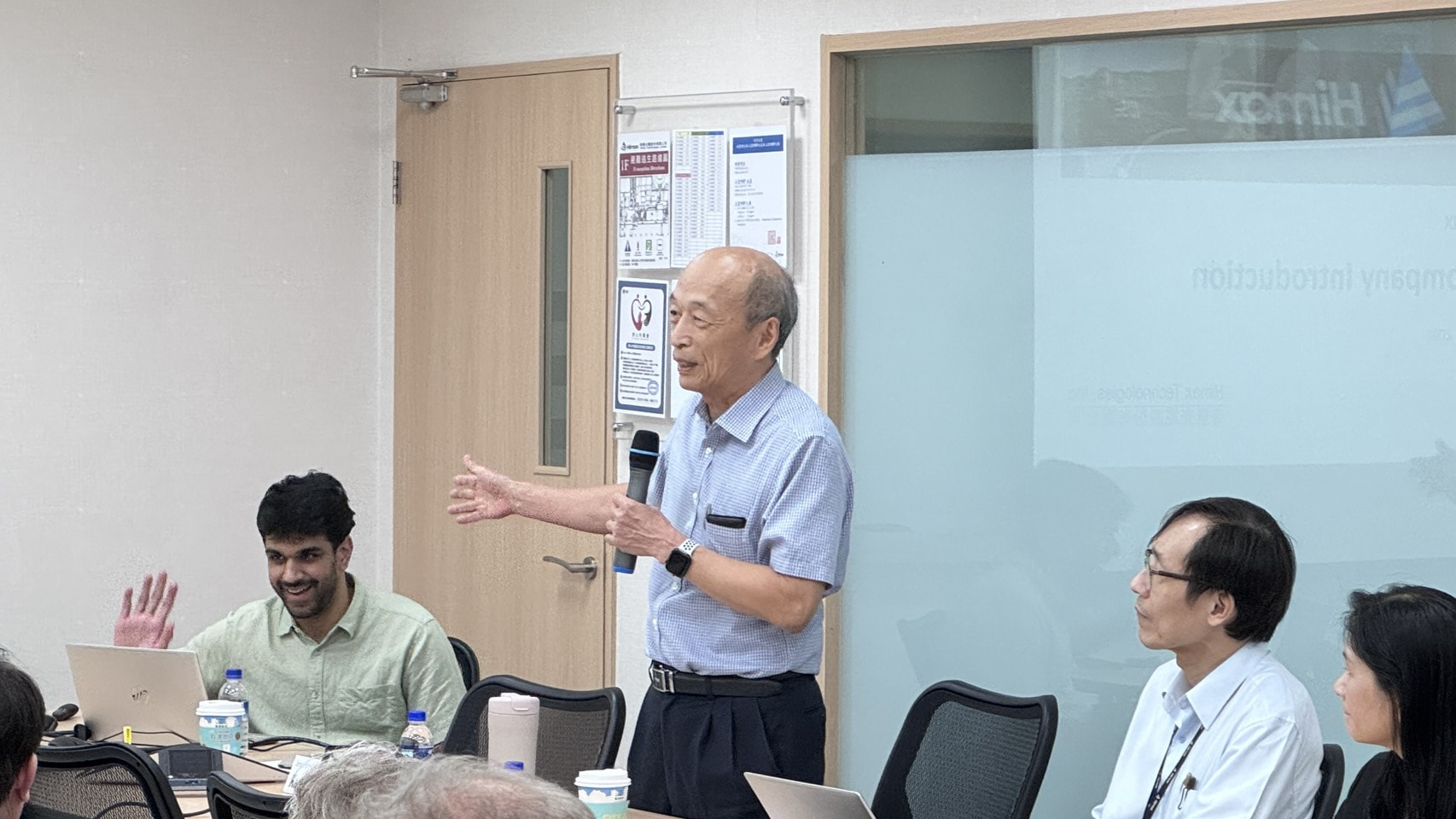
The U.S. higher education delegation visited Himax Technologies, where Chairman Dr. Biing-Seng Wu personally welcomed the delegation and provided an introduction, offering insights into Taiwan’s semiconductor industry development, talent needs, and industry-academia collaboration.
The U.S. delegation visits NCKU’s Center of Crystal Research to learn firsthand about semiconductor-related research facilities and capabilities.
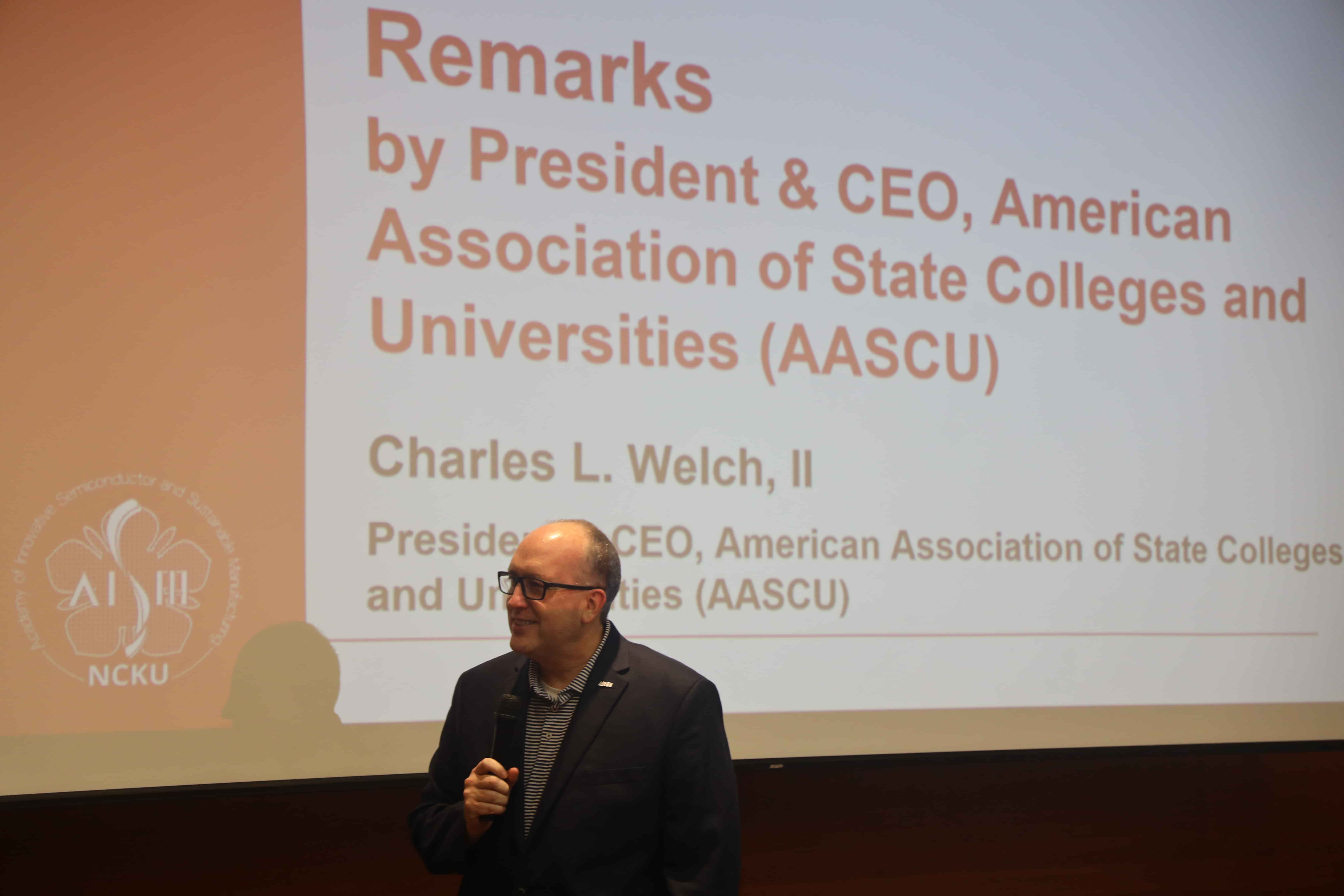
Charles L. Welch II, President and CEO of the American Association of State Colleges and Universities (AASCU), delivers remarks on behalf of the U.S. delegation.
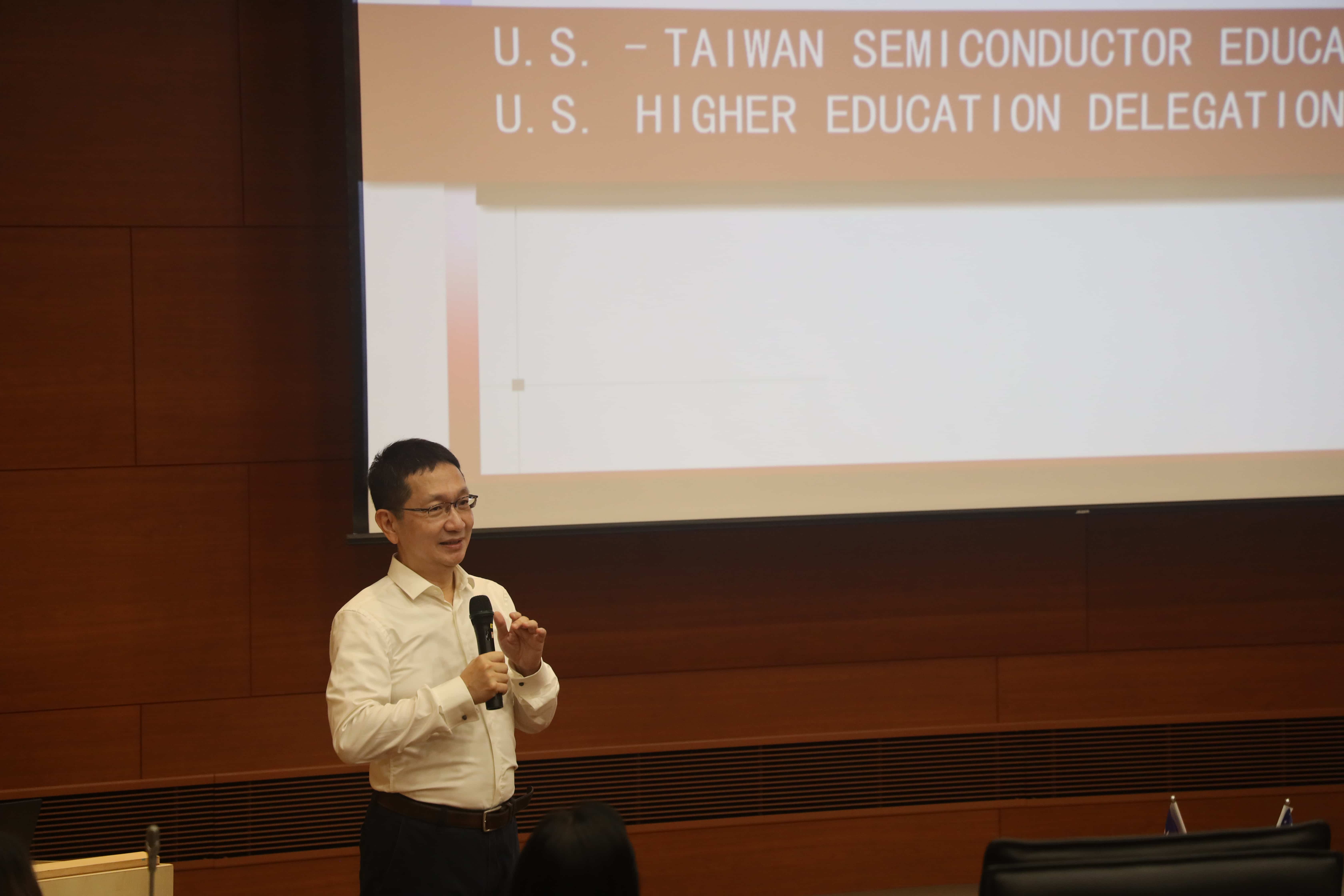
Associate Dean Ming-Chi Chou of NCKU AISSM delivers welcoming remarks on behalf of National Cheng Kung University to the visiting U.S. higher education delegation.
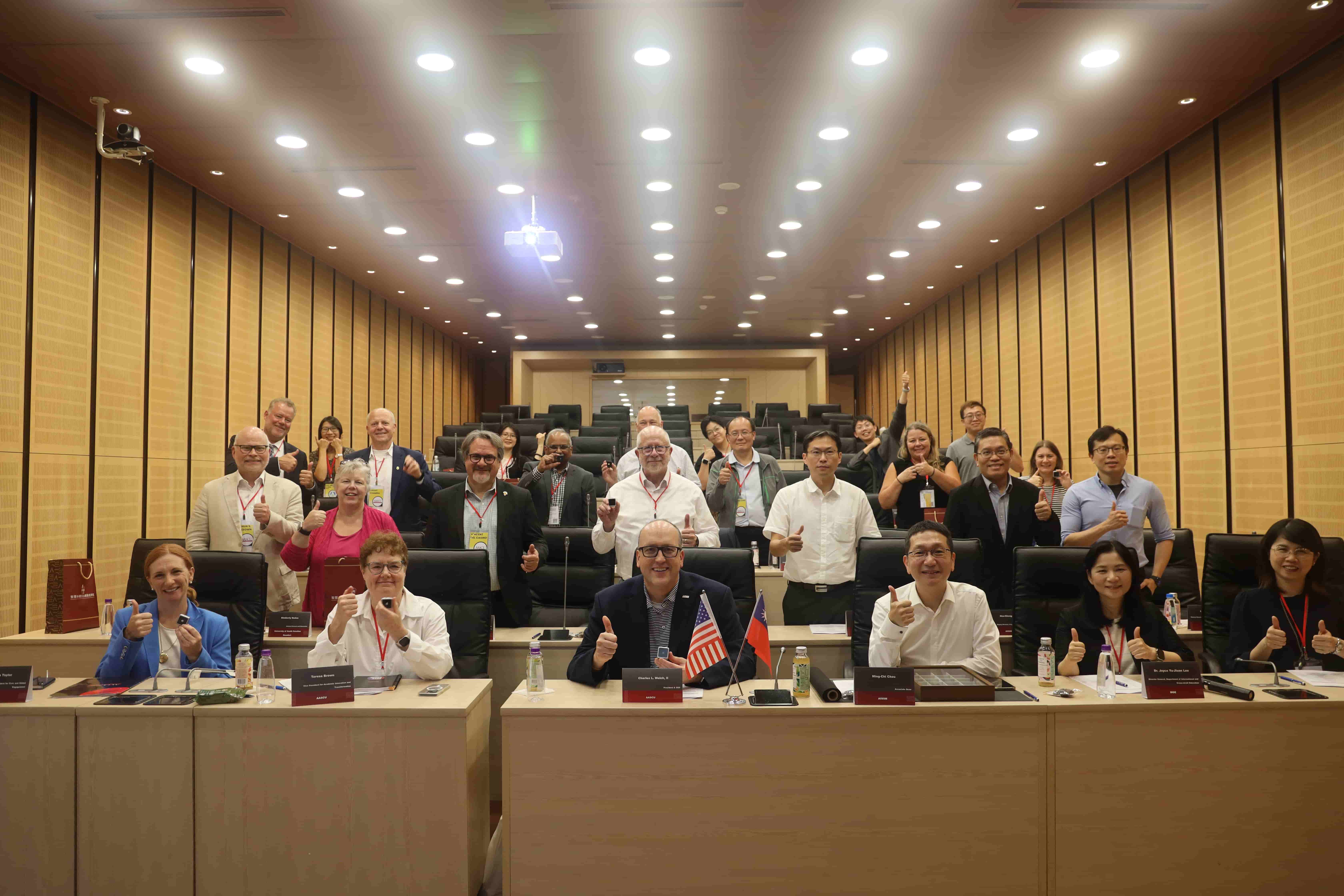
Representatives from Taiwan and the United States engage in discussions and take a group photo, further strengthening cooperation in semiconductor education and talent development.
SDG4NCKU's Traditional Opera and Citizen Judge Course: A New Interdisciplinary Artistic Perspective.
View more
SDG4The first Nova Scholars meeting brings together NCKU North America alumni to inspire young scholars.
View more