



SDG15
NCKU Badlands Co-Creation USR Project Joins Forces Across Domains to Build a Model Area for the Zuojin Landscape Corridor
On September 4, the National Cheng Kung University (NCKU) Badlands Co-Creation USR Project team hosted a briefing and field survey session in Gongguan Community, Zuojin District, Tainan City, for the "Nann171/171-1 Line Landscape Corridor Demonstration Area Action Proposal". Together with the Gongguan Community Development Association, the team invited over 20 partners from four key organizations: the Chiayi Branch of the Forestry and Nature Conservation Agency (MOA), the Tainan Branch of the Agency of Rural Development and Soil and Water Conservation (MOA), the Water Resources Bureau of Tainan City Government, and the Zuojin District Office.
Through inter-agency discussion and cross-sector collaboration, the action proposal aims to provide nature-based solutions with multi-fold benefits to tackle local Thorny Bamboo hazards. Furthermore, it seeks to pioneer a new cross-departmental governance model, offering novel possibilities for public-private partnerships in rural regions.
This proposal was launched in 2025 by Professor Wei-Ju Huang of NCKU’s Department of Urban Planning, who co-chairs the Badlands Co-Creation USR Project. Building upon three years of practical achievements from the Graduate Institute of Urban Planning's "Sustainable Urban and Regional Marketing Practicum," Professor Huang continues to leverage strategic spatial planning expertise to foster sustainable rural development.
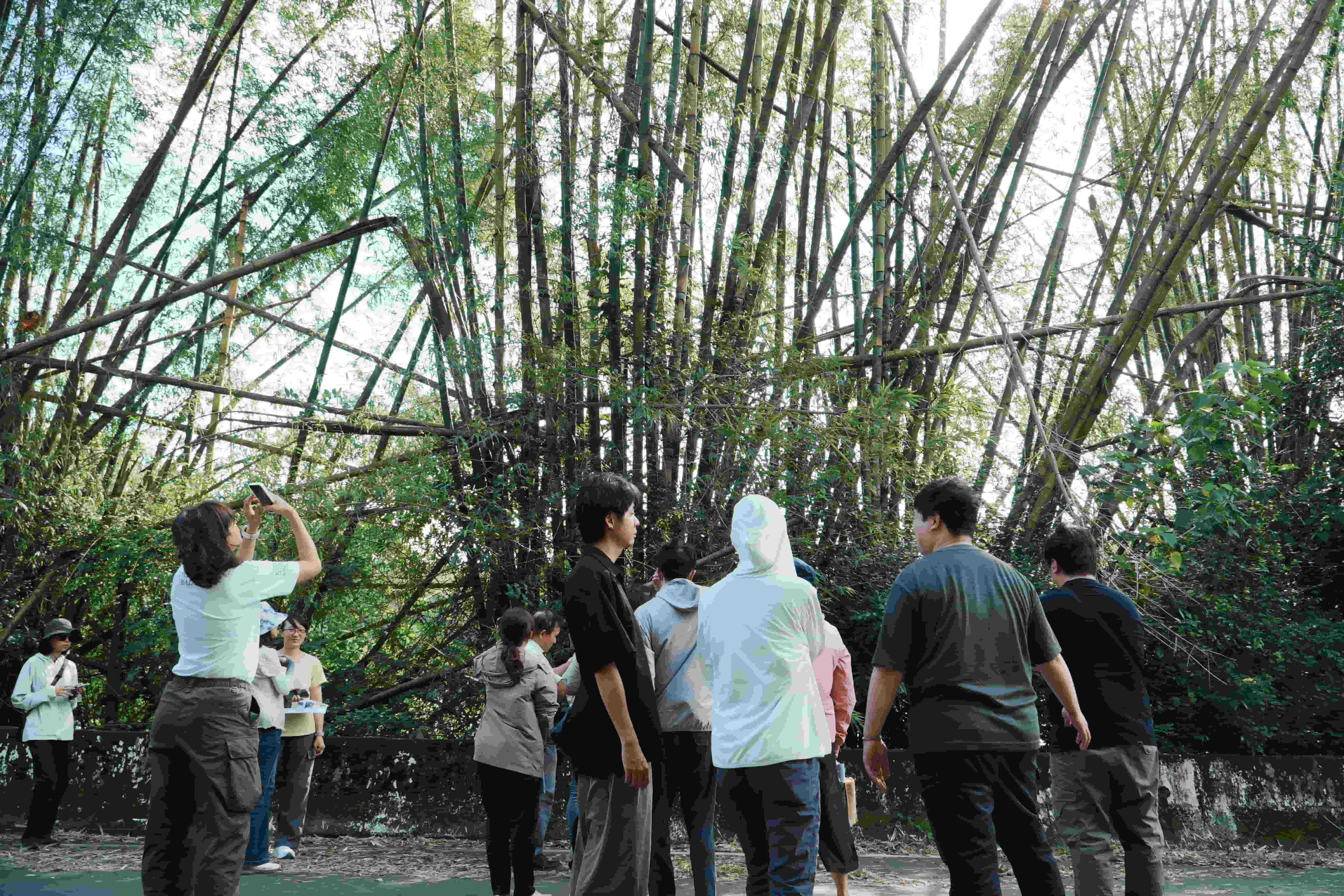
Thorny Bamboo is a vital forestry resource in Taiwan's low-elevation hill areas. However, due to rural depopulation and industrial decline, local bamboo forests have long lacked proper cultivation and management. Overgrown aging bamboo thickets along roadsides not only threaten traffic safety and spoil natural aesthetics, but also increase the risks of forest fires and slope hazards. This underscores the critical need for bamboo ecosystem conversion to protect land safety, maintain resources, and spur local industry through public and central-local joint efforts.
The Badlands Co-Creation USR Project has long been committed to broad-scale policy advocacy, working with multi-level institutions and local communities to adopt strategic and practical measures that drive local transformation. By establishing a "Landscape Corridor Demonstration Area," the team hopes that innovative cross-agency partner discussions will go beyond disaster prevention to also address tourism, forest conservation, and local industrial growth.
Since 2025, the action plan has progressed through spatial mapping analysis, strategy formulation, stakeholder visits, and community dialogues. Forestry experts were consulted regarding Thorny Bamboo removal techniques and recommended replacement plantings. Consequently, three roadside public land plots with high bamboo hazard risks were identified as potential demonstration sections. This event served to engage forestry, soil/water conservation, and rural development agencies in discussions and site inspections to build consensus and establish early demonstration routes and long-term implementation mechanisms.
Hsiu-Tuan Huang, Secretary of the Chiayi Branch of the Forestry and Nature Conservation Agency, noted that the event was a highly meaningful occasion for public-private partnership. She highlighted that the agency has been actively connecting diverse entities in recent years to resolve regional forestry governance issues, and that working toward a shared vision will turn goals into reality.
Other attending entities, including the Zuojin District Office, the Tainan Branch of the Agency of Rural Development and Soil and Water Conservation, and the Tainan City Water Resources Bureau, sequentially shared relevant policy alignment, available resources, and cooperation intentions, propelling the initiative forward to its next phase.
Through inter-agency discussion and cross-sector collaboration, the action proposal aims to provide nature-based solutions with multi-fold benefits to tackle local Thorny Bamboo hazards. Furthermore, it seeks to pioneer a new cross-departmental governance model, offering novel possibilities for public-private partnerships in rural regions.
This proposal was launched in 2025 by Professor Wei-Ju Huang of NCKU’s Department of Urban Planning, who co-chairs the Badlands Co-Creation USR Project. Building upon three years of practical achievements from the Graduate Institute of Urban Planning's "Sustainable Urban and Regional Marketing Practicum," Professor Huang continues to leverage strategic spatial planning expertise to foster sustainable rural development.
Thorny Bamboo is a vital forestry resource in Taiwan's low-elevation hill areas. However, due to rural depopulation and industrial decline, local bamboo forests have long lacked proper cultivation and management. Overgrown aging bamboo thickets along roadsides not only threaten traffic safety and spoil natural aesthetics, but also increase the risks of forest fires and slope hazards. This underscores the critical need for bamboo ecosystem conversion to protect land safety, maintain resources, and spur local industry through public and central-local joint efforts.
The Badlands Co-Creation USR Project has long been committed to broad-scale policy advocacy, working with multi-level institutions and local communities to adopt strategic and practical measures that drive local transformation. By establishing a "Landscape Corridor Demonstration Area," the team hopes that innovative cross-agency partner discussions will go beyond disaster prevention to also address tourism, forest conservation, and local industrial growth.
Since 2025, the action plan has progressed through spatial mapping analysis, strategy formulation, stakeholder visits, and community dialogues. Forestry experts were consulted regarding Thorny Bamboo removal techniques and recommended replacement plantings. Consequently, three roadside public land plots with high bamboo hazard risks were identified as potential demonstration sections. This event served to engage forestry, soil/water conservation, and rural development agencies in discussions and site inspections to build consensus and establish early demonstration routes and long-term implementation mechanisms.
Hsiu-Tuan Huang, Secretary of the Chiayi Branch of the Forestry and Nature Conservation Agency, noted that the event was a highly meaningful occasion for public-private partnership. She highlighted that the agency has been actively connecting diverse entities in recent years to resolve regional forestry governance issues, and that working toward a shared vision will turn goals into reality.
Other attending entities, including the Zuojin District Office, the Tainan Branch of the Agency of Rural Development and Soil and Water Conservation, and the Tainan City Water Resources Bureau, sequentially shared relevant policy alignment, available resources, and cooperation intentions, propelling the initiative forward to its next phase.
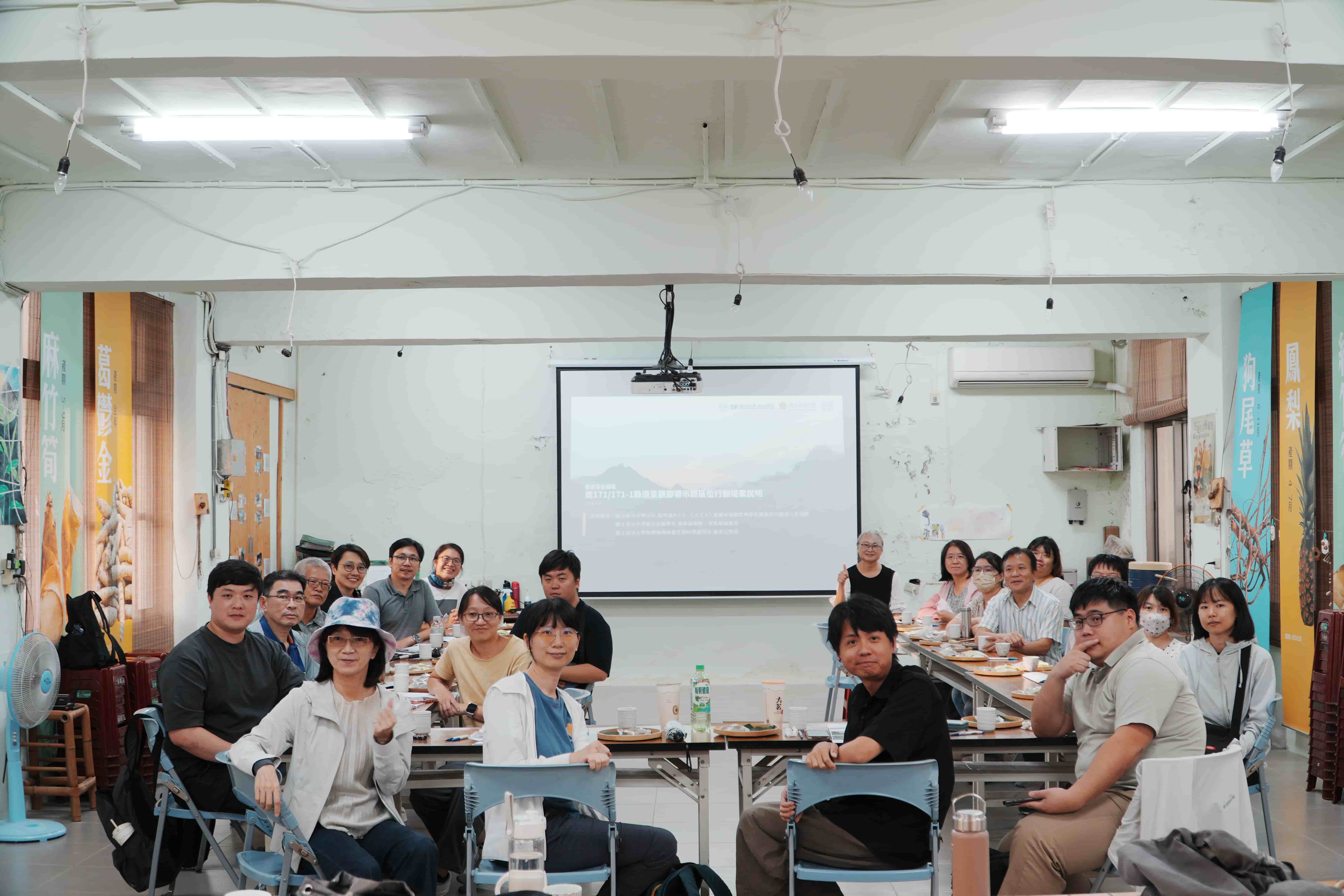
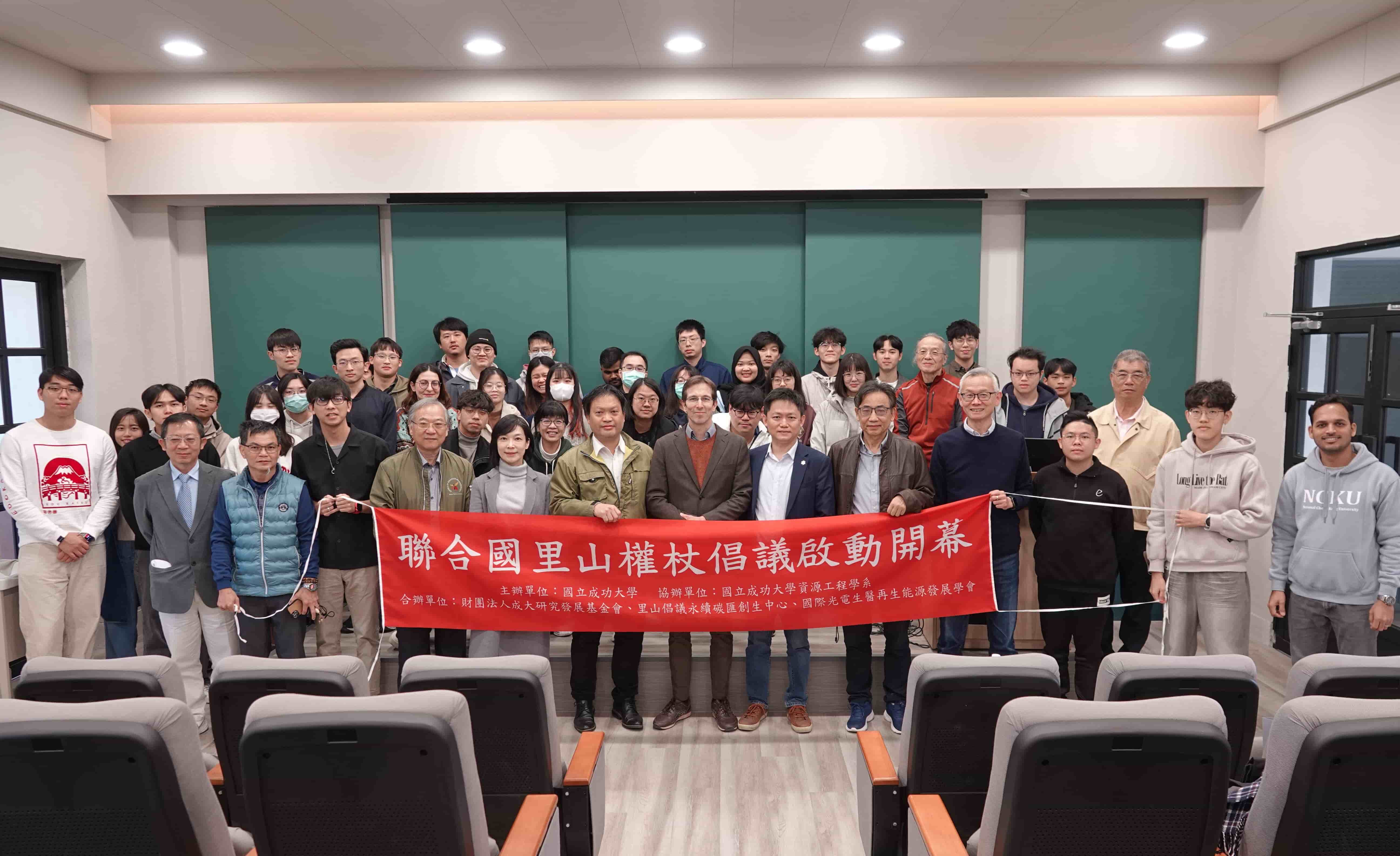
Group photo from the briefing session and field survey for the "Nann171/171-1 Line Landscape Corridor Demonstration Area Action Proposal."
Participating partners conduct an on-site survey at three potential demonstration sections along the landscape corridor.
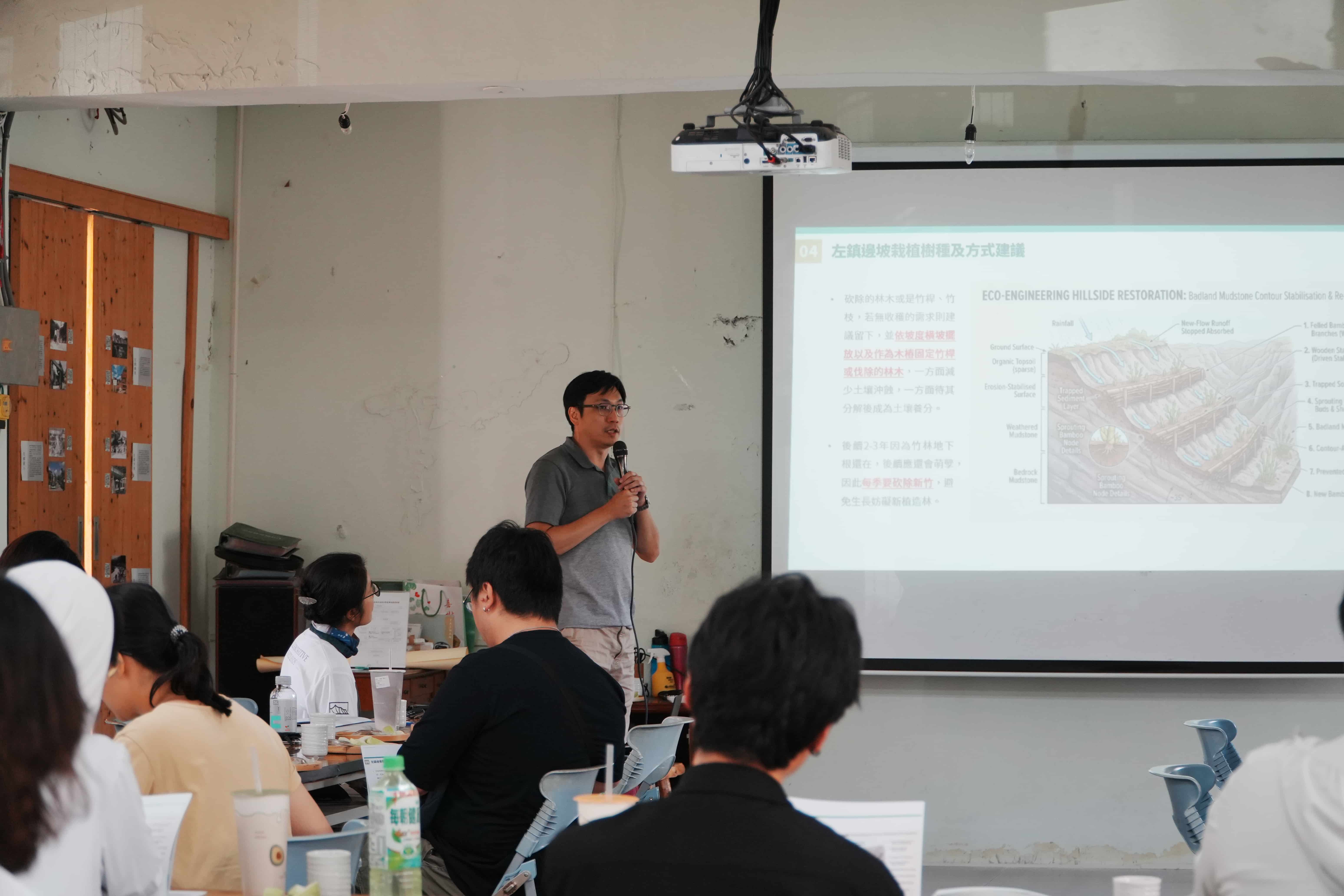
Professor Chao-Li Huang from the NCKU Institute of Tropical Plant Sciences and Microbiology provides planting recommendations.
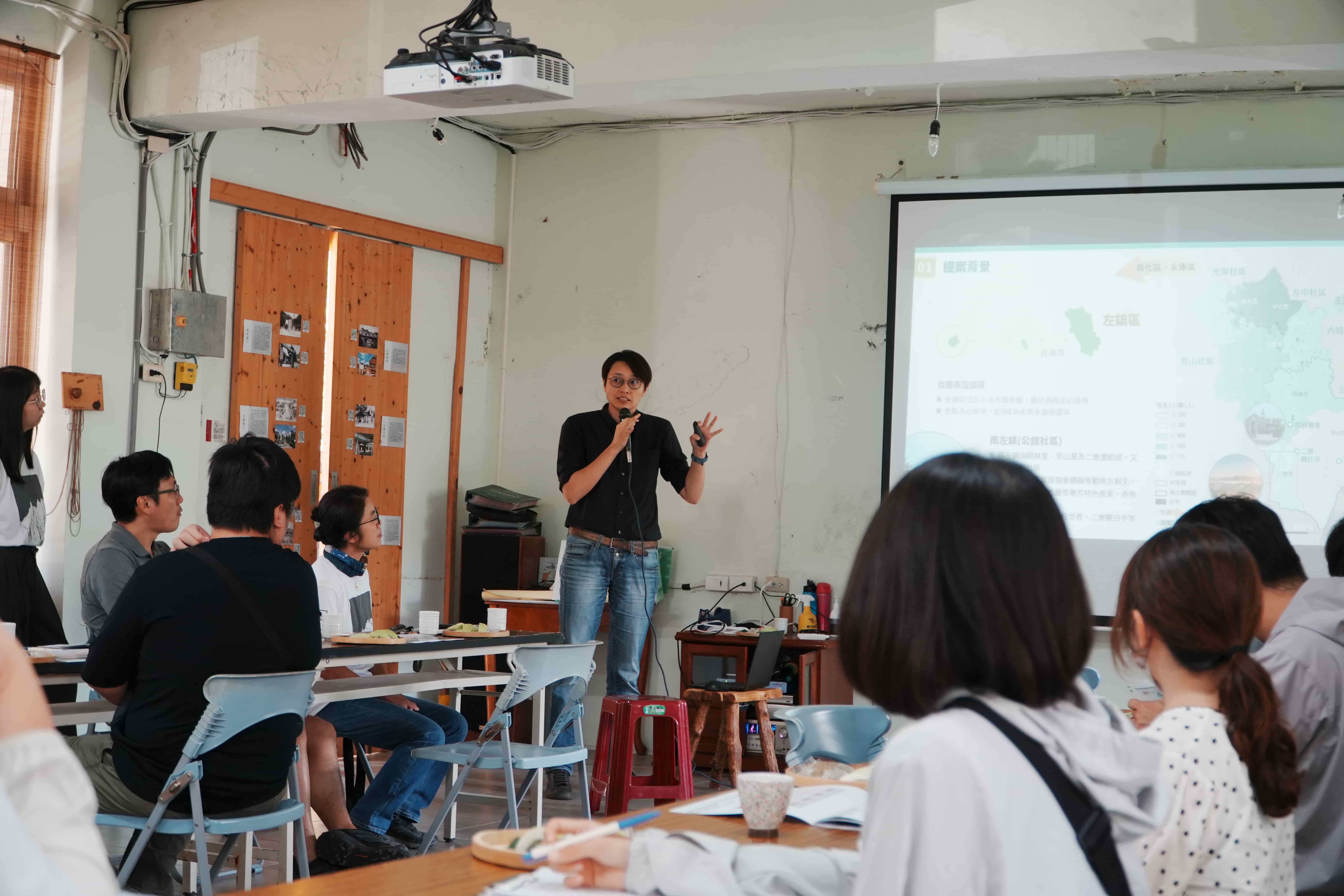
Professor Wei-Ju Huang, initiator of the Landscape Corridor Demonstration Area Action Proposal, presents the project outline.