



SDG17
NCKU Preservice Teachers Join US Practicum to Drive International Education Exchange
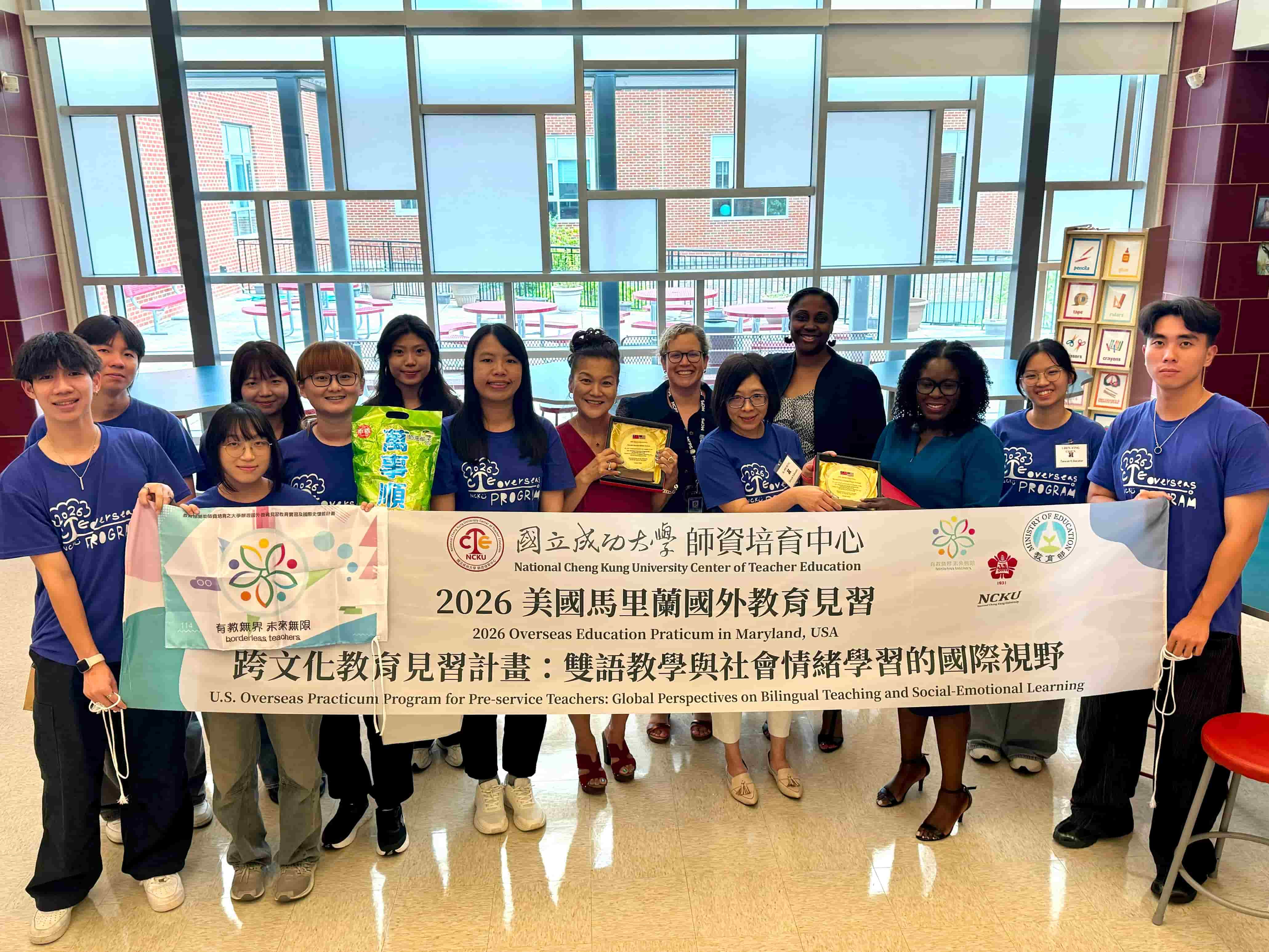
Supported by the Ministry of Education's "Teaching Without Borders" project, National Cheng Kung University (NCKU) Center for Teacher Education extended its collaboration with Montgomery County Public Schools (MCPS) in Maryland, USA. Led by Project Director Professor Su-Ping Hung and Co-Director Assistant Professor Yun-Ting Huang, eight preservice teachers returned to Herbert Hoover Middle School for a two-week overseas educational practicum. Through class observations, joint lesson preparation, teaching participation, and professional exchanges, students accumulated valuable experience in bilingual instruction, Social and Emotional Learning (SEL), and cross-cultural education.
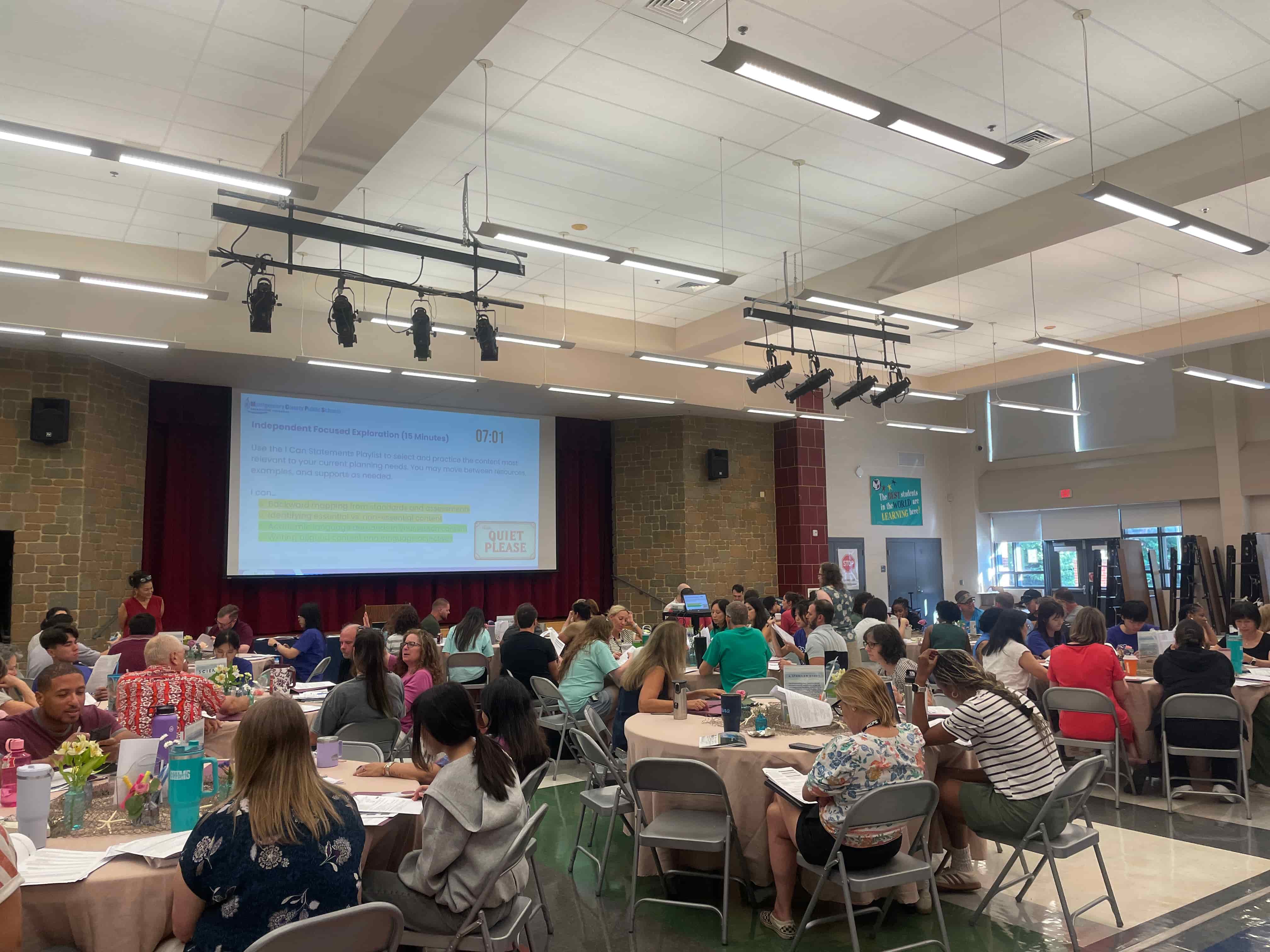
The practicum utilized a one-on-one mentorship model with local teachers guiding each preservice teacher. The first week coincided with the pre-school preparation week, during which preservice teachers engaged in team building, interdisciplinary lesson planning, and administrative preparation, gaining insight into how US schools integrate SEL and teamwork into campus life. In the second week, they entered classrooms for observation and co-teaching, connecting theoretical knowledge from teacher training courses with real classroom practices.
During classroom observations, Department of Foreign Languages and Literature student Chia-Yi Chiang noted that small group seating and positive slogans effectively support cooperative learning and classroom management. Department of Life Sciences student Chen-Ying Chien observed the importance of hands-on activities in science classes, where students developed critical thinking and collaboration skills through designing experiments, creating models, and interpreting charts. Department of Political Science student Chen-Yi Su observed how teachers build trust through daily interactions, serving as key mentors who support student learning and growth.
Another major focus of this year's program was enhancing preservice teachers' experience in bilingual instruction and active classroom participation. Working with students of diverse language proficiencies and cultural backgrounds, preservice teachers observed how host teachers adapted instructional language, questioning strategies, and activity design to facilitate learning. Department of Taiwanese Literature student Yi-Chieh Chen participated in World Languages Chinese classes, observing how teachers built an immersive environment using high proportions of Chinese alongside body language and interactive tasks to accommodate varied language levels and learning needs.
Beyond classroom teaching, preservice teachers explored how SEL is integrated into classes, counseling, and school culture through workshops and campus observations. During a guidance office observation, Department of Psychology student Chia-Yi Wen saw a counselor assist a newly arrived Japanese student who felt anxious in the unfamiliar environment. The counselor asked Wen to share her own feelings upon first arriving in the US, helping the student realize that anxiety is a normal reaction to new surroundings. This guidance experience demonstrated that SEL extends beyond classroom activities into daily school routines, supporting student adaptation and growth through institutional counseling and campus resources.
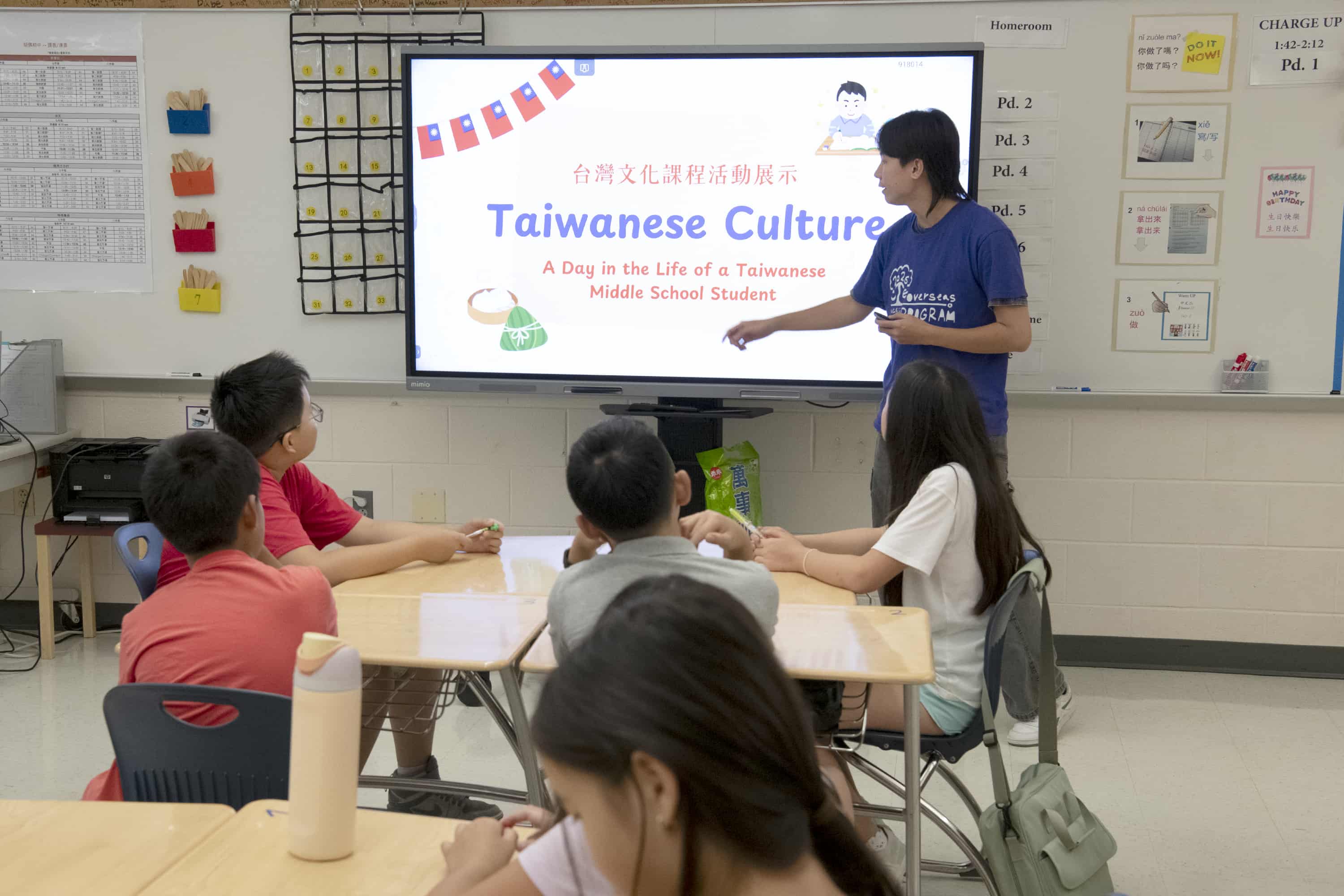
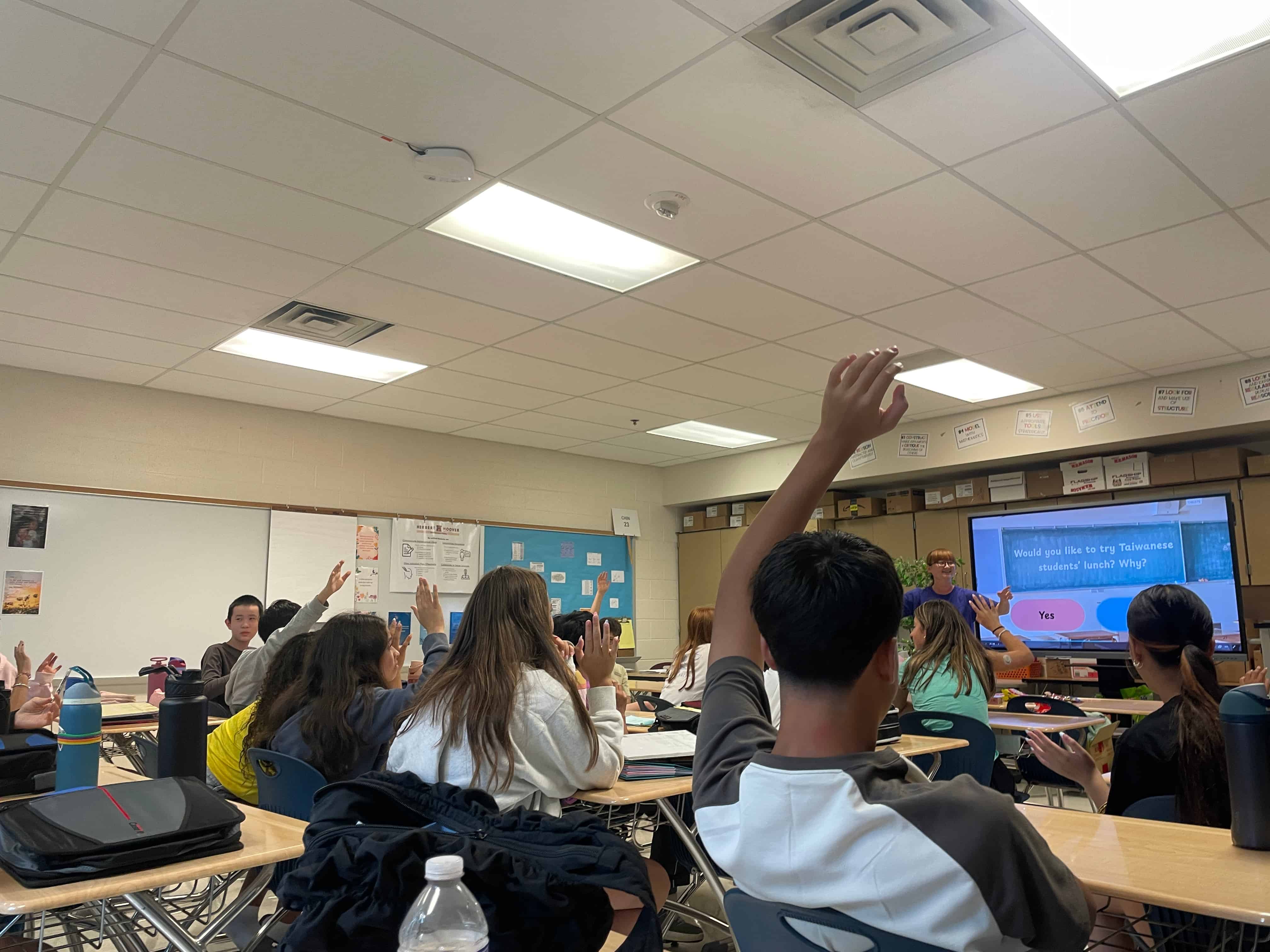
Preservice teachers also brought Taiwanese culture into US classrooms by introducing Taiwan’s languages, traditions, and daily life, complete with hands-on activities such as poke-box games and Taiwanese snacks. Department of Physics graduate student Chun-Te Liao recalled an enthusiastic response following a cultural presentation when an American student exclaimed, "I want to go to Taiwan right now!" and invited classmates to travel together. Active Q&A sessions transformed cultural exchange from one-way presentations into two-way dialogues. These warm responses not only demonstrated the impact of cultural sharing but also reconnected Liao deeply with his home culture.
The team also visited Washington Taiwanese Christian Church / Taiwan School to observe how Taiwanese language and cultural education are practiced overseas. Department of Political Science student Cheng-Yun Cheng reflected on the importance of language in connecting families, land, and culture through local teachers' efforts in promoting the Taiwanese language, prompting deeper reflection on the relationship between cultural roots and international exchange.
The itinerary additionally included visits to Twin Oaks and other historical and cultural sites. Department of Physics student Wen-Hung Liao shared that a guided tour of the US Capitol helped him better understand the context of American constitutional democracy, civil rights, and landmark legislation. This experience highlighted the hard-earned nature of democratic systems, reinforcing the value of freedom and democracy along with a citizen's responsibility to protect them.
From observation to participation, and from participation to reflection—Director Su-Ping Hung noted that the practicum not only introduced preservice teachers to different educational systems and teaching methods, but also inspired them to reflect on how to apply these insights back in Taiwan. Moving forward, preservice teachers will transform these observations, experiences, and reflections into rich nutrition for their ongoing teaching practice and professional growth.
The practicum utilized a one-on-one mentorship model with local teachers guiding each preservice teacher. The first week coincided with the pre-school preparation week, during which preservice teachers engaged in team building, interdisciplinary lesson planning, and administrative preparation, gaining insight into how US schools integrate SEL and teamwork into campus life. In the second week, they entered classrooms for observation and co-teaching, connecting theoretical knowledge from teacher training courses with real classroom practices.
During classroom observations, Department of Foreign Languages and Literature student Chia-Yi Chiang noted that small group seating and positive slogans effectively support cooperative learning and classroom management. Department of Life Sciences student Chen-Ying Chien observed the importance of hands-on activities in science classes, where students developed critical thinking and collaboration skills through designing experiments, creating models, and interpreting charts. Department of Political Science student Chen-Yi Su observed how teachers build trust through daily interactions, serving as key mentors who support student learning and growth.
Another major focus of this year's program was enhancing preservice teachers' experience in bilingual instruction and active classroom participation. Working with students of diverse language proficiencies and cultural backgrounds, preservice teachers observed how host teachers adapted instructional language, questioning strategies, and activity design to facilitate learning. Department of Taiwanese Literature student Yi-Chieh Chen participated in World Languages Chinese classes, observing how teachers built an immersive environment using high proportions of Chinese alongside body language and interactive tasks to accommodate varied language levels and learning needs.
Beyond classroom teaching, preservice teachers explored how SEL is integrated into classes, counseling, and school culture through workshops and campus observations. During a guidance office observation, Department of Psychology student Chia-Yi Wen saw a counselor assist a newly arrived Japanese student who felt anxious in the unfamiliar environment. The counselor asked Wen to share her own feelings upon first arriving in the US, helping the student realize that anxiety is a normal reaction to new surroundings. This guidance experience demonstrated that SEL extends beyond classroom activities into daily school routines, supporting student adaptation and growth through institutional counseling and campus resources.
Preservice teachers also brought Taiwanese culture into US classrooms by introducing Taiwan’s languages, traditions, and daily life, complete with hands-on activities such as poke-box games and Taiwanese snacks. Department of Physics graduate student Chun-Te Liao recalled an enthusiastic response following a cultural presentation when an American student exclaimed, "I want to go to Taiwan right now!" and invited classmates to travel together. Active Q&A sessions transformed cultural exchange from one-way presentations into two-way dialogues. These warm responses not only demonstrated the impact of cultural sharing but also reconnected Liao deeply with his home culture.
The team also visited Washington Taiwanese Christian Church / Taiwan School to observe how Taiwanese language and cultural education are practiced overseas. Department of Political Science student Cheng-Yun Cheng reflected on the importance of language in connecting families, land, and culture through local teachers' efforts in promoting the Taiwanese language, prompting deeper reflection on the relationship between cultural roots and international exchange.
The itinerary additionally included visits to Twin Oaks and other historical and cultural sites. Department of Physics student Wen-Hung Liao shared that a guided tour of the US Capitol helped him better understand the context of American constitutional democracy, civil rights, and landmark legislation. This experience highlighted the hard-earned nature of democratic systems, reinforcing the value of freedom and democracy along with a citizen's responsibility to protect them.
From observation to participation, and from participation to reflection—Director Su-Ping Hung noted that the practicum not only introduced preservice teachers to different educational systems and teaching methods, but also inspired them to reflect on how to apply these insights back in Taiwan. Moving forward, preservice teachers will transform these observations, experiences, and reflections into rich nutrition for their ongoing teaching practice and professional growth.
The principal of Herbert Hoover Middle School and MCPS staff visit NCKU professors and eight preservice teachers for a group photo.
Preservice teachers participate in a full-faculty administrative meeting to learn key annual school matters and join discussions on pedagogical topics.
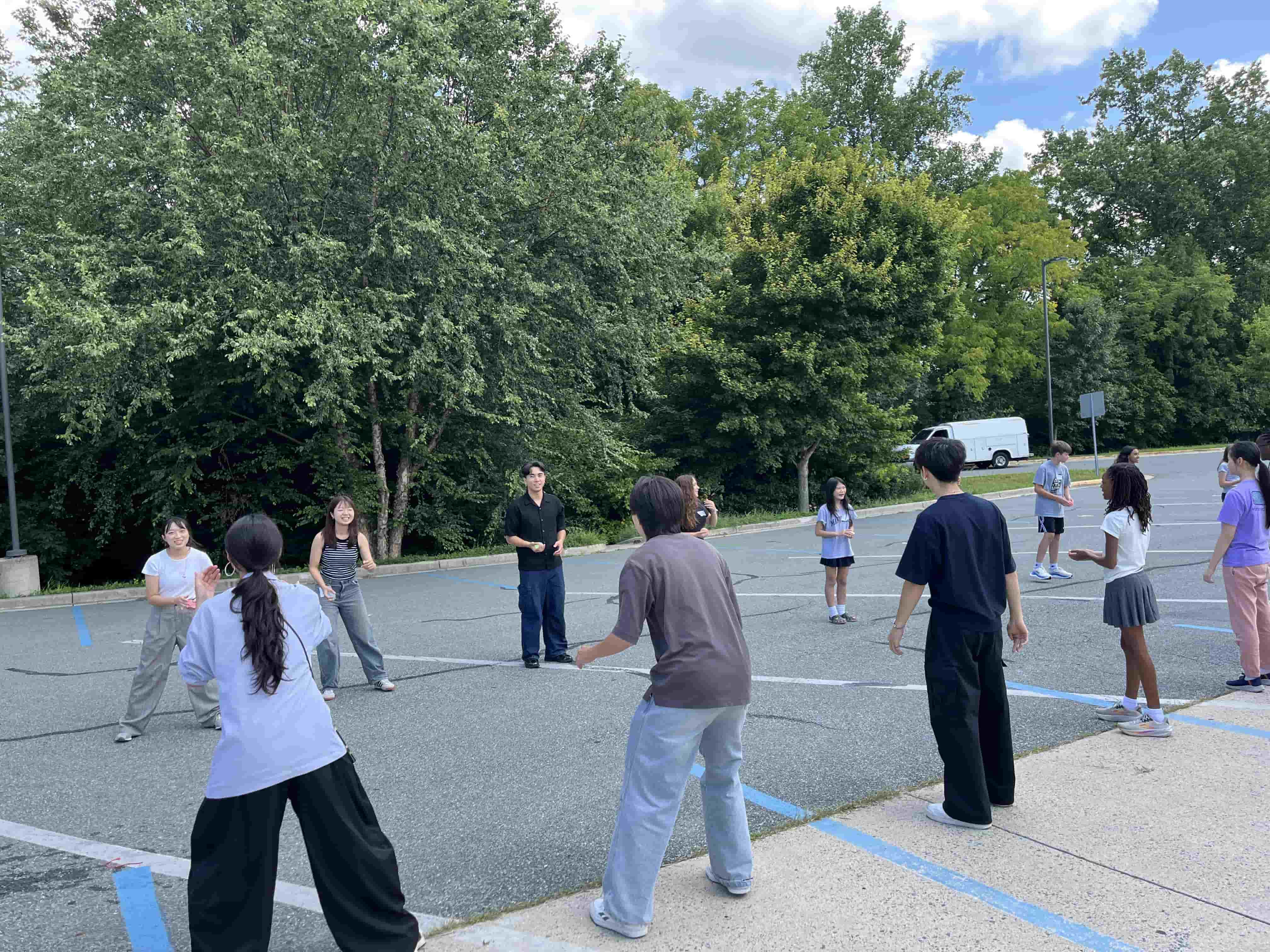
Preservice teachers join the New Student Transition Day activities, using interactive games to build connections and help new students reduce anxiety about the new environment.
Preservice teachers enter classrooms to introduce Taiwanese culture and engage with students through interactive activities.
Students actively participate in class, enthusiastically raising their hands to respond and interact with preservice teachers.