

SDG13
EU Environmental Psychologist Prof. Ricardo García Mira Lectures at NCKU on Nature-Based Solutions Driving Urban Renewal
Text & Photo / Department of Architecture, NCKU
On October 13, the College of Planning and Design at National Cheng Kung University (NCKU) invited Prof. Ricardo García Mira from the Department of Social and Environmental Psychology at the University of A Coruña, Spain, for an international exchange and lecture. Drawing on his own experience, Prof. García Mira spoke on "Urban Renewal with Nature-Based Solutions: An Environmental Psychology Approach," illustrating how academic research can step-by-step inform policy formulation.
Prof. García Mira previously served as President of the International Association for People-Environment Studies (IAPS), European Regional Editor of the Journal of Architectural and Planning Research, and a Member of the Spanish Parliament serving as spokesperson on climate change issues. His career spans academic research, parliamentary legislation, and urban governance, making him a leading scholar in integrating research with policy. For over a decade, the interdisciplinary research team led by Prof. García Mira has participated in multiple EU Framework Programmes (FP7, Horizon 2020, and Horizon Europe) with partners across more than 40 countries. Their research covers sustainable lifestyles and the green economy (GLAMURS), social innovation transitions (TRANSIT), energy transitions and social innovation (SMARTEES), energy transitions in carbon-intensive regions (ENTRANCES), and urban nature-based solutions (CONNECTING Nature), as well as the ongoing health and climate change project (TRIGGER) and the critical raw materials resilience project (TiBeRIUM) launched in 2026—all closely aligned with EU decarbonization and green economy policies.
During the lecture, Prof. García Mira cited the CONNECTING Nature project to explain the significance of Nature-Based Solutions (NBS) for urban renewal. Beyond mitigating risks brought by climate change and supplementing infrastructure deficits, these solutions enhance residents' well-being, sense of safety, and community cohesion. Referencing Stress Reduction Theory and Attention Restoration Theory, he noted that green spaces help restore psychological resources. Studies have also shown that higher levels of greenery around buildings correlate with lower crime rates, while mutual trust and interaction among neighbors enable communities to respond to risks more effectively.
Regarding how research influences policy, Prof. García Mira shared insights from the GLAMURS project, explaining how the team adopted a "knowledge co-production" approach that enabled researchers, policymakers, and stakeholders to jointly generate knowledge throughout the research process. The project's findings were subsequently cited as a reference in legislation passed by the Spanish Parliament in April 2016. He also cautioned that translating research into policy often stalls due to overly rigid disciplinary silos, single-source knowledge, and a lack of effective collaboration among stakeholders, emphasizing that university education should cultivate interdisciplinary and transdisciplinary collaborative capabilities.
In closing, Prof. García Mira recommended three promising research directions: the experience, meaning, and management of urban green spaces; public participation models in urban planning and sustainable governance; and human factors and risk analysis in sustainability transitions. He encouraged faculty and students in architecture and planning to bring environmental psychology perspectives into design and policy discussions, sparking an enthusiastic response from the audience.

EU environmental psychologist Prof. Ricardo García Mira lectures at NCKU on nature-based solutions driving urban renewal.

Prof. Ricardo García Mira shares EU research projects and practical experiences.
Chair En-Yu Huang of the NCKU Department of Architecture presents a gift to the speaker.

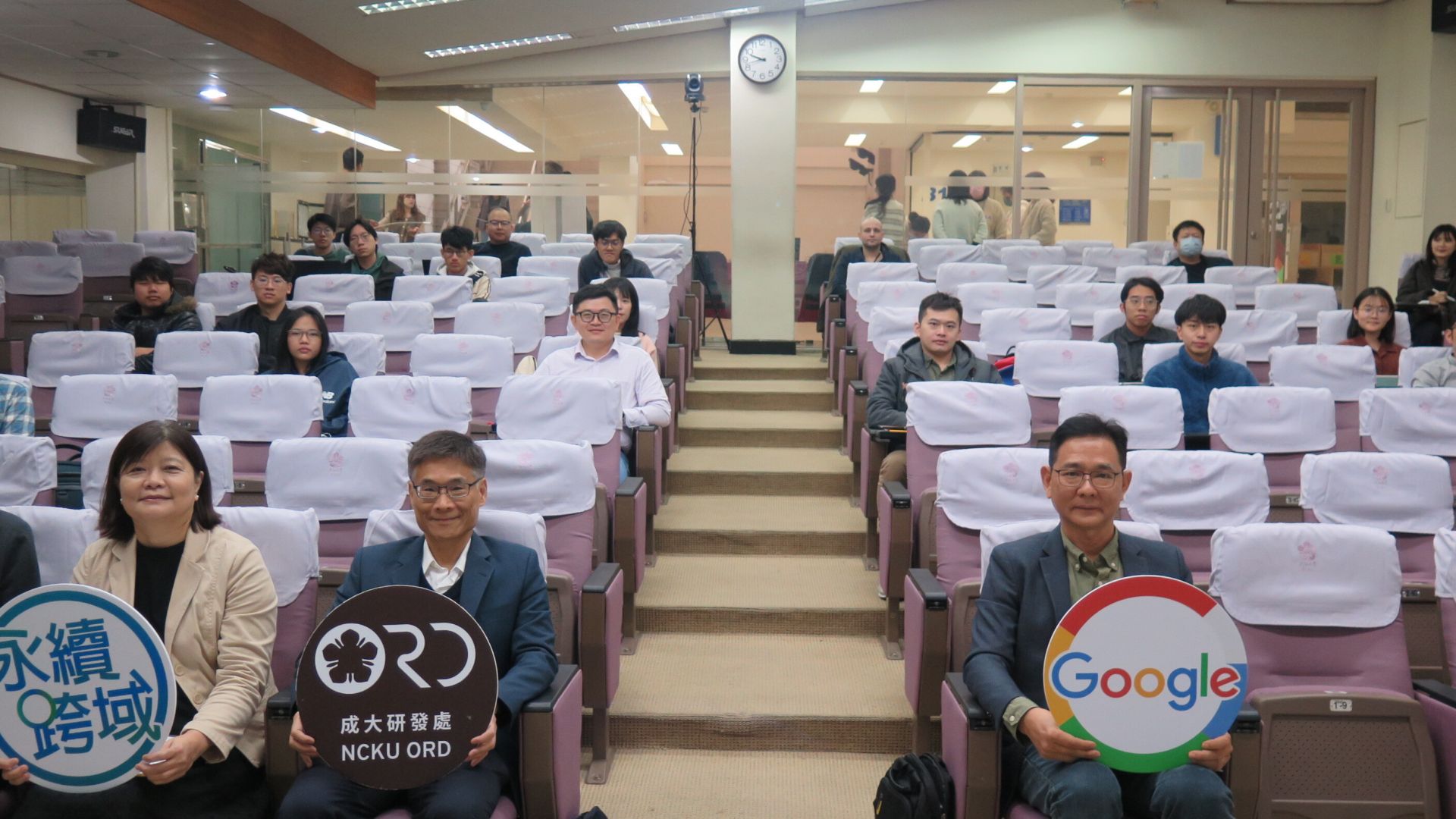
Group photo of participants (from right: Associate Professor Li-Wen Sung of the NCKU Department of Architecture; Prof. Ricardo García Mira of the Department of Social and Environmental Psychology, University of A Coruña, Spain; and Prof. Tzuhui Angie Tseng of the Department of Environmental and Cultural Resources, National Tsing Hua University).