




SDG4
Qisda Group Supports NCKU’s Department of Electrical Engineering in Establishing an Innovation Space


Distinguished National Cheng Kung University (NCKU) alumnus Mr. Chi-Hung Chen (陳其宏), Chairman of Qisda Group (佳世達集團), has long cared about the development of his alma mater and generously donated a series of instruments and equipment to assist the Department of Electrical Engineering in creating an innovative hub that integrates cross-disciplinary research and practical applications. On November 10, ahead of NCKU’s 94th anniversary, the department held the unveiling ceremony of the “OPEN LAB Innovation Space” named after Qisda, encouraging students to fully utilize the facility’s hardware resources and open environment to spark more forward-looking research outcomes.
The OPEN LAB Innovation Space is located on the first floor of the Department of Electrical Engineering’s Building 3 (Qi-Duan Hall, 啟端館). Qisda Group generously donated 3D printers, laser engraving machines, measuring instruments, robotics kits, oscilloscopes, signal generators, and other equipment, as well as contributed to the design and interior setup of the space. The department stated that this donation not only significantly enhances experimental capabilities but also provides students with a high-quality environment for free ideation, experimental verification, and practical application.
Dean Shih-Chun Wu (吳士駿) of the College of Electrical Engineering and Computer Science expressed gratitude to Chairman Chi-Hung Chen for supporting the department. He noted that the OPEN LAB Innovation Space will become a venue where students can turn ideas into practice and connect their academic knowledge with real-world applications. He encouraged everyone to make full use of the space, embrace failure without fear, and boldly pursue dreams, experimentation, and innovation.
Department Chair Meng-Hsueh Chiang (江孟學) remarked that the OPEN LAB was planned two years ago, gradually turning the concept into reality and continuously upgrading the equipment. Recently, he has seen students soldering and assembling devices, and others using the 3D printing equipment to build robots and complete their theses. He believes that NCKU Electrical Engineering students will be able to unleash even more imagination and creativity in this space.
Chairman Chi-Hung Chen, an alumnus of the Department of Electrical Engineering (Class of ROC 74), received the NCKU Outstanding Alumni Achievement Award in 2018 and currently serves as Chairman of the NCKU Global Alumni Association. Having achieved success in his career, he actively gives back to his alma mater, placing special emphasis on the department’s research capabilities in artificial intelligence, Internet of Things, semiconductors, and smart healthcare.
He stated that the NCKU Department of Electrical Engineering has nurtured countless outstanding talents and serves as an important pillar of Taiwan’s technology industry. Through this donation, he hopes that students can freely access the OPEN LAB Innovation Space whenever inspiration strikes or innovative ideas emerge, to discuss, implement, and test them using the provided instruments. This “learning by doing” approach aims to cultivate students’ ability to identify problems, apply design thinking, and implement practical solutions, encouraging them to boldly pursue innovative concepts. Moreover, he hopes students will exchange ideas and collaborate in this open and creative environment, fostering cross-disciplinary cooperation and generating more breakthrough research and entrepreneurial opportunities.
The Department of Electrical Engineering emphasized that the OPEN LAB Innovation Space will serve as an important platform for faculty – student collaboration and industry–academia connection. In the future, it will not only support department-related courses and research projects but will also be open for students’ independent use, nurturing young talents with both creativity and practical skills. Qisda Group’s support demonstrates a model of enterprise–academia collaboration, and through resource provision and knowledge transfer, it opens more opportunities for NCKU Electrical Engineering students to explore and practice their ideas, further strengthening Taiwan’s competitiveness in global technology development.
The OPEN LAB Innovation Space is located on the first floor of the Department of Electrical Engineering’s Building 3 (Qi-Duan Hall, 啟端館). Qisda Group generously donated 3D printers, laser engraving machines, measuring instruments, robotics kits, oscilloscopes, signal generators, and other equipment, as well as contributed to the design and interior setup of the space. The department stated that this donation not only significantly enhances experimental capabilities but also provides students with a high-quality environment for free ideation, experimental verification, and practical application.
Dean Shih-Chun Wu (吳士駿) of the College of Electrical Engineering and Computer Science expressed gratitude to Chairman Chi-Hung Chen for supporting the department. He noted that the OPEN LAB Innovation Space will become a venue where students can turn ideas into practice and connect their academic knowledge with real-world applications. He encouraged everyone to make full use of the space, embrace failure without fear, and boldly pursue dreams, experimentation, and innovation.
Department Chair Meng-Hsueh Chiang (江孟學) remarked that the OPEN LAB was planned two years ago, gradually turning the concept into reality and continuously upgrading the equipment. Recently, he has seen students soldering and assembling devices, and others using the 3D printing equipment to build robots and complete their theses. He believes that NCKU Electrical Engineering students will be able to unleash even more imagination and creativity in this space.
Chairman Chi-Hung Chen, an alumnus of the Department of Electrical Engineering (Class of ROC 74), received the NCKU Outstanding Alumni Achievement Award in 2018 and currently serves as Chairman of the NCKU Global Alumni Association. Having achieved success in his career, he actively gives back to his alma mater, placing special emphasis on the department’s research capabilities in artificial intelligence, Internet of Things, semiconductors, and smart healthcare.
He stated that the NCKU Department of Electrical Engineering has nurtured countless outstanding talents and serves as an important pillar of Taiwan’s technology industry. Through this donation, he hopes that students can freely access the OPEN LAB Innovation Space whenever inspiration strikes or innovative ideas emerge, to discuss, implement, and test them using the provided instruments. This “learning by doing” approach aims to cultivate students’ ability to identify problems, apply design thinking, and implement practical solutions, encouraging them to boldly pursue innovative concepts. Moreover, he hopes students will exchange ideas and collaborate in this open and creative environment, fostering cross-disciplinary cooperation and generating more breakthrough research and entrepreneurial opportunities.
The Department of Electrical Engineering emphasized that the OPEN LAB Innovation Space will serve as an important platform for faculty – student collaboration and industry–academia connection. In the future, it will not only support department-related courses and research projects but will also be open for students’ independent use, nurturing young talents with both creativity and practical skills. Qisda Group’s support demonstrates a model of enterprise–academia collaboration, and through resource provision and knowledge transfer, it opens more opportunities for NCKU Electrical Engineering students to explore and practice their ideas, further strengthening Taiwan’s competitiveness in global technology development.
Department of Electrical Engineering “OPEN LAB” Grand Opening Ceremony Sponsored by Qisda
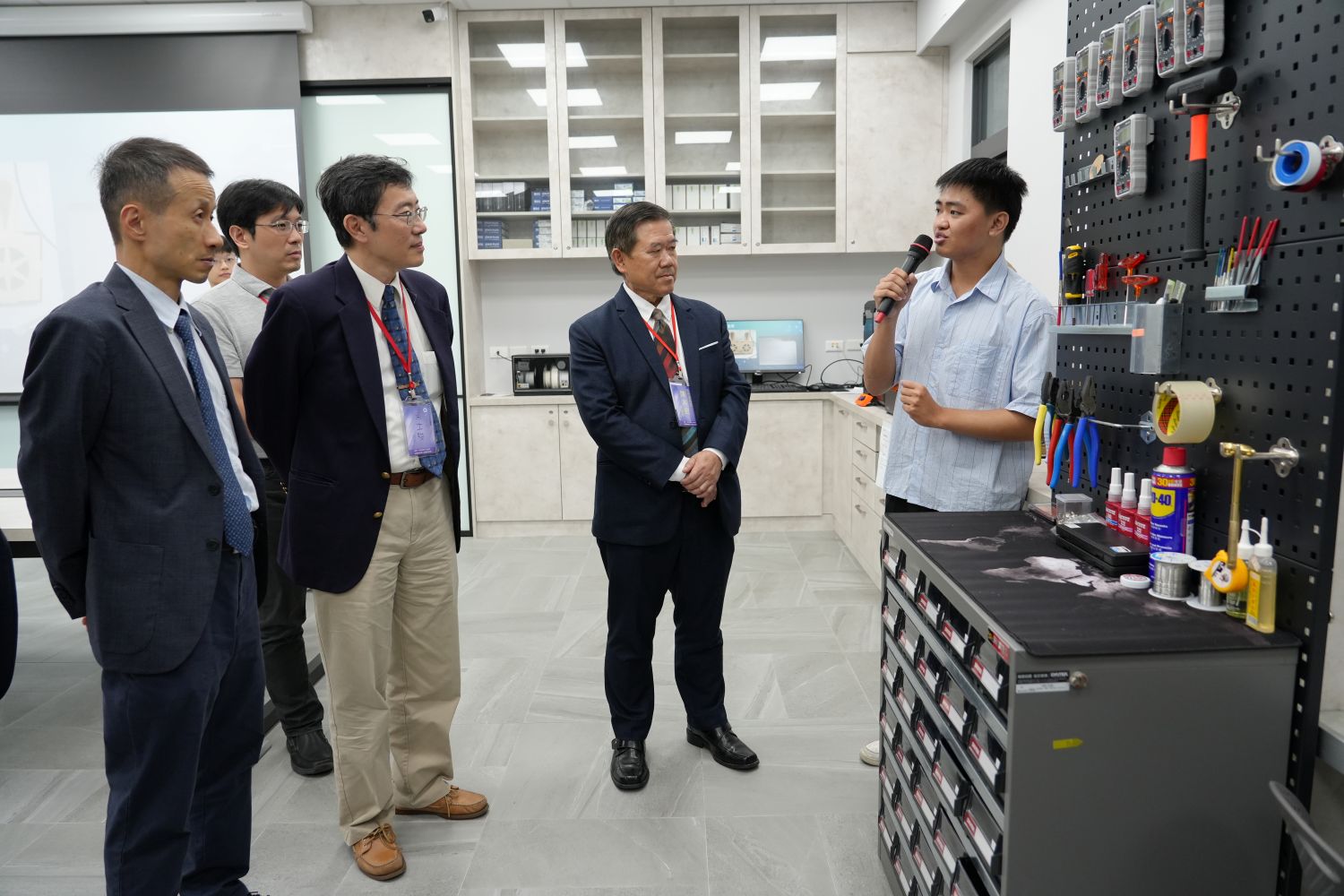
Chairman Chi-Hong Chen (second from left) listens to the space planning explanation and tour.
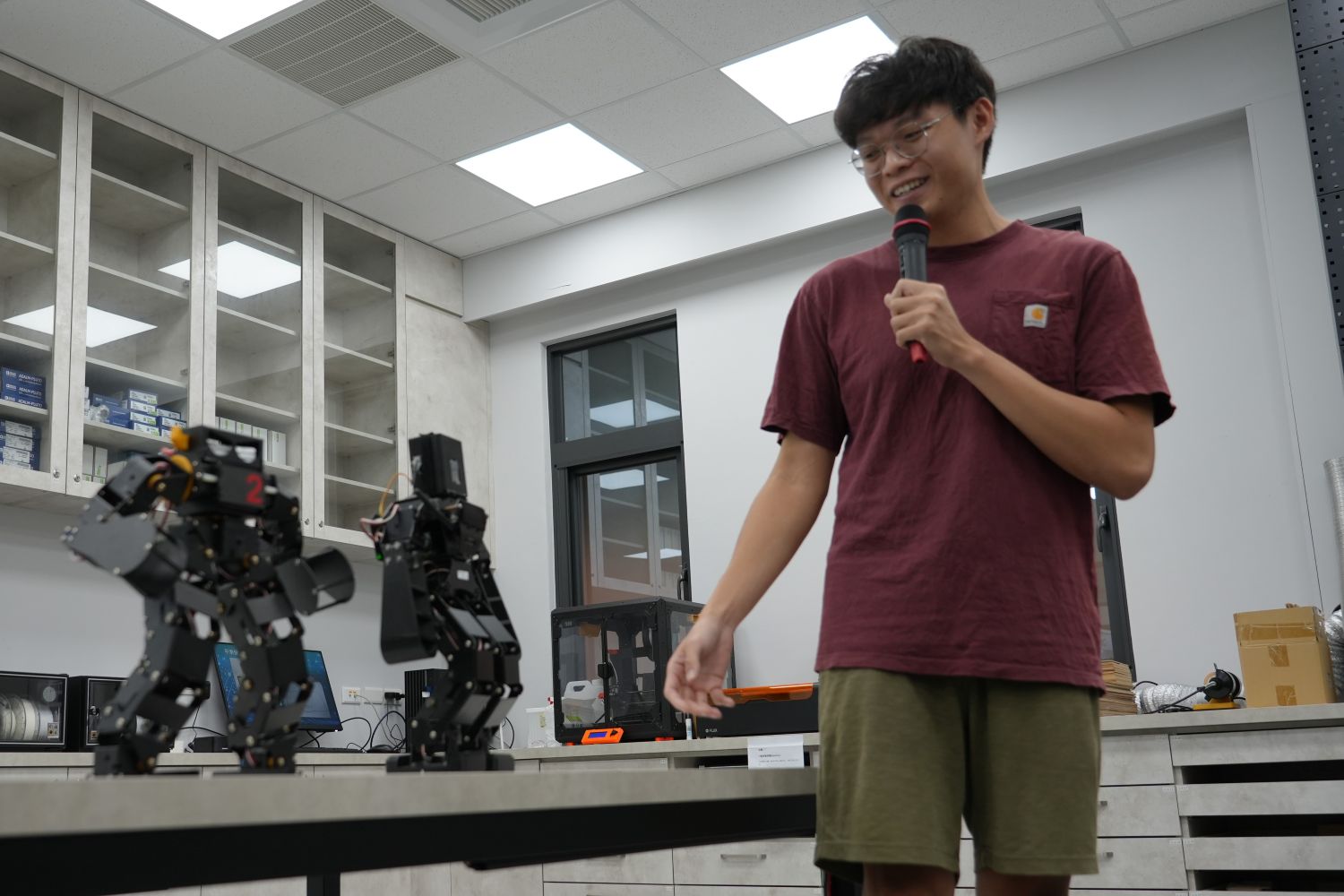
Students demonstrate the operation of robots programmed with their self-designed software.
SDG4NCKU’s Cross-disciplinary X-Village Course Breaks Conventions and Rebuilds Teaching from the Ground Up
View more
SDG4Department of Electrical Engineering at NCKU faces intense competition in admissions due to its innovative teaching and research
View more