



SDG11
The “Future Living Imaginations” Workshop Held at Tainan Green Corridor, Advancing New Visions for Future Urban Governance
The “Tainan Green Corridor · City Participation in Action (臺南綠園道・城市參與行動)” initiative—jointly promoted by the Department of Architecture at National Cheng Kung University (NCKU), the College of Planning and Design, the Tainan Community College Green Transportation Research Group, Tainan Sprout, and the Foundation Historic City Conservation and Regeneration—held the “Future Living Imaginations (未來生活想像)” workshop on December 6 at the CPC Qianfeng Road Environmental Education Center.
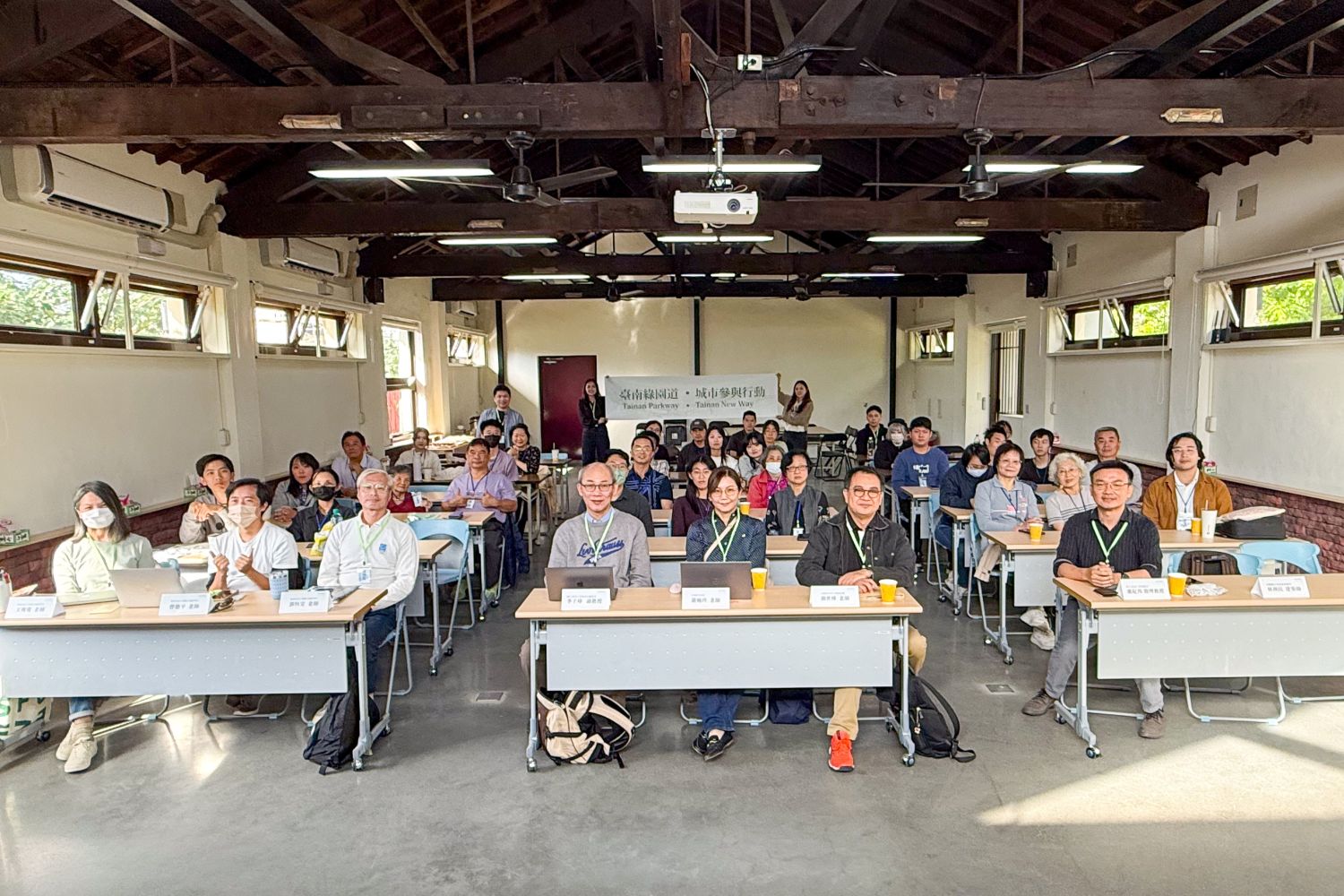
The event brought together more than 50 participants, including community leaders, residents, experts and scholars, representatives from public agencies, legislative assistants, and university students. Discussions focused on the future lifestyles that the Tainan Green Corridor may support following the undergrounding of the Tainan railway, and on how urban public spaces can evolve from mere improvements to existing conditions toward the development of long-term future visions.
Preparations for the workshop began as early as October. Multiple experts emphasized that the Green Corridor is not merely an infrastructure project, but rather an opportunity to reimagine urban life in Tainan. As such, it requires the establishment of inclusive, citizen-based dialogue mechanisms grounded in long-term trends such as population aging and declining birth rates, climate change, people-oriented transportation, and urban governance. Within this context, the workshop placed Tainan residents at its core, using open discussion and professional facilitation to explore potential futures for the Green Corridor.
The workshop began with four thematic keynote talks, followed by two rounds of small-group discussions.
Professor Tzu-Chang Li (李子璋) (Department of Urban Planning) and Te-Ping Tseng (曾德平), President of the Green Transportation Research Group at Tainan Community College, discussed “Walkable Cities as a Design of Everyday Life.” Shih-Hua Yen (顏世樺), Executive Director of the Foundation Historic City Conservation and Regeneration, spoke on “Historical Urban Morphology.” Professor Chi-Pang Lu (盧紀邦) (Department of Architecture) addressed “Super-Aging Societies and Community Coexistence.” Wan-Ling Yen (嚴婉玲), Board Member of Tainan Sprout, presented on “Climate Change and Urban Risk.”
Each discussion table was facilitated by a moderator and assistant responsible for guiding dialogue and documenting outcomes, weaving together citizens’ lived experiences, professional perspectives, and future-oriented governance viewpoints.
Participants came from highly diverse backgrounds, including residents long engaged in local development issues, volunteers with community-based experience, architecture and urban planning student teams, citizens and neighborhood leaders deeply concerned about the Green Corridor, and representatives from district offices—many of whom possessed spatial planning expertise. This cross-generational and interdisciplinary composition enriched the discussions with practical insights and multiple perspectives.
In the “Walkable City” group, participants proposed that the future Green Corridor should become a comfortable, pedestrian-friendly urban living space suitable for older adults, integrating public transportation systems, developing place-specific activity characteristics, and even incorporating renewable energy facilities such as solar power to support long-term management and maintenance.
The “Historical Urban Morphology” group emphasized that Tainan’s historical fabric is the source of its urban charm, and that the Green Corridor’s future possibilities should be understood through the city’s historical development. From the perspectives of future users—youth, older adults, and tourists alike—the group envisioned a public urban axis with stronger cultural identity.
Discussions in the “Super-Aging Society and Community Coexistence” group focused on anticipated changes in Tainan’s social structure over the next 20 years. Participants widely agreed that the Green Corridor could serve as a hub for intergenerational learning, health promotion integrated with technology, and community support networks.
The “Climate Change and Urban Risk” group highlighted that, in the face of extreme climate events, the Green Corridor must fulfill multiple functions, including disaster prevention and resilience. More importantly, they emphasized that true resilience lies in strengthening community cohesion, public recognition of urban infrastructure, and a shared sense of civic responsibility.
During the final sharing session, each group presented its conclusions through visual materials and posters, offering concrete observations and feedback. Participants unanimously agreed that the future of the Green Corridor is not a single design solution, but rather a process of collective imagination and ongoing dialogue. This workshop represents an important starting point for that journey.
The event will serve as the inaugural session for subsequent phased discussions and expanded public participation activities. Moving forward, the organizing team plans to host additional workshops focused on specific locations and themes, deepening collaboration among citizens, community groups, and professionals. Through this process, they aim to gradually build the momentum of public discourse in urban governance and collectively shape a more livable, culturally rich, and future-ready Tainan Green Corridor.
The event brought together more than 50 participants, including community leaders, residents, experts and scholars, representatives from public agencies, legislative assistants, and university students. Discussions focused on the future lifestyles that the Tainan Green Corridor may support following the undergrounding of the Tainan railway, and on how urban public spaces can evolve from mere improvements to existing conditions toward the development of long-term future visions.
Preparations for the workshop began as early as October. Multiple experts emphasized that the Green Corridor is not merely an infrastructure project, but rather an opportunity to reimagine urban life in Tainan. As such, it requires the establishment of inclusive, citizen-based dialogue mechanisms grounded in long-term trends such as population aging and declining birth rates, climate change, people-oriented transportation, and urban governance. Within this context, the workshop placed Tainan residents at its core, using open discussion and professional facilitation to explore potential futures for the Green Corridor.
The workshop began with four thematic keynote talks, followed by two rounds of small-group discussions.
Professor Tzu-Chang Li (李子璋) (Department of Urban Planning) and Te-Ping Tseng (曾德平), President of the Green Transportation Research Group at Tainan Community College, discussed “Walkable Cities as a Design of Everyday Life.” Shih-Hua Yen (顏世樺), Executive Director of the Foundation Historic City Conservation and Regeneration, spoke on “Historical Urban Morphology.” Professor Chi-Pang Lu (盧紀邦) (Department of Architecture) addressed “Super-Aging Societies and Community Coexistence.” Wan-Ling Yen (嚴婉玲), Board Member of Tainan Sprout, presented on “Climate Change and Urban Risk.”
Each discussion table was facilitated by a moderator and assistant responsible for guiding dialogue and documenting outcomes, weaving together citizens’ lived experiences, professional perspectives, and future-oriented governance viewpoints.
Participants came from highly diverse backgrounds, including residents long engaged in local development issues, volunteers with community-based experience, architecture and urban planning student teams, citizens and neighborhood leaders deeply concerned about the Green Corridor, and representatives from district offices—many of whom possessed spatial planning expertise. This cross-generational and interdisciplinary composition enriched the discussions with practical insights and multiple perspectives.
In the “Walkable City” group, participants proposed that the future Green Corridor should become a comfortable, pedestrian-friendly urban living space suitable for older adults, integrating public transportation systems, developing place-specific activity characteristics, and even incorporating renewable energy facilities such as solar power to support long-term management and maintenance.
The “Historical Urban Morphology” group emphasized that Tainan’s historical fabric is the source of its urban charm, and that the Green Corridor’s future possibilities should be understood through the city’s historical development. From the perspectives of future users—youth, older adults, and tourists alike—the group envisioned a public urban axis with stronger cultural identity.
Discussions in the “Super-Aging Society and Community Coexistence” group focused on anticipated changes in Tainan’s social structure over the next 20 years. Participants widely agreed that the Green Corridor could serve as a hub for intergenerational learning, health promotion integrated with technology, and community support networks.
The “Climate Change and Urban Risk” group highlighted that, in the face of extreme climate events, the Green Corridor must fulfill multiple functions, including disaster prevention and resilience. More importantly, they emphasized that true resilience lies in strengthening community cohesion, public recognition of urban infrastructure, and a shared sense of civic responsibility.
During the final sharing session, each group presented its conclusions through visual materials and posters, offering concrete observations and feedback. Participants unanimously agreed that the future of the Green Corridor is not a single design solution, but rather a process of collective imagination and ongoing dialogue. This workshop represents an important starting point for that journey.
The event will serve as the inaugural session for subsequent phased discussions and expanded public participation activities. Moving forward, the organizing team plans to host additional workshops focused on specific locations and themes, deepening collaboration among citizens, community groups, and professionals. Through this process, they aim to gradually build the momentum of public discourse in urban governance and collectively shape a more livable, culturally rich, and future-ready Tainan Green Corridor.
The “Future Living Imaginations” workshop was held on the 6th, bringing together cross-disciplinary and cross-sector participants to collectively explore new visions for future urban governance.
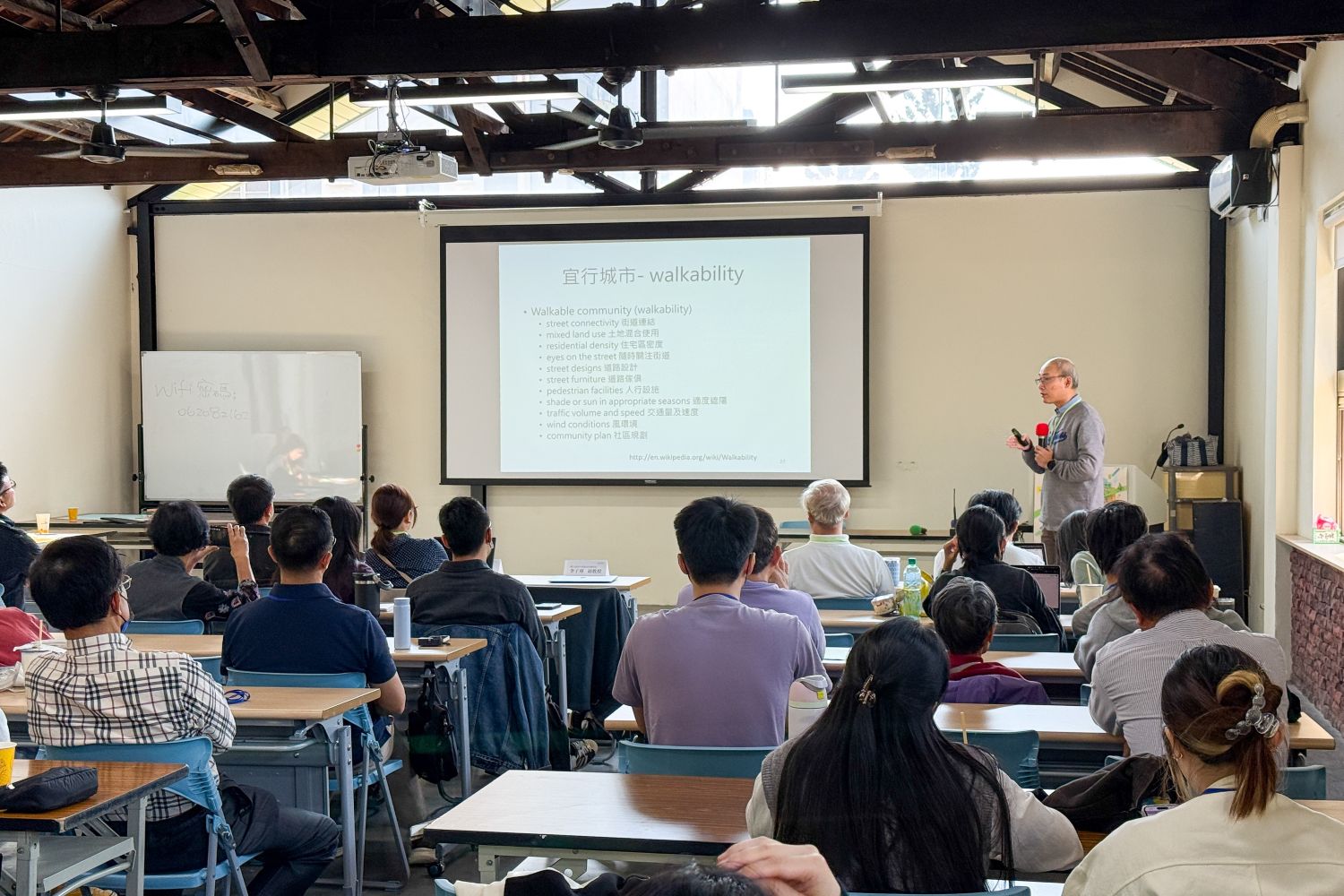
A keynote lecture by Professor Tzu-Chang Li of the Department of Urban Planning.
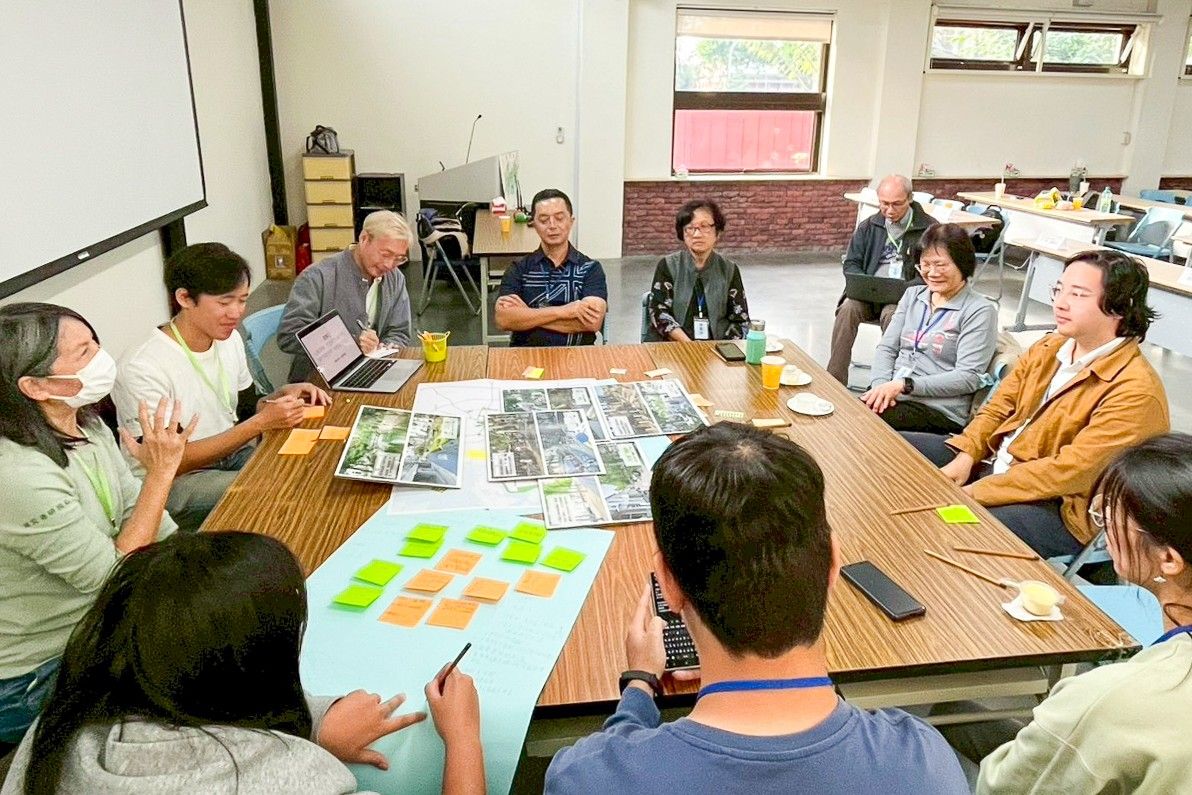
Participants engaged in table-based group discussions during the workshop.
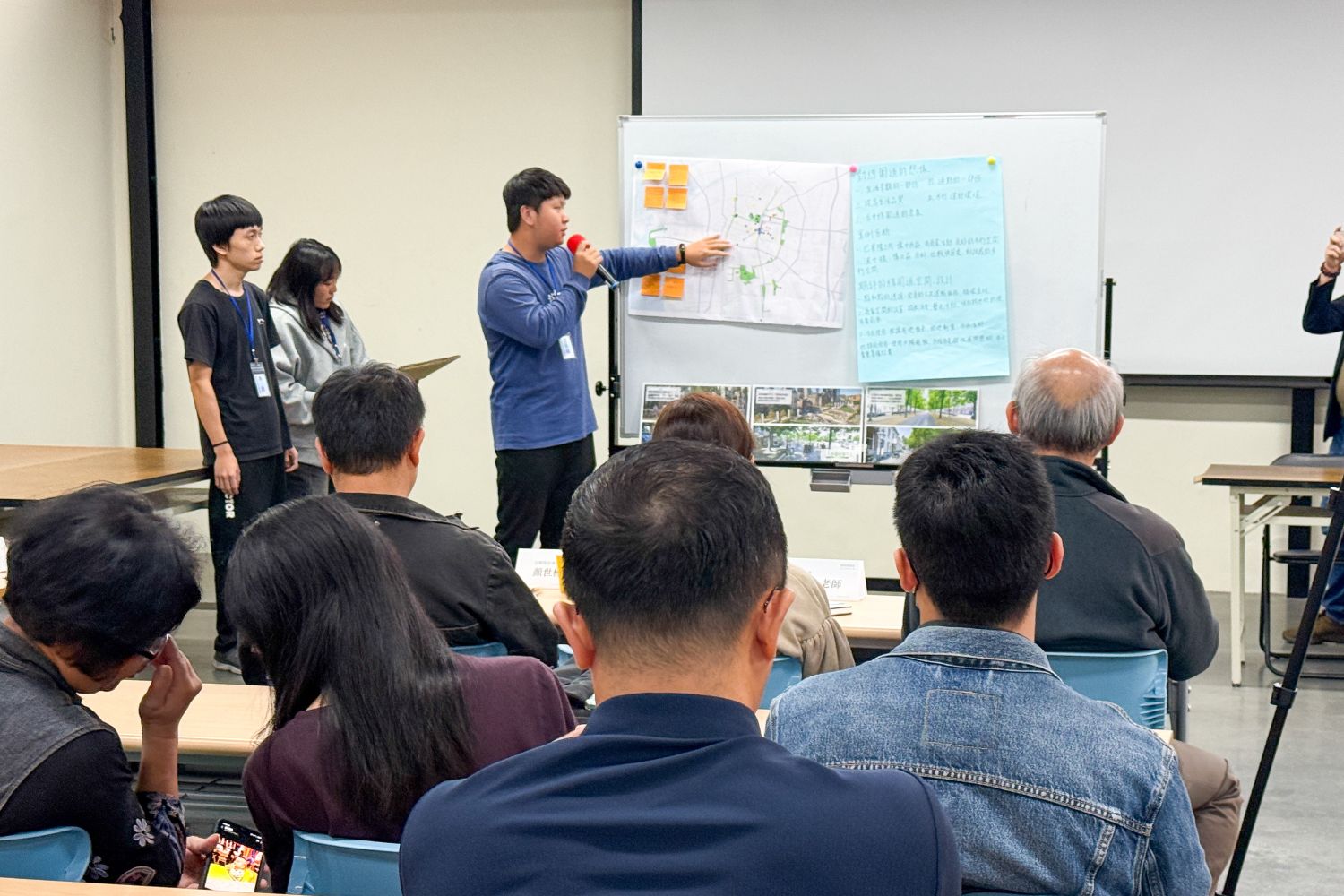
Each group presented the outcomes of their discussions through visual materials and posters during the final presentation session.