



SDG3
When Geriatric Medicine Meets Social Design: NCKU’s “Integrated Elderly Care and Social Design” Course Final Exhibition
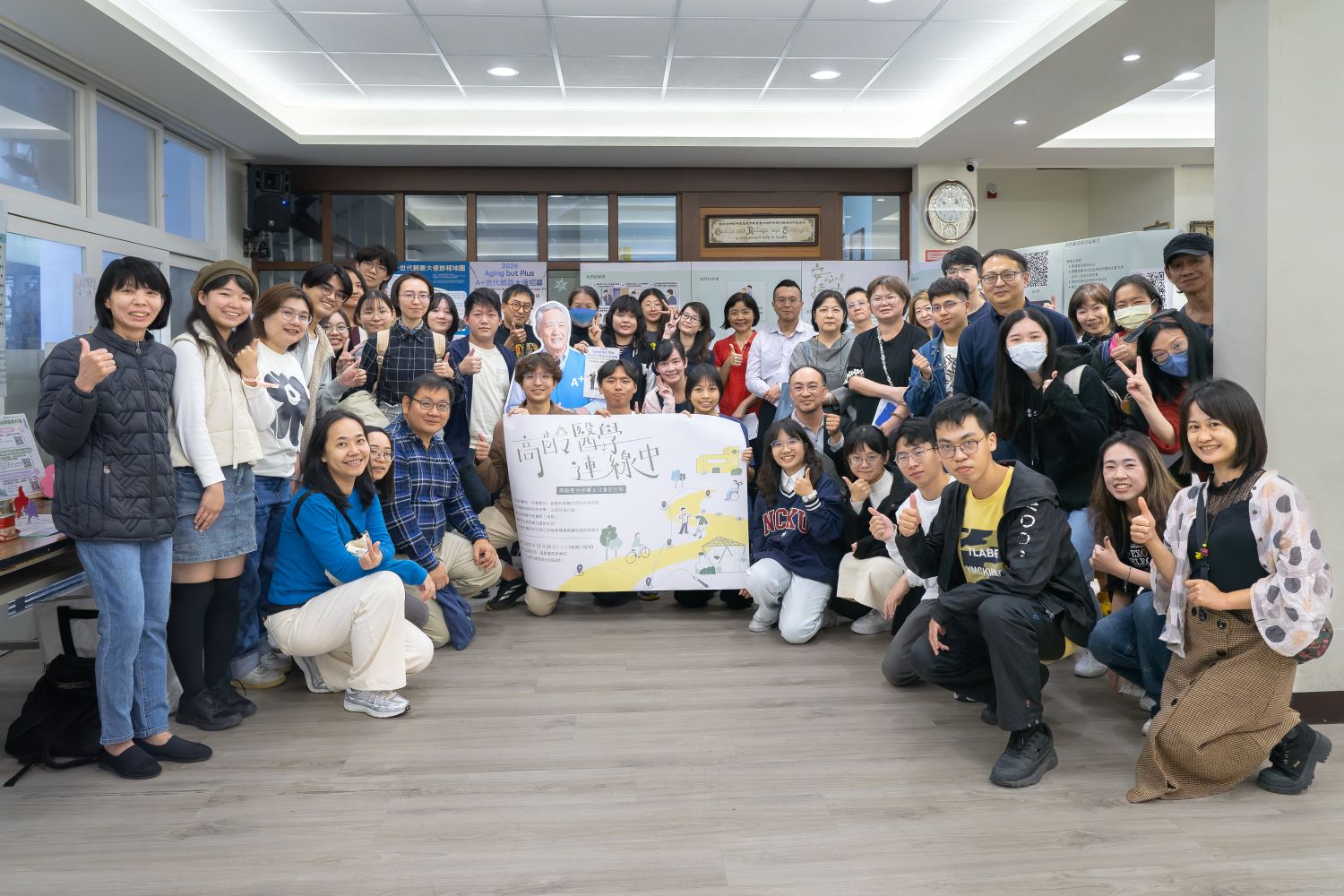
The Department of Medicine at National Cheng Kung University (NCKU) hosted the final exhibition of its cross-disciplinary course, “Integrated Elderly Care and Social Design,” for the second semester of the 2025 academic year, on Saturday, December 20, at the Yixiang Silver Hair Fitness Center in Tainan’s East District. The exhibition brought together 22 students from diverse backgrounds in medicine, design, and the humanities and social sciences, who used social design approaches to address elderly care issues such as hospital discharge transitions, social prescriptions, and community co-living, demonstrating the rich potential of collaboration between geriatric medicine and social design.
The course was co-taught by Dr. Chieh-Hsiu Liu (劉介修), specialist in geriatric medicine at NCKU, and Professor Chia-Han Yang (楊佳翰), Director of the Graduate Institute of Creative Industry Design. Centered on solution-oriented learning and cross-disciplinary teamwork, the course guided students to approach elderly care topics using social design research methods, completing the full design process from field understanding, needs insight, concept generation, prototyping, to solution evaluation. The curriculum also emphasized human-centered and systems-oriented perspectives, helping students grasp the complex ecological linkages between medical care, caregiving, families, and communities.
The student participants came from a wide range of disciplines, including second- and third-year medical students, as well as students from NCKU’s Interdisciplinary Program, Graduate Institute of Creative Industry Design, Department of Foreign Languages, Graduate Institute of Industrial Design, Graduate Institute of Gerontology, Department of Occupational Therapy, and the Center for Humanities and Social Sciences. They were organized into five cross-disciplinary teams. During the course, each team conducted hospital, community, and public fieldwork, using interviews, observation, and interaction to gain in-depth understanding of the actual needs of elderly individuals, case managers, family caregivers, healthcare professionals, and community volunteers, and explored ways to use design to address diverse interface challenges within the care system.
The final exhibition focused on three key themes of social design for aging societies: “Hospital Discharge Transitions” (field sites: NCKU Hospital and Tainan Veterans General Hospital), “Social Prescriptions” (field sites: Tainan National Museum of Fine Arts and Yixiang Silver Age Fitness Club), and “Southern Taiwan Science Park Community Co-Living” (field site: Xiaoxinli Community, Tainan Science Park). The five student teams presented innovative solutions tailored to each theme, including:
The course was co-taught by Dr. Chieh-Hsiu Liu (劉介修), specialist in geriatric medicine at NCKU, and Professor Chia-Han Yang (楊佳翰), Director of the Graduate Institute of Creative Industry Design. Centered on solution-oriented learning and cross-disciplinary teamwork, the course guided students to approach elderly care topics using social design research methods, completing the full design process from field understanding, needs insight, concept generation, prototyping, to solution evaluation. The curriculum also emphasized human-centered and systems-oriented perspectives, helping students grasp the complex ecological linkages between medical care, caregiving, families, and communities.
The student participants came from a wide range of disciplines, including second- and third-year medical students, as well as students from NCKU’s Interdisciplinary Program, Graduate Institute of Creative Industry Design, Department of Foreign Languages, Graduate Institute of Industrial Design, Graduate Institute of Gerontology, Department of Occupational Therapy, and the Center for Humanities and Social Sciences. They were organized into five cross-disciplinary teams. During the course, each team conducted hospital, community, and public fieldwork, using interviews, observation, and interaction to gain in-depth understanding of the actual needs of elderly individuals, case managers, family caregivers, healthcare professionals, and community volunteers, and explored ways to use design to address diverse interface challenges within the care system.
The final exhibition focused on three key themes of social design for aging societies: “Hospital Discharge Transitions” (field sites: NCKU Hospital and Tainan Veterans General Hospital), “Social Prescriptions” (field sites: Tainan National Museum of Fine Arts and Yixiang Silver Age Fitness Club), and “Southern Taiwan Science Park Community Co-Living” (field site: Xiaoxinli Community, Tainan Science Park). The five student teams presented innovative solutions tailored to each theme, including:
- 1. Safe & Seamless Gamified Scenario Training Platform
- 2. Safe Path AI Dialogue and Resource Structuring Platform
- 3. Xiaoxin Village Community Hub Spatial Scenario Redesign
- 4. Exercise as a Social Prescription for Older Adults’ Health Passbook
- 5. A+ Generation Friendly Ambassador Program at the Southern Museum of Fine Arts
These projects explored new service interaction interfaces for elderly medicine and care.
The exhibition was held in collaboration with the ongoing public art installation project for elderly care in hospitals conducted by the NCKU Art Center. Guest reviewers included experts and industry professionals from healthcare, government, community, and the elderly care sector, such as: Dr. Chong-Sheng Hsu (許重勝), Director of Jen-Ai Hospital; Director-General Shu-Chuan Chen (陳淑娟), Tainan City Health Bureau; CEO Hsiang-Hao Lee (李祥豪), Nine Days Action Health; Mr. He-Chen Cheng (鄭合珍), Nanke Community; Ms. Chia-Tzu Lin (林佳慈), Tainan National Museum of Fine Arts; Supervisor Hsiu-Hua Lee (李秀花), NCKU Hospital; Case Manager Wei Lee (李薇); family caregiver and former Eslite Southern Operations Manager Ching-Hua Yeh (葉青華); Professor Chi-Chang Chen (陳志昌), NCKU Center for Humanities and Social Sciences; and Professor Shi-Hong Yang (楊詩弘), Department of Architecture, NCKU. They provided cross-disciplinary feedback and practical suggestions for implementing the students’ ideas.
Dr. Chieh-Hsiu Liu and Professor Chia-Han Yang emphasized that the course was designed to allow students to experience firsthand how geriatric medicine and social design methods can complement each other in real care scenarios. Through cross-department collaboration and field practice, students gained a deeper understanding of elderly care as a complex system involving policies, lifestyle patterns, and social structures, and explored how medicine and design can work together as shared interfaces to ensure care needs are understood and addressed through innovative solutions.
The final exhibition not only summarized the students’ learning achievements but also offered creative perspectives from the younger generation on integrated elderly care. As students engaged across hospitals, communities, homes, and cultural spaces, the new social design interfaces they proposed and envisioned are expected to open up more opportunities for dialogue and cross-disciplinary collaboration in Taiwan’s future aging society.
Presentation of the Exercise as a Social Prescription for Older Adults’ Health Passbook
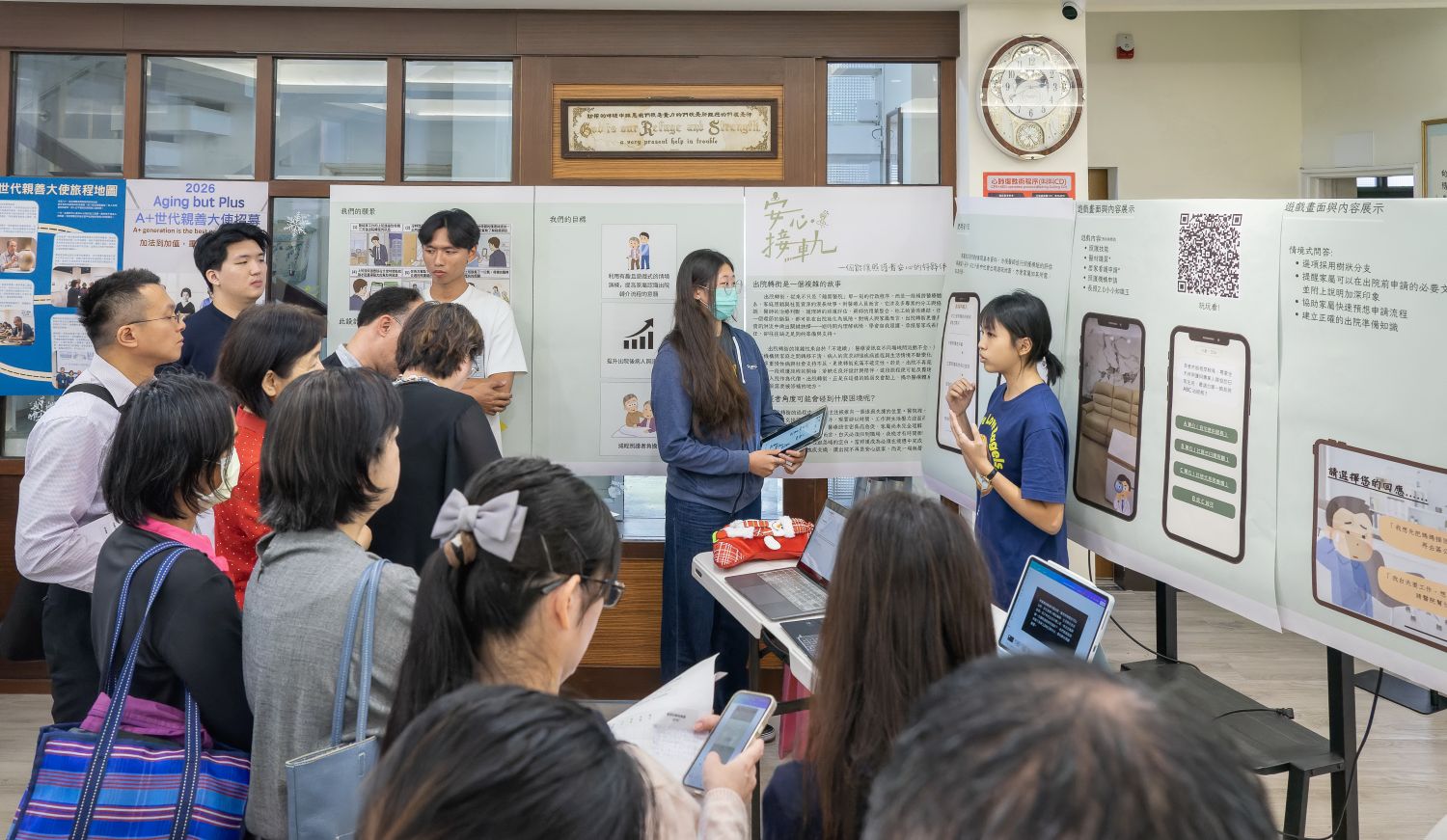
Presentation of the Safe & Seamless Gamified Scenario Training Platform
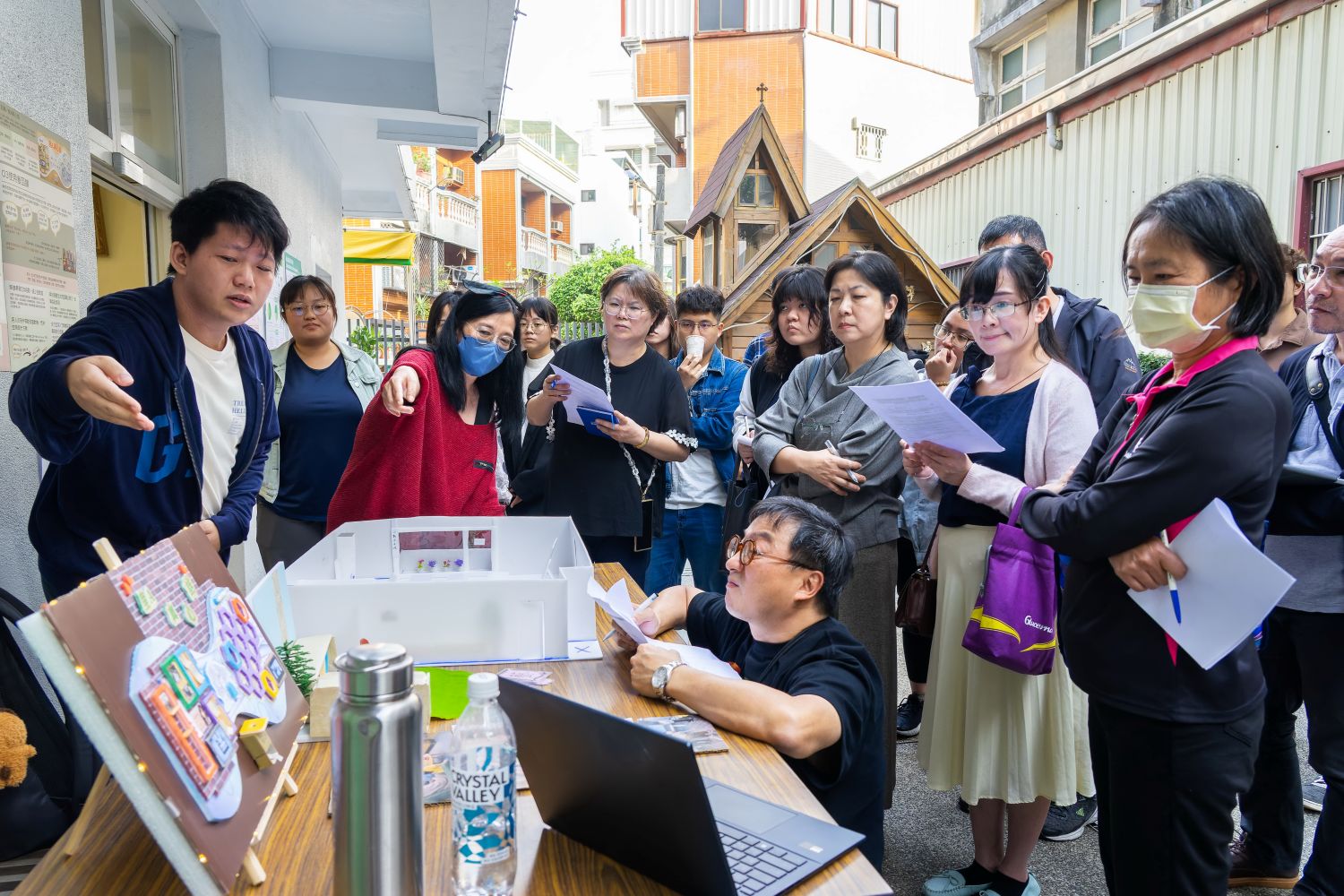
Presentation of Xiaoxin Village Community Hub Spatial Scenario Redesign in Southern Taiwan Science Park
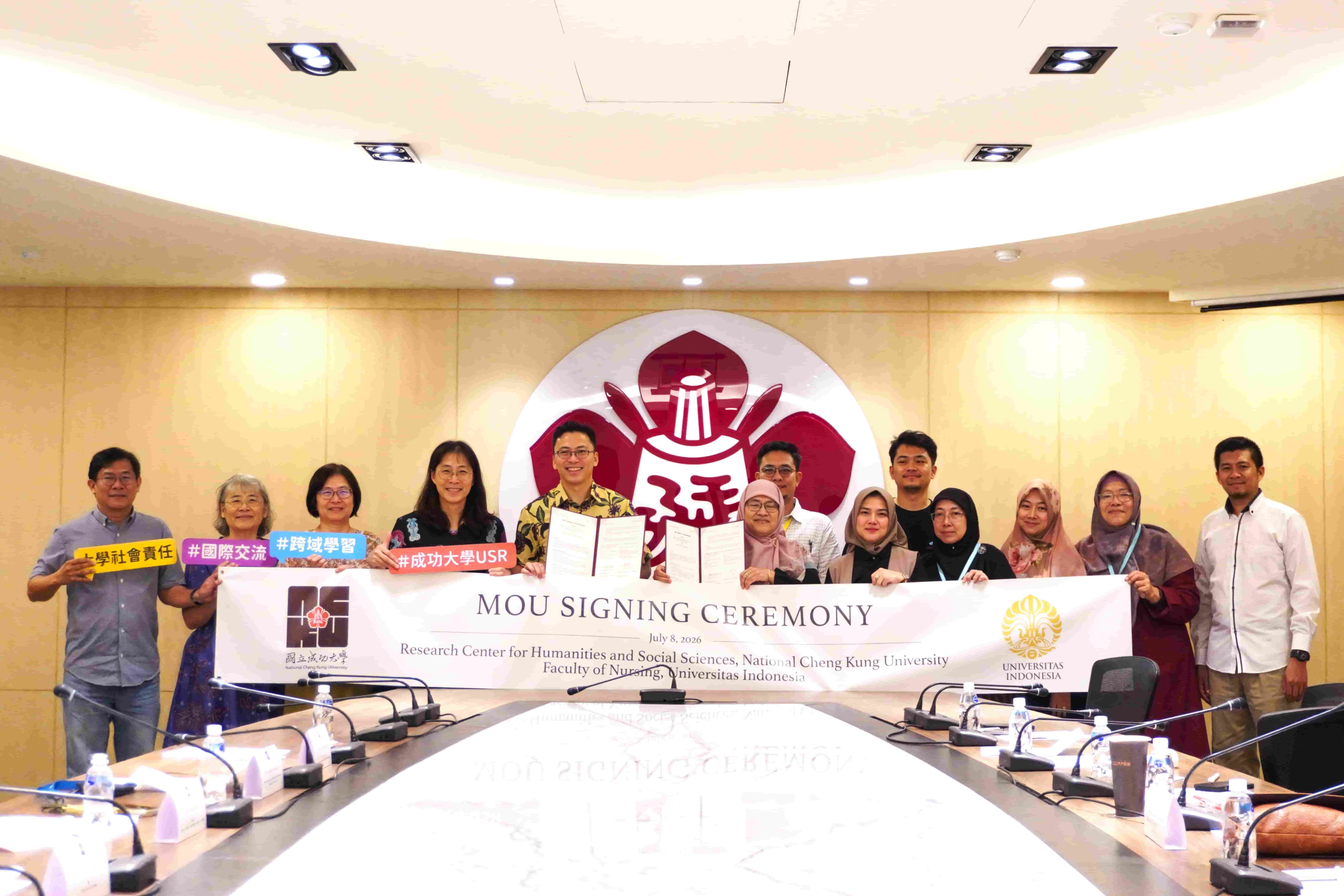
SDG3NCKU HSSC and Universitas Indonesia Sign MOU to Advance Healthy Aging and Community Practice
View more
SDG3“Guess What Fei-Fei Has?” – NCKU USR Partners with Cheng Mei Materials to Promote Rare Disease Education
View more