



SDG11
Building Good Neighbors Locally and Globally: Seven Universities Gather at NCKU for the “Big Region, Small Co-Learning” Exchange
On January 16, the Department of Humanities and Social Sciences of the National Science and Technology Council (NSTC), together with the Humanities and Social Sciences Center of National Cheng Kung University (NCKU), jointly held the “Phase IV University–Local Government Collaboration Program for Advancing Local Humanities Development and Cross-Sector Governance (the ‘Big Region Program’) (第四期大學與地方政府合作推動地方人文發展與跨域治理計畫,簡稱大地方計畫)—2026 Seven-University ‘Big Region, Small Co-Learning’ Event.” Aimed at deepening universities’ social responsibility and fostering innovation in local governance, the event brought together seven universities—National Cheng Kung University, National Sun Yat-sen University (NSYSU), Asia University (AU), National Taiwan Ocean University (NTOU), National University of Kaohsiung (NUK), National Changhua University of Education (NCUE), and National Taipei University (NTPU)—at the NCKU History Archieves. Through the sharing and exchange of diverse themes and experiences, the organizers hope to facilitate the smooth advancement of Phase IV of the Big Region Program among universities, local governments, and local communities.
The co-learning event opened with remarks by Director Chun-Ju Huang (黃俊儒處長) of the NSTC Department of Humanities and Social Sciences. Director Huang expressed expectations for discussions on six key focal topics and underscored the importance of Taiwan–Japan experience exchange. Professor Hsu-Shen Chien (簡旭伸教授) of the Department of Geography at National Taiwan University, the chief convener of the Big Region Program, emphasized that aligning and adapting humanities and social sciences knowledge is a core challenge in contemporary higher education. He noted that, unlike typical University Social Responsibility (USR) project models, the co-learning forum places greater emphasis on broad policy advocacy strategies and on creating an institutionally supportive environment for faculty engaged in social practice. From a local government perspective, Hsiao-Wen Wang (王效文主委), Director-General of the Tainan City Government Research, Development, and Evaluation Commission, highlighted the role of universities as think tanks and expressed hope for sustained dialogue to generate more practical contributions. NCKU Vice President Yuh-Neu Chen (陳玉女副校長) welcomed representatives from the other six universities and expressed optimism that, through sharing NCKU’s social practice experiences in southern Taiwan and inter-university exchange, participants could jointly learn how to translate policy discussions among professionals into effective communication and interaction with local governments—ultimately forming a model for tripartite collaboration among universities, local governments, and local communities.
Key issues addressed in Phase IV of the Big Region Program include: NSYSU’s collaboration with the Pingtung County Government on zero tolerance for sexual harassment; the NUK’s partnership with the Kaohsiung City Government to build a Greater Kaohsiung cross-sector forum platform; NTOU’s cooperation with the Keelung City Government on local talent cultivation; AU’s work with the Yunlin County Government on local revitalization led by young farmers; NTPU’s collaboration with the New Taipei City Government on net-zero sustainability initiatives; NCUE’s partnership with the Changhua County Government on sustainable mountain–sea ecological observation systems; and NCKU’s collaboration with the Tainan City Government on the “Intergenerational Co-Creation of New Cultural Value” initiative in response to recent population decline and aging in the northern Tainan region. Spanning themes from gender and local culture to youth agriculture and climate change, these topics highlight region-specific challenges across Taiwan and underscore the shared challenges the Big Region Program seeks to address through cultural governance strategies.
The co-learning conference comprised three main components. First, chaired by Professor Hsu-Shen Chien, a session titled “NCKU’s Experience in Deepening Local Governance Innovation in Southern Taiwan” featured Vice President Yuh-Neu Chen and Director Cheng-Ta Yang (楊政達主任) of the Humanities and Social Sciences Center, who shared NCKU’s extensive networks in cultural governance and social practice, including the “Tracing Tainan” initiative, field managers, and modes of engagement with local governments. This was followed by two forum sessions—“Experiences in Collaborating with Local Governments” and “Cultivating an Academically Supportive Environment that Integrates Research and Practice.” Representatives from the seven universities convened to discuss six major topics: cross-departmental coordination within local governments; translation of local knowledge; strategies for responding to passive governmental attitudes; the role of field managers; cultivation of interdisciplinary social practice talent within universities; and the integration of teaching and research theory with practice. These discussions addressed the challenges universities face when engaging with local governments and communities in implementing the Big Region Program. In addition, a “Public Administration Case Teaching and Writing” forum centered on NCKU’s fence-free long-term care initiative, where Associate Professor Ling-Hui Chang (張玲慧副教授) of NCKU’s Department of Occupational Therapy and Professor Hsu-Shen Chien emphasized the importance of case writing for policy implementation in public agencies.
The event concluded with a keynote by Professor Masayuki Suzuki (鈴木雅之教授) of the Institute for Global Prominent Research, Chiba University, titled “Experiences of Collaboration between Japanese Universities and Local Governments.” He shared comparative experiences from Taiwan and Japan in local revitalization and university–government collaboration. Addressing Taiwan’s university evaluation system, Professor Chien also presented a comparative table highlighting differences between Taiwan and Japan, aiming to draw on Japanese institutional approaches to optimize Taiwan’s evaluation mechanisms and encourage greater faculty engagement in the Big Region Program.
In closing, Chief Convener Professor Hsu-Shen Chien summarized that, by connecting NCKU’s social practice capacity, the diverse local contexts of the seven Taiwanese universities, and Japan’s local revitalization experiences, the co-learning event fostered rich exchanges and linkages. He expressed hope that these efforts would support Big Region Program teams under the NSTC in enhancing both quality and depth, promoting mutually beneficial collaboration among universities, local governments, and local communities, and collectively addressing the challenges of local governance through a think-tank-oriented approach.
The co-learning event opened with remarks by Director Chun-Ju Huang (黃俊儒處長) of the NSTC Department of Humanities and Social Sciences. Director Huang expressed expectations for discussions on six key focal topics and underscored the importance of Taiwan–Japan experience exchange. Professor Hsu-Shen Chien (簡旭伸教授) of the Department of Geography at National Taiwan University, the chief convener of the Big Region Program, emphasized that aligning and adapting humanities and social sciences knowledge is a core challenge in contemporary higher education. He noted that, unlike typical University Social Responsibility (USR) project models, the co-learning forum places greater emphasis on broad policy advocacy strategies and on creating an institutionally supportive environment for faculty engaged in social practice. From a local government perspective, Hsiao-Wen Wang (王效文主委), Director-General of the Tainan City Government Research, Development, and Evaluation Commission, highlighted the role of universities as think tanks and expressed hope for sustained dialogue to generate more practical contributions. NCKU Vice President Yuh-Neu Chen (陳玉女副校長) welcomed representatives from the other six universities and expressed optimism that, through sharing NCKU’s social practice experiences in southern Taiwan and inter-university exchange, participants could jointly learn how to translate policy discussions among professionals into effective communication and interaction with local governments—ultimately forming a model for tripartite collaboration among universities, local governments, and local communities.
Key issues addressed in Phase IV of the Big Region Program include: NSYSU’s collaboration with the Pingtung County Government on zero tolerance for sexual harassment; the NUK’s partnership with the Kaohsiung City Government to build a Greater Kaohsiung cross-sector forum platform; NTOU’s cooperation with the Keelung City Government on local talent cultivation; AU’s work with the Yunlin County Government on local revitalization led by young farmers; NTPU’s collaboration with the New Taipei City Government on net-zero sustainability initiatives; NCUE’s partnership with the Changhua County Government on sustainable mountain–sea ecological observation systems; and NCKU’s collaboration with the Tainan City Government on the “Intergenerational Co-Creation of New Cultural Value” initiative in response to recent population decline and aging in the northern Tainan region. Spanning themes from gender and local culture to youth agriculture and climate change, these topics highlight region-specific challenges across Taiwan and underscore the shared challenges the Big Region Program seeks to address through cultural governance strategies.
The co-learning conference comprised three main components. First, chaired by Professor Hsu-Shen Chien, a session titled “NCKU’s Experience in Deepening Local Governance Innovation in Southern Taiwan” featured Vice President Yuh-Neu Chen and Director Cheng-Ta Yang (楊政達主任) of the Humanities and Social Sciences Center, who shared NCKU’s extensive networks in cultural governance and social practice, including the “Tracing Tainan” initiative, field managers, and modes of engagement with local governments. This was followed by two forum sessions—“Experiences in Collaborating with Local Governments” and “Cultivating an Academically Supportive Environment that Integrates Research and Practice.” Representatives from the seven universities convened to discuss six major topics: cross-departmental coordination within local governments; translation of local knowledge; strategies for responding to passive governmental attitudes; the role of field managers; cultivation of interdisciplinary social practice talent within universities; and the integration of teaching and research theory with practice. These discussions addressed the challenges universities face when engaging with local governments and communities in implementing the Big Region Program. In addition, a “Public Administration Case Teaching and Writing” forum centered on NCKU’s fence-free long-term care initiative, where Associate Professor Ling-Hui Chang (張玲慧副教授) of NCKU’s Department of Occupational Therapy and Professor Hsu-Shen Chien emphasized the importance of case writing for policy implementation in public agencies.
The event concluded with a keynote by Professor Masayuki Suzuki (鈴木雅之教授) of the Institute for Global Prominent Research, Chiba University, titled “Experiences of Collaboration between Japanese Universities and Local Governments.” He shared comparative experiences from Taiwan and Japan in local revitalization and university–government collaboration. Addressing Taiwan’s university evaluation system, Professor Chien also presented a comparative table highlighting differences between Taiwan and Japan, aiming to draw on Japanese institutional approaches to optimize Taiwan’s evaluation mechanisms and encourage greater faculty engagement in the Big Region Program.
In closing, Chief Convener Professor Hsu-Shen Chien summarized that, by connecting NCKU’s social practice capacity, the diverse local contexts of the seven Taiwanese universities, and Japan’s local revitalization experiences, the co-learning event fostered rich exchanges and linkages. He expressed hope that these efforts would support Big Region Program teams under the NSTC in enhancing both quality and depth, promoting mutually beneficial collaboration among universities, local governments, and local communities, and collectively addressing the challenges of local governance through a think-tank-oriented approach.
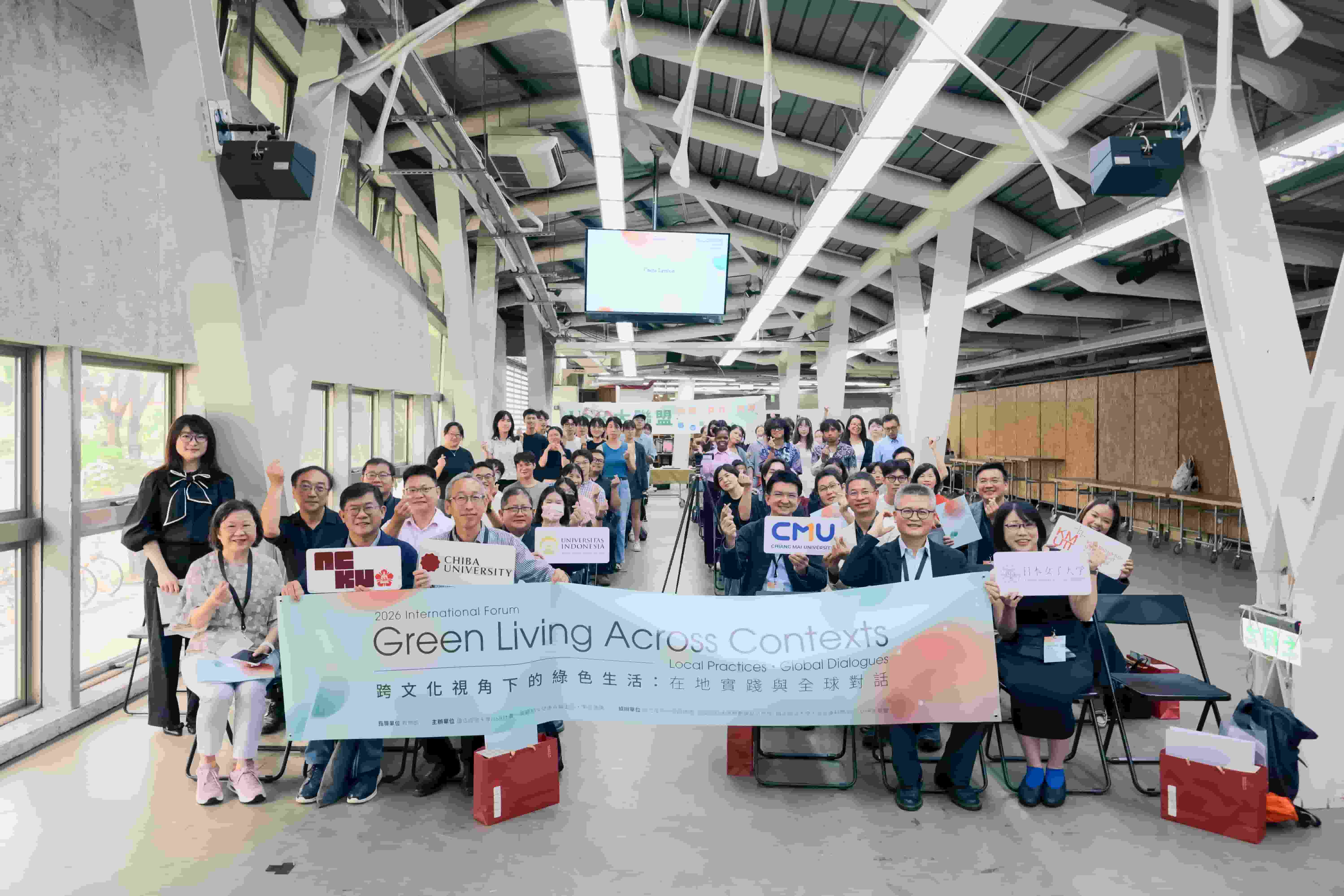
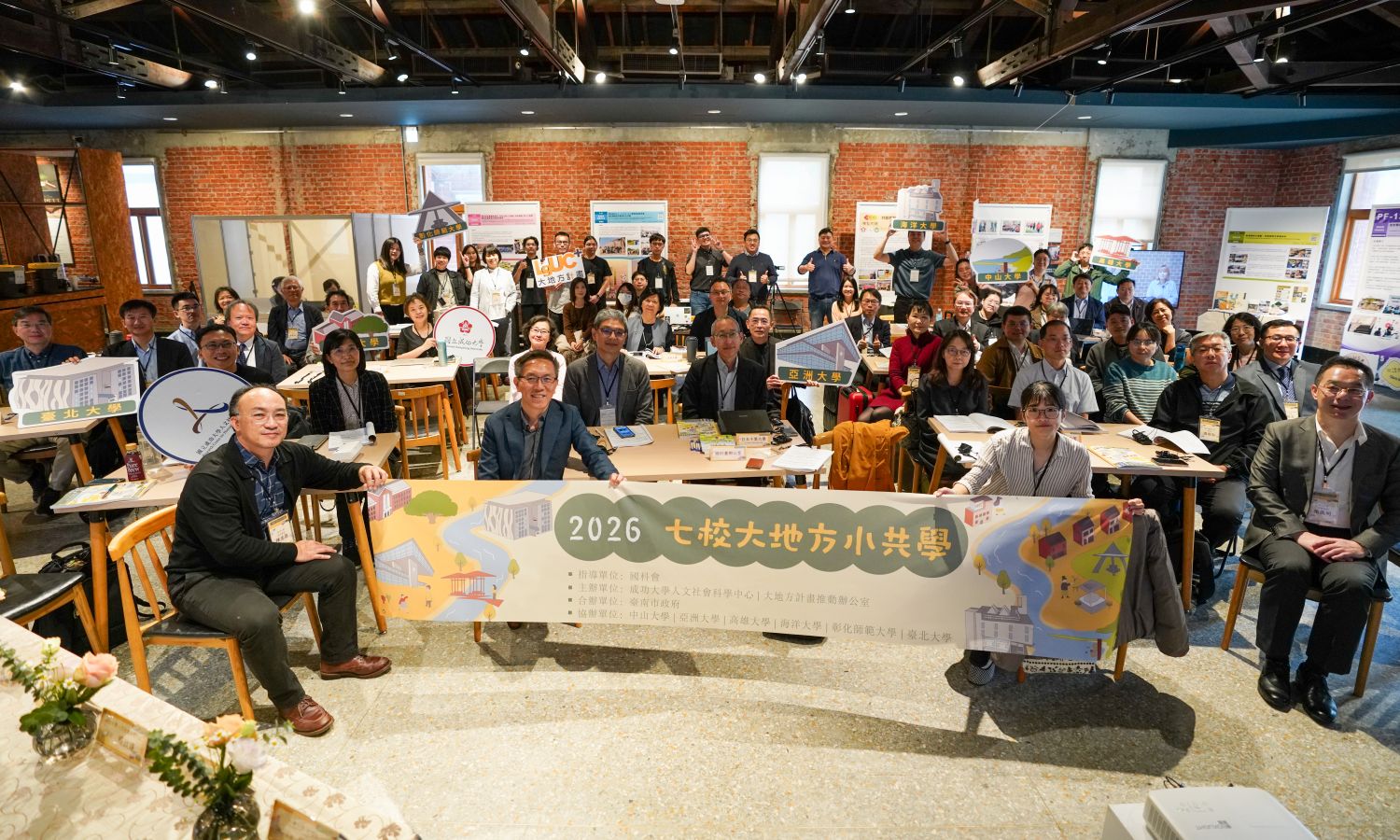
The National Science and Technology Council (NSTC), together with National Cheng Kung University, National Sun Yat-sen University, Asia University, National Taiwan Ocean University, National University of Kaohsiung, National Changhua University of Education, and National Taipei University, gathered at the NCKU History Archieves.
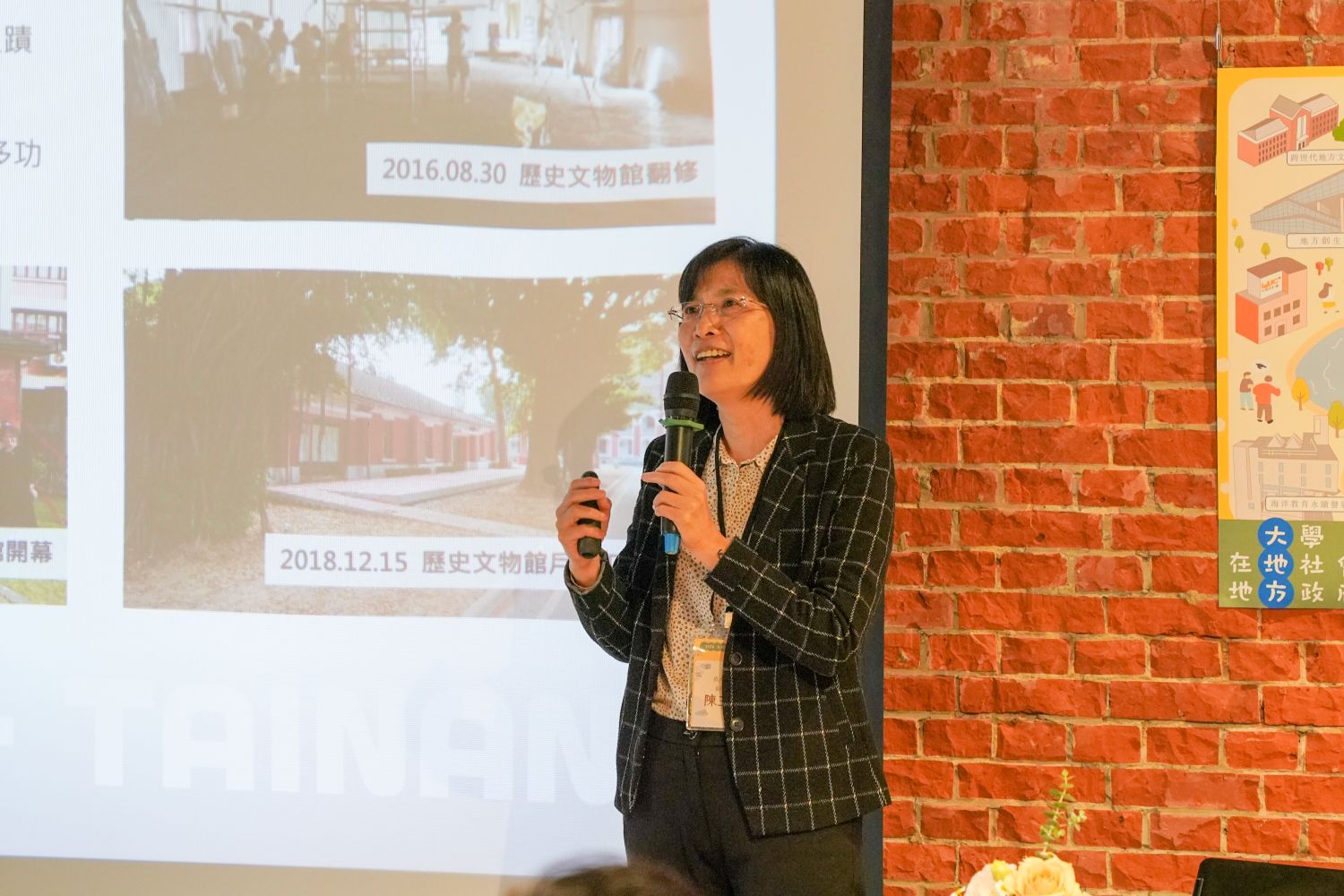
NCKU Vice President Yuh-Neu Chen shared NCKU’s journey in cultivating and building its capacity for social practice.
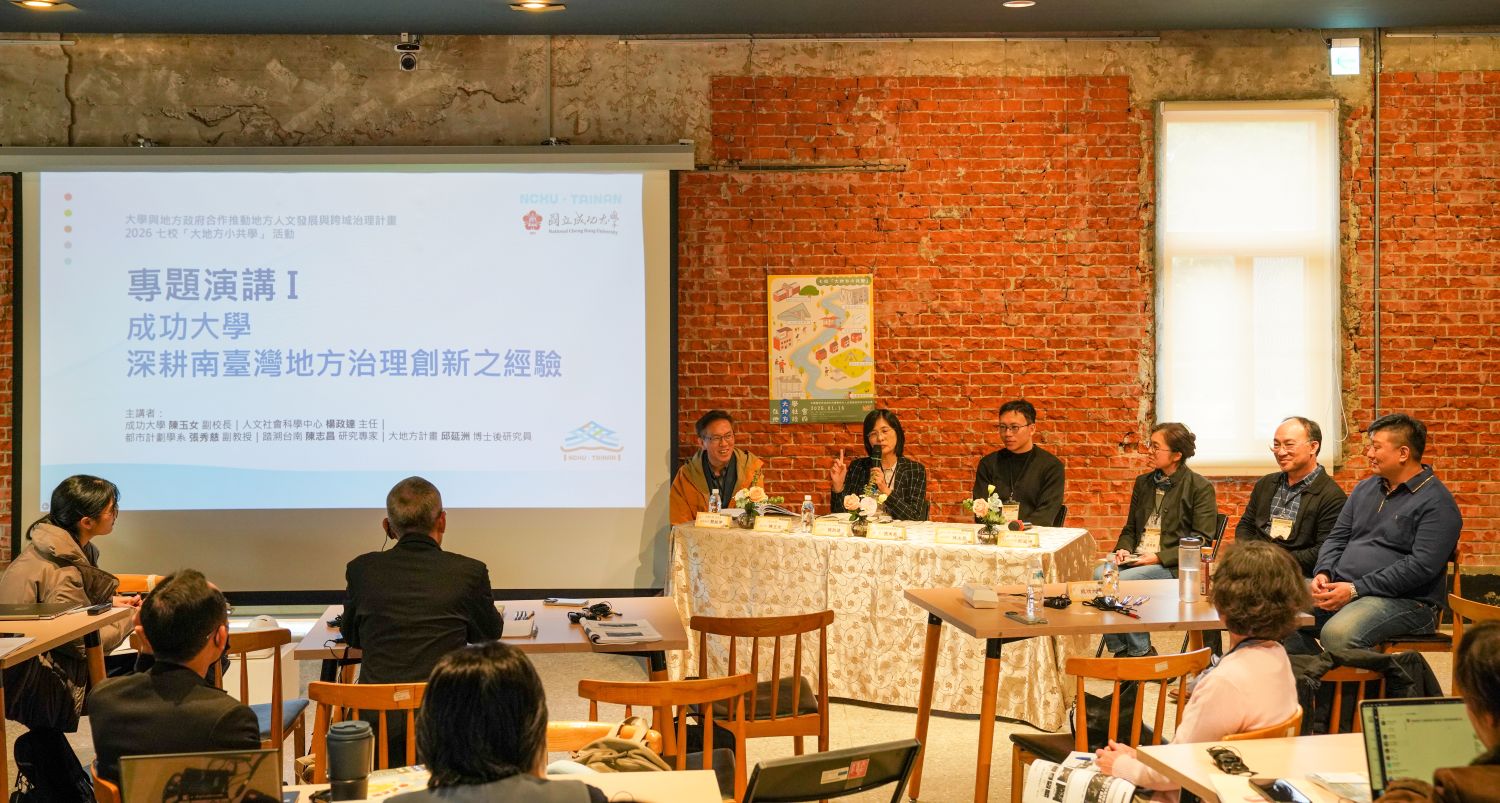
The NCKU team shared its experience in deeply engaging with local governance in southern Taiwan.
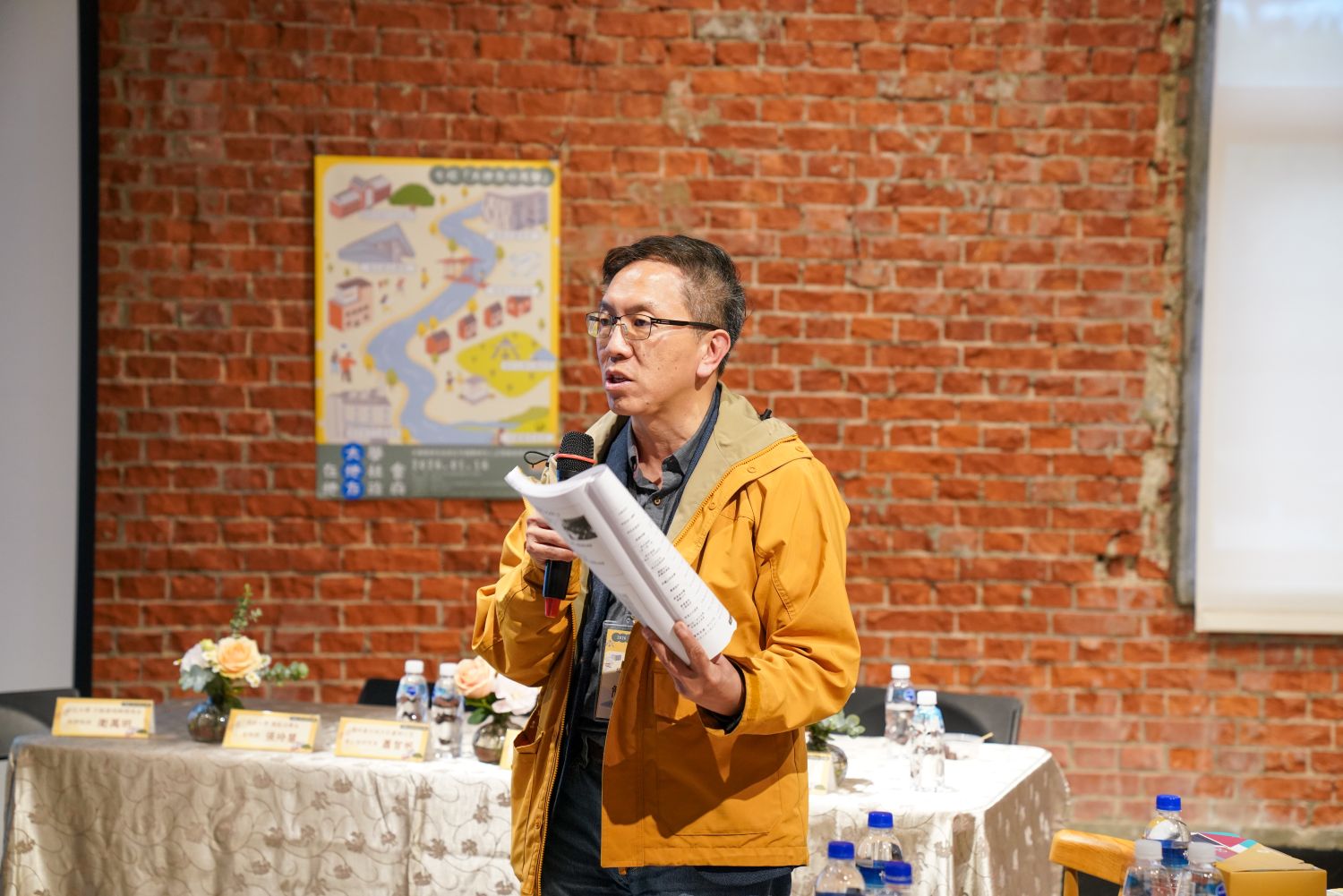
Professor Hsu-Shen Chien, Chief Convener of the Big Region Program, emphasized the importance of think-tank-oriented approaches and institutional support within universities for advancing social practice.
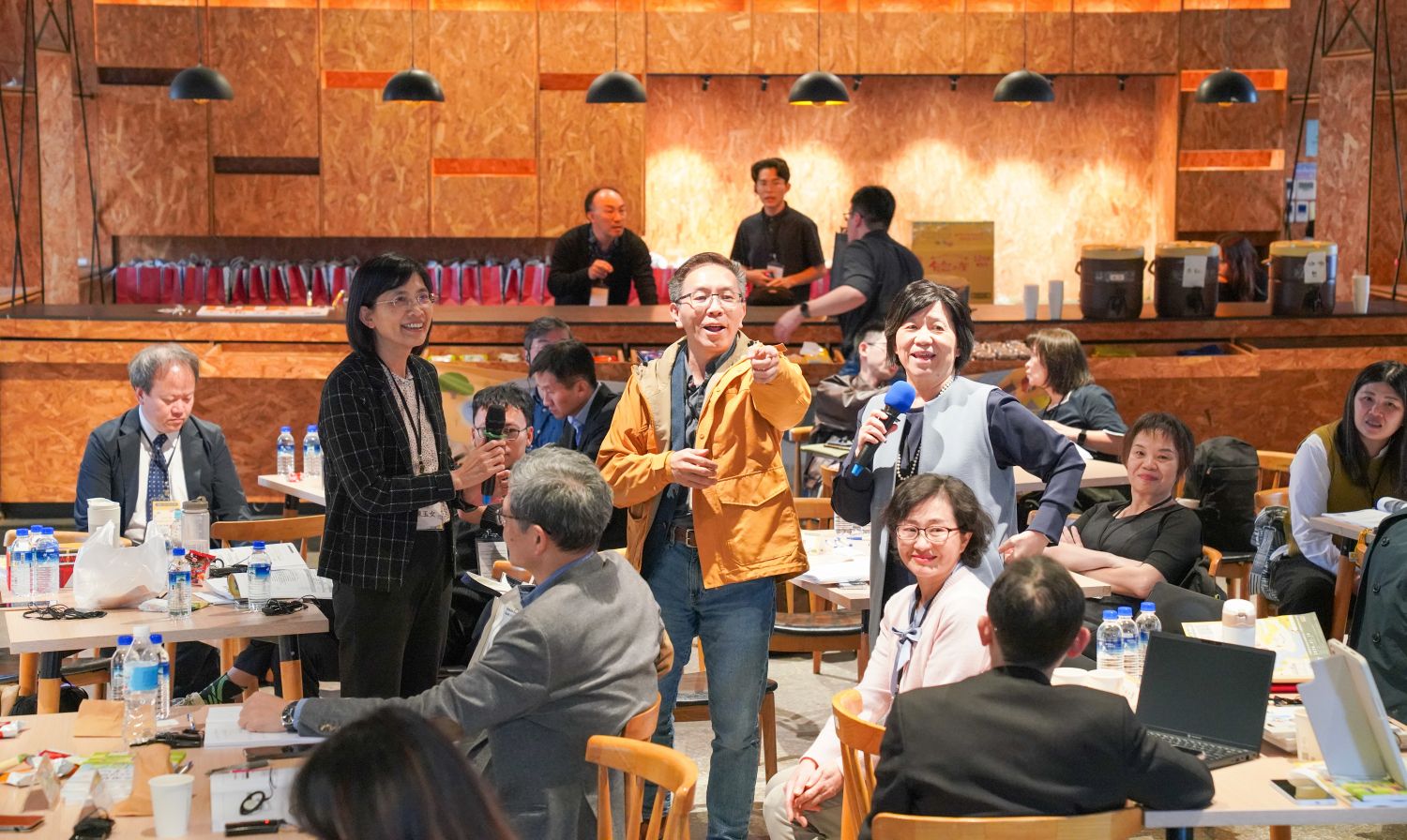
Seven universities engage in active exchange during the Co-Learning Forum.
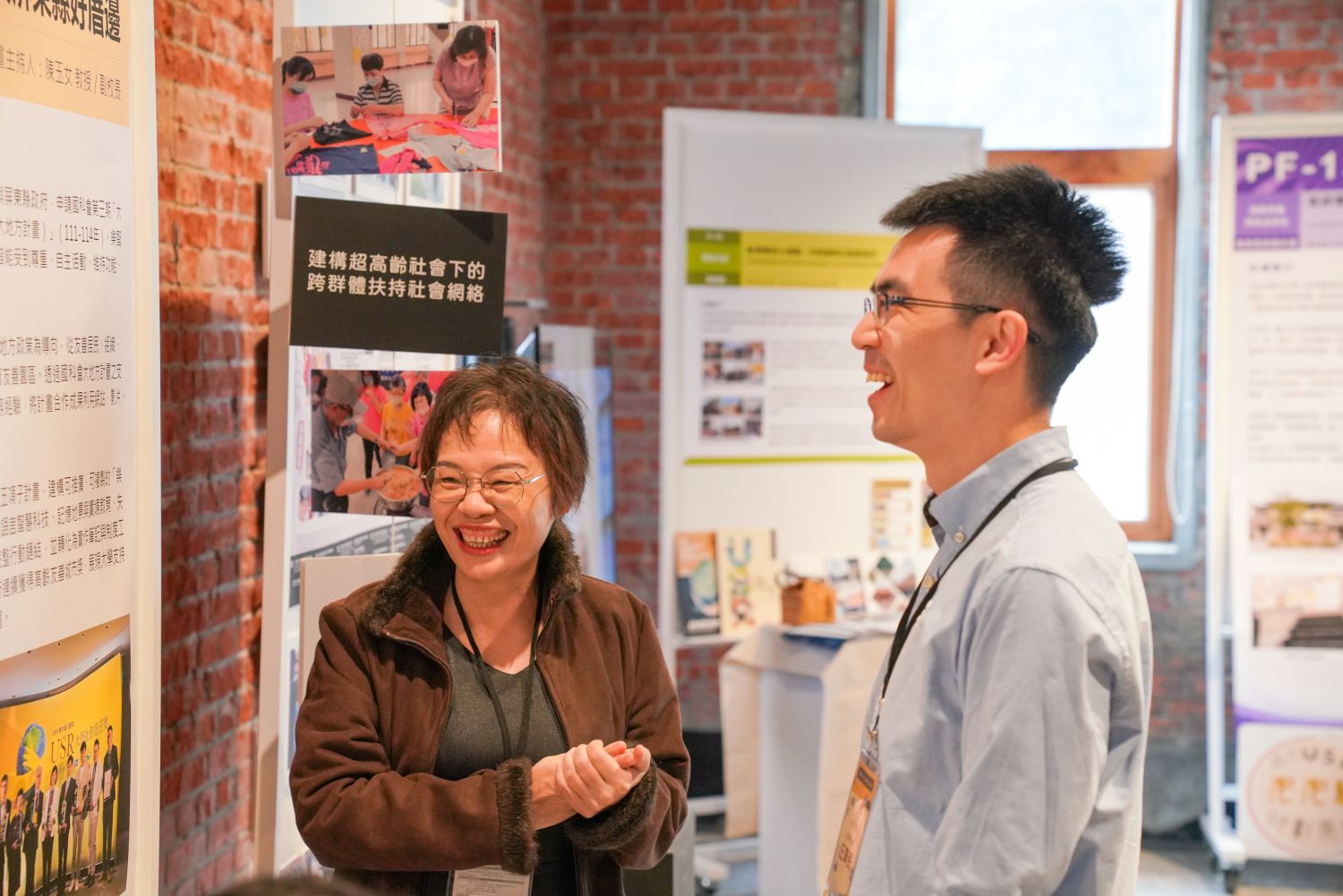
Associate Professor Ling-Hui Chang of the Department of Occupational Therapy at NCKU presented the outcomes of the Phase III Big Region Program project, “Co-Creating a Dementia-Friendly Community.”
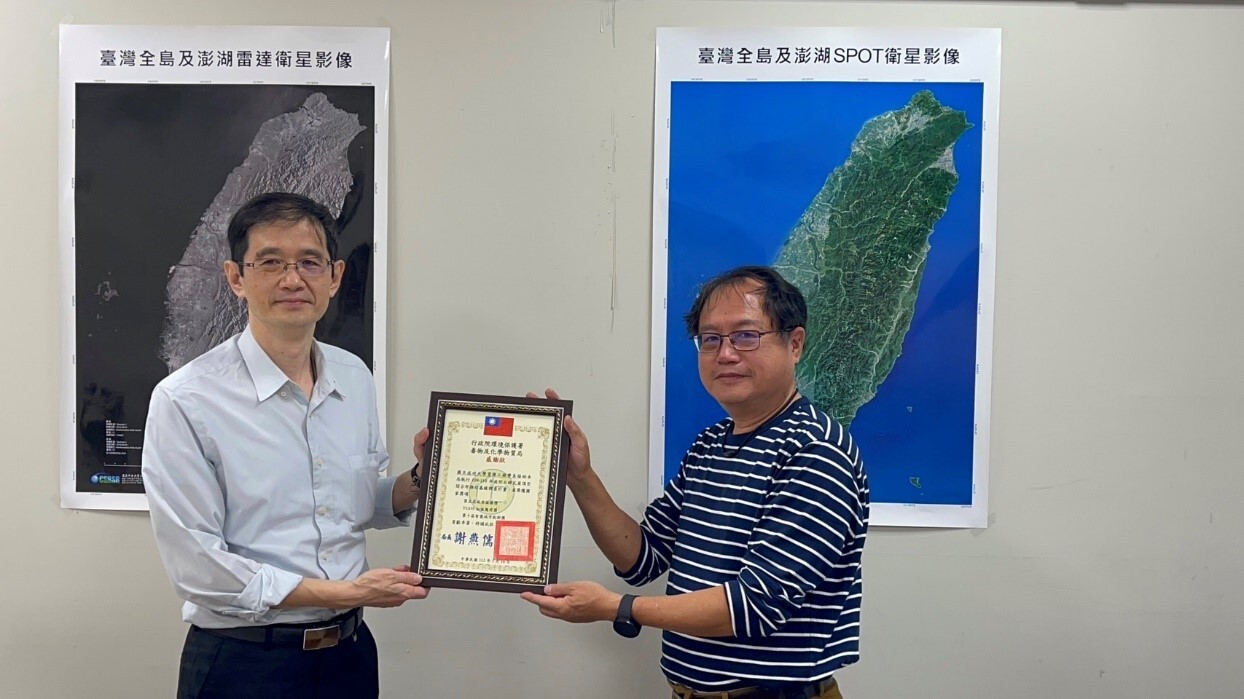
SDG11AI Helps Protect the Environment: NCKU Resource Engineering Asbestos Roofing Remote Sensing Team Wins 3 National Awards.
View more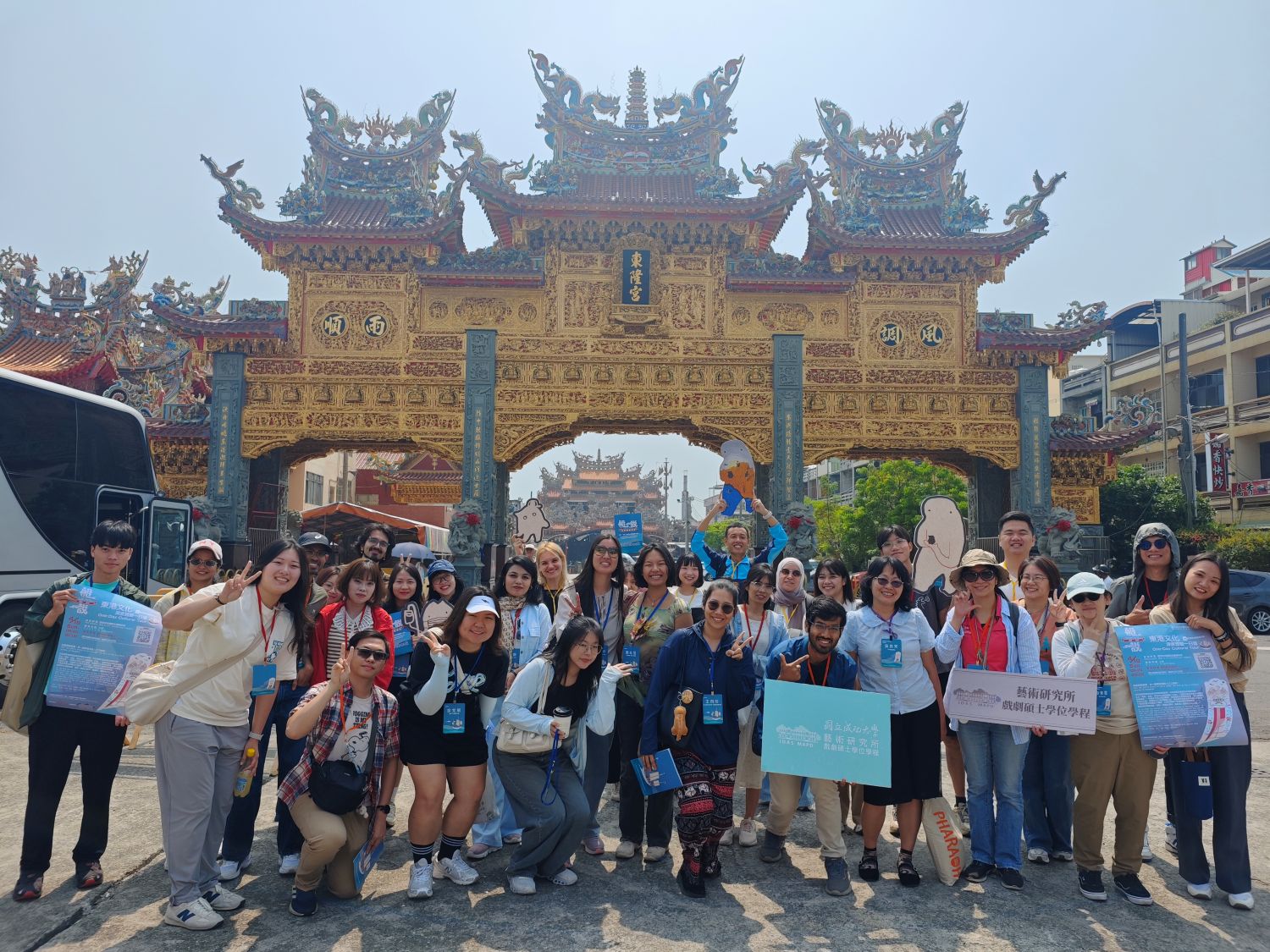
SDG11Legends and Boats: An In-depth Cultural Experience of Donggang Culture — A Journey Exploring the Fusion of Faith and Art
View more