



SDG11
NCKU Song Jiang Martial Arts Team Celebrates Mother’s Day with Traditional Performance
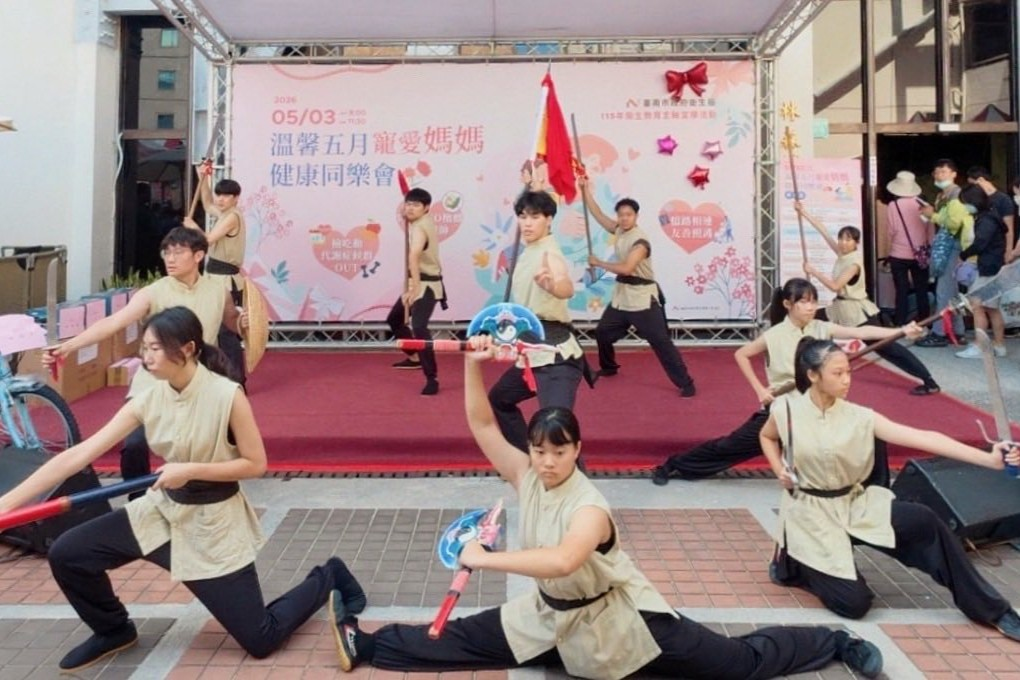
National Cheng Kung University (NCKU) has implemented the National Science and Technology Council’s “Taiwan Sports Culture Research Project” through its Research Center for Humanities and Social Sciences. By integrating teaching practice and training, the university established the NCKU Song Jiang Martial Arts Team to promote the inheritance and development of local sports culture. In celebration of Mother’s Day, the NCKU Song Jiang team joined forces with the martial arts team of Tainan Municipal Liujia Junior High School on the morning of May 3 to perform at the “Warm May: Mother’s Day Health and Joy Festival,” organized by the Tainan City Government Health Bureau. Together, they presented the performance “Sincere Heart, Artistic Expression (誠馨呈藝),” expressing gratitude and blessings to mothers through traditional martial arts formations.
The performance was choreographed by Coach Chiu-Yi Tsai of Liujia Junior High School, centering on the spirit of “sincerity” and incorporating the symbolic image of the carnation. The choreography integrated blessings into martial formations and movements. The opening segment featured traditional martial formation rituals, with evolving formations incorporating floral imagery to present a visual metaphor of “flowers forming formations, heartfelt intentions taking shape.” The second half transitioned into martial arts performances, jointly presented by NCKU and Liujia Junior High School. The NCKU Song Jiang team demonstrated a steady and powerful martial formation, while the junior high school team brought youthful energy. Together, they created a dynamic intergenerational performance that combined cultural depth with emotional resonance.
This performance was also part of the National Science and Technology Council’s “Taiwan Sports Culture Research Project—Dynamic Taiwan: From Traditional Martial Arts Techniques to Science-Based Sports Culture Innovation.” Led by Professor Cheng-Ta Yang, Director of the NCKU Research Center for Humanities and Social Sciences, the project integrates cultural studies, digital transformation, and sports science with Tainan’s local Song Jiang martial traditions to develop an application model that combines cultural significance with health promotion. NCKU also fulfills its University Social Responsibility (USR) by collaborating with local schools and involving rural junior high school students in training and performances, providing hands-on learning opportunities. This process helps students deepen their understanding of traditional culture while cultivating teamwork and self-expression, thereby strengthening cultural inheritance at the grassroots level.
Through collaboration between the university and local schools, the event not only implemented the extension of academic research into public engagement but also demonstrated the contemporary relevance of traditional martial formations, including health promotion, intergenerational integration, and cultural revitalization through festivals. Audiences were able not only to experience visual and dynamic performances but also to deepen their understanding and appreciation of Taiwan’s local sports culture.
Principal Ching-Chung Chen of Liujia Junior High School stated that the performance aligns with the National Science and Technology Council’s objectives of traditional martial arts inheritance, sports culture promotion, sports technology application, and community engagement. It has enhanced students’ practical learning experience while showcasing the achievements of cross-school collaboration. He emphasized that the partnership between Liujia Junior High School and NCKU is closely connected with the university’s USR initiatives, extending higher education resources into rural secondary education through teaching support, curriculum development, and diversified learning opportunities. Students in the martial arts team have generally trained since elementary school, demonstrating strong foundational skills and discipline. Their joint performance with the NCKU Song Jiang team improved overall coordination and stage presence. He further noted that the students’ stability and focus reflect the long-term effectiveness of the training program and demonstrate strong future potential.
Director Cheng-Ta Yang of the NCKU Research Center for Humanities and Social Sciences explained that the “Dynamic Taiwan” project centers on traditional martial arts and integrates sports culture promotion, sports technology, and interdisciplinary collaboration to establish an evidence-based model for cultural development. Through cooperation with local schools, teaching, research, and practice are integrated and gradually transformed into concrete training and outreach mechanisms, allowing traditional martial arts to extend from campuses into communities and daily life, thereby promoting intergenerational exchange and cultural connection. The collaboration with Liujia Junior High School not only demonstrates the outcomes of the project but also enables students to deepen their learning and accumulate cultural experience. Future efforts will continue to expand partnerships with local schools and communities, strengthen the application of traditional martial arts in education and health promotion, and further integrate sports culture into everyday life to sustain its inheritance and development.
Through cooperation with public institutions and local schools, the event allowed the public to appreciate the vitality of traditional martial arts while deepening their understanding of local culture. Looking ahead, the “Dynamic Taiwan” project will continue to strengthen collaboration with schools and communities, linking public agencies, campuses, communities, and temples to promote the integration of Song Jiang martial formations into primary and secondary education and extend their application to physical and mental health promotion for older adults. At the same time, through diversified outreach, the project aims to reshape public perceptions of traditional martial arts, strengthen local cultural identity, and further demonstrate the university’s engagement with society and the embodiment of humanistic values in contemporary contexts.
The performance was choreographed by Coach Chiu-Yi Tsai of Liujia Junior High School, centering on the spirit of “sincerity” and incorporating the symbolic image of the carnation. The choreography integrated blessings into martial formations and movements. The opening segment featured traditional martial formation rituals, with evolving formations incorporating floral imagery to present a visual metaphor of “flowers forming formations, heartfelt intentions taking shape.” The second half transitioned into martial arts performances, jointly presented by NCKU and Liujia Junior High School. The NCKU Song Jiang team demonstrated a steady and powerful martial formation, while the junior high school team brought youthful energy. Together, they created a dynamic intergenerational performance that combined cultural depth with emotional resonance.
This performance was also part of the National Science and Technology Council’s “Taiwan Sports Culture Research Project—Dynamic Taiwan: From Traditional Martial Arts Techniques to Science-Based Sports Culture Innovation.” Led by Professor Cheng-Ta Yang, Director of the NCKU Research Center for Humanities and Social Sciences, the project integrates cultural studies, digital transformation, and sports science with Tainan’s local Song Jiang martial traditions to develop an application model that combines cultural significance with health promotion. NCKU also fulfills its University Social Responsibility (USR) by collaborating with local schools and involving rural junior high school students in training and performances, providing hands-on learning opportunities. This process helps students deepen their understanding of traditional culture while cultivating teamwork and self-expression, thereby strengthening cultural inheritance at the grassroots level.
Through collaboration between the university and local schools, the event not only implemented the extension of academic research into public engagement but also demonstrated the contemporary relevance of traditional martial formations, including health promotion, intergenerational integration, and cultural revitalization through festivals. Audiences were able not only to experience visual and dynamic performances but also to deepen their understanding and appreciation of Taiwan’s local sports culture.
Principal Ching-Chung Chen of Liujia Junior High School stated that the performance aligns with the National Science and Technology Council’s objectives of traditional martial arts inheritance, sports culture promotion, sports technology application, and community engagement. It has enhanced students’ practical learning experience while showcasing the achievements of cross-school collaboration. He emphasized that the partnership between Liujia Junior High School and NCKU is closely connected with the university’s USR initiatives, extending higher education resources into rural secondary education through teaching support, curriculum development, and diversified learning opportunities. Students in the martial arts team have generally trained since elementary school, demonstrating strong foundational skills and discipline. Their joint performance with the NCKU Song Jiang team improved overall coordination and stage presence. He further noted that the students’ stability and focus reflect the long-term effectiveness of the training program and demonstrate strong future potential.
Director Cheng-Ta Yang of the NCKU Research Center for Humanities and Social Sciences explained that the “Dynamic Taiwan” project centers on traditional martial arts and integrates sports culture promotion, sports technology, and interdisciplinary collaboration to establish an evidence-based model for cultural development. Through cooperation with local schools, teaching, research, and practice are integrated and gradually transformed into concrete training and outreach mechanisms, allowing traditional martial arts to extend from campuses into communities and daily life, thereby promoting intergenerational exchange and cultural connection. The collaboration with Liujia Junior High School not only demonstrates the outcomes of the project but also enables students to deepen their learning and accumulate cultural experience. Future efforts will continue to expand partnerships with local schools and communities, strengthen the application of traditional martial arts in education and health promotion, and further integrate sports culture into everyday life to sustain its inheritance and development.
Through cooperation with public institutions and local schools, the event allowed the public to appreciate the vitality of traditional martial arts while deepening their understanding of local culture. Looking ahead, the “Dynamic Taiwan” project will continue to strengthen collaboration with schools and communities, linking public agencies, campuses, communities, and temples to promote the integration of Song Jiang martial formations into primary and secondary education and extend their application to physical and mental health promotion for older adults. At the same time, through diversified outreach, the project aims to reshape public perceptions of traditional martial arts, strengthen local cultural identity, and further demonstrate the university’s engagement with society and the embodiment of humanistic values in contemporary contexts.
The NCKU Song Jiang Martial Arts Team and the Liujia Junior High School Martial Arts Team jointly performed at the “Warm May Mother’s Day Health and Joy Festival,” organized by the Tainan City Government Health Bureau, on May 3.
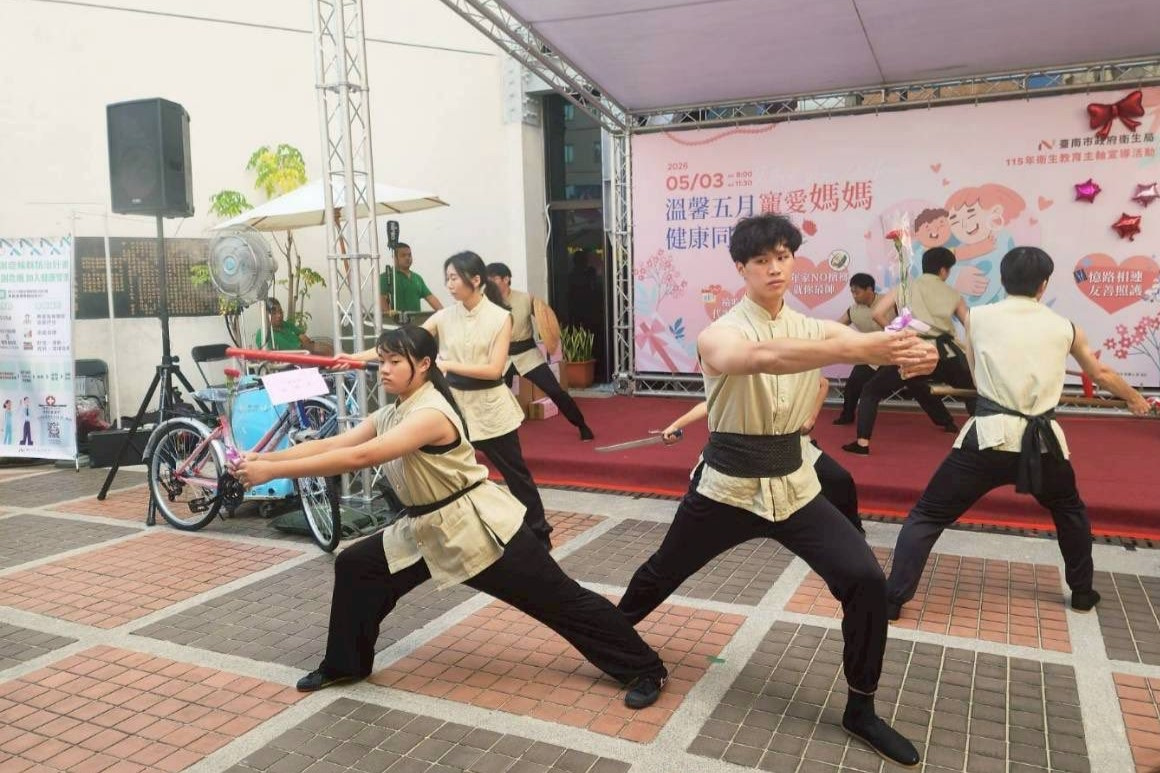
Blessings were integrated into the formations and martial arts performance, dedicated to every mother and family member present.
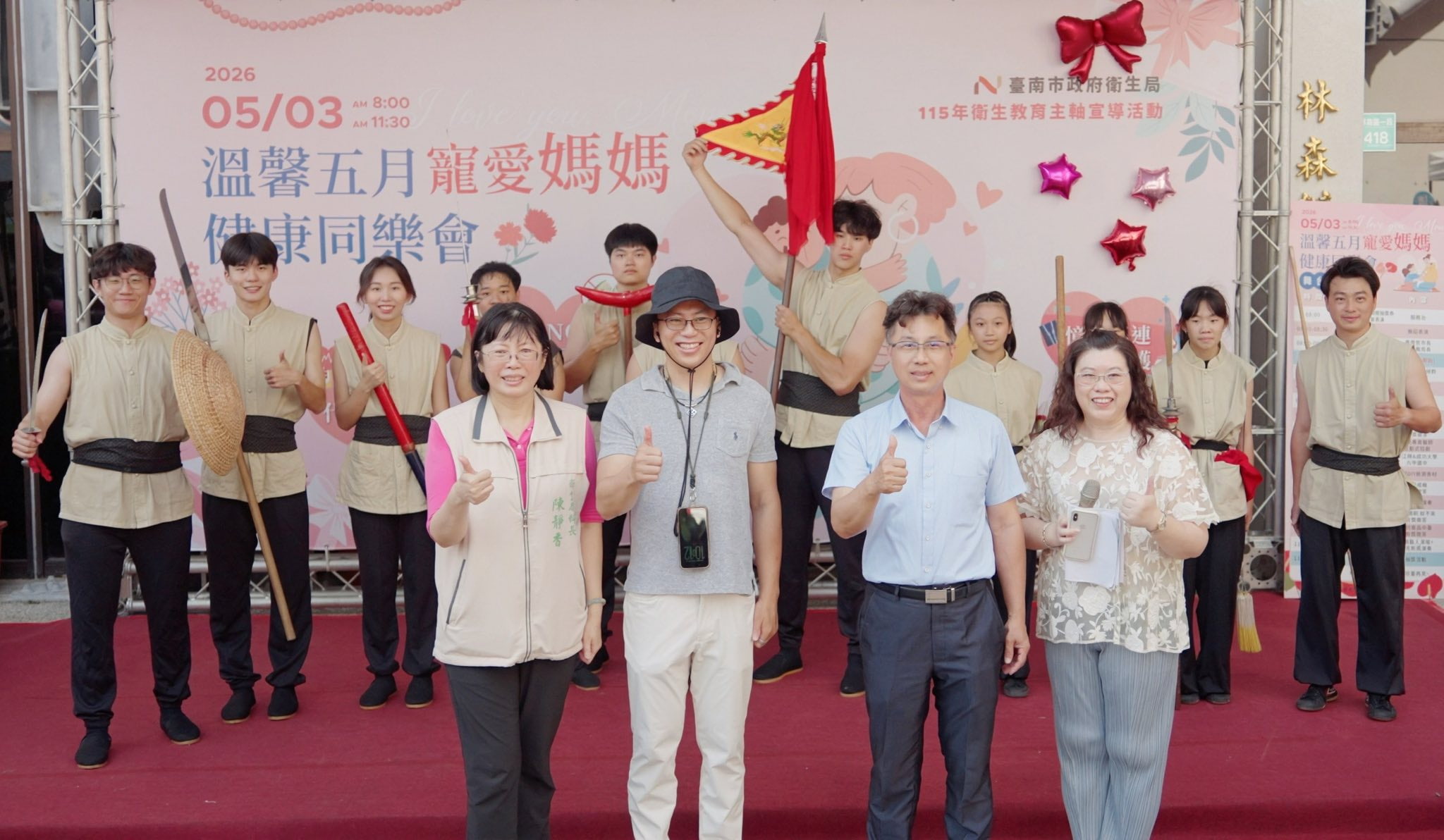
“Sincere Heart, Artistic Expression” was jointly led and completed by Principal Ching-Chung Chen and Coach Chiu-Yi Tsai of Liujia Junior High School, together with Professor Cheng-Ta Yang, Director of the NCKU Research Center for Humanities and Social Sciences, demonstrating the tangible outcomes of cross-school collaboration and intergenerational transmission.