




SDG3
Exploring Human Wellbeing, Technology, and Social Resilience: 2026 APPA Summit & Conference Kicks Off at NCKU

The 2026 Asia-Pacific Psychology Leadership Summit and Conference (2026 APPA Summit & Conference) was held from June 17 to 19 at National Cheng Kung University (NCKU), bringing together psychological association representatives, international scholars, and practitioners from countries and regions including Australia, Japan, Vietnam, India, Hong Kong, Macao, Nepal, Singapore, New Zealand, and Lebanon. Jointly hosted by the NCKU Center for Humanities and Social Sciences and the Taiwanese Psychological Association, and supported by the National Science and Technology Council (NSTC), the conference was themed "Connecting Through Taiwan: Wellbeing, Technology, and Society." The event facilitated transnational academic exchanges and integrated cultural walks with University Social Responsibility (USR) field experiences, connecting the Asia-Pacific psychology community with local social practice fields in Tainan. Drawing from their respective national experiences, participants jointly explored crucial contemporary issues facing the Asia-Pacific region and the world, including mental health, disaster resilience, technological innovation, and social governance.
In addition to promoting international academic exchange, the conference provided a vital opportunity for the Asia-Pacific psychological community to deepen dialogue, share experiences, and expand cooperation. The event invited psychological representatives from 10 countries, attracting over 300 participants from 18 countries. Through keynote speeches, distinguished academic lectures, four core symposia, poster presentations, the Asia-Pacific Leadership Strategic Roundtable, and visits to local USR sites in Tainan, the conference seamlessly interconnected academic research, professional practice, and social care in psychology, further demonstrating Taiwan's active role in psychological exchange and knowledge connectivity within the Asia-Pacific region.
In her opening remarks, NCKU Vice President Yuh-Neu Chen stated that the summit's theme highly aligns with the university's long-term academic mission and social practice direction. Over the years, NCKU has deeply rooted itself in local Tainan communities through USR projects and has engaged in exchanges with Southeast Asian and East Asian academic communities via "Taiwan Studies" research, continuously bringing Taiwan's local practice experiences into broader regional discussions. Holding this summit at NCKU not only showcases the university's achievements in the humanities, social sciences, and interdisciplinary research, but also fosters hope that through dialogue and cooperation with Asia-Pacific partners, they can jointly explore more forward-looking directions for mental health, social wellbeing, and regional sustainable development.
Jung-Ta Yang, Director of the NCKU Center for Humanities and Social Sciences and President of the Taiwanese Psychological Association, noted in his opening address that this conference serves as an important transnational academic dialogue platform for the psychological community in the Asia-Pacific region. With Taiwan serving as a vital node connecting the Asia-Pacific psychology network, the conference aims to leverage Taiwan's unique geopolitical role, academic perspectives, and social practice experiences to build an open space for dialogue and exchange among Asia-Pacific psychological associations, working together to address cross-border and cross-disciplinary social challenges.
The conference invited numerous prominent scholars and professional representatives from the Asia-Pacific and international psychological communities. On the first day, June 17, Prof. Simon F. Crowe (President of APPA / La Trobe University, Australia) and Dr. Brigitte Khoury (President-Elect of the International Union of Psychological Science, IUPsyS) delivered a joint plenary keynote address, offering forward-looking insights on the future development of Asia-Pacific psychology, international cooperation, and professional institution building. Prof. Crowe’s speech, titled "A Strategic Vision for Psychology in the Asia-Pacific," explored how Asia-Pacific psychology can build a shared vision amid cultural diversity, professional ethics, regional cooperation, digital mental health, and artificial intelligence to enhance the discipline's impact on regional social development. The conference also specially invited Professor Ying-yi Hong from The Chinese University of Hong Kong, a long-time researcher in cultural psychology and social identity, as the "Distinguished Academic Lecture" keynote speaker, providing a crucial cross-cultural psychological perspective to the assembly.
The two-day academic program featured four core symposia, inviting Asia-Pacific psychological association representatives, international scholars, and Taiwanese experts for in-depth exchanges:
Forum 1 “Disaster and Resilience" : focused on disaster mental health, social trauma, and community resilience, with scholars and experts from India, Hong Kong, New Zealand, and Taiwan discussing how psychology responds to disaster risks and social vulnerabilities.
Forum 2"Wellbeing and Mental Health" : shared mental health service experiences from Vietnam, Macao, Nepal, and Taiwan, covering psychological challenges faced by the younger generation, school psychology, caregiver support, family wellbeing, and community psychological care.
Forum 3 "AI and Future Innovation" : addressed new issues confronting psychology amid the rapid development of AI and digital technology, encompassing human-centered AI, tech ethics, digital mental health, and professional service innovation, with exchanges among scholars and professional representatives from Japan, Taiwan, and Singapore.
Forum 4 "Forensic Psychology and Assessment Standards" : centered on forensic psychology, psychological assessment, and professional standard architecture, promoting the exchange of experiences in forensic psychology and professional system development across the Asia-Pacific. Through these forums, the conference highlighted the critical role of psychology in addressing contemporary social challenges, promoting public welfare, and driving cross-disciplinary cooperation.
Furthermore, on the afternoon of the second day (June 18), the "Asia-Pacific Leaders World Café: Strategic Roundtable" was held. Moderated by Professor Yi-Rui Wu from the NCKU College of Interdisciplinary Studies, the session invited leaders of psychological associations from various Asia-Pacific countries to engage in deep discussions regarding regional cooperation, psychological professional development, youth scholar cultivation, and transnational research networks. The goal was to build consensus and form the symbolic "Taiwan Consensus," laying the foundation for future cooperation in Asia-Pacific psychology. The Student Development Group of the Taiwanese Psychological Association also arranged special sharing sessions to encourage the younger generation to participate in international academic networks and cultivate future leaders in psychology.
To provide international participants with a deeper understanding of Taiwan's culture and NCKU's local social practices, the third day of the conference (June 19) featured a "Cultural Walk and USR Field Experience." Guided by the NCKU USR "With Us" project team, participants interacted with local elders in Nanmei Li, explored historic neighborhoods that carry the city's memory, and experienced traditional Dragon Boat Festival customs such as egg balancing and hanging five-poison amulets. By bridging academic exchange with cultural tours, the conference not only showcased Tainan’s profound cultural heritage but also tangibly manifested psychology's core concerns regarding social connection, local memory, and social wellbeing.
In addition to promoting international academic exchange, the conference provided a vital opportunity for the Asia-Pacific psychological community to deepen dialogue, share experiences, and expand cooperation. The event invited psychological representatives from 10 countries, attracting over 300 participants from 18 countries. Through keynote speeches, distinguished academic lectures, four core symposia, poster presentations, the Asia-Pacific Leadership Strategic Roundtable, and visits to local USR sites in Tainan, the conference seamlessly interconnected academic research, professional practice, and social care in psychology, further demonstrating Taiwan's active role in psychological exchange and knowledge connectivity within the Asia-Pacific region.
In her opening remarks, NCKU Vice President Yuh-Neu Chen stated that the summit's theme highly aligns with the university's long-term academic mission and social practice direction. Over the years, NCKU has deeply rooted itself in local Tainan communities through USR projects and has engaged in exchanges with Southeast Asian and East Asian academic communities via "Taiwan Studies" research, continuously bringing Taiwan's local practice experiences into broader regional discussions. Holding this summit at NCKU not only showcases the university's achievements in the humanities, social sciences, and interdisciplinary research, but also fosters hope that through dialogue and cooperation with Asia-Pacific partners, they can jointly explore more forward-looking directions for mental health, social wellbeing, and regional sustainable development.
Jung-Ta Yang, Director of the NCKU Center for Humanities and Social Sciences and President of the Taiwanese Psychological Association, noted in his opening address that this conference serves as an important transnational academic dialogue platform for the psychological community in the Asia-Pacific region. With Taiwan serving as a vital node connecting the Asia-Pacific psychology network, the conference aims to leverage Taiwan's unique geopolitical role, academic perspectives, and social practice experiences to build an open space for dialogue and exchange among Asia-Pacific psychological associations, working together to address cross-border and cross-disciplinary social challenges.
The conference invited numerous prominent scholars and professional representatives from the Asia-Pacific and international psychological communities. On the first day, June 17, Prof. Simon F. Crowe (President of APPA / La Trobe University, Australia) and Dr. Brigitte Khoury (President-Elect of the International Union of Psychological Science, IUPsyS) delivered a joint plenary keynote address, offering forward-looking insights on the future development of Asia-Pacific psychology, international cooperation, and professional institution building. Prof. Crowe’s speech, titled "A Strategic Vision for Psychology in the Asia-Pacific," explored how Asia-Pacific psychology can build a shared vision amid cultural diversity, professional ethics, regional cooperation, digital mental health, and artificial intelligence to enhance the discipline's impact on regional social development. The conference also specially invited Professor Ying-yi Hong from The Chinese University of Hong Kong, a long-time researcher in cultural psychology and social identity, as the "Distinguished Academic Lecture" keynote speaker, providing a crucial cross-cultural psychological perspective to the assembly.
The two-day academic program featured four core symposia, inviting Asia-Pacific psychological association representatives, international scholars, and Taiwanese experts for in-depth exchanges:
Forum 1 “Disaster and Resilience" : focused on disaster mental health, social trauma, and community resilience, with scholars and experts from India, Hong Kong, New Zealand, and Taiwan discussing how psychology responds to disaster risks and social vulnerabilities.
Forum 2"Wellbeing and Mental Health" : shared mental health service experiences from Vietnam, Macao, Nepal, and Taiwan, covering psychological challenges faced by the younger generation, school psychology, caregiver support, family wellbeing, and community psychological care.
Forum 3 "AI and Future Innovation" : addressed new issues confronting psychology amid the rapid development of AI and digital technology, encompassing human-centered AI, tech ethics, digital mental health, and professional service innovation, with exchanges among scholars and professional representatives from Japan, Taiwan, and Singapore.
Forum 4 "Forensic Psychology and Assessment Standards" : centered on forensic psychology, psychological assessment, and professional standard architecture, promoting the exchange of experiences in forensic psychology and professional system development across the Asia-Pacific. Through these forums, the conference highlighted the critical role of psychology in addressing contemporary social challenges, promoting public welfare, and driving cross-disciplinary cooperation.
Furthermore, on the afternoon of the second day (June 18), the "Asia-Pacific Leaders World Café: Strategic Roundtable" was held. Moderated by Professor Yi-Rui Wu from the NCKU College of Interdisciplinary Studies, the session invited leaders of psychological associations from various Asia-Pacific countries to engage in deep discussions regarding regional cooperation, psychological professional development, youth scholar cultivation, and transnational research networks. The goal was to build consensus and form the symbolic "Taiwan Consensus," laying the foundation for future cooperation in Asia-Pacific psychology. The Student Development Group of the Taiwanese Psychological Association also arranged special sharing sessions to encourage the younger generation to participate in international academic networks and cultivate future leaders in psychology.
To provide international participants with a deeper understanding of Taiwan's culture and NCKU's local social practices, the third day of the conference (June 19) featured a "Cultural Walk and USR Field Experience." Guided by the NCKU USR "With Us" project team, participants interacted with local elders in Nanmei Li, explored historic neighborhoods that carry the city's memory, and experienced traditional Dragon Boat Festival customs such as egg balancing and hanging five-poison amulets. By bridging academic exchange with cultural tours, the conference not only showcased Tainan’s profound cultural heritage but also tangibly manifested psychology's core concerns regarding social connection, local memory, and social wellbeing.
The 2026 Asia-Pacific Psychology Leadership Summit and Conference (2026 APPA Summit & Conference) was held at National Cheng Kung University (NCKU) from June 17 to 19.
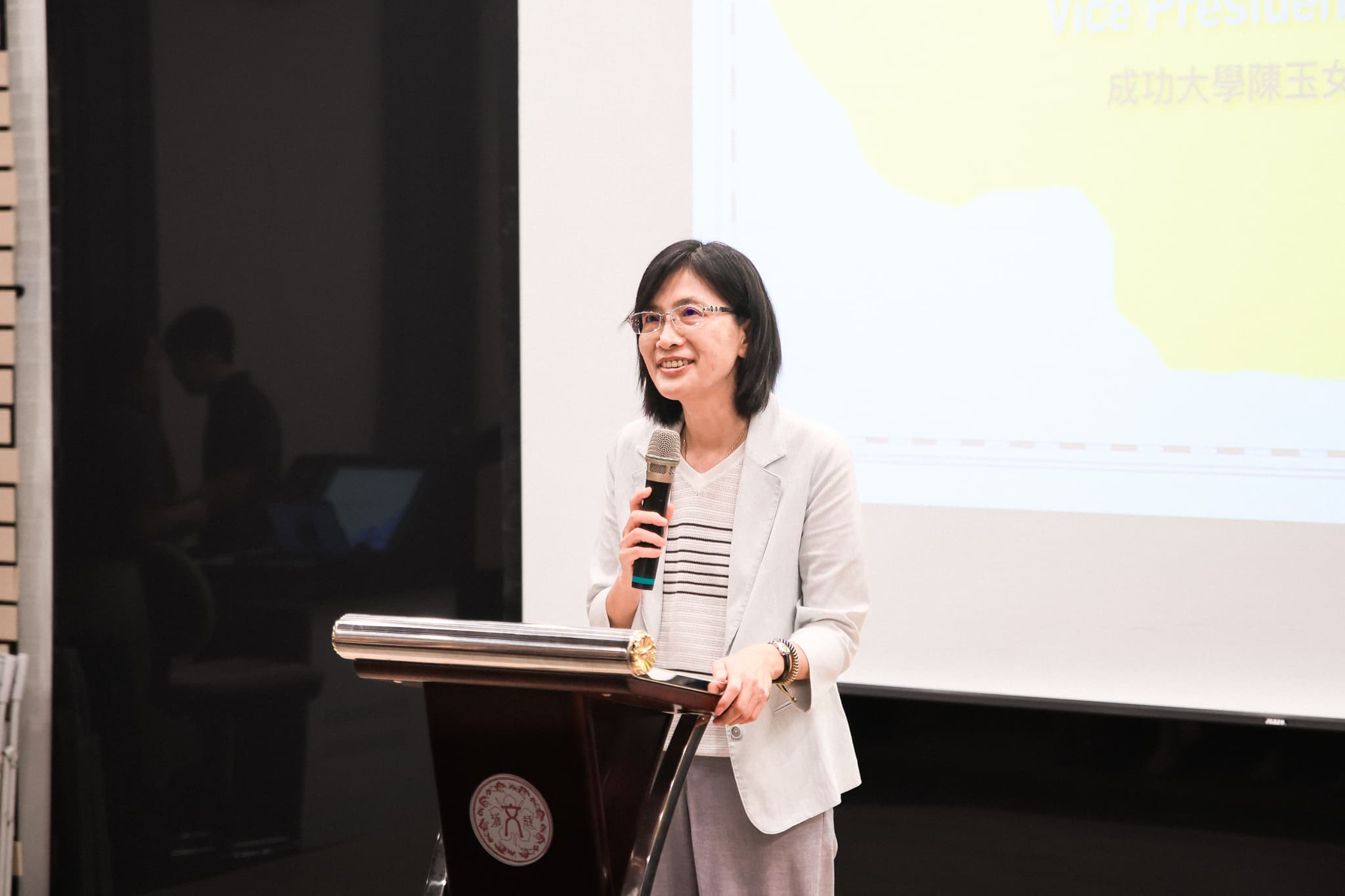
NCKU Vice President Yuh-Neu Chen delivered the remarks
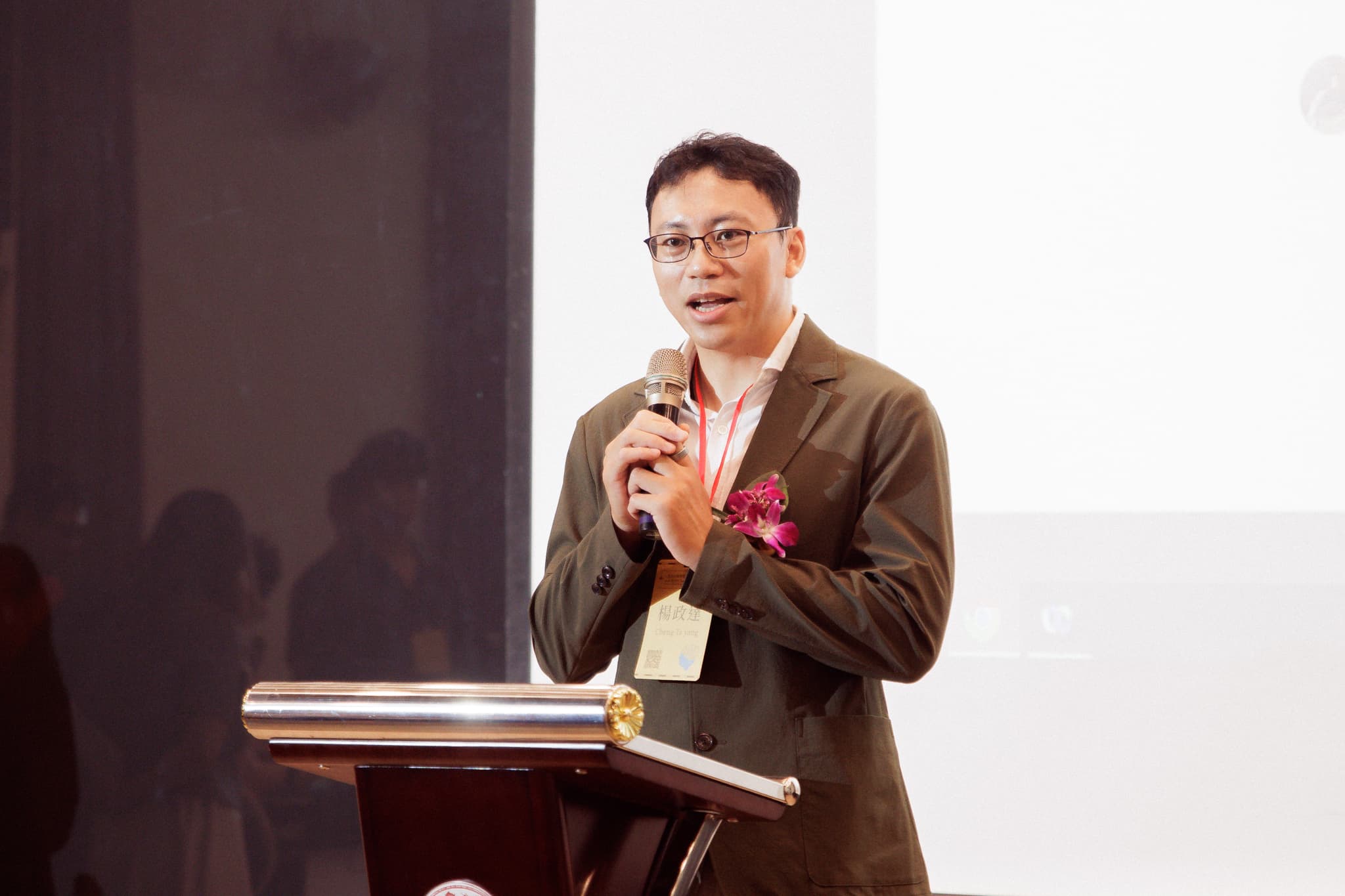
Jung-Ta Yang, Director of the NCKU Center for Humanities and Social Sciences and President of the Taiwanese Psychological Association
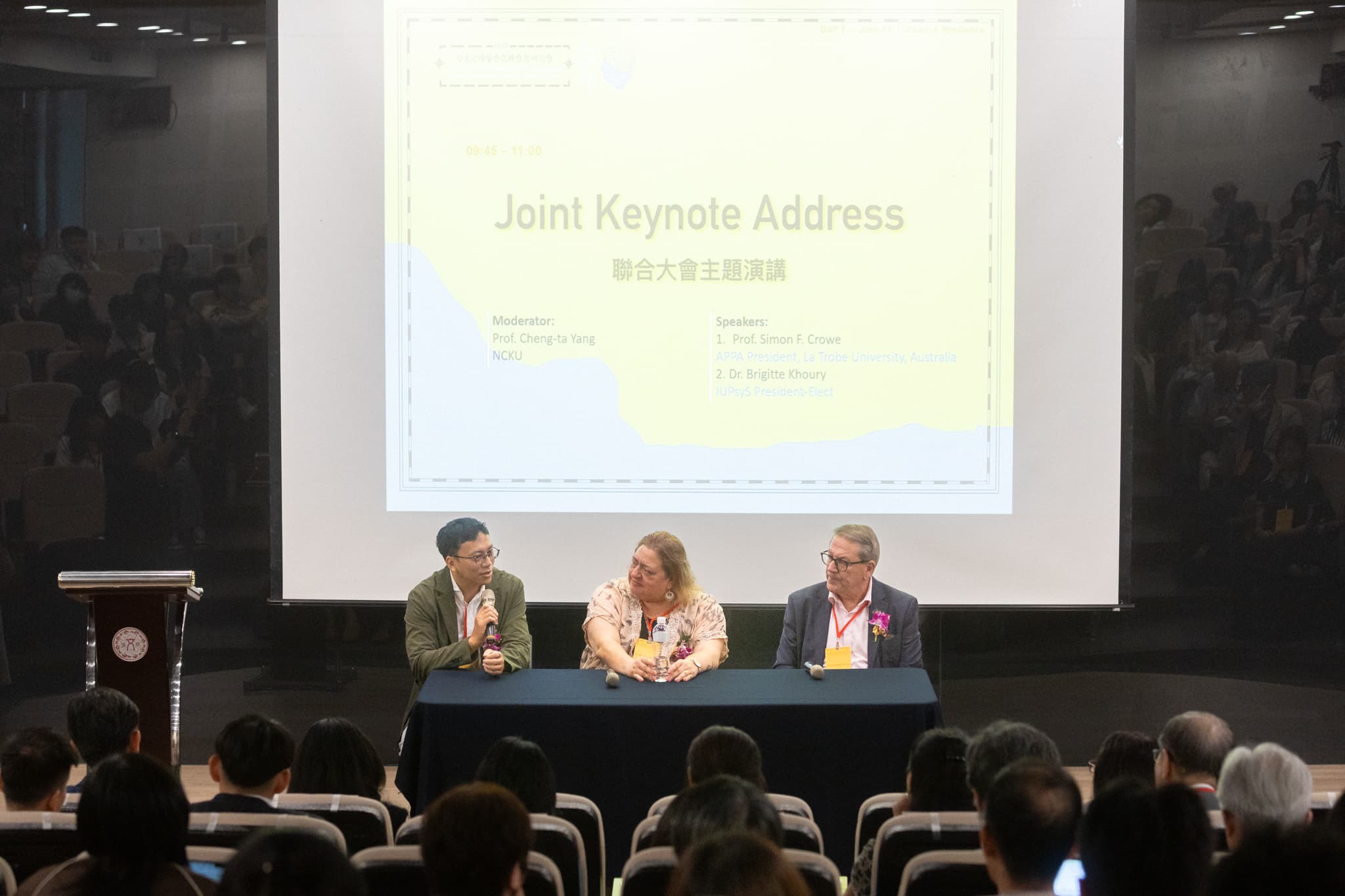
Joint Plenary Keynote Address on the First Day (June 17)
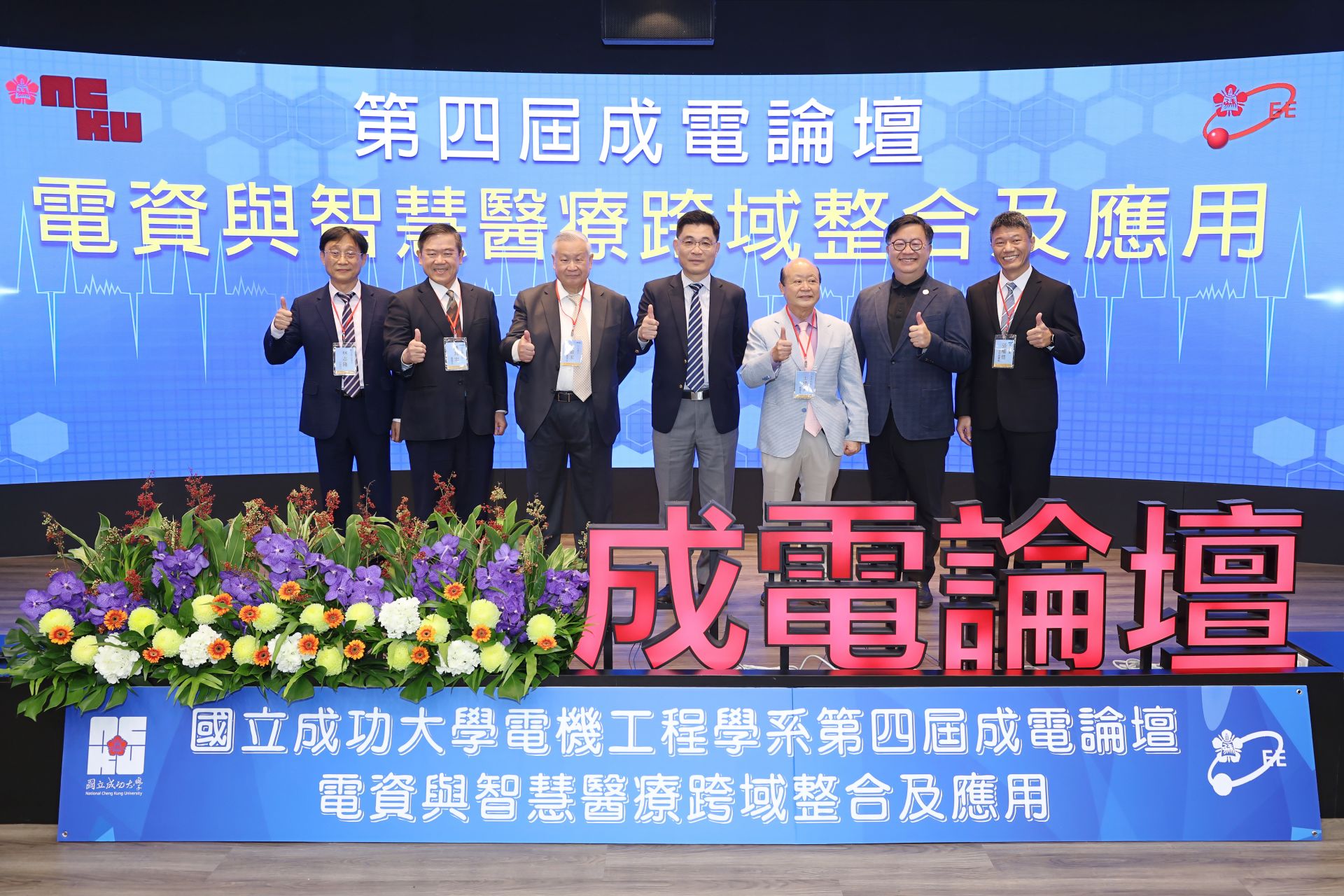
SDG3The 4th NCKU Electrical Engineering Forum, focused on "Cross-Domain Integration of Electrical Engineering and Smart Healthcare"
View more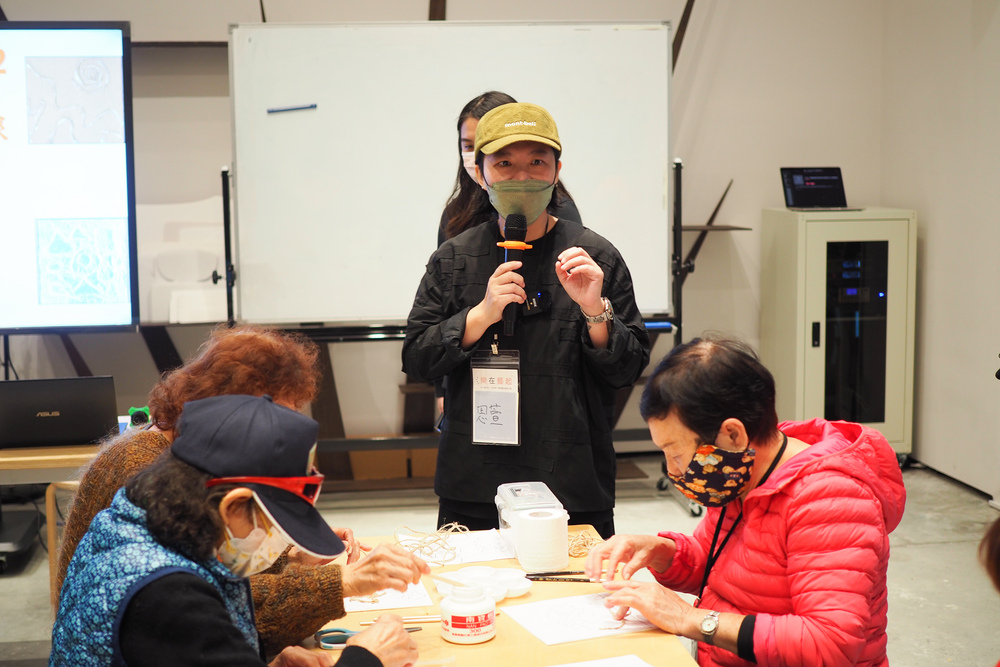
SDG3NCKU Department of Fine Arts and South American Pavilion Promote Senior Art, Leading Elderly Individuals to Artistic Creation
View more