



SDG11
NCKU and UC Berkeley Center for Global Healthy Cities Sign MOU for Academic Collaboration
The team from the Center for Healthy Cities at National Cheng Kung University (NCKU) visited the University of California, Berkeley from August 31 to September 2 and officially signed a Memorandum of Understanding (MOU) with the UC Berkeley Center for Global Healthy Cities. The signing ceremony was represented by Prof. Tzi-Yuan Chao, Director of the NCKU Center for Healthy Cities, and Prof. Dr. Jason Corburn, Director of the UC Berkeley Center for Global Healthy Cities. Prof. Chia-Han Yang, Associate Director of the NCKU Center for Healthy Cities, and Clinical Associate Prof. Hsin-Yi Shih, Associate Director, also participated in the delegation to join discussions on future collaboration directions. Centering on healthy city development, both parties aim to deepen international academic exchange and collaboration, laying an important foundation for establishing long-term and stable international partnerships.
Healthy city topics are inherently interdisciplinary and global, requiring joint participation across various fields such as urban planning, public health, architecture, and service design. The signing of this MOU between NCKU and UC Berkeley's Center for Global Healthy Cities marks a new milestone in their collaboration. In addition to expanding NCKU's international connectivity in healthy city research, it is anticipated that joint research, course collaborations, and talent cultivation will allow more faculty, students, and professionals to engage in international exchanges—bringing global experience back to Taiwan while sharing Taiwan's healthy city research and practical experience with the world.
Regarding implementation strategies, both sides are adopting a phased, step-by-step approach rather than fixing a single collaboration model from the start. According to current plans, short-term workshops and training courses will serve as the first-phase pilot. Through joint summer professional certification courses, both teams will gain experience in course content, faculty cooperation, participant needs, and administrative operations. As the partnership matures, these efforts can be expanded into formal credit-bearing courses, and further developed into educational certificate programs if demand from external professionals and international learners grows. Simultaneously, both centers will actively promote teaching and research exchanges, developing joint international publications based on comparative research projects to increase the global impact of healthy city studies.
During the visit, the NCKU team also met with Dr. Michael C. Lu, Dean of the School of Public Health. Dr. Lu shared UC Berkeley's long-standing experience in global public health cooperation and its models for building partnerships with universities, public health agencies, and research partners worldwide, demonstrating diverse possibilities for cross-border, cross-institutional, and cross-disciplinary collaboration.
Moving forward, both parties will use this MOU as a new starting point to discuss the themes, faculty, target audiences, and implementation methods for the initial workshops and training sessions, while identifying suitable content for formal course development. It is hoped that NCKU's healthy city research will not only deepen its partnership with UC Berkeley's School of Public Health, but also connect broader international academic and practical networks—gradually establishing a continuous and recognizable NCKU–Berkeley Healthy City Collaboration Platform to jointly cultivate talents with cross-disciplinary capabilities and global vision to address global urban health and sustainable development challenges.
Healthy city topics are inherently interdisciplinary and global, requiring joint participation across various fields such as urban planning, public health, architecture, and service design. The signing of this MOU between NCKU and UC Berkeley's Center for Global Healthy Cities marks a new milestone in their collaboration. In addition to expanding NCKU's international connectivity in healthy city research, it is anticipated that joint research, course collaborations, and talent cultivation will allow more faculty, students, and professionals to engage in international exchanges—bringing global experience back to Taiwan while sharing Taiwan's healthy city research and practical experience with the world.
Regarding implementation strategies, both sides are adopting a phased, step-by-step approach rather than fixing a single collaboration model from the start. According to current plans, short-term workshops and training courses will serve as the first-phase pilot. Through joint summer professional certification courses, both teams will gain experience in course content, faculty cooperation, participant needs, and administrative operations. As the partnership matures, these efforts can be expanded into formal credit-bearing courses, and further developed into educational certificate programs if demand from external professionals and international learners grows. Simultaneously, both centers will actively promote teaching and research exchanges, developing joint international publications based on comparative research projects to increase the global impact of healthy city studies.
During the visit, the NCKU team also met with Dr. Michael C. Lu, Dean of the School of Public Health. Dr. Lu shared UC Berkeley's long-standing experience in global public health cooperation and its models for building partnerships with universities, public health agencies, and research partners worldwide, demonstrating diverse possibilities for cross-border, cross-institutional, and cross-disciplinary collaboration.
Moving forward, both parties will use this MOU as a new starting point to discuss the themes, faculty, target audiences, and implementation methods for the initial workshops and training sessions, while identifying suitable content for formal course development. It is hoped that NCKU's healthy city research will not only deepen its partnership with UC Berkeley's School of Public Health, but also connect broader international academic and practical networks—gradually establishing a continuous and recognizable NCKU–Berkeley Healthy City Collaboration Platform to jointly cultivate talents with cross-disciplinary capabilities and global vision to address global urban health and sustainable development challenges.
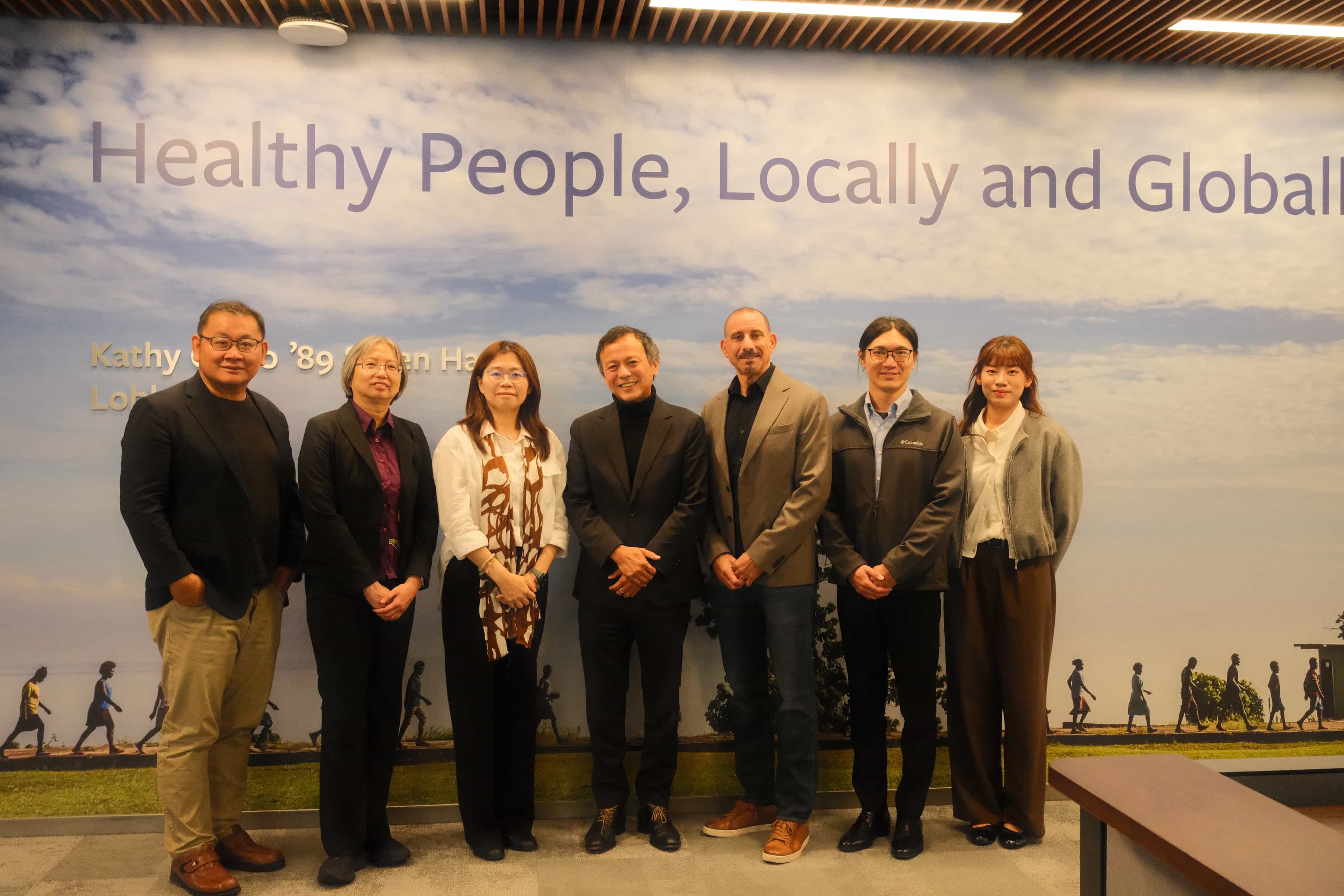
Group photo of the NCKU Center for Healthy Cities team with Dean Dr. Michael C. Lu.
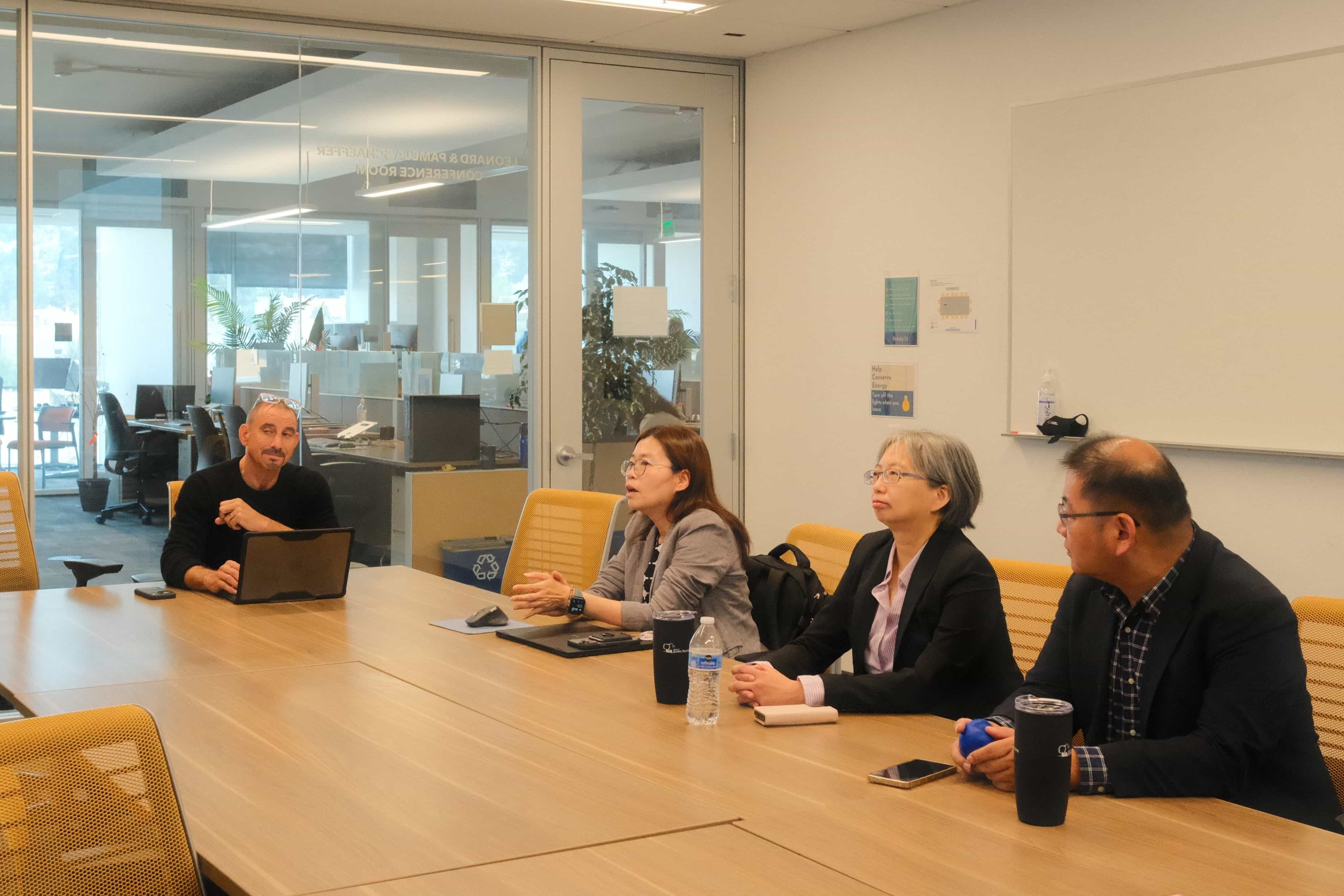
Prof. Tzi-Yuan Chao, Director of the NCKU Center for Healthy Cities, introduces the center's vision and goals for collaboration.
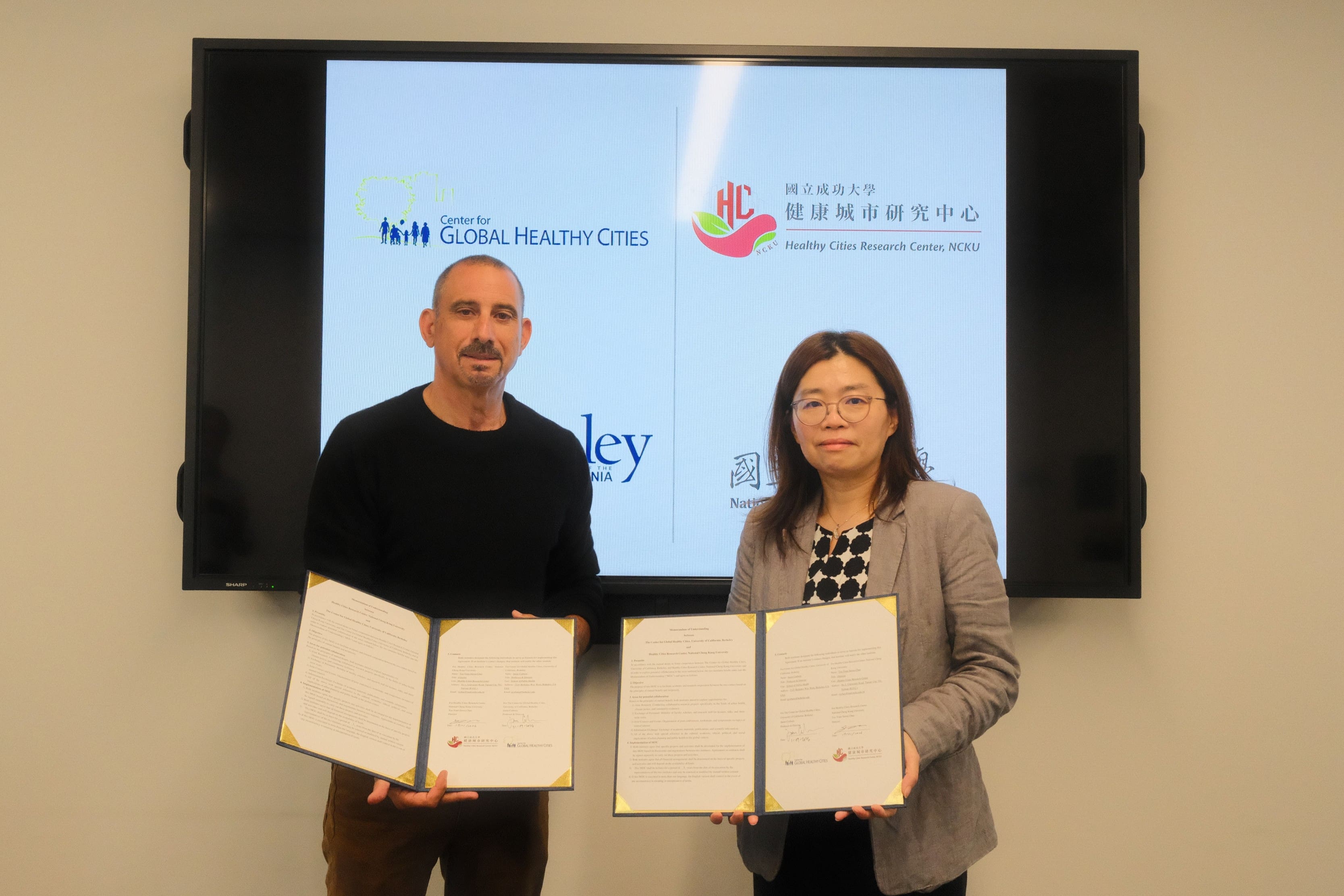
Prof. Tzi-Yuan Chao, Director of the NCKU Center for Healthy Cities (right), and Prof. Jason Corburn, Director of the UC Berkeley Center for Global Healthy Cities (left), represent both parties in signing the Memorandum of Understanding (MOU).