

SDG11
Engaging Local Communities Through Art: NCKU Teams Up with Chien-Chen Foundation and ARDSW in Yanshui, Tainan
Holiday Art School | Fostering New Possibilities for Local Cultural Heritage and Sustainable Development
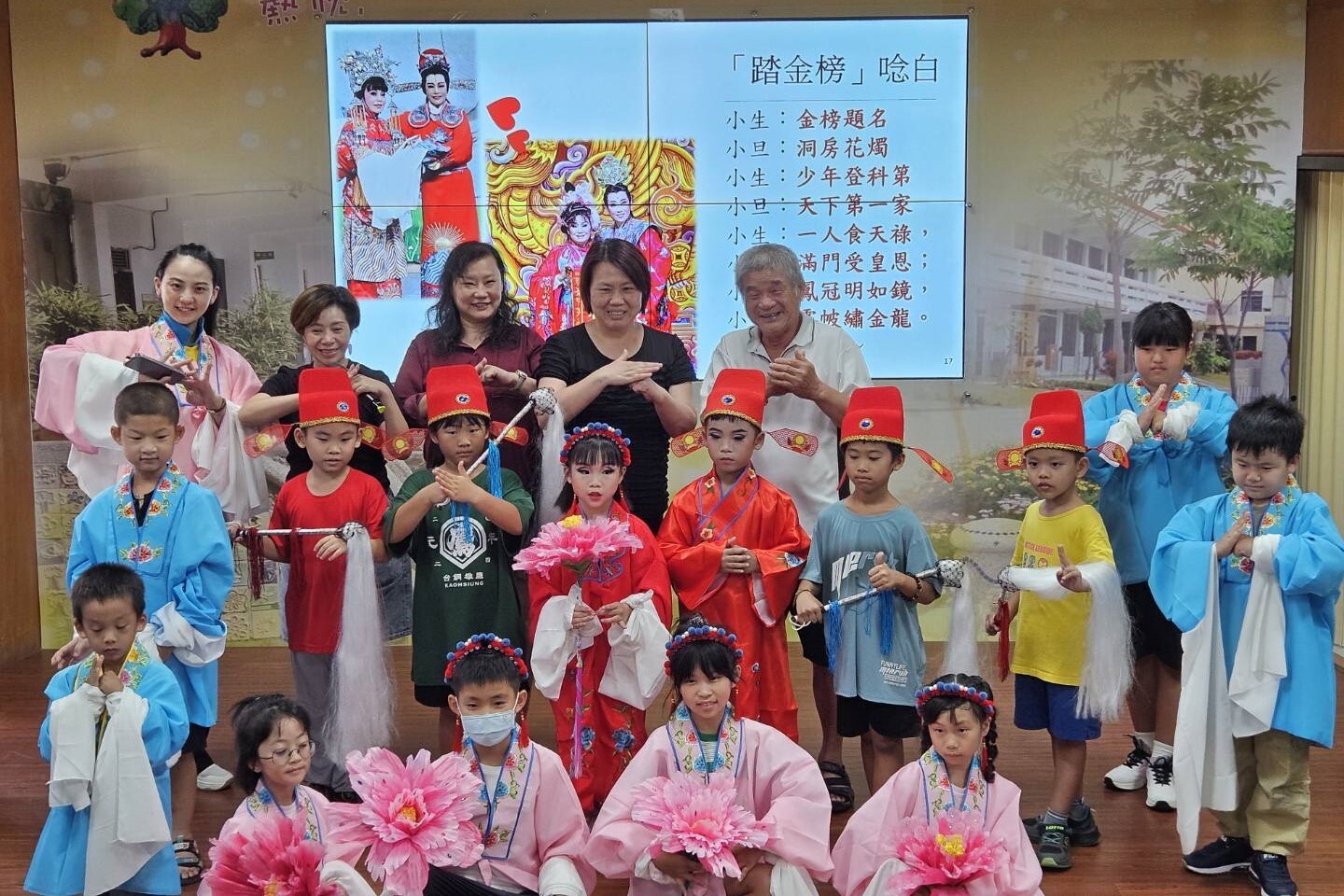
To fulfill University Social Responsibility by bringing art to rural areas and rooting culture at the grassroots level, Associate Professor Wei-Chien Ma’s team from NCKU’s Institute of Art Studies and Master’s Program in Drama partnered with the Chien-Chen Environmental Education Foundation to host the "Holiday Art School" at Ditougang Elementary School in Yanshui District, Tainan, on September 19. Through diverse classes—including traditional opera face painting, diabolo, physical movement, and blanket spinning—children engaged with traditional opera and folk arts via play, creation, and hands-on practice. These activities nurtured their expression, teamwork, and kinesthetic abilities, integrating art into the everyday learning experiences of rural children.
Ditougang boasts a rich agricultural heritage and deep-seated local memories, with the Song Jiang Battle Array standing as a vital community tradition. Addressing the need for local cultural preservation, Associate Professor Wei-Chien Ma noted that the "Holiday Art School" aims to build upon children’s daily lives and interests. Through performing arts and skill-based workshops, the program helps children connect with art, understand their hometown, and build fresh momentum for cultural continuity. This initiative was made possible by the long-standing support of the Chien-Chen Environmental Education Foundation—established by an alumnus of NCKU’s Department of Chemical Engineering—which facilitated collaboration among the university, the foundation, and the local school to bring arts and educational resources into rural classrooms.
Located near the Jishui River, Ditougang experienced frequent flooding and muddy terrain in earlier years, giving rise to its name featuring the character "坔" (Di), which signifies "water over earth." The interplay of river, land, and daily life has shaped a unique community memory. Beyond artistic exploration, the curriculum guided children to recognize their hometown through everyday life and feel the connection between art, land, and culture. The program also united faculty and students from across institutions—including students from NCKU’s Institute of Art Studies and Department of Aeronautics and Astronautics, faculty and students from NTCPA, and students from NTU. Through interdisciplinary exchange and collaborative teaching, they delivered diverse artistic experiences to the schoolchildren while applying their own academic training in real-world settings, gaining valuable social practice experience through mentorship and instruction.
Principal Shih-An Yang of Ditougang Elementary School remarked that art education is not merely about acquiring a skill, but a pathway to self-discovery, understanding one’s locality, and connecting with others. Through the joint efforts of universities, foundations, schools, and the community, different generations come together through art. From children embracing the arts and college students engaging in service to local culture gaining renewed visibility, this initiative gradually fosters intergenerational co-learning and resource sharing—ensuring that art continues to thrive in Ditougang and opening new avenues for cultural heritage and sustainable development.
Artistic Walking Tour | Cross-Disciplinary Industry-Academia Co-Creation Driving Rural Cultural Regeneration
In response to societal needs for rural cultural revitalization, regional regeneration, and sustainable development, Associate Professor Wei-Chien Ma’s team received funding from the Ministry of Agriculture’s Agency of Rural Development and Soil and Water Conservation (ARDSW) under the "Yanshui District Regeneration Project: Promoting Rural Cultural and Educational Development Through Industry-Academia Co-Creation." Implementing the "Rural Arts Regeneration and Local Walking Tour" in Ditougang, Yanshui District, the team adopted industry-academia co-creation to integrate university expertise in the humanities and arts, local cultural assets, and community practice, establishing an interdisciplinary action-learning model of "Fieldwork — Cultural Understanding — Artistic Translation — Educational Practice."
On September 20, NCKU faculty and students led students from NTU and faculty and students from NTCPA to Yanshui, Tainan, for the off-site course "Walking Through Rural Villages, Encountering Culture, Co-Creating Sustainability." Utilizing "fieldwork" as a core pedagogical tool, the course combined cultural exchange with artistic creation to guide students in observing the locality across industry, culture, daily life, and the environment. Students transformed their field insights into material for subsequent artistic creation and performances, realizing the practical community value of university humanities and social sciences education.
The group visited the "Taiwan Poetry Path," exploring Yanshui’s cultural context through local literature, poetry chanting, and rural landscapes. Ming-Kun Lin, founder of the Taiwan Poetry Path, has long dedicated himself to local cultural practice through chanted literature and once planted kapok trees to reflect the original spirit of meeting livelihood needs through natural resources. This case helped students understand that culture continuously adapts and is reinterpreted alongside social and environmental changes, prompting deeper reflection on the interplay among cultural preservation, environmental issues, and regional development.
Furthermore, inspired by the water-and-earth imagery of the character "坔" in Ditougang, the course featured hands-on pottery workshops. Starting from local landscapes and cultural symbols, students explored the links between land, daily life, and art through kneading and shaping clay. Associate Professor Wei-Chien Ma emphasized that off-site teaching goes beyond merely "visiting a place"—it uses fieldwork to cultivate students’ ability to understand local contexts, identify issues, and translate culture, turning art into a medium for deep community engagement and dialogue. Through field research and hands-on creation, students honed their skills in social observation, local comprehension, interdisciplinary collaboration, and public issue engagement, embodying the educational philosophy of "learning from the locality, translating through art, and returning to practice in the community."
The off-site course also culminated in a student showcase at "Yongcheng Theater," putting art into practice to revitalize the historic venue. The performance not only drew local residents and visiting tourists, but also completed a full pedagogical cycle of "Fieldwork — Artistic Creation — Performance Practice — Community Feedback." Borough Chief Shuo-Jin Chang of Ditougang stated that integrating the ARDSW project with university coursework brings humanities and social science expertise directly into the community, transforming students from passive cultural observers into active local participants, creators, and practitioners. Through the creations and performances of young students, Ditougang’s land, people, culture, and life stories gain greater visibility—making the community seen and establishing art as a vital bridge connecting universities, communities, and rural villages, thereby realizing the true value of humanities practice and industry-academia co-creation.

Students staged a showcase at "Yongcheng Theater," putting art into practice to revitalize local historic spaces.

Drawing creative inspiration from the imagery of "water over earth" embedded in the character "坔" (Di) of Ditougang, the course incorporated hands-on pottery making.

Through cultural exchange and hands-on art practice, students were guided to observe the local community across dimensions such as industry, culture, daily life, and the environment.

The course utilized "fieldwork" as a core pedagogical approach.

On September 20, NCKU faculty and students led students from National Taiwan University (NTU) and faculty and students from the National Taiwan College of Performing Arts (NTCPA) to Yanshui, Tainan, for an off-site course titled "Walking Through Rural Villages, Encountering Culture, Co-Creating Sustainability."

The "Holiday Art School" also brought together faculty and students from multiple universities, allowing college students to apply what they have learned in real-world community settings.

Beyond artistic experiences, the program guided children to learn about their hometown through everyday life.

The "Holiday Art School" offered diverse courses, including traditional opera face painting, diabolo (Chinese yo-yo), physical movement, and blanket spinning.
Group photo from the "Holiday Art School" at Ditougang Elementary School in Yanshui District, Tainan City, on September 19.

On the second day, the team collaborated with the Agency of Rural Development and Soil and Water Conservation (ARDSW) on an off-site teaching program, featuring a performance at Yongcheng Theater that drew local residents and tourists alike.

Associate Professor Wei-Chien Ma’s team from NCKU’s Institute of Art Studies and Master’s Program in Drama visited Yanshui District, Tainan, teaming up with the Chien-Chen Foundation and faculty and students from multiple universities to host the "Holiday Art School" at Ditougang Elementary School on the first day.
SDG11NCKU and Alumni Collaborate to Establish the First Weekend Art School in Rural Tainan
View more
SDG11NCKU 93rd Anniversary: "Sweet Dreams" Themed Book Exhibition, Aiming for Everyone to Have a "Good Night's Sleep"
View more