

SDG11
Temples as Centers of Learning: NCKU and Local Communities Co-Host 2026 East Asian Folk Culture and Religion Symposium
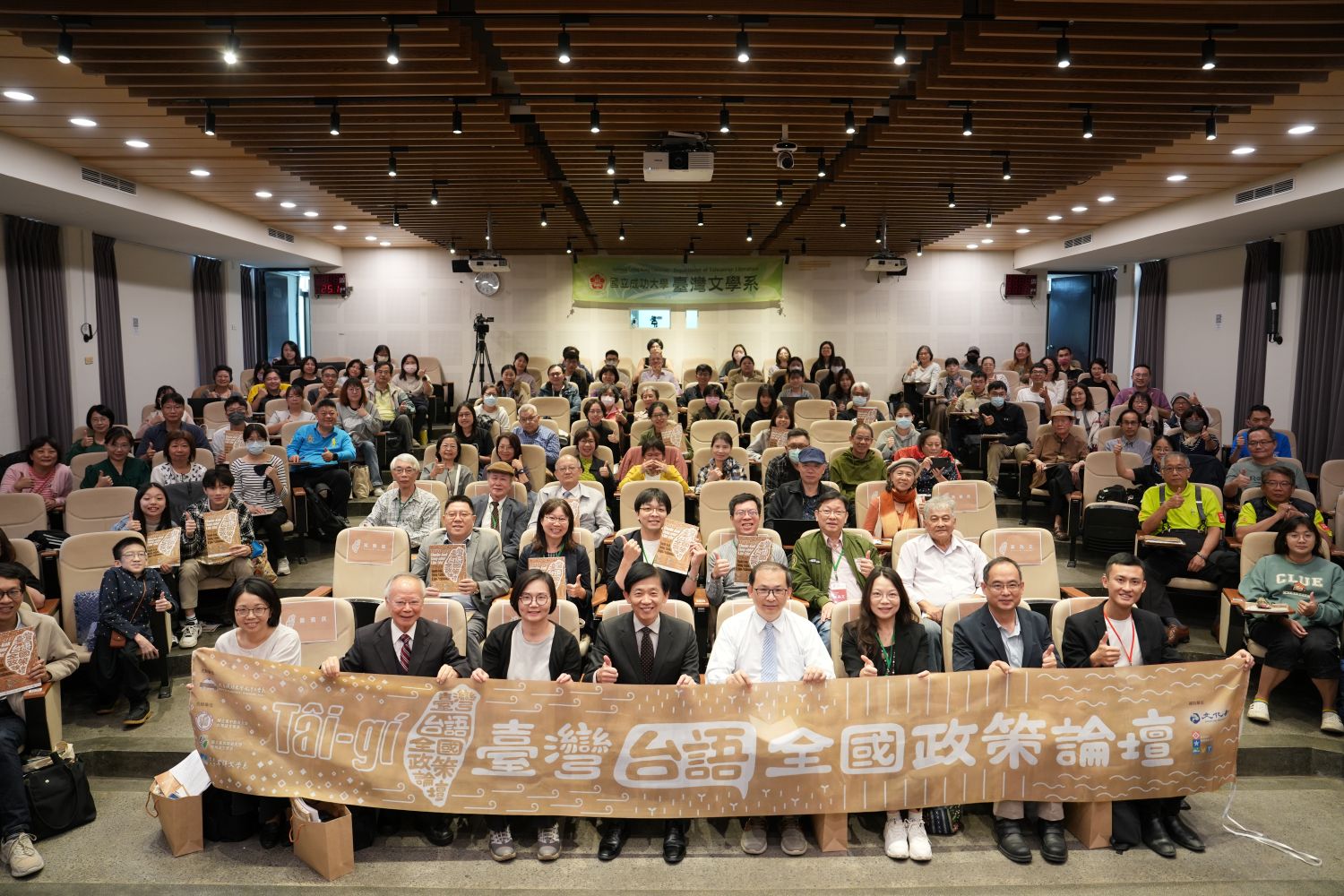
The academic partnership between NCKU and the Tainan Grand Guanyin Temple and State-Sacrifice Xingji Temple Foundation has officially entered its 15th year. On the morning of October 3, distinguished guests—including NCKU President Meng-Ru Shen, Vice President for Academic Affairs Sheng-Chih Shen, Chair of the Department of Chinese Literature Wei-Hung Yen, Temple Foundation Chairperson Shu-Hua Lin, Fucheng Guan-Xing Culture and Art Foundation President Fu-Ming Wu, and Executive Director Jin-Ming Chen—attended the opening ceremony and joined the keynote lecture delivered by Chairperson Ming-Te Lin.
In his opening remarks, President Meng-Ru Shen expressed his gratitude to the Temples for their longstanding support. He noted that researching religion and culture is no easy task and requires deep scholarly dedication to uncover connections to historical memory within everyday urban life, residents' daily routines, and scattered archival materials. Chairperson Shu-Hua Lin and President Fu-Ming Wu also thanked the NCKU team for their enduring support and assistance, adding that President Shen’s presence made the Temples feel deeply valued and encouraged.
The two-day symposium concluded smoothly on the afternoon of October 4. During the panel discussion, Wen-Che Huang, Distinguished Professor of Chinese Literature and Dean of the College of Humanities and Social Sciences at National Pingtung University, pointed out that the 15-year, highly institutionalized collaboration between the Temples and NCKU represents a new model of "learning through temples". He noted that it has pioneered a paradigm of "Southern Temple Studies," achieving a two-way outreach that connects academia with local communities while enabling local communities to engage with the world.
The Tainan Grand Guanyin Temple and State-Sacrifice Xingji Temple Foundation stated that the two-day program explored diverse subjects—including the origins of beliefs, temple fortune poems (qian poetry), and cross-regional cultural flows—allowing participants to rediscover the deep historical roots and modern vitality of folk religion. The Foundation expressed its hope that this passion for faith and culture will continue to thrive in the years to come.
The 2026 International Symposium on East Asian Folk Culture and Religion was held from October 3 to 4 at the Lecture Hall of the College of Liberal Arts, National Cheng Kung University (NCKU).

NCKU President Meng-Ru Shen attended the opening ceremony of the symposium.

Co-organized by the Temples (Tainan Grand Guanyin Temple and State-Sacrifice Xingji Temple) and NCKU, the symposium aims to explore folk religious beliefs from an academic perspective and has been held consecutively for 15 years as of 2026.

Wen-Che Huang, Distinguished Professor of Chinese Literature and Dean of the College of Humanities and Social Sciences at National Pingtung University, praised the collaboration between the Temples and NCKU for establishing a paradigm of "Southern Temple Studies".

Covering a wide range of topics over two days, the symposium shed new light on the profound historical heritage and contemporary vitality of folk beliefs.