




SDG4
Harvard Professor Peter Galison Invited to NCKU to Discuss Black Hole Research, Sparking Lively Dialogue and Exchange

Professor Peter Galison, Joseph Pellegrino University Professor at Harvard University, visited National Cheng Kung University (NCKU) on November 20 to deliver a lecture titled “At the Boundary of Science and Humanities: Black Holes.” The talk drew more than one hundred attendees from both on and off campus, completely filling the Academic Lecture Hall of the College of Liberal Arts.
During the Q&A session, participants enthusiastically raised questions on topics such as black hole science, black hole imaging and scientific communication, as well as the interplay between science and the humanities. Online viewers also seized the rare opportunity to interact with an internationally renowned scholar, contributing to a lively and engaging atmosphere. In the afternoon, Professor Galison held an in-depth seminar with faculty and students from the College of Sciences, further enriching public understanding of black holes and inspiring new directions for interdisciplinary dialogue on campus.
This event was part of the “Master Lecture Series” organized by the Taiwan Comprehensive University System and hosted by the NCKU Center for Humanities and Social Sciences, the College of Liberal Arts, and the College of Sciences, with support from the Foundation for the Advancement of Outstanding Scholarship and the Chung-Hua Institution for Economic Research. In his opening remarks, Associate Director En-Yu Huang of the Center for Humanities and Social Sciences expressed his gratitude to Professor Galison for bringing a remarkable intellectual feast that bridges science and the humanities. He noted that Galison’s visit provided valuable opportunities for faculty and students from NCKU, National Sun Yat-sen University, National Chung Hsing University, and National Chung Cheng University to engage in academic exchange, thereby enhancing research capacity and fostering diverse talent development.
In his lecture, Professor Galison explored multiple dimensions of black hole imaging, using black hole photography as an example to illustrate how science and the humanities intersect at the boundaries of knowledge. He reviewed the black hole imaging project launched in 2015 and the establishment of the Black Hole Initiative (BHI) in 2016. He also described the challenges inherent in this endeavor, including the impossibility of obtaining an image using a single telescope, the need for global coordination among multiple observatories, the integration of work across different research teams, and the process of averaging and idealizing the many images captured.
Professor Galison also discussed the widespread attention generated after the release of the final image—from the scientific community to the general public—highlighting the significant role that black hole imagery plays in science communication and public understanding.
He further explained the scientific procedures behind black hole image reconstruction, including data segmentation, isolated computation, image stacking, averaging, and idealization. He emphasized that a black hole image is not a simple “direct representation of reality,” but rather a composite product of objective measurements, expert judgment, and computational model training. He also addressed the various conditions and limitations involved in generating such images, such as responsible site selection, extreme environmental factors, and physical challenges like the possible distortion of the photon ring caused by black hole spin. The lecture not only deepened public understanding of black hole imaging but also prompted reflection on the relationship between scientific communication, modern technology, and human perception.
Professor Peter Galison is a leading scholar in physics and the history and philosophy of science. He currently serves as Director of the Black Hole Initiative (BHI) at Harvard University and is one of its founding members. His work spans the fields of physics and the history and philosophy of science and has earned him numerous prestigious awards, including the MacArthur Fellows Program, the Max Planck and Humboldt Awards, the Pfizer Prize, and the Abraham Pais Prize. As a core member of the Event Horizon Telescope (EHT) Collaboration, Professor Galison shared the 2020 Breakthrough Prize in Fundamental Physics for capturing the first-ever image of a supermassive black hole—an achievement that garnered global recognition.
During the Q&A session, participants enthusiastically raised questions on topics such as black hole science, black hole imaging and scientific communication, as well as the interplay between science and the humanities. Online viewers also seized the rare opportunity to interact with an internationally renowned scholar, contributing to a lively and engaging atmosphere. In the afternoon, Professor Galison held an in-depth seminar with faculty and students from the College of Sciences, further enriching public understanding of black holes and inspiring new directions for interdisciplinary dialogue on campus.
This event was part of the “Master Lecture Series” organized by the Taiwan Comprehensive University System and hosted by the NCKU Center for Humanities and Social Sciences, the College of Liberal Arts, and the College of Sciences, with support from the Foundation for the Advancement of Outstanding Scholarship and the Chung-Hua Institution for Economic Research. In his opening remarks, Associate Director En-Yu Huang of the Center for Humanities and Social Sciences expressed his gratitude to Professor Galison for bringing a remarkable intellectual feast that bridges science and the humanities. He noted that Galison’s visit provided valuable opportunities for faculty and students from NCKU, National Sun Yat-sen University, National Chung Hsing University, and National Chung Cheng University to engage in academic exchange, thereby enhancing research capacity and fostering diverse talent development.
In his lecture, Professor Galison explored multiple dimensions of black hole imaging, using black hole photography as an example to illustrate how science and the humanities intersect at the boundaries of knowledge. He reviewed the black hole imaging project launched in 2015 and the establishment of the Black Hole Initiative (BHI) in 2016. He also described the challenges inherent in this endeavor, including the impossibility of obtaining an image using a single telescope, the need for global coordination among multiple observatories, the integration of work across different research teams, and the process of averaging and idealizing the many images captured.
Professor Galison also discussed the widespread attention generated after the release of the final image—from the scientific community to the general public—highlighting the significant role that black hole imagery plays in science communication and public understanding.
He further explained the scientific procedures behind black hole image reconstruction, including data segmentation, isolated computation, image stacking, averaging, and idealization. He emphasized that a black hole image is not a simple “direct representation of reality,” but rather a composite product of objective measurements, expert judgment, and computational model training. He also addressed the various conditions and limitations involved in generating such images, such as responsible site selection, extreme environmental factors, and physical challenges like the possible distortion of the photon ring caused by black hole spin. The lecture not only deepened public understanding of black hole imaging but also prompted reflection on the relationship between scientific communication, modern technology, and human perception.
Professor Peter Galison is a leading scholar in physics and the history and philosophy of science. He currently serves as Director of the Black Hole Initiative (BHI) at Harvard University and is one of its founding members. His work spans the fields of physics and the history and philosophy of science and has earned him numerous prestigious awards, including the MacArthur Fellows Program, the Max Planck and Humboldt Awards, the Pfizer Prize, and the Abraham Pais Prize. As a core member of the Event Horizon Telescope (EHT) Collaboration, Professor Galison shared the 2020 Breakthrough Prize in Fundamental Physics for capturing the first-ever image of a supermassive black hole—an achievement that garnered global recognition.
Harvard University Professor Peter Galison Invited to Discuss Black Hole Research, Sparking Lively Interdisciplinary Dialogue and Exchange.
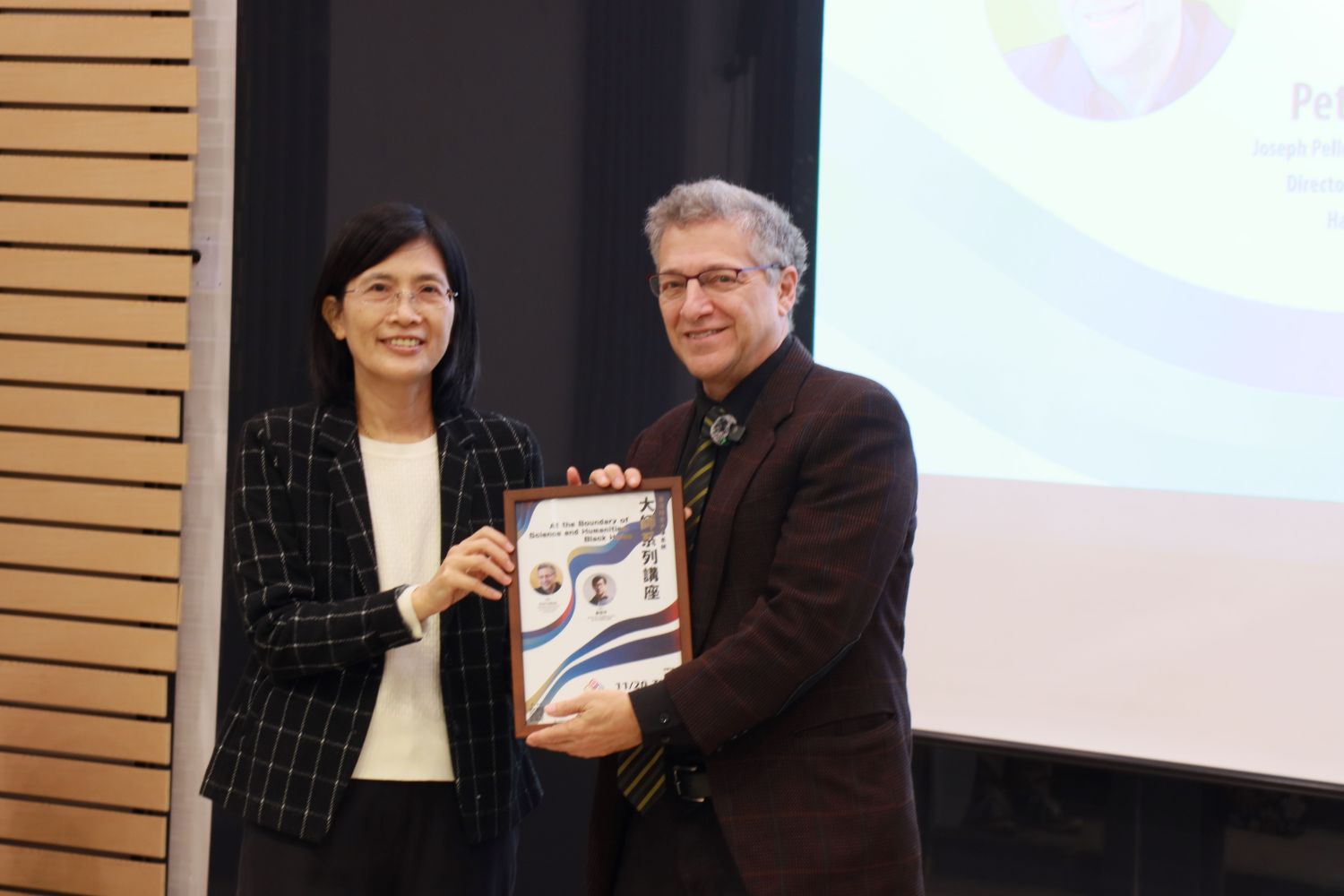
Vice President Yuh-Neu Chen (陳玉女) presented a gift to Harvard University Professor Peter Galison to express gratitude.
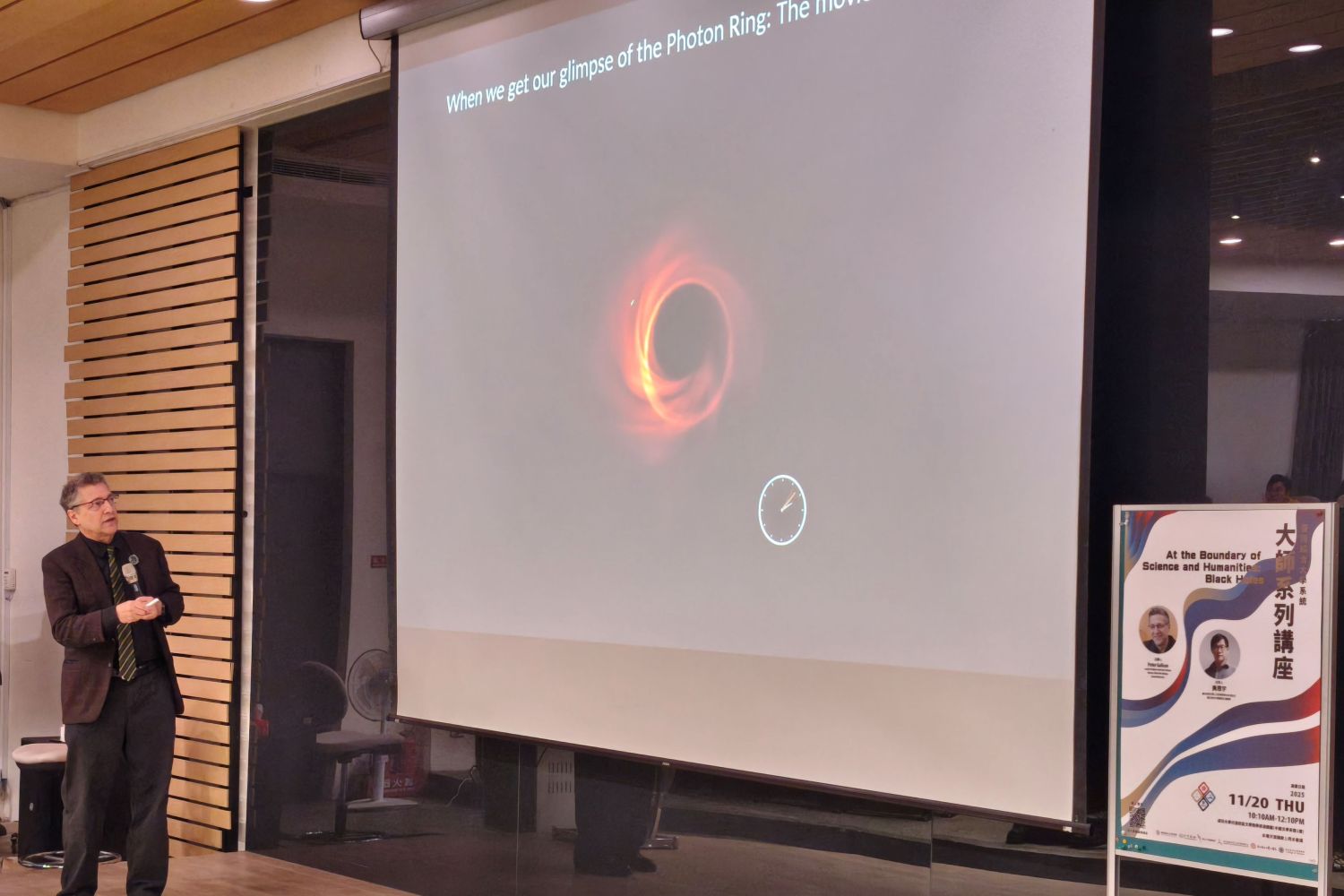
Professor Peter Galison explored multiple aspects of black hole imaging in his lecture.
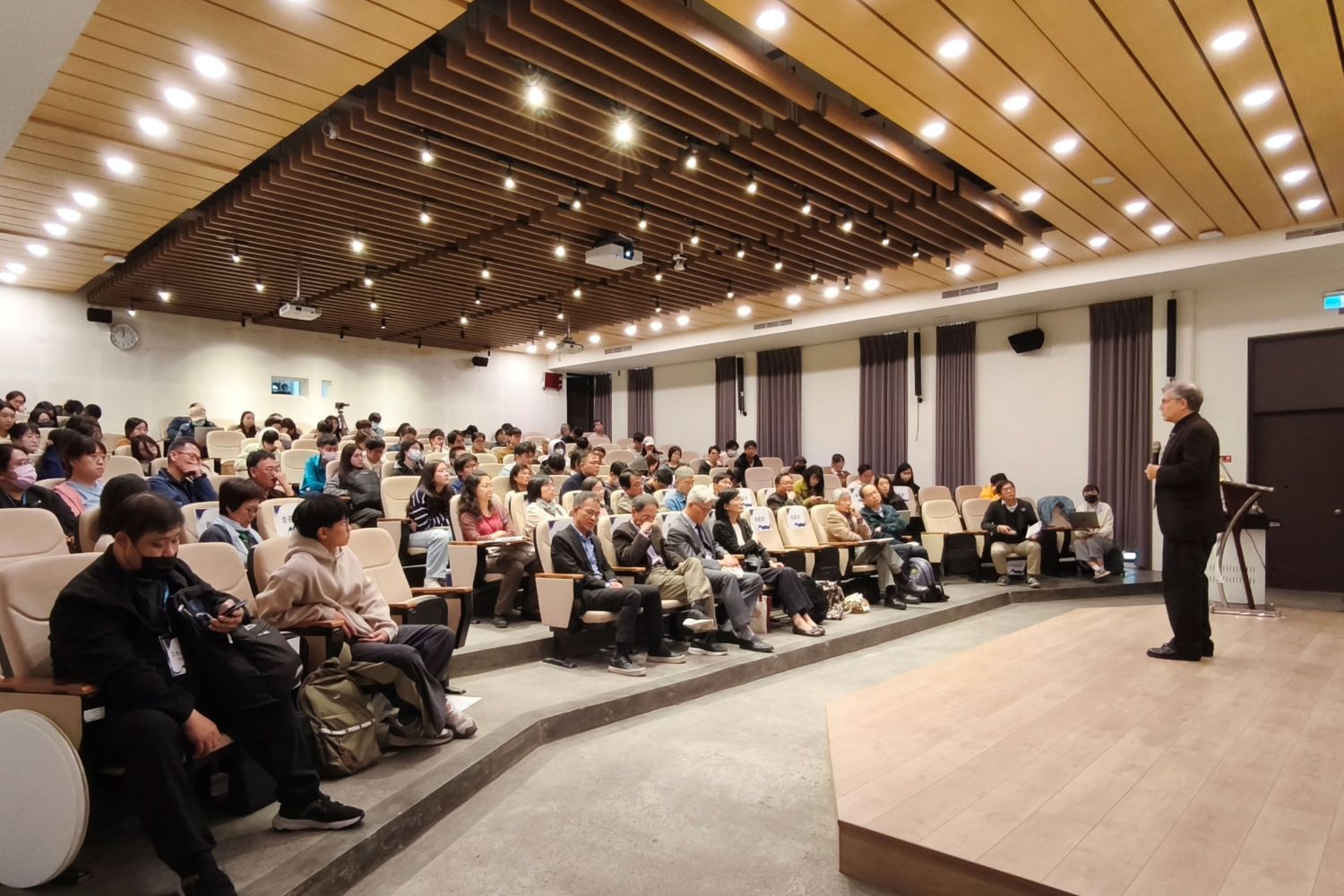
The audience actively engaged in discussions, creating a lively and vibrant atmosphere.

SDG4University of Tsukuba and NCKU Signed JV Campus Program to Accelerate the Sharing of Higher Education Online Resources
View more
SDG42025 U.S. Department of State CLS Program Begins – Students Embrace Challenges with Hope for Meaningful Growth
View more