




SDG13
From Energy and Microalgae to Blue Carbon: Interdisciplinary Experts to Share Nature’s Path to Sustainability
In response to global climate change and the urgent 2050 net-zero emission target, the Office of Research and Development (R&D), National Cheng Kung University (NCKU), held a special lecture titled “Co-Creating a Net-Zero Future: Nature’s Path to Sustainability” on November 25 at the International Conference Hall, Guangfu Campus, NCKU. The event was opened by NCKU R&D Director Chuan-Pu Liu (劉全璞), who emphasized that carbon reduction is no longer a challenge for a single field, but requires interdisciplinary and cross-industry integration, combining cutting-edge technology with nature-based solutions.
The lecture featured three distinguished speakers: Assistant Professor Ting-Chia Ou (歐庭嘉) of the Intelligent and Sustainable Manufacturing Program, NCKU; Researcher Jun-Yan Chen (陳俊延) from the NCKU Biotechnology Center; and Distinguished Professor Hsing-Lu Lin (林幸助) of the Department of Life Sciences, National Chung Hsing University (NCHU). They provided in-depth analysis of Taiwan’s net-zero transition strategies across three dimensions: energy management, microalgae carbon capture technology, and blue carbon ecosystems, attracting numerous faculty and students for exchange and discussion.
Assistant Professor Ting-Chia Ou opened the lecture with a talk titled “Net-Zero Technology, Carbon Neutrality, and Sustainable Development”, focusing on the energy structure transition. He noted that as Taiwan increases its renewable energy share, the installed capacities of solar photovoltaic and offshore wind power continue to expand. However, challenges such as the “duck curve” — a phenomenon describing midday overproduction of solar energy and evening demand peaks — pose threats to grid stability. Professor Ou emphasized that Energy Management Systems (EMS), integrating energy storage and smart grids, are key solutions. He also highlighted that companies facing domestic carbon fees and international supply chain decarbonization pressures must comply with international standards, such as ISO 14064 (Greenhouse Gas Accounting) and ISO 50001 (Energy Management), to implement carbon inventories and reduce Scope 1, 2, and 3 emissions. He introduced the concept of Green Smart Manufacturing, leveraging digital monitoring and process optimization to help industries achieve the 2050 net-zero goal while improving energy autonomy and industrial competitiveness.
Researcher Jun-Yan Chen presented “Microalgae-Driven Carbon Cycle Revolution”, showcasing the potential of microalgae as a biological carbon capture technology. Chen explained that his team uses AIoT (Artificial Intelligence of Things) smart monitoring technology to optimize cultivation conditions. Their studies demonstrated that each gram of microalgae can absorb approximately 4.27 grams of CO₂. The talk also highlighted applications in Sustainable Aviation Fuel (SAF), noting that biofuel derived from microalgae meets ASTM D7566 international standards and can directly replace conventional fossil fuels, serving as a critical decarbonization pathway for the aviation industry. Moreover, he emphasized a whole-algae circular economy model, in which microalgae by-products are converted into high-value resources such as astaxanthin, cosmetic ingredients, and liquid fertilizers, transforming industrial waste into profitable green products while achieving carbon reduction.
The lecture concluded with Distinguished Professor Hsing-Lu Lin, introduced by Vice Dean Yi-Ching Chen (陳一菁) of the College of Life Sciences, NCHU. Professor Lin, lead author of the IUCN Red List of Mangroves, explained blue carbon ecosystems in detail. He clarified that true blue carbon ecosystems include mangroves, seagrass beds, and tidal salt marshes — which have higher carbon sequestration rates and storage than terrestrial forests (green carbon). He noted that Taiwan has extensive Dongsha Atoll seagrass beds and western coastal mangroves, representing significant carbon sinks. Addressing corporate ESG (Environmental, Social, Governance) needs, Professor Lin advocated for science-based nature solutions, emphasizing that protecting and restoring blue carbon ecosystems not only secures carbon credits but also preserves biodiversity and provides natural disaster mitigation. He called on enterprises to actively participate in blue carbon restoration projects, challenging misconceptions about mangrove destruction and recognizing natural carbon sinks as a priority strategy for mitigating climate change.
By covering energy technology, microalgae carbon capture, and oceanic blue carbon, the three speakers provided a comprehensive perspective from technological to nature-based solutions, offering attendees a new vision for sustainable governance integrating science and nature.
The lecture featured three distinguished speakers: Assistant Professor Ting-Chia Ou (歐庭嘉) of the Intelligent and Sustainable Manufacturing Program, NCKU; Researcher Jun-Yan Chen (陳俊延) from the NCKU Biotechnology Center; and Distinguished Professor Hsing-Lu Lin (林幸助) of the Department of Life Sciences, National Chung Hsing University (NCHU). They provided in-depth analysis of Taiwan’s net-zero transition strategies across three dimensions: energy management, microalgae carbon capture technology, and blue carbon ecosystems, attracting numerous faculty and students for exchange and discussion.
Assistant Professor Ting-Chia Ou opened the lecture with a talk titled “Net-Zero Technology, Carbon Neutrality, and Sustainable Development”, focusing on the energy structure transition. He noted that as Taiwan increases its renewable energy share, the installed capacities of solar photovoltaic and offshore wind power continue to expand. However, challenges such as the “duck curve” — a phenomenon describing midday overproduction of solar energy and evening demand peaks — pose threats to grid stability. Professor Ou emphasized that Energy Management Systems (EMS), integrating energy storage and smart grids, are key solutions. He also highlighted that companies facing domestic carbon fees and international supply chain decarbonization pressures must comply with international standards, such as ISO 14064 (Greenhouse Gas Accounting) and ISO 50001 (Energy Management), to implement carbon inventories and reduce Scope 1, 2, and 3 emissions. He introduced the concept of Green Smart Manufacturing, leveraging digital monitoring and process optimization to help industries achieve the 2050 net-zero goal while improving energy autonomy and industrial competitiveness.
Researcher Jun-Yan Chen presented “Microalgae-Driven Carbon Cycle Revolution”, showcasing the potential of microalgae as a biological carbon capture technology. Chen explained that his team uses AIoT (Artificial Intelligence of Things) smart monitoring technology to optimize cultivation conditions. Their studies demonstrated that each gram of microalgae can absorb approximately 4.27 grams of CO₂. The talk also highlighted applications in Sustainable Aviation Fuel (SAF), noting that biofuel derived from microalgae meets ASTM D7566 international standards and can directly replace conventional fossil fuels, serving as a critical decarbonization pathway for the aviation industry. Moreover, he emphasized a whole-algae circular economy model, in which microalgae by-products are converted into high-value resources such as astaxanthin, cosmetic ingredients, and liquid fertilizers, transforming industrial waste into profitable green products while achieving carbon reduction.
The lecture concluded with Distinguished Professor Hsing-Lu Lin, introduced by Vice Dean Yi-Ching Chen (陳一菁) of the College of Life Sciences, NCHU. Professor Lin, lead author of the IUCN Red List of Mangroves, explained blue carbon ecosystems in detail. He clarified that true blue carbon ecosystems include mangroves, seagrass beds, and tidal salt marshes — which have higher carbon sequestration rates and storage than terrestrial forests (green carbon). He noted that Taiwan has extensive Dongsha Atoll seagrass beds and western coastal mangroves, representing significant carbon sinks. Addressing corporate ESG (Environmental, Social, Governance) needs, Professor Lin advocated for science-based nature solutions, emphasizing that protecting and restoring blue carbon ecosystems not only secures carbon credits but also preserves biodiversity and provides natural disaster mitigation. He called on enterprises to actively participate in blue carbon restoration projects, challenging misconceptions about mangrove destruction and recognizing natural carbon sinks as a priority strategy for mitigating climate change.
By covering energy technology, microalgae carbon capture, and oceanic blue carbon, the three speakers provided a comprehensive perspective from technological to nature-based solutions, offering attendees a new vision for sustainable governance integrating science and nature.
Group Photo of Participants at the ‘Co-Creating a Net-Zero Future: Nature’s Path to Sustainability’ Lecture.

Assistant Professor Ting-Chia Ou of NCKU’s Intelligent and Sustainable Manufacturing Program Analyzes Taiwan’s Net-Zero Transition Pathway.
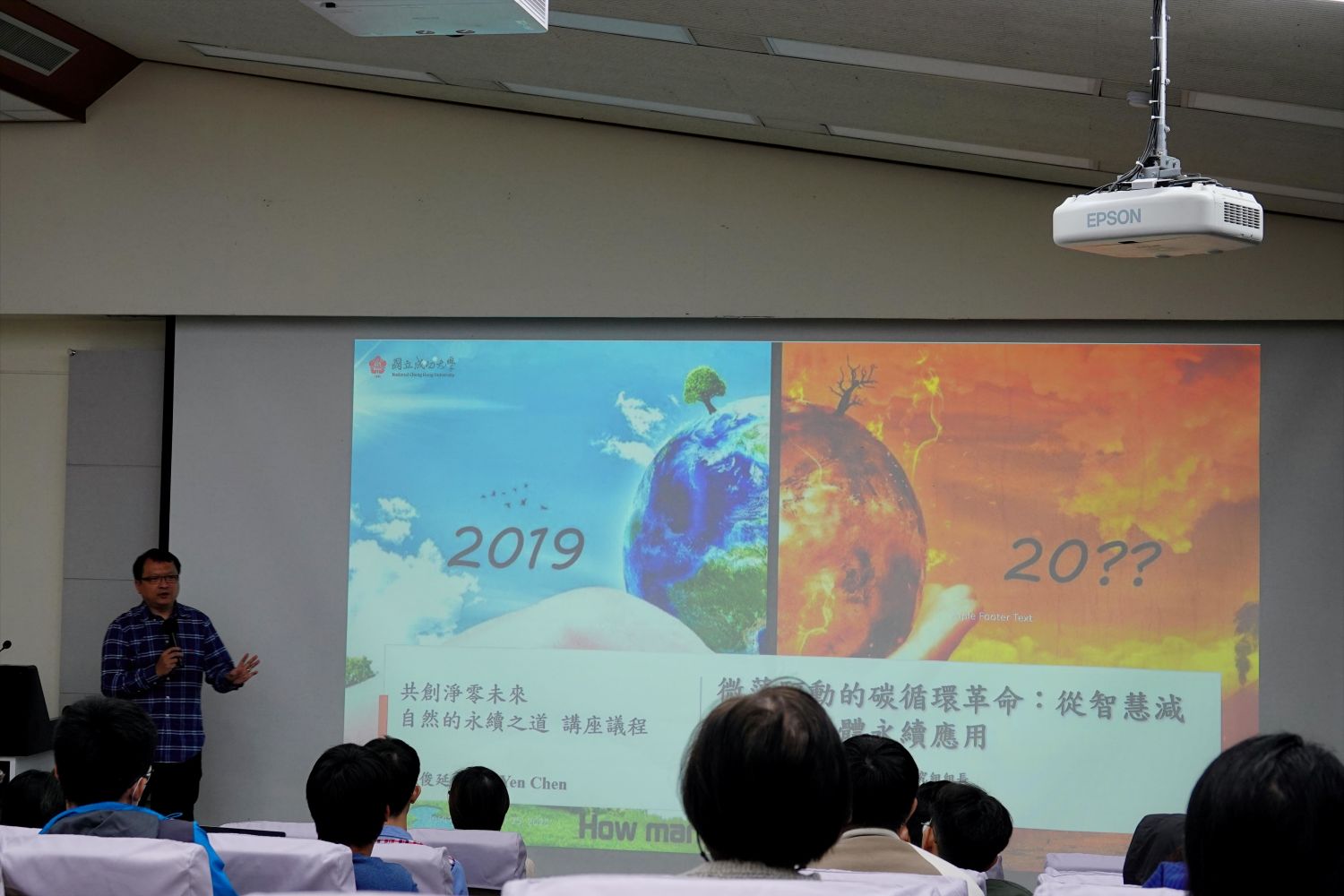
Researcher Jun-Yan Chen of NCKU Biotechnology Center Outlines the Blueprint for Sustainable Aviation Fuel and Whole-Algae Applications.
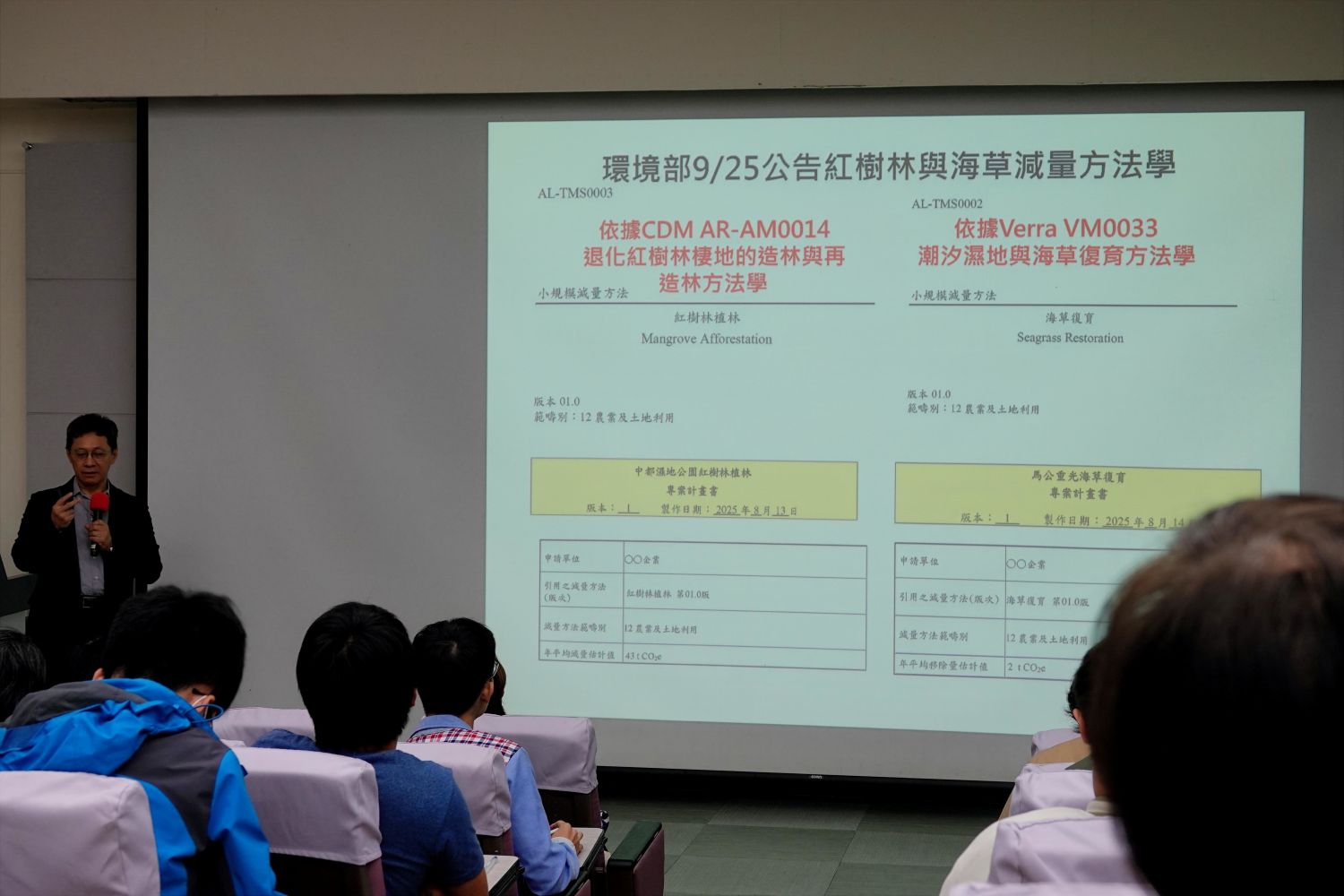
Distinguished Professor Hsing-Lu Lin of National Chung Hsing University Advocates Blue Carbon as a Nature-Based Solution for Cooling the Planet.
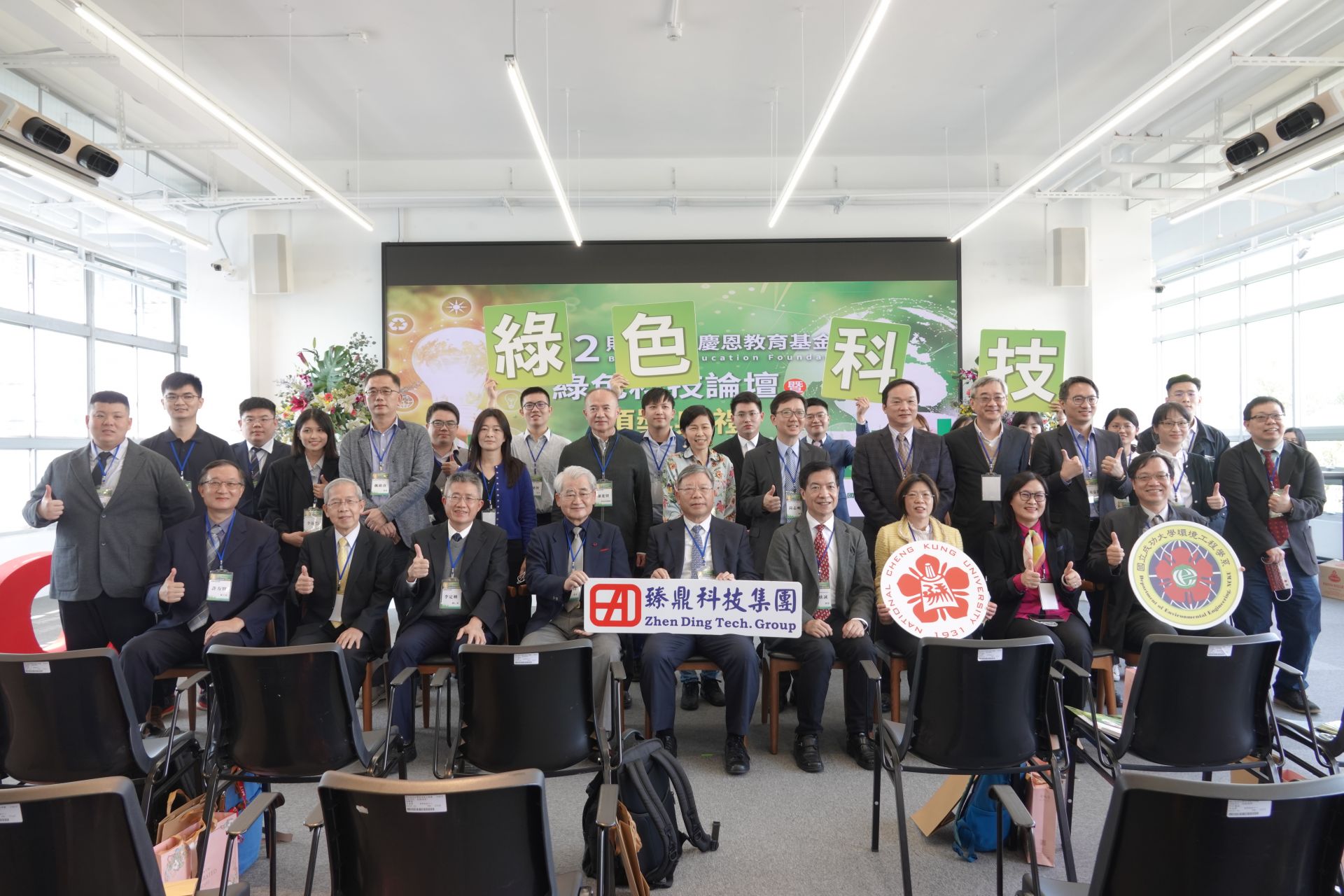
SDG13"2022 Green Technology Forum and Thesis Award Ceremony" at NCKU, recognizing academic contributions to caring for the Earth.
View more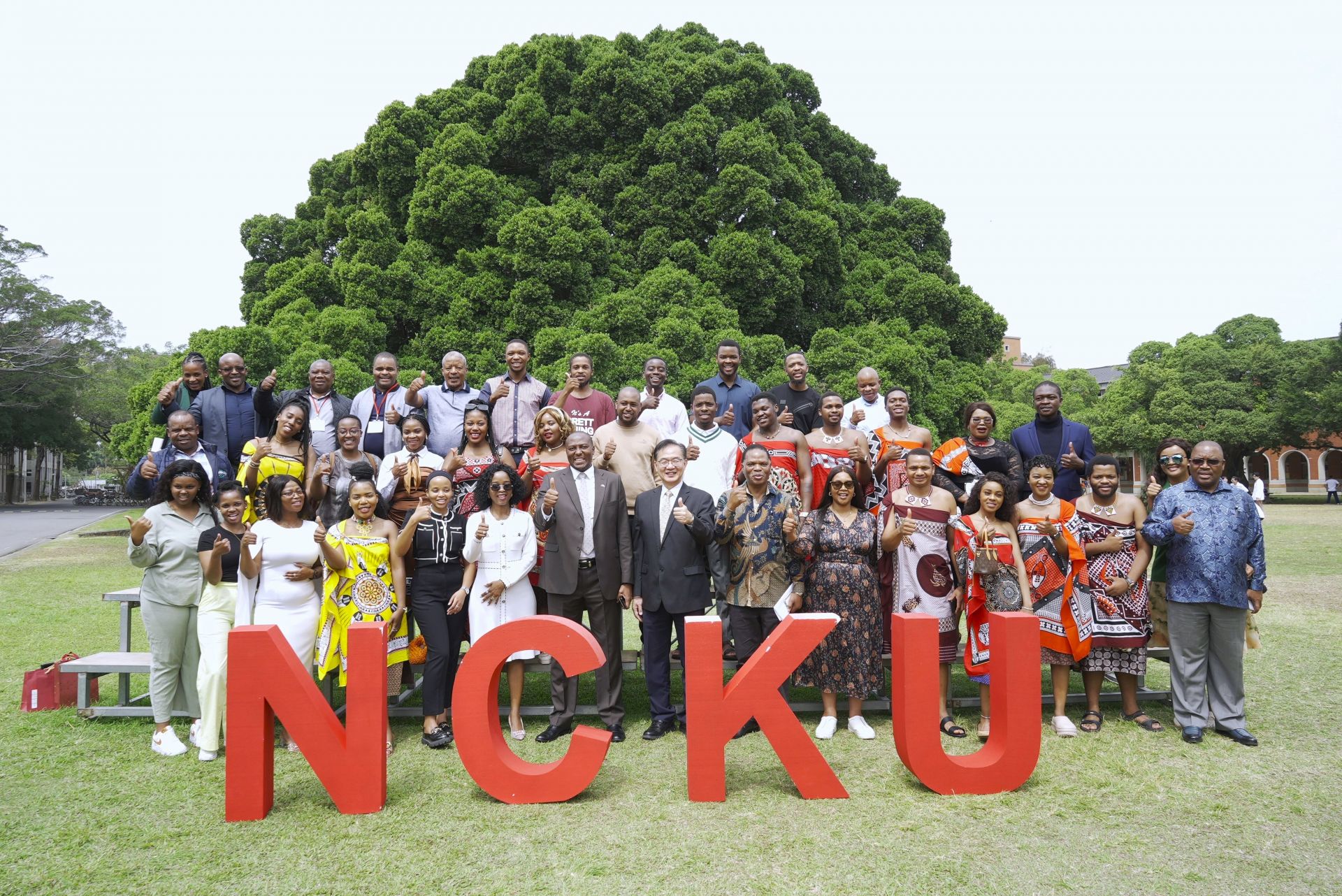
SDG13Delegation Led by Eswatini PM Dlamini Visits NCKU for Exchange on Disaster Prevention Education and Disaster Management System.
View more