



SDG17
NCKU Social Sciences & EECS Partner for 3-Country Overseas Study Program
Here is the complete English translation of the news article:
By College of Social Sciences
National Cheng Kung University (NCKU) College of Social Sciences strongly supports student participation in international exchanges and overseas study activities designed for learning and talent cultivation. During the summer break, the College collaborated with the College of Electrical Engineering and Computer Science (EECS) to organize overseas study programs, followed by a fully English-conducted "Short-Term Overseas Study Presentation" upon their return. During the event, students shared what they had observed and learned abroad while re-examining Taiwan's urban governance, technology education, cultural diversity, and local industrial development.
A total of three overseas study groups were organized this summer, taking 90 student visits in total: visiting Ritsumeikan University in Japan from August 1 to 7; Universiti Malaya in Malaysia from August 9 to 15; and Chiang Mai University in Thailand from August 30 to September 5. Among these, the Japan and Malaysia programs were co-organized by the College of Social Sciences and the College of EECS, with 15 students participating from each college, exemplifying cross-college, interdisciplinary, and cross-cultural exchange. The Thailand program saw the College of Social Sciences lead 30 students to the Faculty of Economics at Chiang Mai University to explore urban issues through the lenses of culture, economy, and sustainable development.
The "Short-Term Overseas Study Presentation" was held on the morning of September 7 at the Xun-Hui Auditorium in the Department of Electrical Engineering Building (B1), split into three sessions: Japan, Malaysia, and Thailand. Notably, Professor Takahashi from Ritsumeikan University—who hosted NCKU during their stay in Japan—led five Japanese students to Taiwan to attend the event. They listened to the presentations alongside NCKU students and engaged in English discussions, transforming overseas study from a one-way trip into a two-way international interaction.
During the study program at Ritsumeikan University, students extended their scope from psychology and cognitive science to urban and technology topics. After visiting Osaka, Kyoto, and Ibaraki City, they observed the over-tourism challenges faced by Japanese cities and contemplated how big data and artificial intelligence could be applied to enhance urban governance capabilities. Students also compared pedestrian environments between Taiwan and Japan, expressing hope that Tainan, as a fellow historical capital, will continue making improvements. Furthermore, the one-stop public service model presented by "Onikuru"—Ibaraki City's cultural and childcare complex—inspired students to consider whether NCKU could incorporate similar concepts into libraries, self-study areas, and discussion spaces to build a campus environment tailored to student needs.
The Universiti Malaya program focused on artificial intelligence and technological applications. Students discovered that different countries prioritize different aspects of AI education; Universiti Malaya particularly emphasizes practical application and uses gamified methods to help students understand the principles of AI algorithms, alongside hands-on experience with equipment such as eye-trackers. On the other hand, visits to Melaka allowed students to recognize the vital role of cultural heritage in urban development. They also observed how Malaysia's multi-ethnic society displays diversity through cultural integration, prompting them to reflect on how Taiwan can more actively showcase its own multiculturalism and local features.
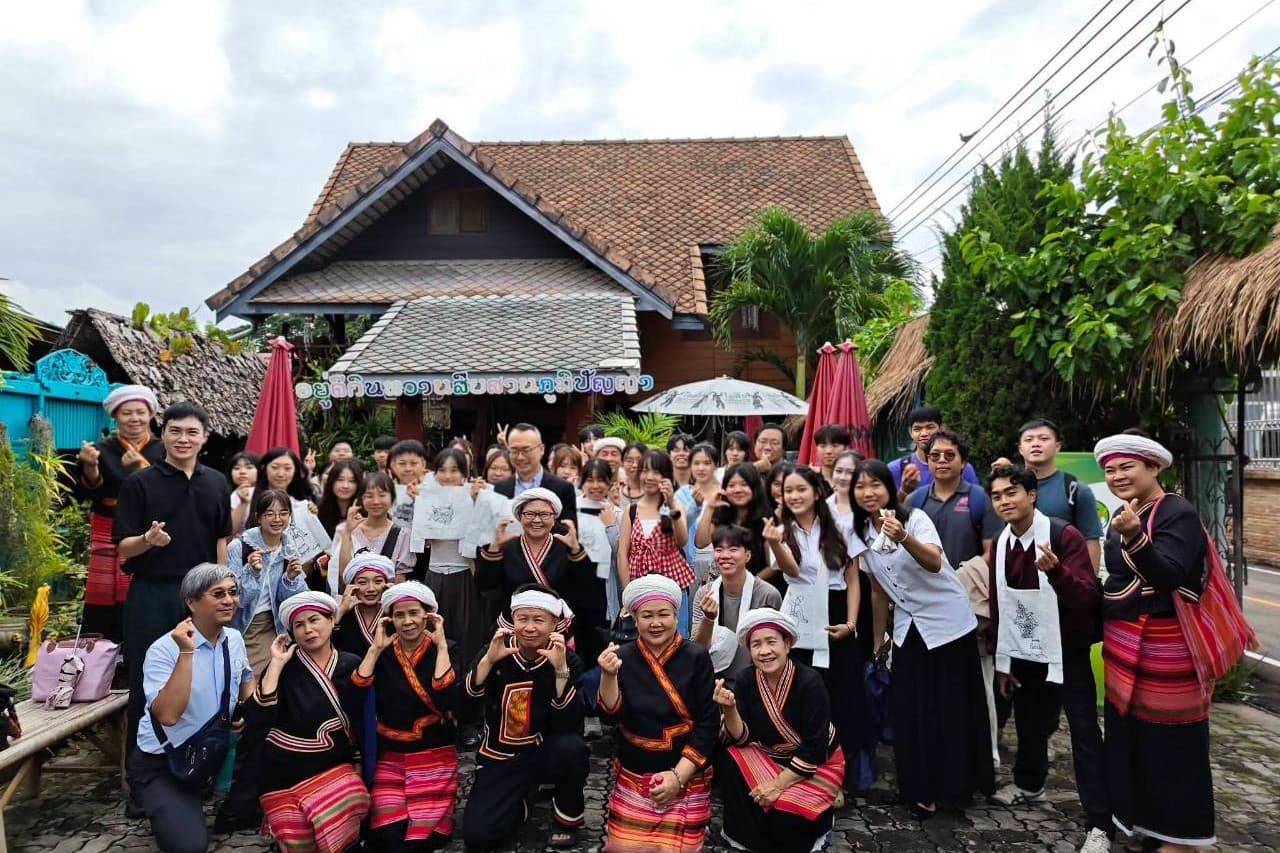
The Chiang Mai University program in Thailand centered on cultural understanding, sustainable economics, and local development. Starting from Chiang Mai's Buddhist culture and urban tourism, students reflected on whether "culture is a starting point or a destination," as well as whether what we see when culture becomes part of a tourism performance is its full picture or a curated representation. Students further turned their attention to cultural appropriation under globalization and its potential impacts on vulnerable nations and local cultures. At the same time, Chiang Mai University's efforts to assist local agricultural products in refining quality and reaching international markets inspired students to ponder how Taiwan can transform its local specialties into internationally competitive industries.
The three study groups focused on the themes of "Psychology & Cities," "AI & Culture," and "Sustainability & Local Development," collectively showcasing the learning outcomes of "reflecting on local issues through international experience." Beyond merely observing development in different countries, students engaged in comparison and inquiry to re-evaluate Taiwan's urban governance, technology education, cultural diversity, and local industrial development.
Qun-Li Tsai, Dean of the College of Social Sciences, stated that the value of international exchange lies not just in sending students abroad, but more importantly in fostering their abilities to observe, communicate, compare, and formulate questions within diverse cultural and professional environments. Shih-Chun Wu, Dean of the College of EECS, also remarked that by interacting with overseas faculty and students, participating in English-taught lectures and academic seminars, and visiting universities, enterprises, public spaces, and urban sites, students successfully transformed theoretical classroom knowledge into real-world issues open to observation and analysis.
The presentation event was conducted through slide presentations, with students delivering professional expressions and engaging in cross-cultural exchanges in English, bringing their international learning outcomes back to campus to share with a broader audience of faculty and students. In the future, both colleges will continue leveraging bilingual learning resources to expand diverse overseas learning opportunities—empowering students to understand the world through a global perspective and to re-imagine the future of Taiwan and NCKU through the eyes of the world.
By College of Social Sciences
National Cheng Kung University (NCKU) College of Social Sciences strongly supports student participation in international exchanges and overseas study activities designed for learning and talent cultivation. During the summer break, the College collaborated with the College of Electrical Engineering and Computer Science (EECS) to organize overseas study programs, followed by a fully English-conducted "Short-Term Overseas Study Presentation" upon their return. During the event, students shared what they had observed and learned abroad while re-examining Taiwan's urban governance, technology education, cultural diversity, and local industrial development.
A total of three overseas study groups were organized this summer, taking 90 student visits in total: visiting Ritsumeikan University in Japan from August 1 to 7; Universiti Malaya in Malaysia from August 9 to 15; and Chiang Mai University in Thailand from August 30 to September 5. Among these, the Japan and Malaysia programs were co-organized by the College of Social Sciences and the College of EECS, with 15 students participating from each college, exemplifying cross-college, interdisciplinary, and cross-cultural exchange. The Thailand program saw the College of Social Sciences lead 30 students to the Faculty of Economics at Chiang Mai University to explore urban issues through the lenses of culture, economy, and sustainable development.
The "Short-Term Overseas Study Presentation" was held on the morning of September 7 at the Xun-Hui Auditorium in the Department of Electrical Engineering Building (B1), split into three sessions: Japan, Malaysia, and Thailand. Notably, Professor Takahashi from Ritsumeikan University—who hosted NCKU during their stay in Japan—led five Japanese students to Taiwan to attend the event. They listened to the presentations alongside NCKU students and engaged in English discussions, transforming overseas study from a one-way trip into a two-way international interaction.
During the study program at Ritsumeikan University, students extended their scope from psychology and cognitive science to urban and technology topics. After visiting Osaka, Kyoto, and Ibaraki City, they observed the over-tourism challenges faced by Japanese cities and contemplated how big data and artificial intelligence could be applied to enhance urban governance capabilities. Students also compared pedestrian environments between Taiwan and Japan, expressing hope that Tainan, as a fellow historical capital, will continue making improvements. Furthermore, the one-stop public service model presented by "Onikuru"—Ibaraki City's cultural and childcare complex—inspired students to consider whether NCKU could incorporate similar concepts into libraries, self-study areas, and discussion spaces to build a campus environment tailored to student needs.
The Universiti Malaya program focused on artificial intelligence and technological applications. Students discovered that different countries prioritize different aspects of AI education; Universiti Malaya particularly emphasizes practical application and uses gamified methods to help students understand the principles of AI algorithms, alongside hands-on experience with equipment such as eye-trackers. On the other hand, visits to Melaka allowed students to recognize the vital role of cultural heritage in urban development. They also observed how Malaysia's multi-ethnic society displays diversity through cultural integration, prompting them to reflect on how Taiwan can more actively showcase its own multiculturalism and local features.
The Chiang Mai University program in Thailand centered on cultural understanding, sustainable economics, and local development. Starting from Chiang Mai's Buddhist culture and urban tourism, students reflected on whether "culture is a starting point or a destination," as well as whether what we see when culture becomes part of a tourism performance is its full picture or a curated representation. Students further turned their attention to cultural appropriation under globalization and its potential impacts on vulnerable nations and local cultures. At the same time, Chiang Mai University's efforts to assist local agricultural products in refining quality and reaching international markets inspired students to ponder how Taiwan can transform its local specialties into internationally competitive industries.
The three study groups focused on the themes of "Psychology & Cities," "AI & Culture," and "Sustainability & Local Development," collectively showcasing the learning outcomes of "reflecting on local issues through international experience." Beyond merely observing development in different countries, students engaged in comparison and inquiry to re-evaluate Taiwan's urban governance, technology education, cultural diversity, and local industrial development.
Qun-Li Tsai, Dean of the College of Social Sciences, stated that the value of international exchange lies not just in sending students abroad, but more importantly in fostering their abilities to observe, communicate, compare, and formulate questions within diverse cultural and professional environments. Shih-Chun Wu, Dean of the College of EECS, also remarked that by interacting with overseas faculty and students, participating in English-taught lectures and academic seminars, and visiting universities, enterprises, public spaces, and urban sites, students successfully transformed theoretical classroom knowledge into real-world issues open to observation and analysis.
The presentation event was conducted through slide presentations, with students delivering professional expressions and engaging in cross-cultural exchanges in English, bringing their international learning outcomes back to campus to share with a broader audience of faculty and students. In the future, both colleges will continue leveraging bilingual learning resources to expand diverse overseas learning opportunities—empowering students to understand the world through a global perspective and to re-imagine the future of Taiwan and NCKU through the eyes of the world.
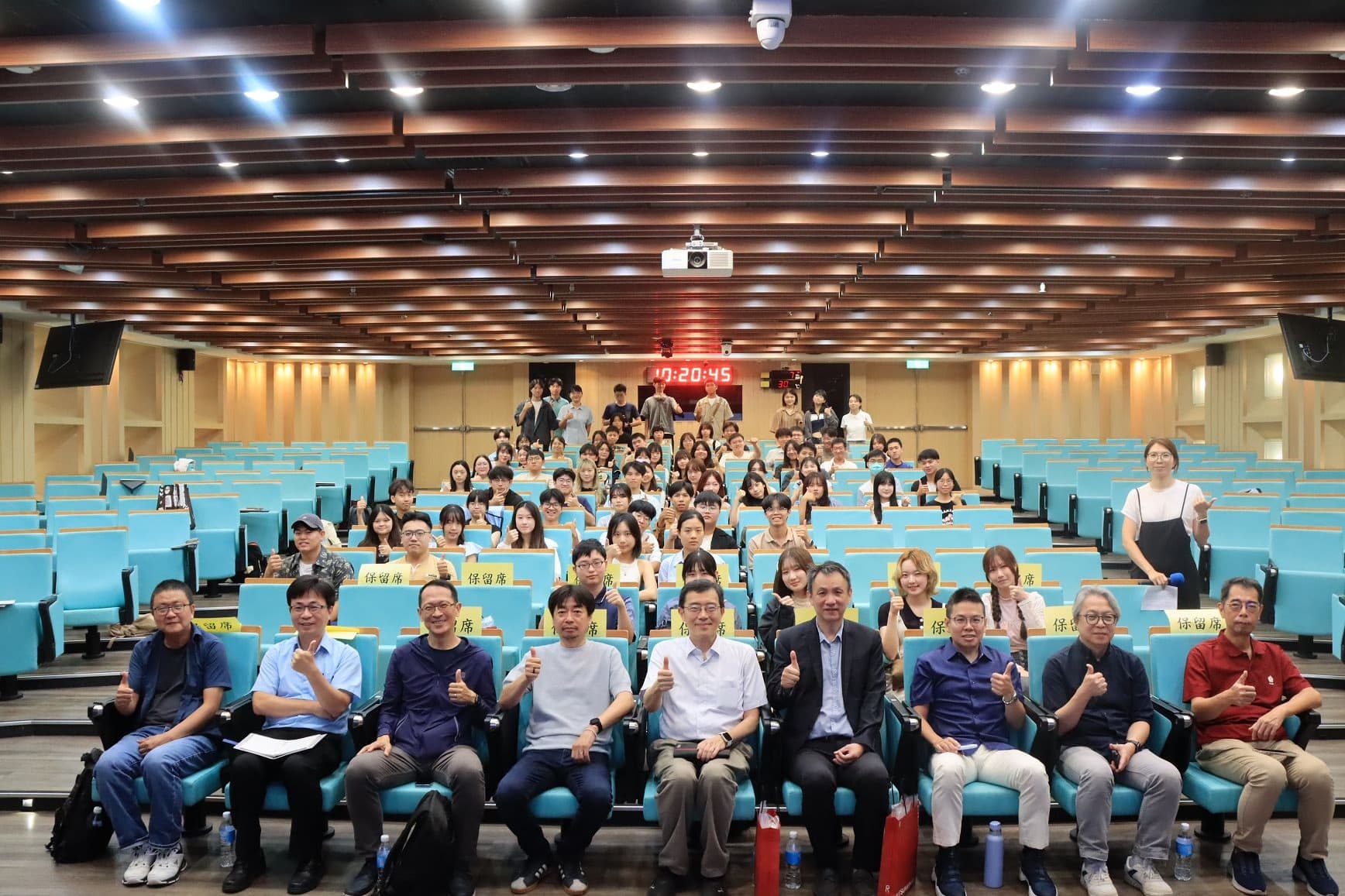
Group photo of participants at the presentation session.
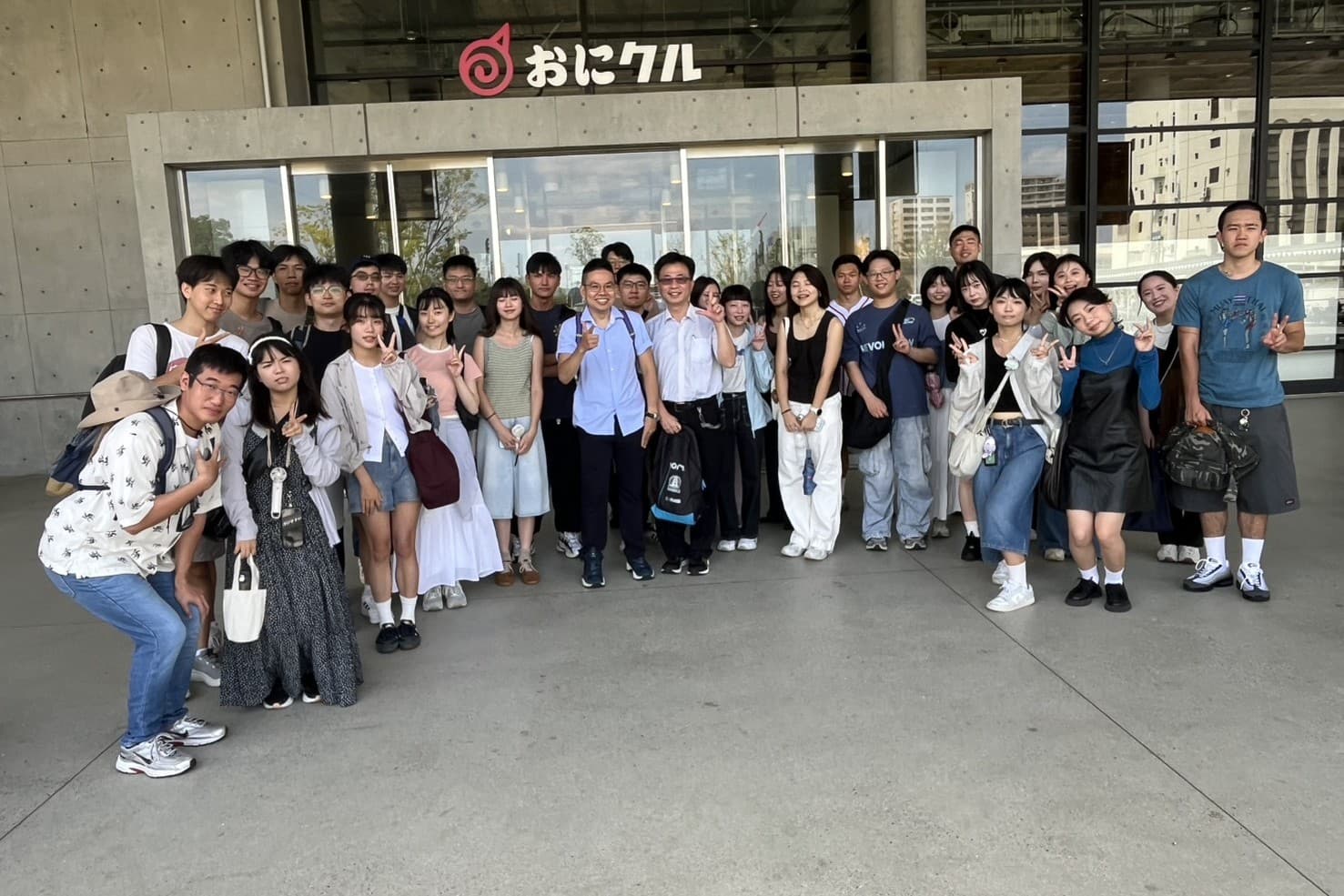
The Japan study group visits "Onikuru," a integrated cultural and childcare facility in Ibaraki City.
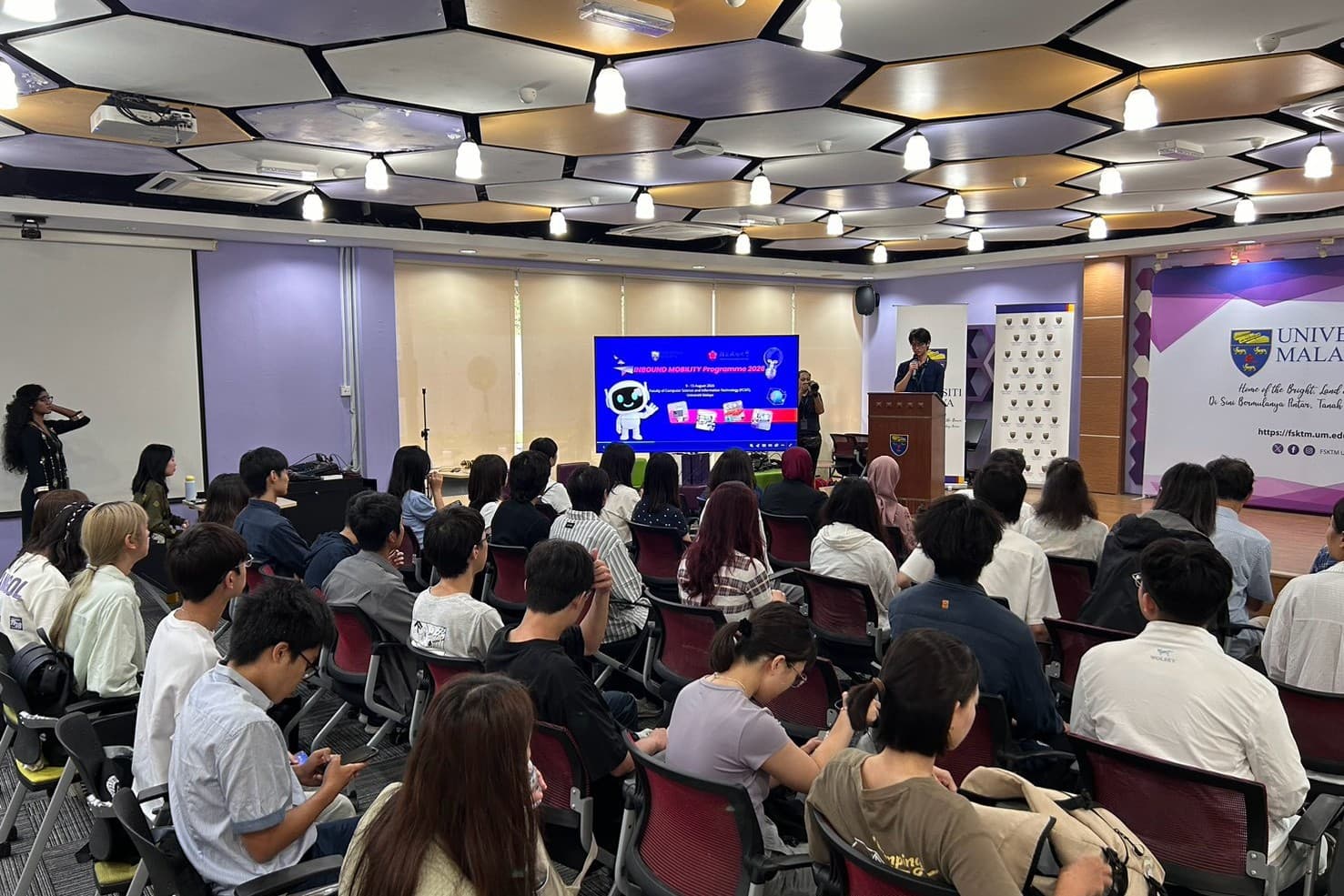
Visit to the Faculty of Computer Science and Information Technology, Universiti Malaya.
Chiang Mai University arranges a cultural tour for students to experience ethnic minority traditions.