

SDG12
NCKU Architecture’s "Stone Weir 2.0" Restores Penghu Intertidal Ecology via Circular Design
Supported by the Ocean Affairs Council, the team led by Professor Shun-Ren Liu of the Department of Architecture, National Cheng Kung University (C-Cube Lab), executed the project "Deepening Penghu as a Sustainable Circular Island – Innovative Application R&D and Field Trials of Marine Calcium Carbonate 2.0," presenting its annual results on October 15 in Chikan Village, Baisha Township, Penghu. Centered on architectural design and integrating expertise in circular materials, marine ecology, and the aquarium industry, the team transformed large amounts of silted coral rubble (sha-ling) in Penghu’s intertidal zone into the "Stone Weir 2.0" modular habitat system, and completed on-site installation of two unit sets (A and B) in North Penghu—which has the highest stone weir density in the world—turning dormant stone weirs back into spaces where ecology, production, and community operate together. Project video: https://youtu.be/opwHGqKIkNU
Compared to the 3D-printed ecological reefs deployed on the seabed last year, the intertidal zone simultaneously endures multi-directional waves and currents brought by typhoons and the northeast monsoon, and is also the interface with the most frequent interaction among residents, fishermen, and marine life, making it a more challenging design problem. The team returned to the construction logic of traditional stone weirs’ "dry-stone masonry": while Penghu basalt has a specific gravity of about 2.9 to 3.2, circular materials are lighter and less resistant to flotation, so overall strength cannot rely on unit self-weight alone and must come from the assembly system.
Using discrete geometry, the team developed unit mortise-and-tenon/interlocking logic so units form a stable structure through geometric stacking and interlocking without steel reinforcement; in form, they translated the survival mechanisms of intertidal organisms—for example, using cavities and self-shading geometry to provide shelter for barnacles, snails, and shellfish, and surface textures to induce turbulence and increase settlement area for organisms. On the manufacturing side, they integrated two methods—3D printing and compression molding (pressed bricks)—with the former preserving design freedom and the latter supporting future mass production. This year, they developed two systems—"horizontal stacking" and "vertical stacking"—applied respectively to parts such as the weir chamber (hu-fang) and wing walls/extensions (shen-jiao), adjusting assembly configurations to the undulations of the reef flat.
Continuing the Circular Slurry (C-Slurry) technology developed over many years by C-Cube Lab, the project uses alkali-activated cementation for room-temperature molding without firing, incorporating marine calcium carbonate such as Penghu coral rubble and oyster shells into the mix. Every 1 cubic meter of Stone Weir 2.0 construction requires about 600 kg of units, of which over 420 kg is Penghu marine calcium carbonate material; compared to cement-based substrates, material carbon emissions are reduced by at least 162 kg, with an average reduction of 5.7 kg per unit. The team also partnered with industry collaborator NCKU Chang Hong Technology on process development to move research results from the laboratory toward a mass-producible manufacturing system.
Traditional stone weirs operated through "collective funding, shared labor, and catch sharing by share," which Penghu locals call "hu-fen." The team wrote this spirit of shared ownership and operation into the design: unit dimensions were set around manual transport, and during installation local partners and NCKU Architecture master’s students carried, stacked, and deployed the units together, verifying that non-professionals can also collaborate on construction as a foundation for expanding public participation in the future. For students, it was a design course where everything from materials and structure to community communication happened in a real field setting.
Project leader Professor Shun-Ren Liu said: "Stone weirs were once a production system where Penghu people put in effort together and shared together. What we want to do is not just repair a stone weir, but let 'a group of people showing up together for the intertidal zone' happen again. Even in the future, if the world wants to solve island problems, it will come to Penghu to look for solutions."
Key project collaborator Researcher Heng-Yi Hsieh of the Penghu Marine Fisheries Research Center, Fisheries Research Institute, said: "Because of severe coral rubble silting, ecological conditions in the intertidal zone are harsher than on the seabed, and also closest to residents’ daily lives. The deeper we go, the more unexpected issues we encounter, and the more we need everyone to join together. I hope next year we have the opportunity to go deeper into the community so residents move from identification to joint participation, gradually bringing back the habitat while clearing coral rubble and creating a virtuous cycle across multiple dimensions such as generating income."
Last year, the team deployed six sets of 3D-printed coral rubble ecological reefs in two marine areas off Penghu: outer Qingwan Bay and Shetou Mountain. Monitoring this year in collaboration with the Penghu Marine Fisheries Research Center of the Fisheries Research Institute, Ministry of Agriculture, showed that after reef installation at Shetou Mountain, both indicator fish species and total numbers increased compared to before installation, invertebrate species and quantities increased around both reef sites, and 28 attached, growing corals have been tagged on the reefs, verifying the potential of circular coral rubble materials as coral settlement substrates.
The same material system also extends to the aquarium industry. "Simulated live rock" made from marine calcium carbonate by the team has completed water quality benefit testing, with all metrics meeting standards; going forward, they will collaborate with Bo-Teng Marine Biotech on mass-production trials and use the Stone Weir 2.0 site as a demonstration zone for live rock cultivation and harvesting, establishing a circular production model of "intertidal cultivation, harvesting, and aquarium application."
Stone Weir 2.0 is currently transitioning from concept to validation. Next, the team will observe structural displacement, unit scattering, changes in coral rubble silting, and biological attachment after the system experiences the winter northeast monsoon as a basis for design revisions; they have also connected with professors in hydraulic and environmental engineering to establish professional guidelines for deploying repair units at different scales and orientations, gradually expanding from a single demonstration stone weir to the entire North Penghu stone weir cluster. The team will also partner with enterprises and foundations to develop experiences such as unit fabrication, intertidal guided walks, and environmental education, and align with spring tide cycles to promote public actions including ecological observation, live rock harvesting, stone weir restoration, and coral rubble dredging.
Internationally, Professor Shun-Ren Liu was invited in June this year to present Penghu circular island research in Leuven, Belgium, and follow-up collaboration with European academia is underway. Professor Shun-Ren Liu said: "The coral rubble silting, resource circulation, and population outflow that Penghu faces are issues shared by many islands. We hope to organize the materials, design, and co-creation methods validated in Penghu into a replicable system, moving from Taiwan to other Asian islands.
Top view of the Stone Weir 2.0 unit system, surrounded by simulated live rock units made from marine calcium carbonate.

On the coral rubble 3D-printed ecological reefs deployed last year, corals have steadily settled and grown.

Master’s students from the NCKU Department of Architecture and local partners jointly carried, stacked, and deployed the Stone Weir 2.0 units.

Stone Weir 2.0 units are manufactured using two methods—3D printing and compression molding—balancing design freedom and mass-production feasibility.

Stone Weir 2.0 uses discrete geometry to develop unit interlocking and stacking logic, forming a stable structure without steel reinforcement.

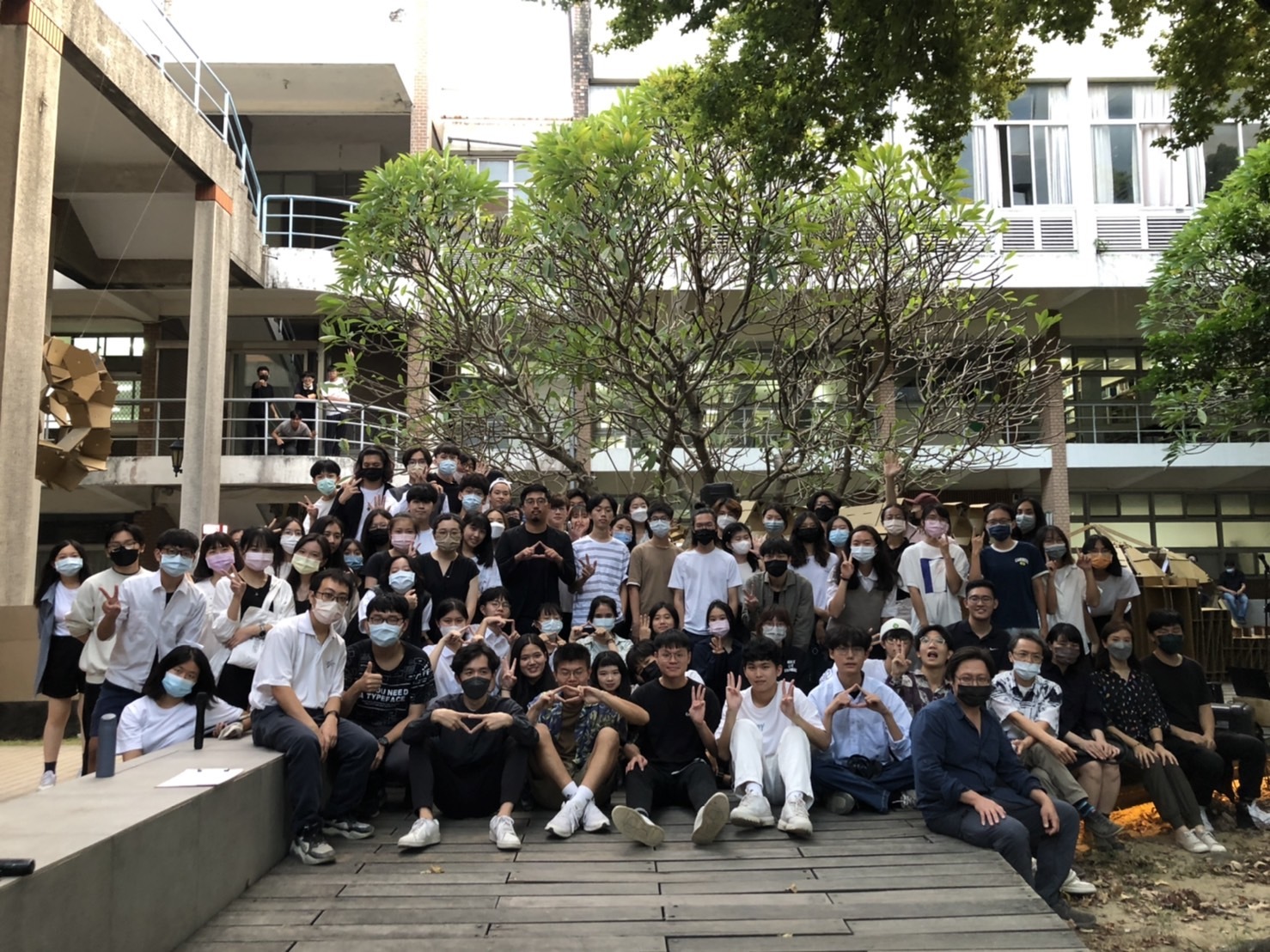
Professor Shun-Ren Liu’s team from the NCKU Department of Architecture and partners from the Circular Penghu Alliance completed the installation of the Stone Weir 2.0 unit system in the northern intertidal zone of Chikan, Penghu.

SDG12[Phoenix Lecture] Academician Yuan-Tseh Lee Visits NCKU to Discuss "New Development Models for Human Sustainable Existence"
View more
SDG12"The first session of the 'Green Economy X Sustainability Transition' lecture series: Sustainable Finance and Carbon Credit."
View more