

SDG11
2026 "Cross & Arts" Symposium at NCKU: Opera, Circus, and AI Drive Cross-Disciplinary Arts
The "2026 Cross & Arts: International Academic Symposium for Faculty and Students on Performing Arts and Cross-Disciplinary Teaching Practice" took place from October 21 to 22 at National Cheng Kung University. The event brought together experts, scholars, and researchers from Australia, Malaysia, Japan, Vietnam, and Thailand alongside faculty and students from domestic colleges and universities. Across two packed days of academic presentations, artistic performances, workshops, and a roundtable forum, participants explored diverse connections among performing arts, cross-disciplinary teaching, and humanities spaces, demonstrating NCKU's practical spirit of responding to society through knowledge innovation and expanding educational possibilities through cross-disciplinary collaboration.
Echoing the core spirit of National Cheng Kung University's 95th anniversary, "Ninety-Five in Harmony, Advancing Far Together," this symposium was guided by the Ministry of Education's Higher Education Sprout Project and the College of Liberal Arts at National Cheng Kung University, and organized by the Drama Cross-Disciplinary Credit Program of the College of Liberal Arts at NCKU. Co-organizers included the Institute of Arts and Master's Program in Drama at NCKU, the Chinese Cartographic Association, Jusy International Co., Ltd., Hsin Hsieh Hsing Opera Troupe, and FOCASA Circus.
The symposium opened on the morning of the 21st at the Academic Lecture Hall of the College of Liberal Arts on NCKU's Kuang-Fu Campus with an auspicious performance of "Tian Guan Ci Fu and Kui Xing Ti Dou" by the Hsin Hsieh Hsing Opera Troupe. Using the auspicious symbolism of traditional opera, the performance added festive spirit to NCKU's 95th anniversary and international academic exchange while making artistic performance a starting point for cross-disciplinary dialogue.
Opening guests on the first day included Prof. Wen-Song Chen, Dean of the College of Liberal Arts at NCKU; Prof. Chun-Li Tsai, Dean of the College of Social Sciences; Director Chi-Chang Lee of the Center for Multicultural Studies; Prof. Yu-Chen Shu, Department of Mathematics and Director of the Master's and Ph.D. Program in Academy of Innovative Semiconductor and Sustainable Manufacturing (note: listed as Miin Wu School of Computing in the source); Director Wei-Hung Yen of the Department of Chinese Literature; Section Chief Chia-Tzu Lin of the Education and Promotion Division at the Preparatory Office of the Tainan National Art Museum; Prof. Li-Hsun Wang, Dean of the College of New Media and Management at Wenzao Ursuline University of Languages; Director Chin-Yuan Yang of the Department of Theatre Design at Taipei National University of the Arts; Associate Prof. Shih-Ping Wang of the General Education Center at National Taiwan University of Arts; as well as Kuo-Ming Shen, Chair of Sunward Theatre in Malaysia; scholar Chuan-Hao Ho (Yi-Zheng), Board Member of the Master Hall of the I Ching and Feng Shui Association of Malaysia; Lecturer Yuki-Hiko Yoshida of Keio University in Japan; and Lecturer Hsiu-Yu Lin from Thailand teaching at NCKU. Associate Prof. Wei-Chien Ma, Convener of the Drama Cross-Disciplinary Credit Program at NCKU's College of Liberal Arts, along with Prof. Fang-Hui Chu, Associate Prof. Chia-Pin Chen, Associate Prof. Chin-Feng Yang, and Associate Prof. Tzu-Yun Hu also participated, showcasing exchange energy across domestic and international academic, artistic, and educational fields.
Centered on "Building a Social Innovation Empathy Network Linking Performing Arts Across Disciplines with Humanities Spaces," this symposium combined NCKU's deep humanities foundation, scientific thinking, and technological research to promote exchange across disciplines. From history, literature, economics, and management to mathematics, smart computing, and theater arts, participants jointly reflected on how specialized knowledge can cross-pollinate and transform into concrete actions in curriculum design, artistic creation, and social engagement, echoing the dedication, collaborative co-creation, and knowledge practice shown in NCKU's 95th anniversary.
The two-day agenda featured 2 keynote speeches, 6 paper panels totaling 22 papers, as well as a performing arts forum with workshops and a roundtable forum, inviting 8 international participants. The first keynote speech was moderated by Prof. Wen-Song Chen, Dean of NCKU's College of Liberal Arts, with Kuo-Ming Shen, Chair of Sunward Theatre in Malaysia, speaking on "Discovering Taiwanese Drama Historical Materials: Starting from the 'Movement to Rescue Century-Old Malaysian Chinese Spoken Drama Historical Materials.'" He shared cross-national experience in collecting and preserving drama archives, tracing theatrical exchanges between Taiwan and Malaya through historical records of Taiwanese troupes, practitioners, and scripts traveling across Southeast Asia to expand cross-regional perspectives in cultural preservation and drama history research. Paper panel topics spanned innovation and cross-disciplinary education, traditional opera and humanities arts, moving image and contemporary theater practice, as well as history, everyday life, and cross-cultural studies, presenting diverse intersections between performing arts and different professions.
Joint presentations and critical inquiry by faculty and students were a key highlight of this symposium. The first panel, "Innovation and Cross-Disciplinary Education," was moderated by Prof. Chun-Li Tsai, Dean of NCKU's College of Social Sciences. Associate Prof. Wei-Chien Ma of NCKU explored the integration of science, technology, and social-emotional learning through performing-arts-oriented cross-disciplinary learning, while Lecturer Hsiu-Yu Lin from Thailand, teaching at NCKU, shared performance-based teaching design grounded in Thai language materials. Ph.D. student Ching-Yung Lin of NCKU's Department of Business Administration and Ph.D. student Pin-Chieh Ku of Yuan Ze University focused respectively on a bibliometric analysis of entrepreneurial university research trajectories and a digital visualization study of the acrobatics piece "Stacked Chairs." Through joint participation by faculty and graduate students in academic exchange, the symposium fostered inter-university and cross-disciplinary dialogue, demonstrating diverse outcomes where research deepens teaching and teaching connects with practice.
On the afternoon of the 21st, the "Traditional Opera and Humanities Arts" session was moderated by Prof. Fang-Hui Chu of NCKU's Institute of Arts and Master's Program in Drama. Assistant Prof. Li-Wu Dai and Adjunct Assistant Prof. Hsiang-Feng Hsu of the Department of Theatre at National Taiwan College of Performing Arts, Director Han-Chen Li of the Department of Performing Arts at Chungyu University of Film and Arts, and Associate Prof. Chia-Pin Chen of NCKU's Institute of Arts and Master's Program in Drama as well as Director of Research and Planning at the Art Center shared research and teaching practice findings, exploring diverse developments in traditional arts, performance education, and humanities teaching innovation through inter-university exchange.
In addition, the "Moving Image and Contemporary Theater Practice" session was moderated by Prof. Li-Hsun Wang, Dean of the College of New Media and Management at Wenzao Ursuline University of Languages. Among the presenters, Associate Prof. Chin-Yuan Yang, Chair of the Department of Theatre Design at Taipei National University of the Arts, shared cross-disciplinary integration of STEM knowledge and stage technology; Lecturer Ju-Wen Chen explored integrating digital media into traditional arts teaching; and NCKU Institute of Arts researchers Pei-Chen Tsai and Chi-En Cheng examined adaptation strategies from the film "Drive My Car" and site-specific action theater in Tainan's historical spaces, presenting diverse perspectives on film research, local observation, and cultural translation. Participants approached issues from stage technology, digital technology, film and television, and arts education to address practical needs in preserving traditional skills, instructional communication, and contemporary theater creation, demonstrating varied possibilities for integrating technology and the arts.
Closing the 21st, the "Performing Arts Forum and Workshop" was moderated by Prof. Yu-Chen Shu of NCKU's Department of Mathematics and Director of the Master's and Ph.D. Program in Academy of Innovative Semiconductor and Sustainable Manufacturing (listed as Miin Wu School of Computing in the source), inviting FOCASA Circus to participate. Through artistic talks, live performances, and hands-on experience, it encouraged interaction among participants and linked bodily experience, stage practice, and academic research through direct participation, showing diverse ways performing arts practice and academic research can unite.
That day's activities began with traditional opera from the Hsin Hsieh Hsing Opera Troupe and extended to exchange and hands-on experience at the FOCASA Circus workshop; performances not only enriched the symposium program but also served as an important medium for cross-disciplinary understanding. In addition, Director Yu-Chen Shu of NCKU used Claude Code to build a multilingual discussion system, applying digital technology to facilitate cross-lingual communication so participants from different linguistic backgrounds could engage in real-time synchronous exchange, broadening the scope and depth of academic dialogue. Through live viewing, interaction, and hands-on practice, participants experienced the bodily vocabulary and creative thinking embedded in different performance forms, and together with multilingual technology applications, further explored links among art, technology, the humanities, and society while considering how to translate cross-disciplinary exchange experiences into concrete teaching practice.
The keynote speech on the morning of the 22nd was moderated by Emeritus Prof. Te-Yu Shih of NCKU, inviting Lan-Chih Yu, Founder and President of the Australia-Asia Science, Technology, Education and Culture Association, and Chien-Yu Wang, Artistic Director of Embodied Theatre Australia, to examine the impacts and development opportunities facing performing arts and arts-cultural events after the rise of artificial intelligence. Drawing on experience in arts production and cross-cultural events, the two speakers considered how technological application, cultural values, and interpersonal emotion jointly shape future arts education.
In the "Artificial Intelligence and Creative Practice Teaching Research" session moderated by Associate Prof. Chia-Pin Chen, Associate Prof. Li-Ping Hsu, Chair of the Department of Digital Marketing and Cross-Border Commerce at Lunghwa University of Science and Technology, examined links between generative AI, sustainable marketing courses, and industry practice. Associate Prof. Shih-Ping Wang of National Taiwan University of Arts analyzed AI-assisted reading and writing course design using advertising copy and personal brand storytelling as examples. Associate Prof. Hsiao-Ching Yang, Director of the Chinese Language Center at National Changhua University of Education, shared research on integrating LINE chatbots into blended Chinese teaching. Ph.D. student Wan-Yi Chang of National Taiwan University of Arts further reflected on how algorithms affect creativity from the distinct insights of human thought, making technology application and critical thinking key topics in teaching innovation.
The cross-cultural studies session was moderated by Prof. Chin-Chang Yang of the Department of Japanese at Fu Jen Catholic University, exploring themes rooted in local history and everyday life. Lecturer Yuki-Hiko Yoshida of Keio University in Japan traced historical links between local and international performing arts through Tainan's dance cultural history. Ph.D. student Min-Ling Chen of National University of Tainan examined traditional performance, temple beliefs, and local identity through integrating Fu-Lu-Shou deity-blessing plays into community Taiwanese opera teaching. Lecturer Ai-Phuong Le of Thu Dau Mot University in Vietnam analyzed Vietnamese betel nut culture through daily social interaction and family etiquette, presenting lived experiences and social meanings across cultural contexts.
The "Classical Thought and Life Studies" session was moderated by Prof. Wei-Hung Yen, Chair of the Department of Chinese Literature at NCKU. Distinguished Prof. Jui-Hung Chen of National Chengchi University explored the convergence of the "Book of Changes" and music theory. Associate Prof. Chia-Sheng Chang of Yango University analyzed ways to integrate Taoist life-cultivation thought into general education courses. Malaysian I Ching scholar Chuan-Hao Ho (Yi-Zheng) proposed an interdisciplinary dialogue between the "Book of Changes" and quantum mechanics, expanding dialogue between classical thought and contemporary educational research.
The closing roundtable forum on the 22nd was moderated by Associate Prof. Wei-Chien Ma, bringing together NCKU Emeritus Prof. Te-Yu Shih, Sunward Theatre Chair Kuo-Ming Shen of Malaysia, Keio University Lecturer Yuki-Hiko Yoshida of Japan, Malaysian I Ching scholar Chuan-Hao Ho (Yi-Zheng), as well as National Chengchi University Distinguished Prof. Jui-Hung Chen, Fu Jen Catholic University Prof. Chin-Chang Yang, and National Taiwan University of Arts Associate Prof. Shih-Ping Wang to extend exchange outcomes from the two-day agenda. From international drama archives, local culture, and classical thought to AI teaching, stage performance, and passing down digital craft, participants deepened possibilities for cross-disciplinary research and teaching collaboration by cross-referencing different specialties.
Dean Wen-Song Chen of NCKU's College of Liberal Arts stated that the "2026 Cross & Arts" symposium broadened research perspectives through international exchange, deepened teaching practice through faculty-student co-learning, and connected knowledge with real-life settings through artistic performances. Through mutual stimulation across disciplines, specialties, and cultural backgrounds, he hoped to continue gathering communities of cross-disciplinary teaching and artistic practice so performing arts serve as a vital bridge linking campus, society, and the world, and let the core spirit of NCKU's 95th anniversary, "Ninety-Five in Harmony, Advancing Far Together," take root in an academic journey where faculty and students dedicate their expertise to teaching, foster cooperation through arts-cultural exchange, and co-create the future through action, continually opening up more possibilities for education and society.

The "2026 Cross & Arts" symposium broadened research perspectives through international exchange, deepened teaching practice through faculty-student co-learning, and connected knowledge with real-life settings through artistic performances.

The event brought together experts, scholars, and researchers from Australia, Malaysia, Japan, Vietnam, and Thailand alongside faculty and students from domestic colleges and universities.

Across two packed days, the program included academic presentations, artistic performances, workshops, and a roundtable forum.

Joint presentations and critical inquiry by faculty and students were a key highlight of this symposium.

The opening featured an auspicious performance of "Tian Guan Ci Fu and Kui Xing Ti Dou" by the Hsin Hsieh Hsing Opera Troupe.
The "2026 Cross & Arts: International Academic Symposium for Faculty and Students on Performing Arts and Cross-Disciplinary Teaching Practice" took place from October 21 to 22 at National Cheng Kung University.
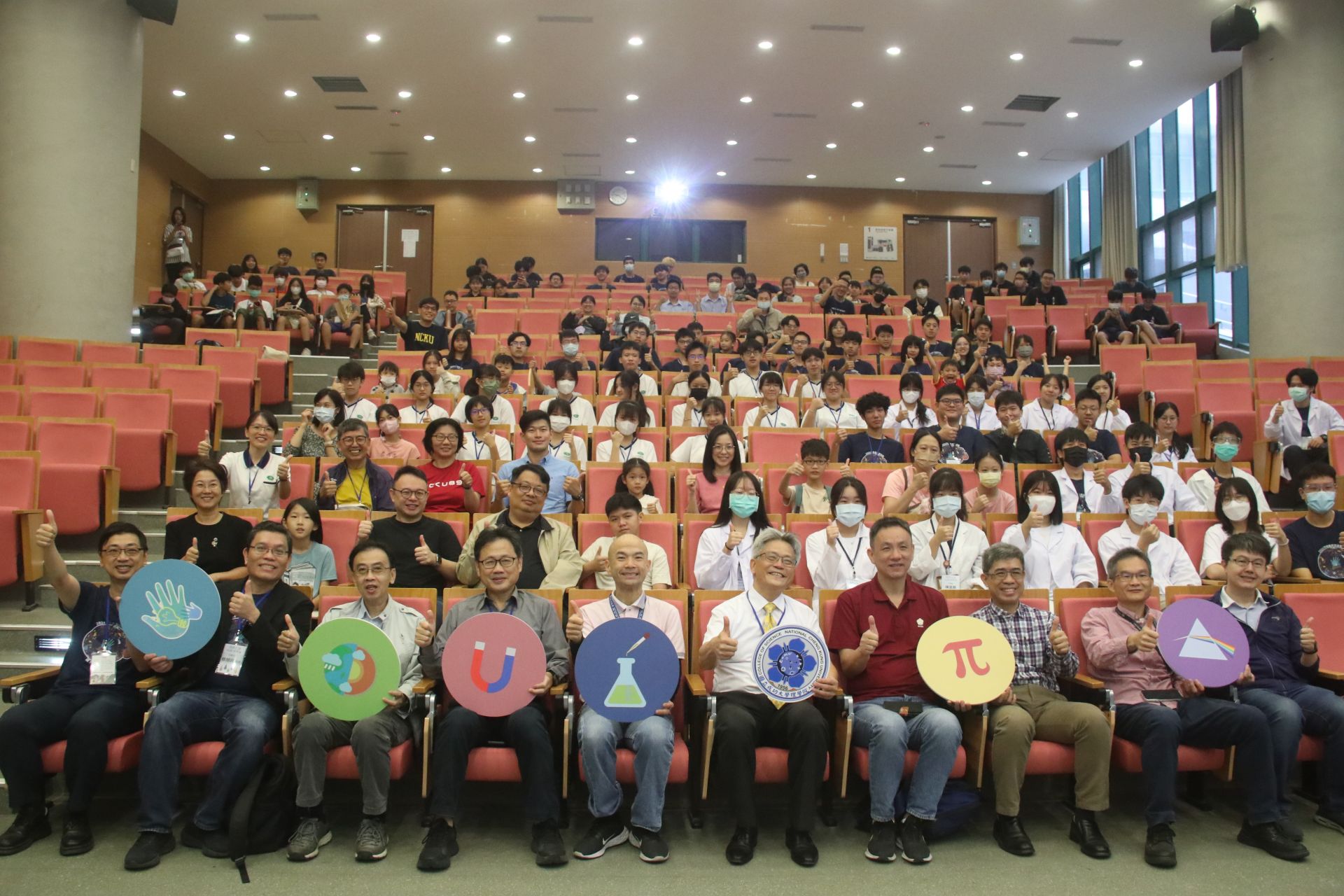
SDG11The 8th Science Boulevard Expo sparked a love for science in both children and adults
View more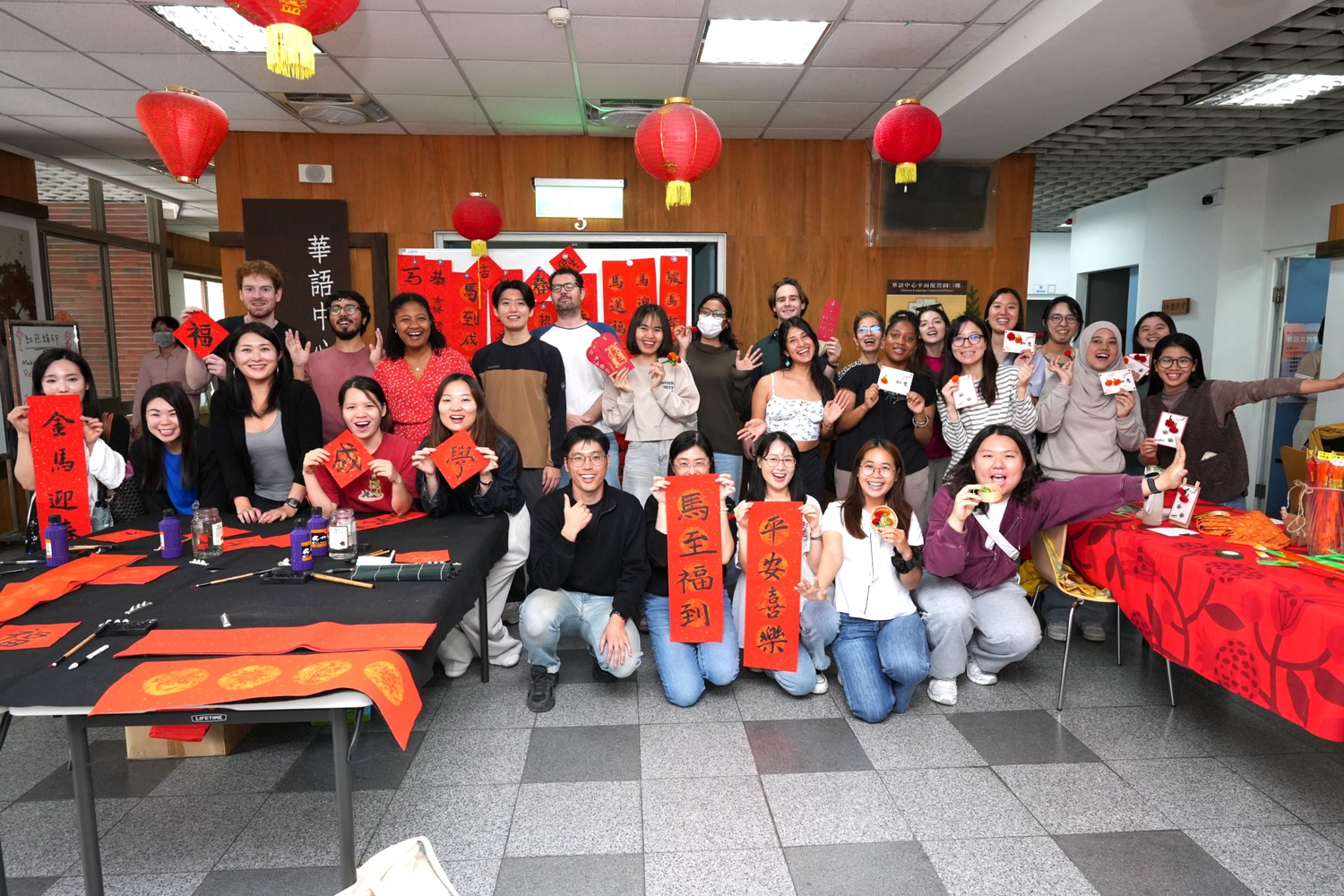
SDG11NCKU Chinese Language Center Hosts Lunar New Year Cultural Experience for International Students
View more